
When it came time to consider a profound change for her company, New Glarus Brewing’s Deb Carey took some sound advice from another business executive selected to be part of President Barack Obama’s “Champions for Change” initiative.
Her fellow change agent, the founder of a shoe company, convinced her to choose an employee stock ownership plan, or ESOP, for her succession plan to reward the workers who helped her build New Glarus into one of the country’s most respected craft brewers.
That spark of creativity came courtesy of Mandy Cabot, the founder of Dansko, the shoe company mainly known for its high-comfort clogs and less so for the fact it became 100% employee owned through an ESOP in 2012.
“(Cabot) spoke about ESOPs and how great they were and what a good program she thought it was for her retirement and for the continuation of her business,” Carey said. “She said to all of us, ‘If anybody wants to know about this, reach out,’ and it really impressed me. I had heard about this, but I didn’t know anything about it and hadn’t met anyone who had done it.”
As Carey investigated succession planning and the various options that could be pursued, ESOPs became her preferred way to share ownership with employees.
Exit, stage ESOP
Advocates tout ESOPs as an attractive option for business owners looking for a way to exit, better engage and motivate employees, and increase their workers’ retirement savings.
ESOPs are retirement plans that allow employees to receive shares of company stock — and the right to the value of those shares.
These plans, which are the most common type of employee ownership, were created by Congress as part of the Employee Retirement Income Security Act in 1974. More recently, Congress passed legislation to facilitate Small Business Administration financing for ESOPs.
ESOPs have attracted attention from several high-profile local companies. Findorff and JG Development recently became full-fledged ESOPs, and one longtime ESOP, Woodman’s Markets, has grown into one of the 100 largest ESOPs in the nation. (In Business Madison, which is owned by Woodward Communications, is also an ESOP.)
Statistical data on their usage is a bit dated, but it shows a stagnant pattern from 2014-2022. According to the nonprofit National Center for Employee Ownership, there were 6,718 companies with ESOPs in 2014 with 14.05 million total participants.
By 2022, fewer companies (6,358) had ESOPS — 5,925 private companies and 433 publicly traded companies — but they covered more employees, 14.9 million.
In Wisconsin, the NCEO said there were 228 ESOPs covering 149,084 participants in 2022.
Locally, there are enthusiastic participants. In its advertising, Woodman’s Markets touts that it is 100% employee owned. With more than 2,300 employees, the Janesville-based supermarket chain is ranked 56th on the NCEO’s largest 100 employee-owned companies in the U.S. — one of 10 supermarket chains on the list.
Executives from the local grocery chain did not return IB Madison’s requests for comment, and other employee-owned grocers, Hy-Vee and Festival Foods, declined to be interviewed. Festival Foods has entered into a definitive agreement to be acquired by 1939 Group Inc., a holding company owned by the family that also owns the St. Louis-based Schnuck Markets grocery chain, which is not an ESOP.
ESOP fundamentals
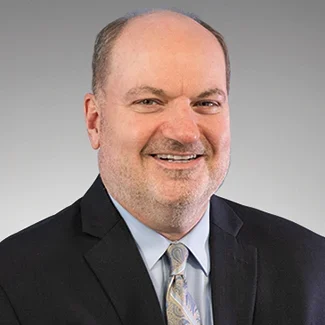
Jean Bergman, vice president and CFO of Ramaker, a Madison architecture, engineering and interior design firm, has worked to advance employee ownership through the ESOP Association, another advocate for these plans.
According to Bergman, employee-owned companies have a governance structure that includes a board of directors, an ESOP trustee and a plan administrator. While many companies hire external trustees and third-party administrators, some choose to handle these functions internally.
An ESOP holds company stock in a trust on behalf of employees. The trust acquires equity, holds the shares for the benefit of plan participants (employees), and manages allocations. The trustee serves as a fiduciary responsible for overseeing the ESOP trust, protecting employee interests, and maintaining compliance with legal and financial standards.
The ESOP may own anywhere from a small percentage of company stock all the way to 100%. As time passes, plan participants (employees) accrue shares in the plan, and they are paid out when their shares are bought back — usually after they retire or leave the company.
Through the ESOP trust, employees gain a meaningful stake in the company, resulting in increased engagement and stronger wealth building as the value of their ownership grows over time, advocates say.
Attorney Rebecca Greene, a shareholder in the Employee Benefits Practice of the Reinhart Boerner Van Deuren law firm, represents companies forming and maintaining ESOPs.
Greene said the best ESOP candidates have enough employees to make it work. For small companies under 20 employees, Greene said it could be difficult because the total compensation of the company has to be large enough for the economics to make sense.
“A company could have ESOPs with 100 employees or ESOPs with 10,000 employees,” Greene said. “It must be a company with strong cash flow and enough employees to support the contribution level, but otherwise any employer could pursue an ESOP as an option, whether it’s for succession planning or just as a desire to continue the legacy of the company.”
In terms of the legal setup, an ESOP is a tax-qualified retirement plan, and employers will need business counsel to draft a plan document and trust agreement.
Greene said there has to be a trust to hold the assets, whether it’s company stock or cash, and the plan document sets forth the terms and conditions for the employees to participate in the plan and receive allocations of contributions.
There are several options to fund an ESOP and there are a number of plan design options.
In a leveraged ESOP, the company or the ESOP trust will borrow money to purchase stock, Greene said, and the company uses future cash flow to repay the loan over time.
As the loan is repaid, shares of stock are gradually allocated to employee accounts in the vesting process, giving employees ownership without requiring them to buy shares.
“It’s a way for the employer to sell a large block of stock all at one time,” Greene said, “but then that stock exists for many years into the future to provide employee benefits.”
Another option is a non-leveraged ESOP, where a company does not borrow money to buy shares — it uses employer-contributed stock or cash — but it operates the same way, Greene said. The company contributes cash or newly issued stock directly to a trust for employees, and shares are allocated to individual employee accounts.
In both cases, employee accounts grow with the company’s stock value and provide retirement benefits.
Employers can contribute to the ESOP up to 25% of total eligible compensation on an annual basis, which is why they must have a large enough employee base to take advantage of this option, Greene said.
So if an employer has a $1 million annual wage base — i.e., they are paying $1 million in compensation to workers — their annual compensation limit to the ESOP would be $250,000.
Rooted in the community
ESOP advocates claim the sense of ownership improves both company performance and employee financial performance.
They not only offer a market for business owners, especially in closely held businesses where external buyers may be limited, but they are an alternative to private equity, which can have a negative effect on employees and local economies, Ramaker’s Bergman said.
“ESOPs help ensure that companies stay rooted in the state and in local communities,” she said.
What’s more, they help ensure continuity of leadership and operations, maintain the culture, values and mission of a company, and they provide a powerful wealth-building platform for employee-owners who receive shares in the company without having to buy them.
“The value of the shares grows tax-free over time,” Bergman said. “Because employees are owners, they have a direct stake in the company’s success. This leads to increased sense of accountability, increased performance and a stronger sense of purpose and engagement.”
They also offer tax advantages for selling shareholders, the company and for employee-owners.
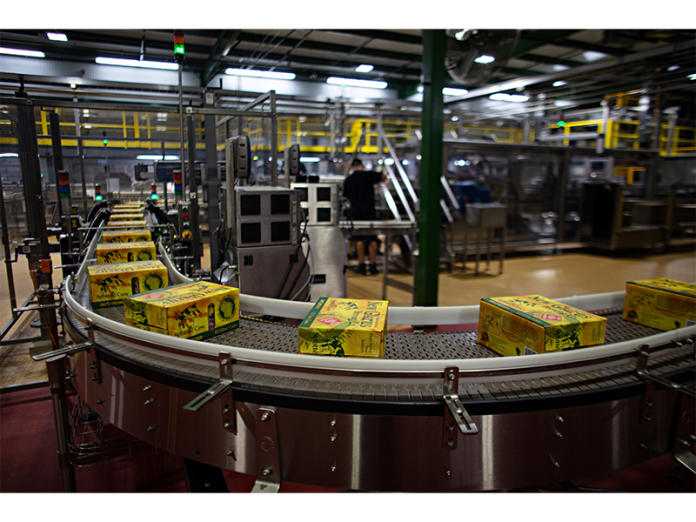
New Glarus Brewing, known for its popular Spotted Cow farmhouse ale among other varieties, has been employee owned for about 10 years. The company, founded in 1993, has 106 full-time employees and seven part-time/seasonal workers, and reports $60 million in annual revenue.
Employees automatically become a member of the ESOP once they have met the basic requirements: 12 months of employment and a minimum of 1,000 hours worked during that time, a common requirement of such plans.
At New Glarus Brewing, the ESOP is built with the help of a 6% company match that once applied to a 401(k) but now applies to the ESOP.
Founder Deb Carey and her brewmaster husband, Dan, now are both 65. With two daughters, one pursuing a career in architecture and one with a degree in biology, transitioning ownership to the next generation wasn’t a viable option.
The idea of selling the brewery to a private equity firm — which Deb Carey characterized as “vulture” capitalists as opposed to venture capitalists — was a nonstarter for reasons having to do with the job security of her workforce. Selling to a larger brewery concerned her for the same reason.
“Breweries generally don’t continue very far into the future,” Carey said. “Typically, they are sort of cannibalized. (Buyers) take the assets or make as much money as they can and then resell it again.”
The more Carey investigated ESOPs, the more she liked them, especially their track record of continuing a business with its established values.
In an email, Emily Bunting, who for 24 years has worked in administration and compliance for New Glarus Brewing, said the company has low turnover and the ESOP adds to the overall sense of employee ownership and pride in their jobs.
Bunting said employees help make company decisions as part of teams called “quality circles.” These groups give employees a voice and provide multiple perspectives to solve problems and influence company direction.
“It means a lot to know that everything you do is benefiting yourself and your fellow employees,” Bunting said. “For employees, the ESOP becomes more real after they have been in it a few years and start to see their balance increase and knowing that none of this money came out of their paycheck.”
Building ESOPs
Construction firms also are well represented on the NCEO’s largest 100 employee-owned companies in the U.S., with 11 total. According to the NCEO, 17.4% of all ESOPs in 2024 were construction firms.
Two local builders, JG Development and Findorff, recently have become full-fledged ESOPs.
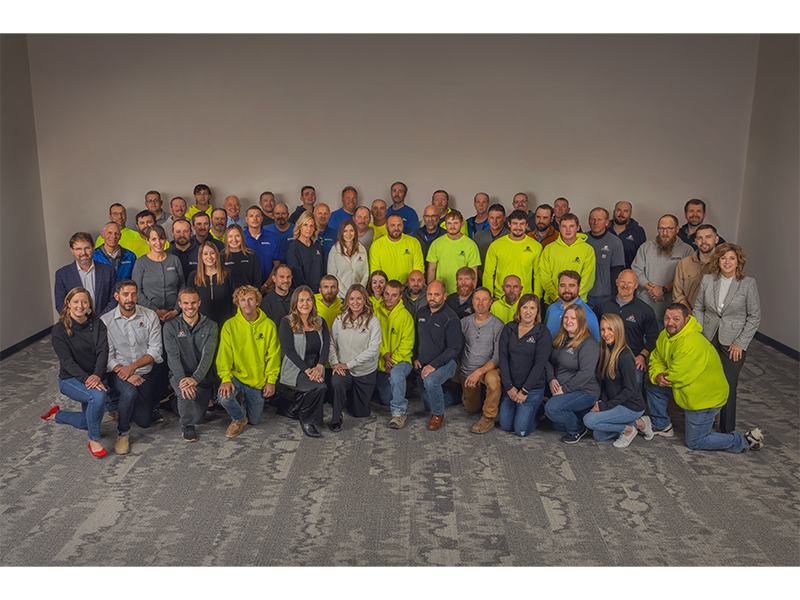
Jeff Grundahl, founder and CEO of JG Development, and his wife Mary, the company’s COO, began devising their succession plan in 2013 and launched phase one of an ESOP in 2017. At that point, it transitioned to 49% employee ownership, and in 2024, it transitioned to 100% employee ownership.
“As we found out, construction companies aren’t necessarily as sellable to their competitors as some other companies are, so we thought that with the culture that we have built and the team that we have, this would be a nice way to reward employees,” Jeff Grundahl said.
JG Development, founded in 1990, has grown through acquisition, but only one company, Supreme Structures in 2024, was added following the establishment of an ESOP.
Now with 75 employees, the Grundahls believe shared ownership promotes a positive, team-oriented work environment, and the ESOP provides employees with more financial security in retirement.
“In most cases, their ESOP contributions far outweigh their 401(k),” Jeff Grundahl said.
The reason JG transitioned to an ESOP in stages was, in part, a matter of quickly paying off the loan so it could reward long-term employees.
“For us to go 100% was maybe a bigger apple than we wanted to bite in 2017,” he said, “but most importantly, it allowed us the opportunity to do 49% and stay engaged. Mary and I both realized that we weren’t yet ready to retire at that point, so we thought, ‘Let’s do a 49% transaction’ and we then decided to amortize that (pay off debt) very aggressively over a five-year period.
“Our trustees tell us it’s one of the most aggressive ESOPs they’ve seen, and that was specifically done to benefit our long-term employees,” he said. “So those folks that have been here for a long time would get a much larger share, or maybe their fair share, of the benefit in a very short period of time because ESOPs are typically amortized, depending on the type of transaction, over 30 to 40 years.”
Among the benefits Mary Grundahl sees is a greater sense of engagement — more buy-in on the happenings of the company — after educating employees about the program.
“ESOPs are a gift that (employees) can control. … They see the benefits of that and the direct correlation into how they can benefit themselves and the company by doing so,” she said.
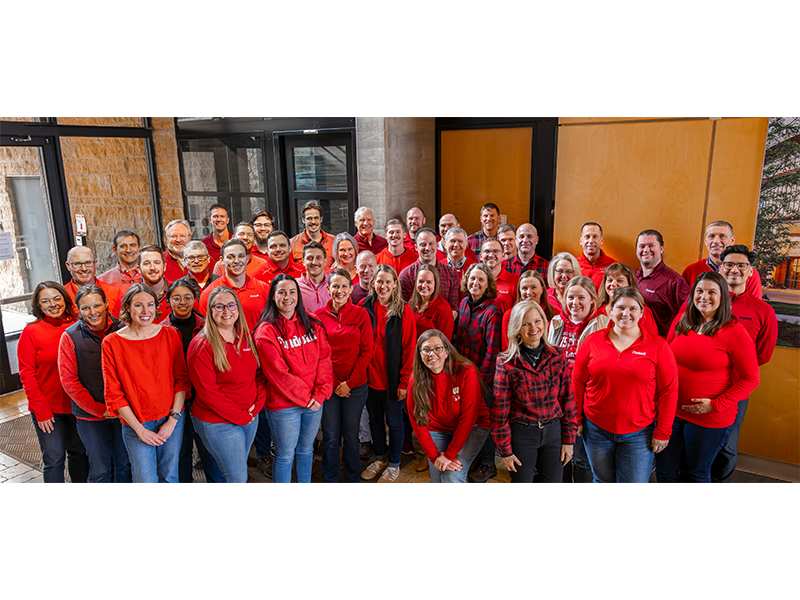
In January, Findorff announced it had transitioned to an ESOP after 135 years in business. Its ESOP gives employees 100% ownership.
In an email, Michelle Kraemer, vice president of people strategy for Findorff, said the company’s motivation for introducing the ESOP was to share success more directly with the people responsible for it.
“This benefit is in addition to our existing retirement benefits, including our 401(k) for eligible employees,” Kraemer said. “We value our people immensely and are proud to offer the ESOP as another way to celebrate their hard work and share in our accomplishments as a company.”
The company employs more than 1,000 people and reports annual revenue of more than $1 billion.
Kraemer said Findorff views the ESOP as an attractive option because it gives eligible employees an ownership stake in the company, which builds a direct link between the company’s success and their own.
Several Findorff employees interviewed by email agreed that it motivates their engagement and gives them a stronger sense of ownership.
“I feel an even deeper sense of ownership and feel we all have a stronger voice now in where we want the company to go,” said Laura Blood Velotta, director of MEP (mechanical, electrical and plumbing) & specialty services.
Mike Smarelli, general superintendent, said he feels proud that Findorff rewards hard work, dedication and smart decision-making.
“Our ESOP takes that a step further,” he said. “It reinforces that each person’s contributions truly matter. That creates a genuine sense of ownership and ‘pay it forward’ mentality.”
Costs and challenges
While Ramaker’s Bergman might be the ESOP’s most enthusiastic backer, she said they also come with complexity and cost. Establishing an ESOP involves substantial legal and consulting fees, and ongoing compliance with regulations can be demanding.
In addition, she said companies must invest in continuous employee education to establish and maintain an ownership culture, which can be challenging as the workforce evolves, she said.
Meanwhile, mature ESOPs face growing repurchase obligations, requiring careful financial planning to sustain the plan over time. “Maintaining a strong sense of ownership among employees is essential but difficult as the company grows and as new employees join,” Bergman said.
New Glarus Brewing pays Principal, its third-party administrator, $18,000 a year, and annual valuations by Capital Valuation cost $20,000. These expenses help provide employees with some protection.
“One of the hurdles, and I think it’s fair, is the government basically has this set up with a lot of protections for the workers,” Carey said. “I believe this is fair because the workers are the ones who are taking on responsibility and debt.”
At JG Development, the Grundahls cited the need for employee education. JG has established an ESOP Ambassador committee to educate employees and gain feedback from departments.
“They have a voice and then they can go out and spread the word,” Mary Grundahl said. “It’s not always across the board that you’re getting information, and the sooner you get that momentum going, the better off you’ll be because then people understand that there’s a lot that happens behind the scenes.”
Jessica Bigler, an executive assistant who has been with JG Development for 10 years, is a member of its ESOP Ambassador Committee. “We all understand that we have to work together as a team to be successful, and when we are successful, we all reap the rewards of that through the ESOP because the stock value will continue to grow,” Bigler said.
Employees are not kept in the dark about the value of their ESOP accounts, which according to Bigler, is a superior way to build a retirement nest egg.
“We get ESOP statements so we all can see what the value of our individual accounts are,” she said. “Everybody does have a different value because it’s based on how long you’ve been here — there’s all kinds of different things that go into that equation.
“We all have a sense as to where we’re at and what we could walk away with when we retire, and it’s definitely more substantial than what my 401(k) looks like.”

