

Can Wisconsin take advantage of the opportunities presented by data centers while protecting against potential downsides?
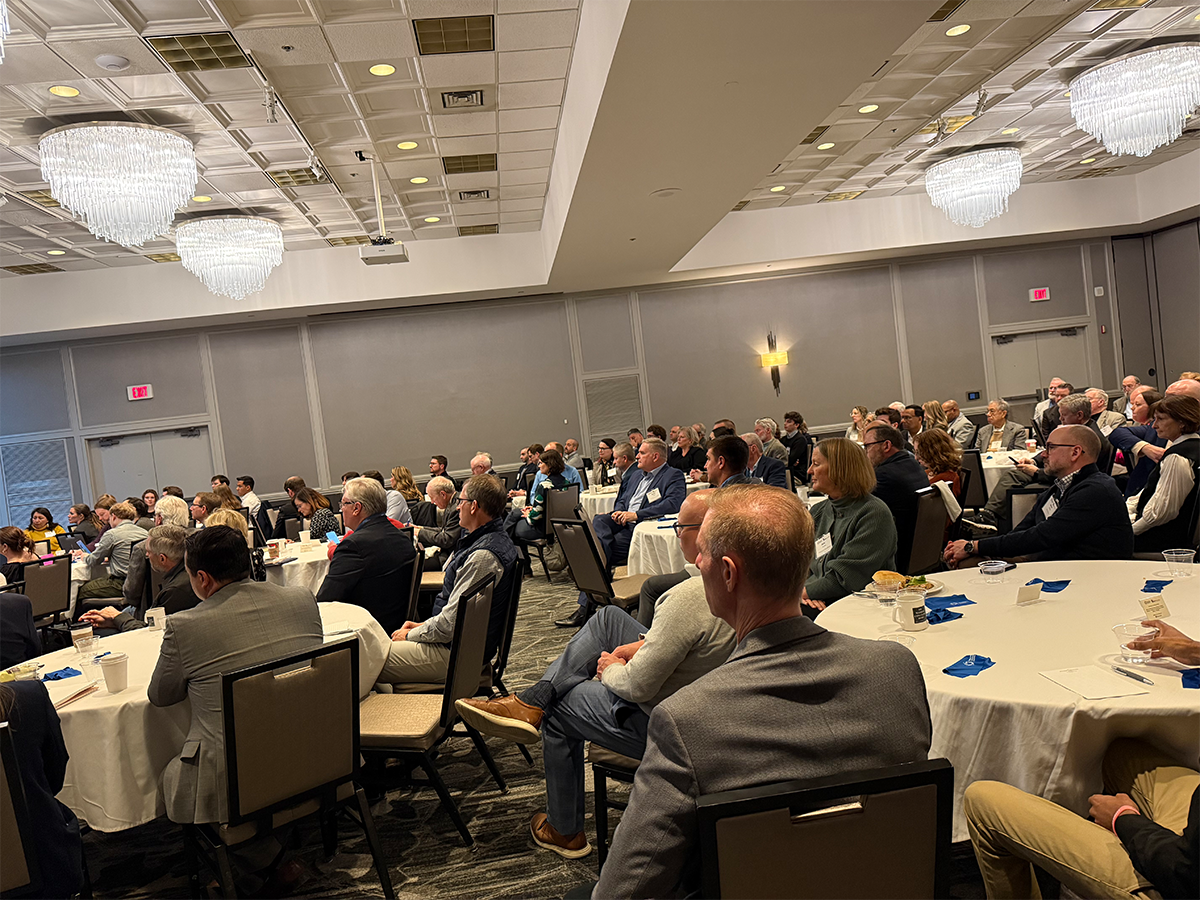
Much of the public remains skeptical about that — witness the recent withdrawal of a data center proposal in De Forest amid public backlash — but corporate and government panelists at a Feb. 5 luncheon in Madison believe it can be done the right way.
They cited Microsoft’s approach as the model for how other data center operators should approach their development in Wisconsin.
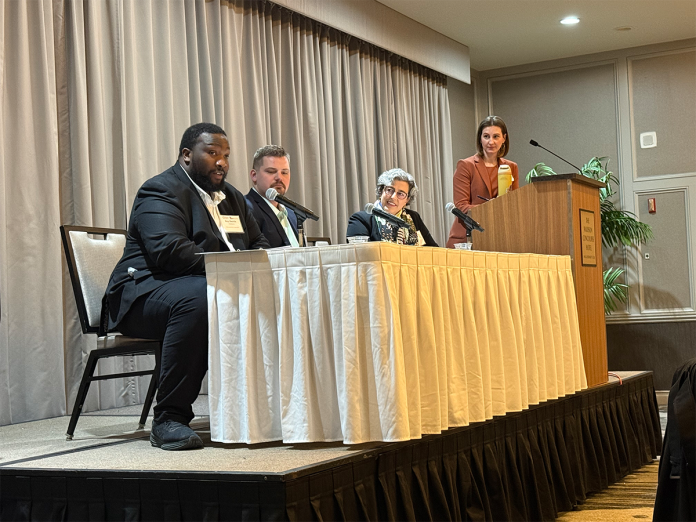
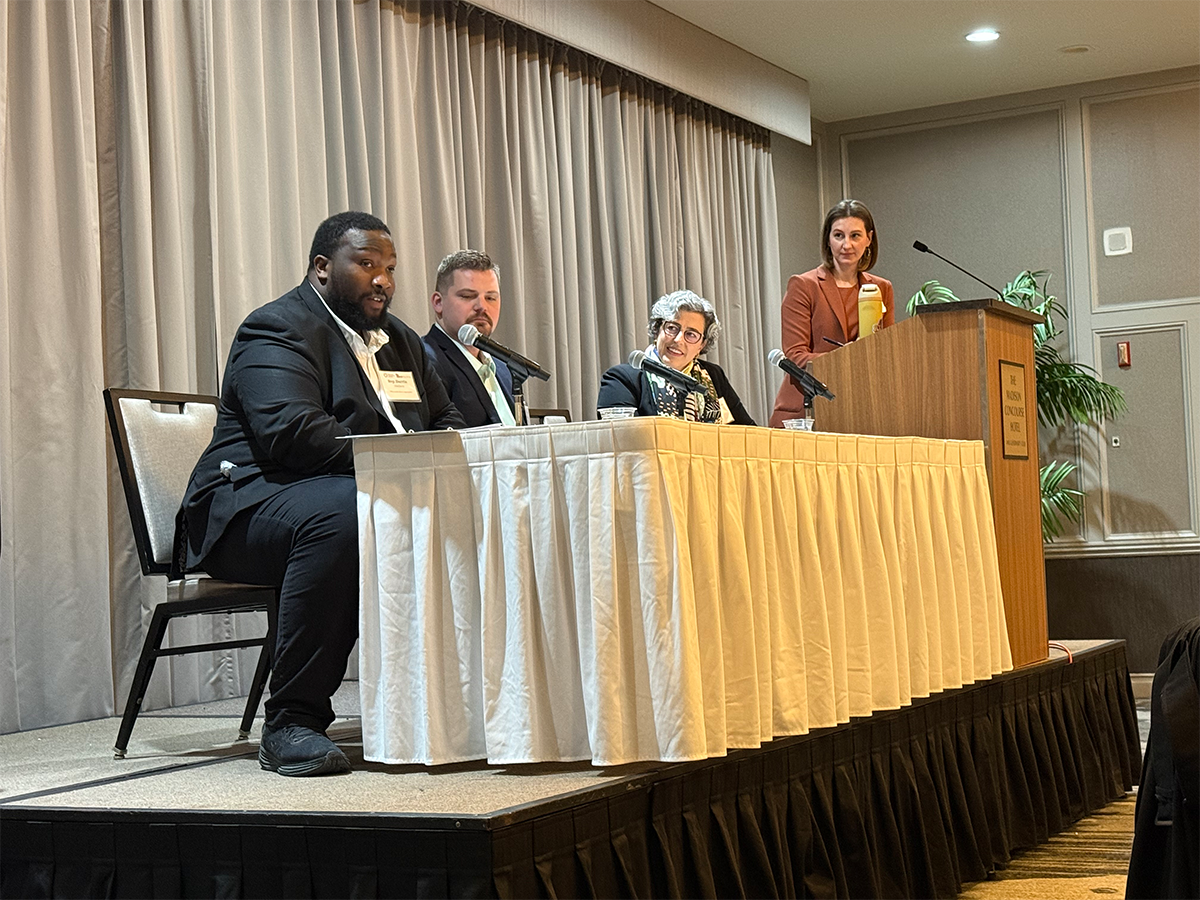
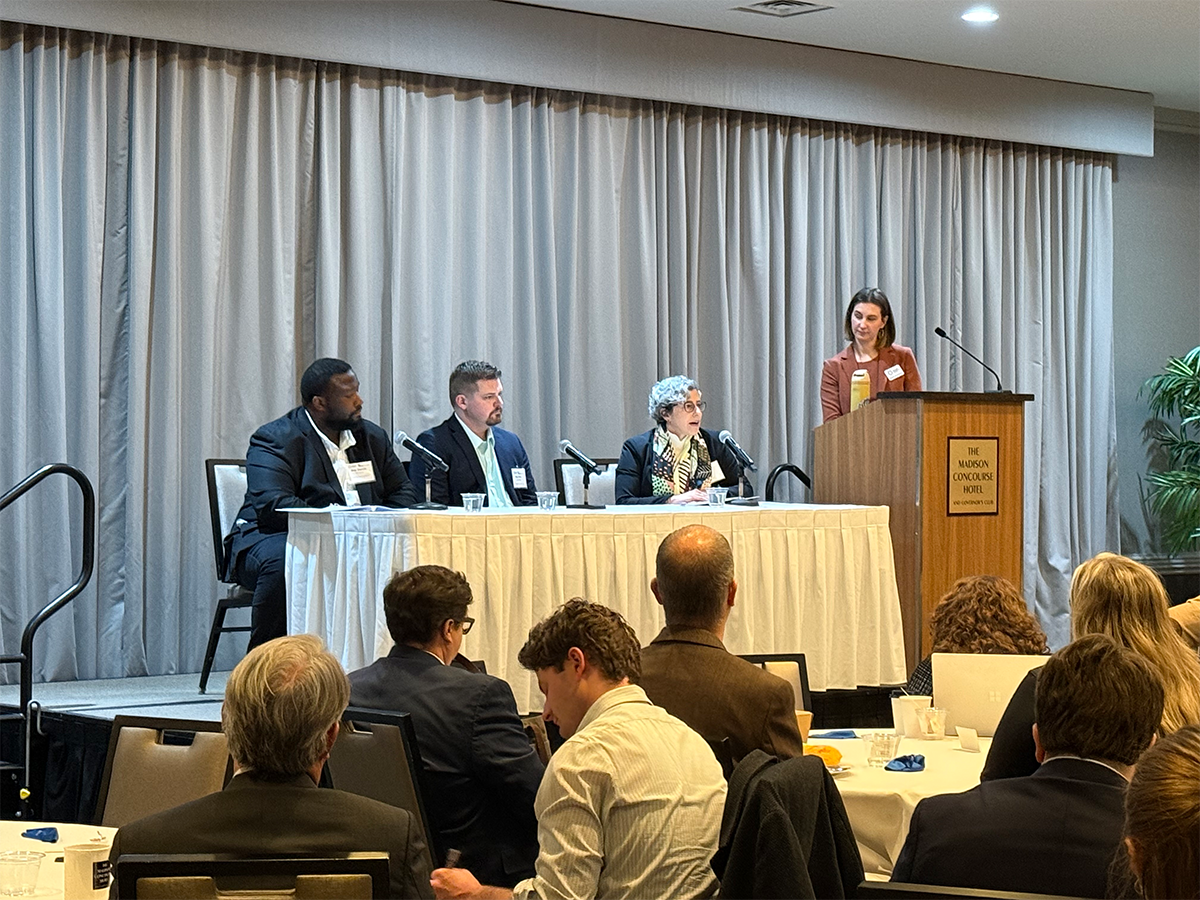
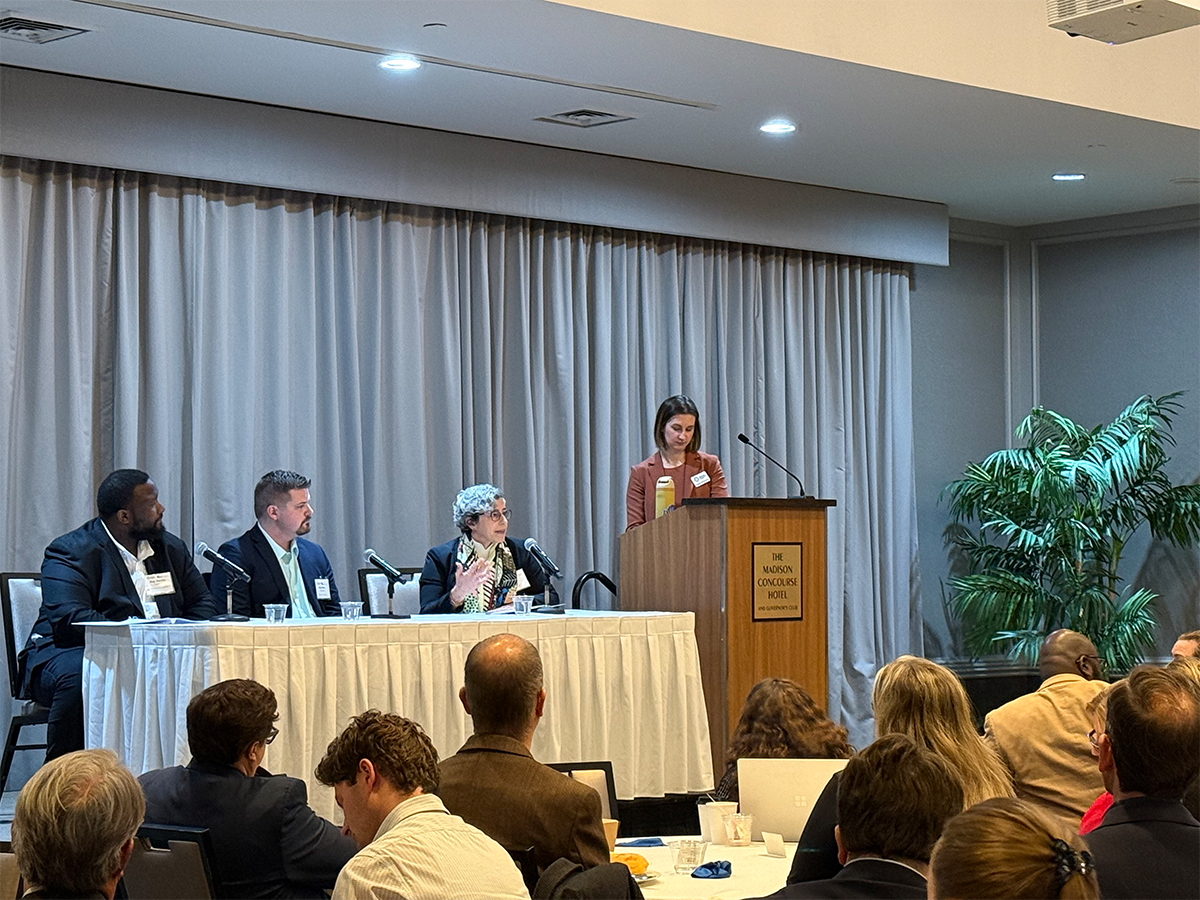
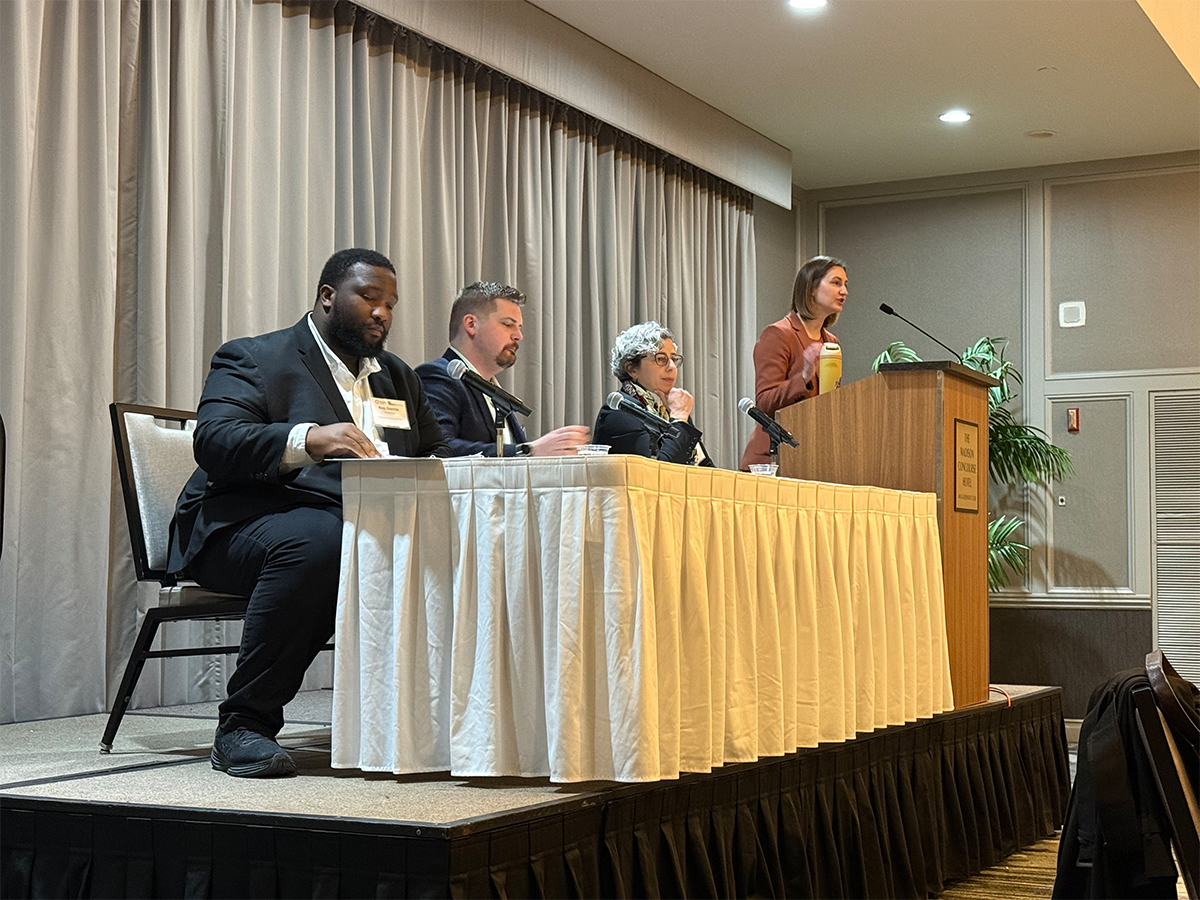
The panelists included Rima Alaily, corporate vice president and general counsel of infrastructure legal affairs for Microsoft, which is building a massive data center set to open later this year in Racine County and has broken ground on another one; and state Reps.Nate Gustafson, R-Omro, and Darrin Madison, D-Milwaukee.
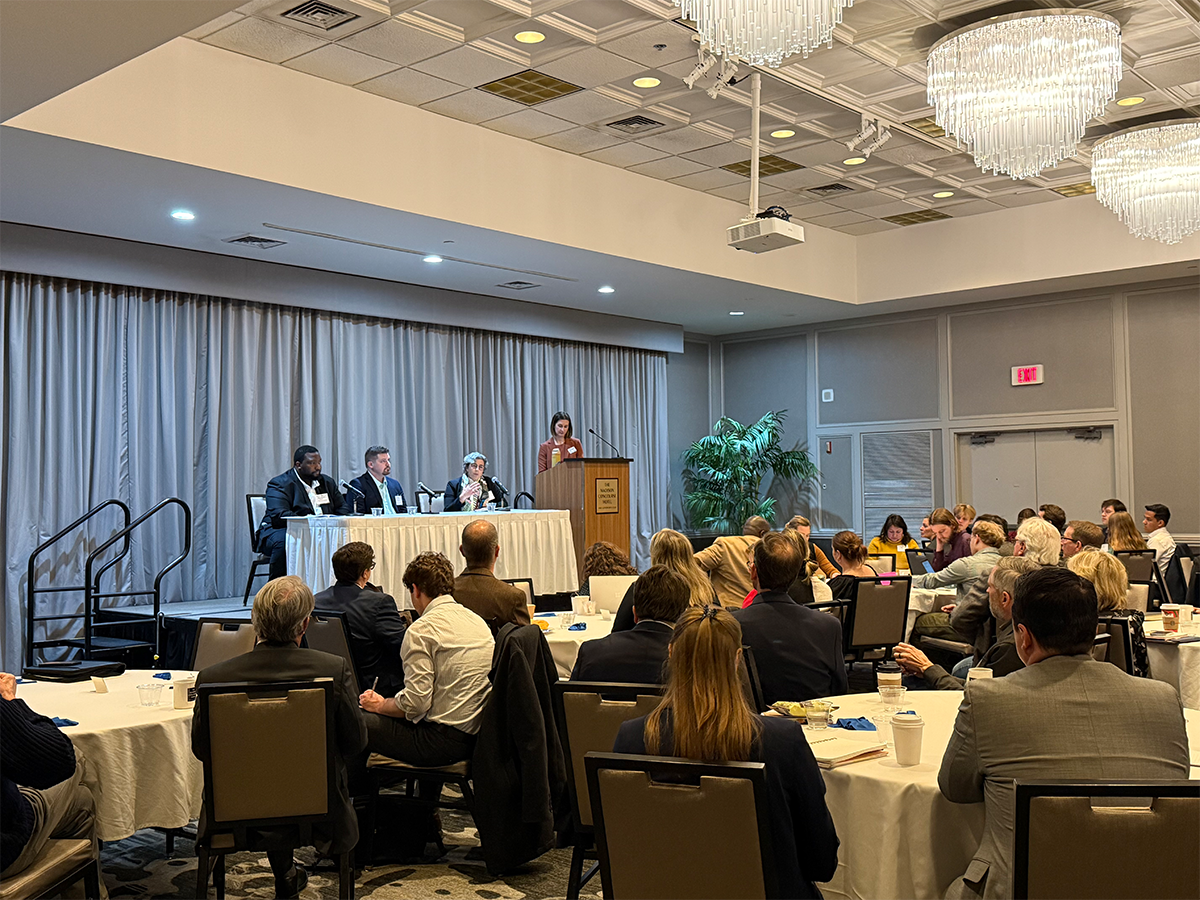
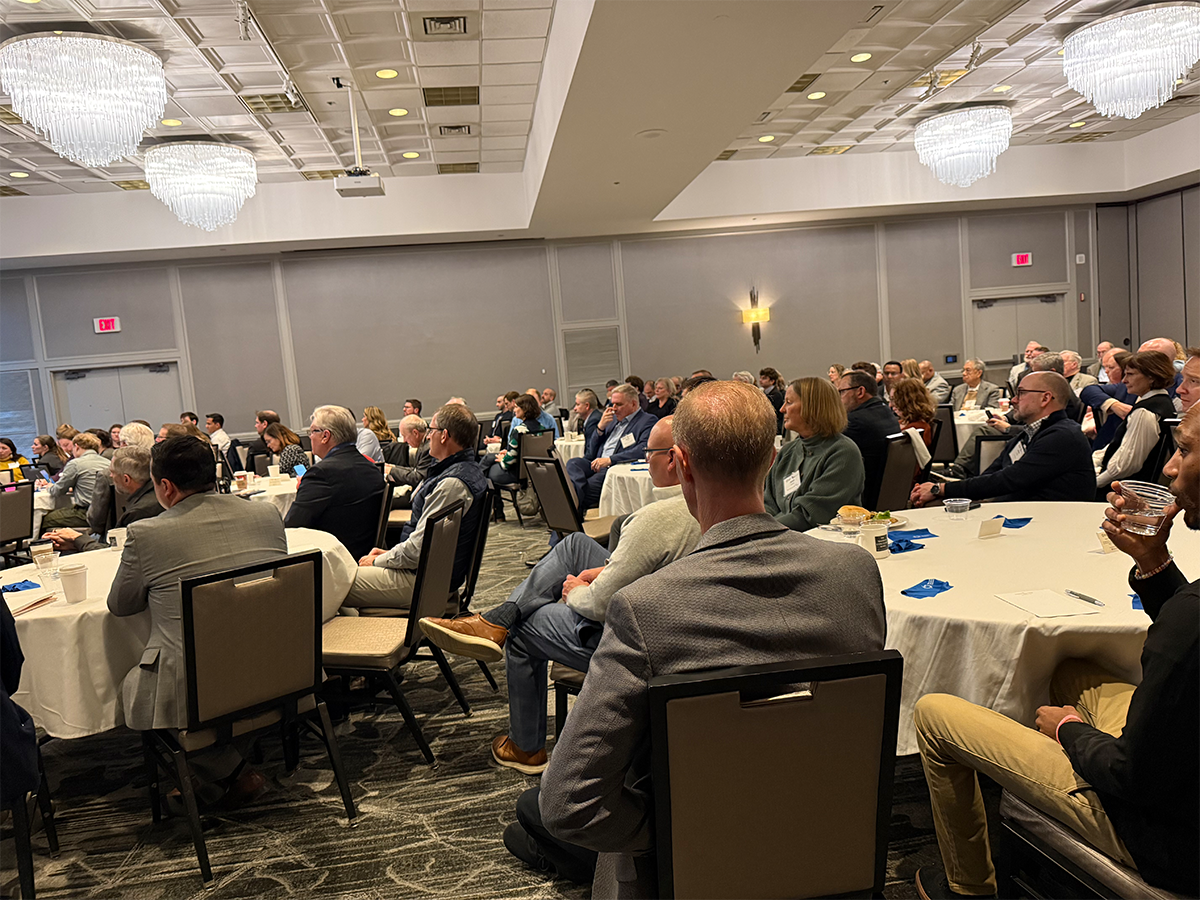
The panel discussion, held at the Madison Concourse Hotel and Governor’s Club, was hosted by the Wisconsin Technology Council and WisPolitics, and sponsored by Microsoft.
Built to scale
Hyperscale data centers like the ones being planned by Microsoft are needed to accommodate the rapid deployment of artificial intelligence applications, which require large amounts of energy, land and water and have created fear about job losses.
Alaily, an Appleton native, said Microsoft has made significant investment — over $7 billion — to build a multi-phase data center campus in southeastern Wisconsin.
In 2024, the tech giant broke ground on a data center in Mount Pleasant on the former site of the Foxconn project. The data center is expected to be operational later this year.
Microsoft also has broken ground and started construction on a second data center next to it, and the company has announced plans to expand onto other adjacent sites for up to 15 data center buildings in the area.
Alaily also talked about Microsoft’s new Community First AI Development Initiative, which was born out of the concerns and questions the company has fielded in Wisconsin about the effect of data centers on their respective communities.
She said people are worried about the cost of electricity and how data centers will affect their utility bills, they are concerned about water usage to cool the facilities, and they have asked whether they will bring construction and other jobs to the community without having AI cost people their jobs.
The initiative is grounded in five commitments to communities that Microsoft believes will raise the bar for itself and others. Those commitments center on:
Electricity: Microsoft is committed to “pay its own way” when it comes to electricity generation, which protects local ratepayers, Alaily said.
Water conservation: With the help of a closed-loop cooling system in which water keeps circulating within a sealed piping system rather than evaporating, the company is working to minimize its water usage and replenish more water than it uses in local communities.
“When we look at our data center that is set to go operational, we’re permitted to use up to 2.4 or 2.5 million gallons of water per year,” Alaily said. “Now that sounds like a lot … but at the end of the day, that’s about four Olympic-sized swimming pools or about how much a restaurant uses, so it’s relatively speaking a small amount of water.”
Jobs: The company has pledged to help create jobs for residents, not only with 500 data center jobs at the center that goes online this year, but with the related construction work and by tapping into Wisconsin’s manufacturing supply chains for mechanical, electrical and HVAC equipment.
Tax base: Microsoft’s data centers will add to the local tax base to ensure there is more revenue to invest in local schools, hospitals and other institutions. Alaily said the tax revenue data centers bring is substantial. Microsoft built its first data center in Quincy, Washington, a small farming community two hours east of Seattle, 20 years ago.
“We’ve continued to build data centers there over the last 20 years and that county (Grant County) has seen property tax revenues go from about $60 million to over $180 million per year,” she said. “With that is coming a brand new high school that is state-of-the-art for a city with only 8,000 people.
“They also recently opened up a new medical center, which is remarkable when you think about how around this country medical centers and hospitals are closing in rural areas because they cannot afford to keep them open, and yet in Quincy, Washington, they are opening up new medical centers.”
AI workforce investment: Alaily said the company is making a conscious effort to invest in AI skills training so that local workers benefit professionally rather than be left behind.
“At the end of the day, it’s our belief that our ability to build out and deliver AI infrastructure really depends on communities coming to the conclusion that the benefits outweigh the costs,” Alaily said.
Legislative alignment
The panel discussion was held amid the current legislative debate over Wisconsin’s approach to data center regulation.
Gustafson, who represents the state’s 55th Assembly District, serves as chair of the Assembly Committee on Science, Technology and AI. Madison, who represents the 10th Assembly District, also is a member of the committee.
Gustafson and Madison spoke of their political parties’ respective approaches to data center regulation. Gustafson said he favors managing the impact of investments in land, water and power consumption without stifling innovation and while making sure it’s done in a sustainable way.
Madison said he prefers to codify into law his objectives so that ratepayer and environmental protections are in place before data center proposals are made.
“Last November, we introduced a bill to cap utility prices at 2% (of annual household income) knowing that data centers will increase our energy burden regardless,” he said. “So trying to codify those protections for ratepayers is critical.”
One regulatory bill, AB 840, passed in the Republican-controlled Assembly on Jan. 20 by a vote of 53-44. Republicans argued it protects Wisconsin residents from paying costs related to the construction of electric infrastructure for data centers and promotes water conservation by requiring closed-loop systems that use a fixed amount of water for cooling purposes, or other systems that do the same.
Only two Democrats voted for the bill, with many saying it doesn’t go far enough to protect ratepayers or the environment.
Contacted before Thursday’s panel, state Rep. Lisa Subeck, D-Madison, voted against the bill in part because it restricts the use of clean energy in powering data centers, allowing only onsite clean energy options on the data center campuses. In her view, it fails to protect ratepayers from being forced to cover the costs of the infrastructure required to power them.
“This bill is pathetic and shameful,” Subeck said in a statement released after the vote. “It does not protect ratepayers; it threatens jobs; it actively harms our environment.”
The measure now advances to the Senate, where Democrats have introduced their own bill to shield ratepayers from bearing the costs of large data center demands, and requires large data center operators to pay an annual fee based on their peak electricity demand forecast. The fees could range from $2 million to $4 million depending on the forecasted demand and would raise revenue for renewable energy programs.
The Democrats’ bill also enables the Public Service Commission to establish and review rates for very large customers, and mandates reporting on data centers’ energy consumption and renewable energy usage.
Under the bill, large-scale data centers are defined as facilities over 25,000 square feet with at least $250 million in investment.
The legislation also requires electric utilities to offer an optional renewable resource tariff for commercial and industrial customers. A renewable resource tariff is a program that allows utility customers to purchase electricity specifically sourced from renewable energy sources.
Gustafson said there likely will be negotiations between the two parties, as Democratic Gov. Tony Evers is reportedly skeptical of the Republican legislation.
“I would think any piece of legislation coming forward is going to have some sort of compromise,” said Gustafson. “We’re going to sit down and identify our top priorities and then find the closest we can go to the middle.
“As you heard today, we are clearly all asking ‘how,’ not saying ‘no,’ and that’s a big factor,” he said.
Cold conversation
The panel discussion was moderated by Maggie Brickerman, president of the Wisconsin Technology Council, the independent, nonprofit science and technology adviser to the governor and Legislature.
Toward the end of the program, Brickerman expressed disappointment about the discussion around the proposed QTS data center campus in DeForest because it never got to the “how it can work” stage.
“I was disappointed to see that, not because I necessarily had a strong feeling either way about the development itself, but to see how that conversation evolved, or devolved, makes you wonder if we can do hard things in Wisconsin,” Brickerman said.

