
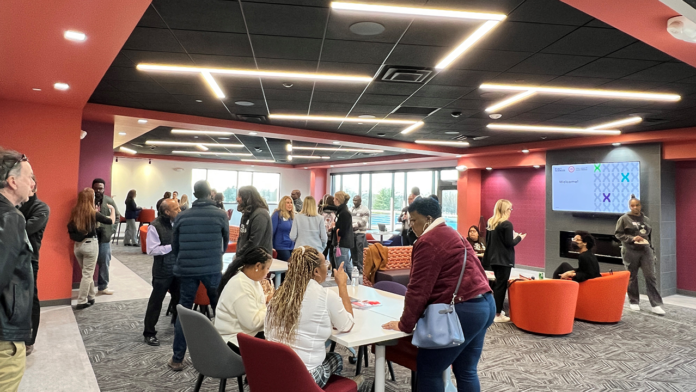


For years, low-income residents on Madison’s far east side struggled to get basic dental care.
Most Wisconsin dentists don’t accept the state’s Medicaid-funded dental insurance because of its low reimbursement rates, effectively cutting off preventive services for many adults in the program.
But a little-known federal tax break for investors — made permanent by Congress last year — has helped to change that for thousands of Dane County residents.
The federal New Markets Tax Credit Program attracts private investment to economically distressed communities by offering a 39% tax break to fund projects that benefit residents. It helps nonprofits and other borrowers build the resources low-income neighborhoods need, including healthcare clinics, affordable housing, daycare centers, business development hubs and grocery stores.
Since the credit was created in 2000, more than $90 billion in tax credits have been directed to projects nationwide, including $4.9 billion in Wisconsin.
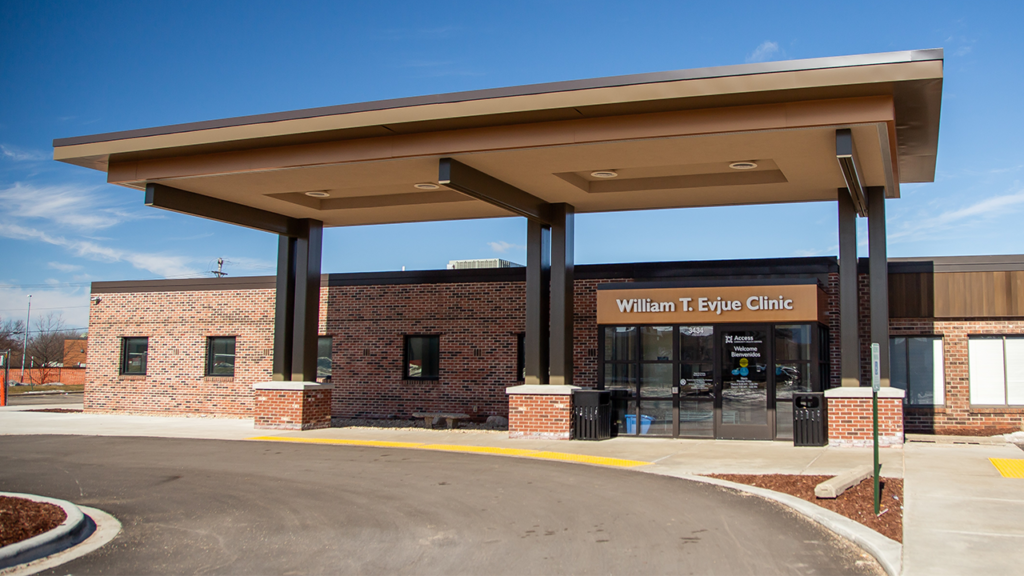
In 2005, Access Community Health Center financed construction of a clinic on East Washington Avenue through the credit. The clinic now provides preventive primary medical care, including dental services, to residents.
For Access, the credit was a gamechanger, allowing it to more quickly meet a community need, said Joanne Holland, chief business development officer for the group, based in Dane County.

“It’s a way to fund work that would happen anyway, but it can happen sooner. It can happen faster,” she said. “That’s why we’re here, to try to really be on top of, what does our community need and how we can position ourselves so that we can better address that need?”
Projects generally qualify for tax credit financing if they are located in a low-income Census tract, which is determined mainly by the tract’s poverty rate, unemployment rate and/or median family income.
“This is one of the most successful programs, maybe the most successful economic development tax incentive that the government has ever put forth,” said Carrie Sanders, founder and CEO of Hope Community Capital, which advises and works with borrowers to get the New Markets Tax Credit for their projects.
“It creates a new market in underinvested areas,” she said.
Because it’s narrowly focused and borrowers must document the effect of their project during a seven-year compliance period after credits are awarded, the money goes where it’s intended. It has garnered bipartisan support in Congress for the past 25 years.
“There is an excellent policy argument there,” Sanders said. “The economic experiment of, if we invest private capital into low-income communities, will the communities be stronger for it? The answer to that has been, ‘Yes.’”
Local Community Development Entities, which act as financial intermediaries between the federal government and borrowers, apply for the credit with projects in mind that meet the government’s criteria.
If their application is successful, the intermediaries get a specific amount of credits for each funding cycle to deploy for local projects. The Community Development Entities determine which eligible projects receive New Markets Tax Credit financing based on their investment strategies, underwriting criteria and benefit to the community.
Each funding cycle, which runs about every two years, the program awards $5 billion in credits nationwide.

Rendering by Kahler Slater
Making it happen
Once a Community Development Entity gets an allocation of credits through the program, the money is immediately funneled to a borrower to help build a project, rather than arriving as a tax break after construction, said Robert Beach, chief operating officer at Forward Community Investments, a Wisconsin-based Community Development Entity focused on bringing the credit to projects in the state.
“It is an upfront credit,” he said. “It comes in immediately to help the project get activated, and that’s a main focus.”
Along with a competitive application process, the program also has aggressive requirements for how quickly credits must be put to use, Beach said.
“So once you receive those credits, you can’t just sort of sit on them in perpetuity. You have to start deploying them,” he said.
In Dane County, the New Markets Tax Credit has helped fund the Goodman Community Center, Boys and Girls Club of Dane County’s McKenzie Regional Workforce Center and the Urban League’s Black Business Hub, plus 16 single-family affordable homes. It has also facilitated the construction of several Access Community Health Center clinics, including one set to open inside the YMCA of Dane County’s new $58 million facility in Fitchburg.
For Madison nonprofits working in low-income neighborhoods, the credit, which covers about 20% of a project’s total costs, is key to sustaining their work over the long term.
That was huge for helping Access stretch its dollars further, said Holland.
“When you’re able to bring that kind of opportunity to a project, it just means that you’re going to be able to accelerate being able to step into a space and do more to be able to meet needs,” she said.
In 2010, Access built another clinic on Main Street in Sun Prairie that offers preventative primary care and dental services, with the help of the New Markets program. It’s a challenging endeavor to build clinics, but another challenge is to make them sustainable over time, Holland said. She called the New Markets credit instrumental in doing both.
“With those projects, that’s work we would have done anyway, but we got to do it with confidence,” Holland said. “We got to do that also in terms of being able to expedite other projects.”
As prices rise for healthcare, groceries and housing, and as government funding priorities shift, the tax credit fills the gaps that emerge, said Sanders, of Hope Community Capital.
“This can fill that gap… but we have way more projects that need (tax credit) allocation than allocation available,” she said.
Critical Support
For the Urban League of Greater Madison, the New Markets Tax Credit has been the difference between projects happening on schedule and not happening at all.
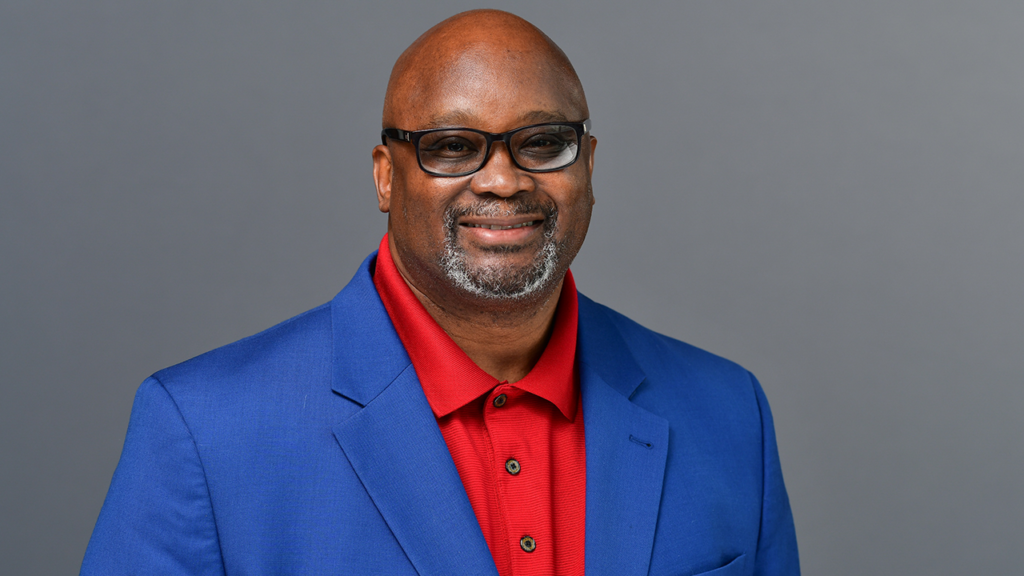
“Tax credits have really played a big role in Urban League projects for 15-plus years now,” said Ruben Anthony, president and CEO of the Urban League.
The group has financed two projects with the credit focused on housing, building wealth and business development, and is developing a third, he said.
“The projects wouldn’t happen unless you had the New Markets Tax Credit financing,” Anthony said.
The Urban League’s 2021 homeownership and wealth-building program was developed with $5 million in New Markets tax credits.
The group bought and rehabilitated 16 homes in the Madison area, on the north and south sides of town, and is providing participating families with homeownership education, coaching and innovative financing.
“We have to make sure that they’re in good shape at that seven years because they have to refinance and take us out of the deal. So a lot of our work right now is doing financial empowerment,” Anthony said.
So far, every homeowner in the program has a savings account with about $10,000 to $15,000 saved. Overall, the project helps to close a racial gap in homeownership in Madison, Anthony said.
“African American homeownership is maybe about 9 or 10%, whereas it’s in the 70% range for whites,” he said.

The program is still in its seven-year compliance period, required by the New Markets Tax Credit Program. The Urban League submits financial and community impact reports every year, said Ed Lee, the group’s senior vice president.
Families initially purchased the homes through a specialized interest-only financing arrangement and will later refinance into traditional mortgages, allowing them to build equity and transition into long-term homeownership. The homes must remain owned by low- or moderate-income families who meet eligibility criteria. The penalties for noncompliance can be significant, he said.
“The federal government has the ability to recapture those tax credits,” said Lee, which would hurt the lending and investment partners.
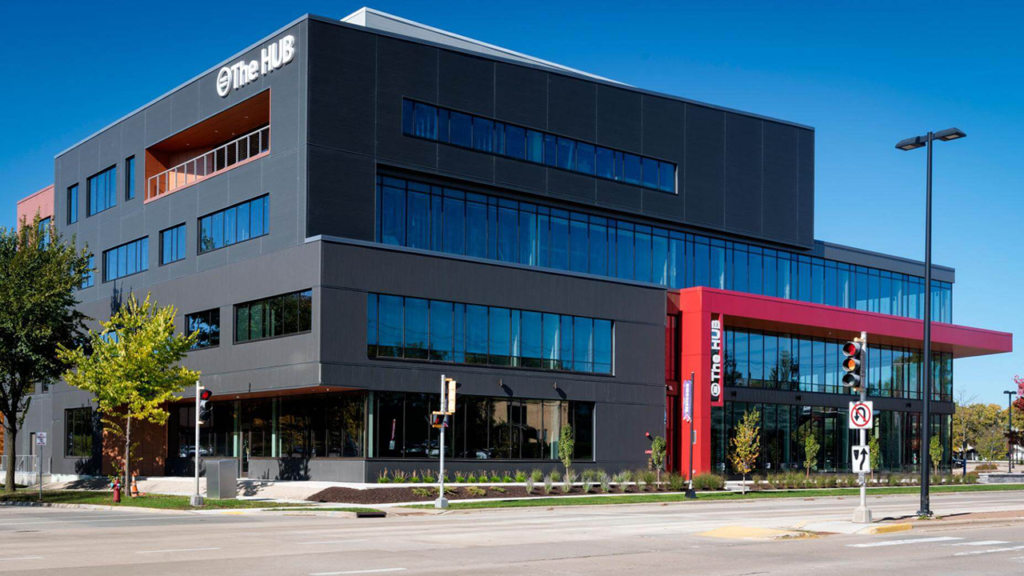
Photo: Urban League of Greater Madison
Another Urban League project built with financing from the tax credit focuses on Black business development. The $23 million Black Business Hub on South Park Street broke ground in 2022 and was built with $5 million in credits, Anthony said.
The idea for the hub, which spans more than 80,000 square feet with four stories, grew from an analysis of the local business landscape which showed that few Black residents owned businesses. The analysis showed that out of the 10,000 businesses with at least one employee in Dane County, only four-tenths of a percent were Black-owned.
After asking the community what it needed, the Urban League said it heard three things: access to capital, business support and space.
Today, the Black Business Hub, located on South Park Street, is drawing attention beyond Madison with visits in the last six months from about 45 mayors across the country, a Chamber of Commerce delegation from Lexington, Kentucky, groups from Kansas City, and officials from Seattle.
“It’s becoming a national model,” Anthony said.
“One of our goals was to make south Madison not just a corridor that you drive through really fast, but we wanted to make sure that it was a destination where you stop,” he said. “The Center for Black Excellence, Centro Hispano and Madison College are creating a renaissance in south Madison. And I think we’re on the path, on track, to make that happen.”
The Black Business Hub houses several companies that serve as resources for emerging ones, including Summit Credit Union, Forward Community Investments, Associated Bank, the Madison Black Chamber of Commerce, Wisconsin Women’s Business Initiative Corporation, or WWBIC, and the Wisconsin Economic Development Corp., known as WEDC, among others.
It holds more financial support under one roof than any other building in the state and also offers training, a commercial kitchen that serves as a cooking co-working space, and pop-up events, Anthony said.
The Hub is different from a traditional business incubator, where businesses are born and then move on, Lee said.
Instead, it is an ecosystem, covering “what it takes to start a business, what it takes to maintain a business, and what it takes to grow a business,” Lee said.
Many tenants aren’t meant to leave.
“I’d hate to lose my Jamaican coffee every morning,” Lee said, referring to Rasta Barista, one of the Hub’s businesses, “so I don’t want them to incubate up and out.”

Photo: Urban League of Greater Madison
About 55 businesses have an office or cubicle in the co-working space, and at least 300 businesses have used the Hub’s training, grants, loans or space, Anthony said.
Training classes are generally free, and membership fees are tiered by desk, cubicle or office. In 2025, the building’s conference rooms, atrium and training spaces were used more than 1,000 times, according to the group.
The space has also become a gathering place for weddings and anniversaries, Anthony said.
“It’s become much more than what we expected its intended use to be,” he said.
Those examples show what the New Markets Tax Credit Program can do, but its effects reach beyond the Black Business Hub to the Urban League as a whole.
The group also got a share of New Market Tax Credits with the help of Johnson Bank, which used them to create low-interest loans for some borrowers. The Urban League used one of those loans to finish its headquarters on South Park Street in 2010.
Anthony credits it with expanding the scope of the group’s work. It not only facilitates new projects but preserves the Urban League’s other fundraising, he said.
There is “a finite amount of capacity to raise money in a particular year,” Lee said, and the credit meant the project didn’t take money away from other work.
Wisconsin and Madison have been especially successful at winning credit awards — probably more than the state’s size would suggest — because of strong partners and support from the city, county and philanthropic sector, he said.
The credits can serve as a sort of stamp of approval, showing private lenders that the organization is a reliable partner, which helps it bring in other funding.
“We’ve benefited tremendously from our partners in this community who really helped us move forward our housing project and our Hub project and our headquarters,” Anthony said.
The Urban League is already planning its next project, informally called “Housing 3.0,” and is hoping to build more affordable homes in the next four to five years in Dane County.
“We’re looking for land to develop and to help with the homeownership challenge that we have here,” Anthony said.
The scope and timeline of the project will depend on the land the Urban League finds, how much it can raise privately, and whether it gets help from the New Markets Tax Credit.