
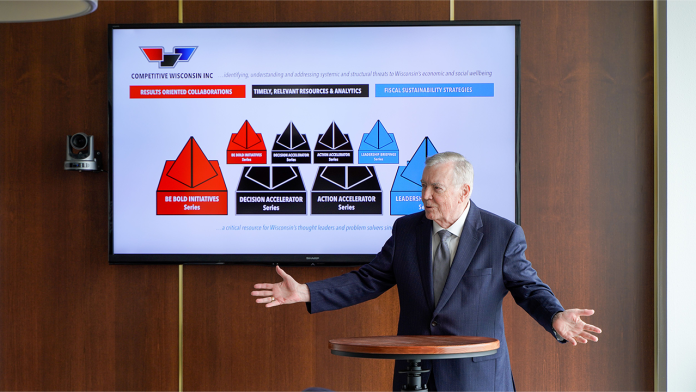
In an age where countless product influencers use a variety of content-creating methods to sway consumers, a small nonpartisan group of Wisconsinites is simply trying to give policymakers some direction.
Competitive Wisconsin Inc., which was founded nearly 45 years ago, remains focused on analyzing what’s needed in the Wisconsin economy, particularly industry strengths such as manufacturing, agriculture and healthcare.
The group is not an adviser to the governor and the Legislature in a specific area like the Wisconsin Technology Council. It doesn’t have the broader lens of a Wisconsin Policy Forum or the university setting of the Center for Research on the Wisconsin Economy.
But it does have a pulse on pocketbook issues.
A nonpartisan coalition of business leaders and institutional managers, Competitive Wisconsin was founded during a severe economic rough patch marked by the one-two punch of high inflation and double digit interest rates.
That was part of its motivation in the early 1980s, but even in this more prosperous time, there is plenty to worry about.
With its Leadership Briefing series on issues such as energy, healthcare and housing — the latter two on tap for this fall — CWI not only attempts to identify pain points but also opportunities to retain and create family supporting jobs.
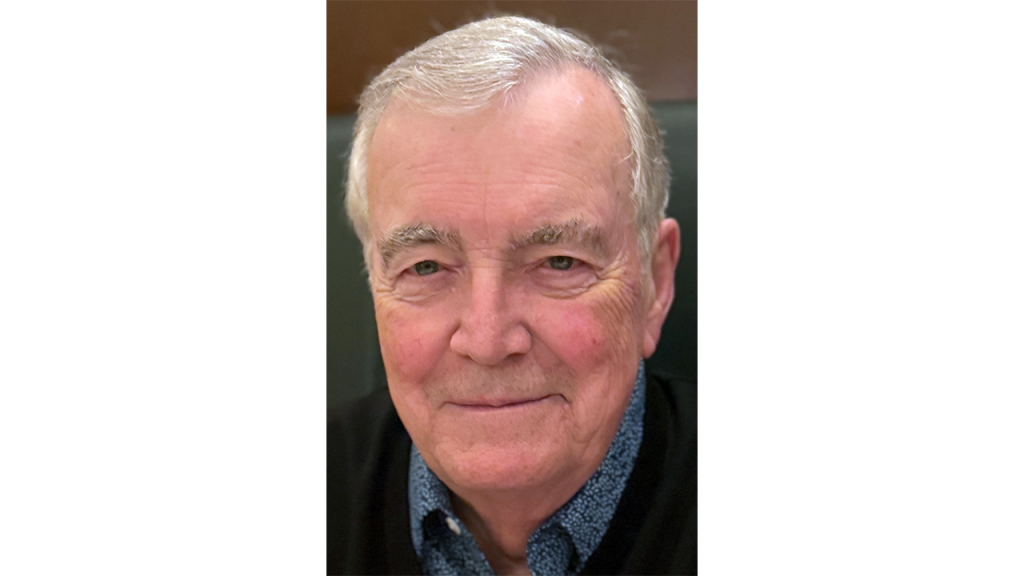
Conversations with frontline players are a big part of its research, according to Jim Wood, chair of Wood Communications Group and strategic counsel to Competitive Wisconsin.
“Sound economic policy comes from sound research,” he said.
Over the years, the intentionally lean organization has taken a collaborative, nonpartisan approach to its research and policy recommendations, and that’s by design, according to Wood.
Engaging with artificial intelligence also helps in the due diligence process, but its reach with advocates, executives and decision-makers also helps inform research and recommendations.
“We go out and sit down with local leaders, with experts in the field,” said Wood, who in 1982 ran for governor as a Democrat. “We sit down with people who have research, have done presentations, etcetera. So, our first crack at getting the job done is to make maximum use of a fairly extensive reach on all of these issues.”

Energizing the debate
CWI’s Leadership Briefing: Energy, released in February, praises the state’s energy stakeholders with diversifying generation to the point where Wisconsin ranks 12th nationally by U.S. News for power grid reliability, but the briefing cautions that this groundwork might not be a lasting victory.
The reason is that Wisconsin has reached another period of growing and evolving energy usage that will require the modernization and expansion of its power transmission lines.
The briefing said this will require a balanced approach, especially with the state’s emerging data center load.
While new power line proposals, such as the proposed 765-kilovolt BECI transmission line by Midcontinent Grid Solutions, are generating their share of controversy, the real hot-button issues of the day are the data center campuses that accommodate artificial intelligence applications.
An increasingly skeptical public — fearful of their effect on utility rates, water use, noise and other environmental issues — appears to have put a halt to further expansion beyond approved campuses in Mount Pleasant and Port Washington.
While Competitive Wisconsin’s briefing on energy calls for a balanced approach to energy generation, including hyperscale data centers, gubernatorial candidates David Crowley and Tom Tiffany are running away from them, and cities and counties are placing moratoriums on their development. AI and the data centers that serve them have become politically radioactive.
To make the controversial hyperscale AI campuses more palatable to the general public, CWI’s energy briefing said ordinary ratepayers must be protected from subsidizing large industrial power users by making those who build, own and use them incur the cost of developing the infrastructure that supports their energy-intensive operations.
Specifically, it recommends utilities recover those costs directly from the data center customers with special rate tariffs. That’s exactly what has happened in the months since the energy briefing was released, but public opposition has steadily grown.
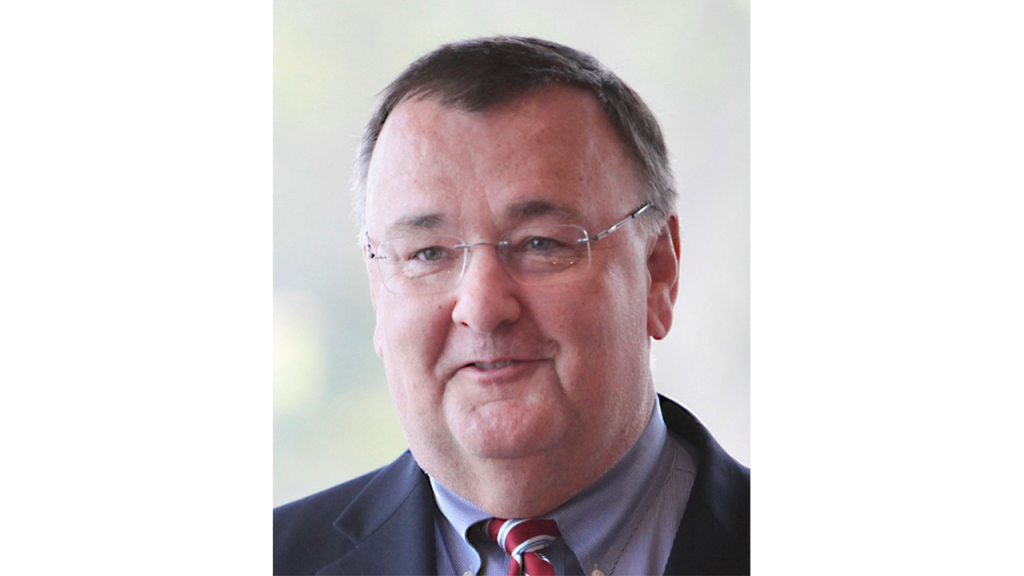
Bob Bartlett, a retired Alliant Energy executive and new CWI board member, said Marquette Law polling indicates that public opinion on this issue has changed fast.
Last year, the poll showed an even split in respondents who thought data centers were worth the cost, but by the time CWI’s briefing on energy was made public, opposition had risen to a 70-30 split.
“As late as last November, there was much more acceptance of it,” said Bartlett, who places some of the blame on large data center operators for not laying the necessary groundwork beforehand.
Some stakeholders have responded, at least in part, to the public’s unmistakable message. Bartlett said the Wisconsin Public Service Commission had done a good job creating guardrails around utility rates, and Microsoft, which continues to expand the Mount Pleasant campus, was among the first to employ a closed loop system to conserve water.
“It’s important to have data centers going forward,” he said. “It’s not like if we stop them here, AI will stop.”
Political pulse
In the current rancorous political environment, can a nonpartisan approach to issue advocacy really work?
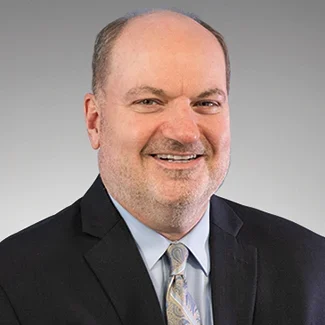
Michael Theo, president of Theo Consulting, former president and CEO of the Wisconsin Realtors Association and current WCI board member, said there are advantages to being nonpartisan.
“It might make the decision-making more difficult in the political arena, but in some respects, it creates a space where the two parties can come together,” he said. “When we create something that is nonpartisan, which is what we do in the reports and in our thinking, that space may be a safe space for the two extremes to say, ‘I can set aside my extreme view because there is a safe space which is policy, not political.’”
Perhaps the best example of a CWI policy recommendation that was enacted into law was the formation of the Wisconsin Economic Development Corp., but Theo said influencing the debate is the organization’s real goal.
“It’s hard to just quantify and say how much of that research yielded actual policy changes,” Theo said. “I think it sets the debate in many ways. It kind of lays the table out of those critical areas, but the depth of the research dictates the quality of the debate.”
Wood said every household has three major cost items that keep rising — housing, healthcare and energy.
“Those three issues are swirling around and are a highly contested, chaotic part of an election,” he said. “There is pressure on people who are running for office to try to respond to that, and the danger is that in responding to it, you don’t do the research.”
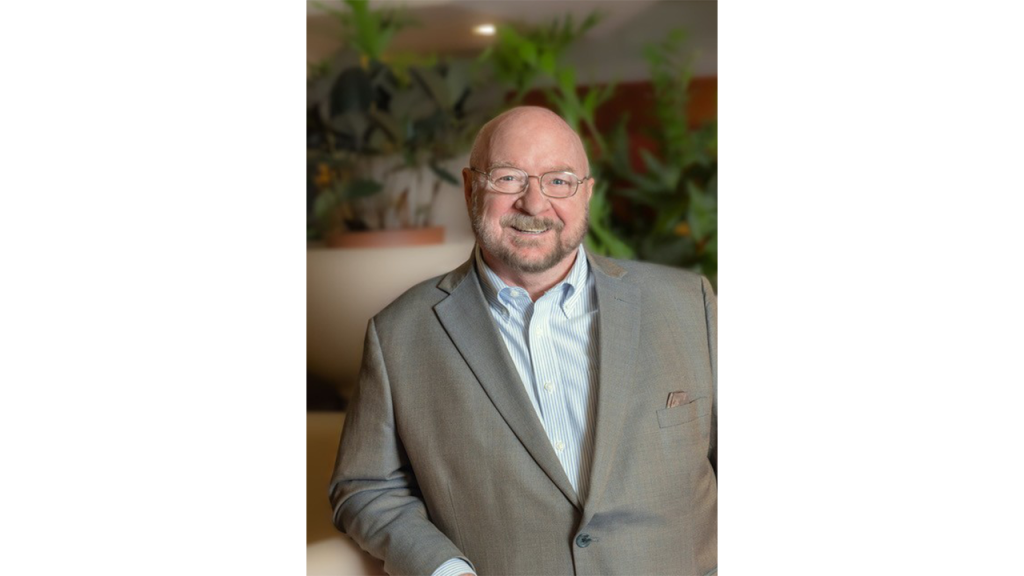
Mark O’Connell, president and CEO of the Wisconsin Counties Association and co-chair of CWI, said part of the thought process is envisioning how Wisconsin is positioned for success.
“Not necessarily for today, for this week, this month or this two-year cycle, but for the next generation,” he said. “The problems that we are generally tackling, they may be today’s problems, but they may not be able to be solved today.
“It may take five, 10 or 20 years to address them.”