


Business snapshot: Graceful Management Systems
- Industry: Business software
- Founded: 2021
- Chief executive: Tommy Stanek
- Headquarters: Madison, Wisconsin
- Employees: Four in Madison; 20 in Chennai, India
- Projected 2026 revenue: $930,000
- Website: gracefulmanagement.com
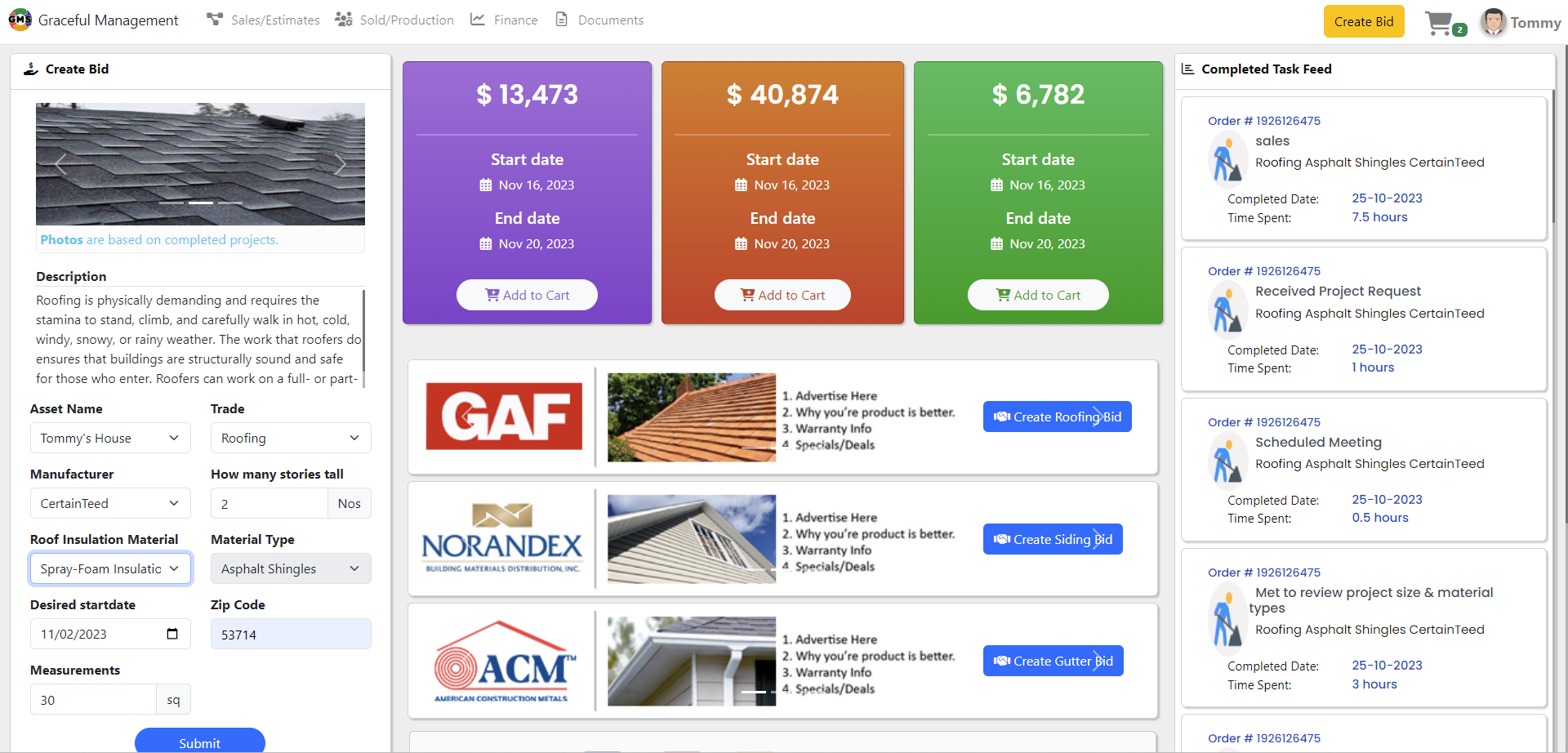
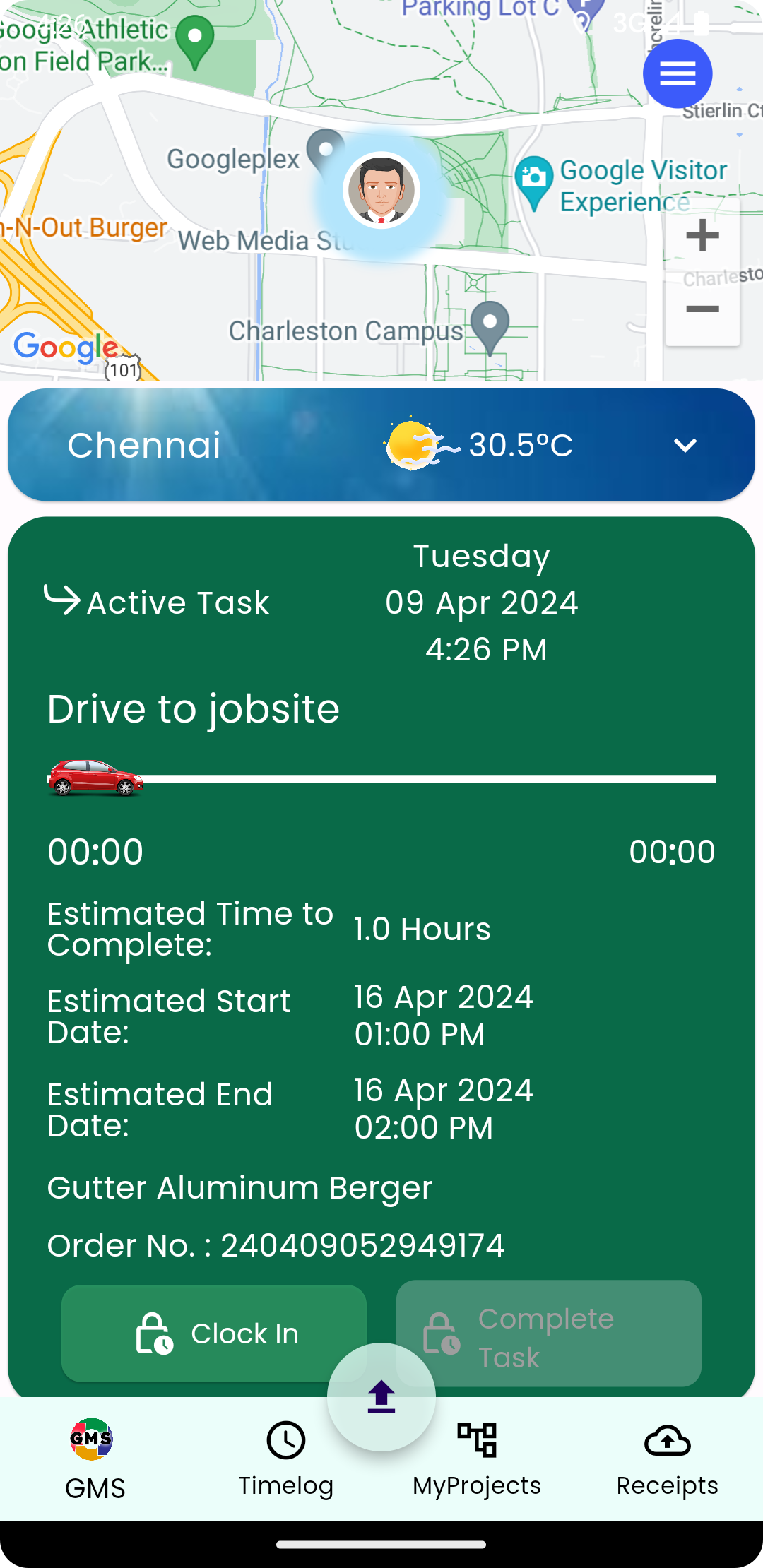
A new software product from Madison’s Graceful Management Systems, which uses AI to improve project management and reduce costs in the construction industry, is on the cusp of a significant milestone.
The beta testing period for GMS’ technology is wrapping up and the commercial phase could begin later this year, according to founder and CEO Tommy Stanek.
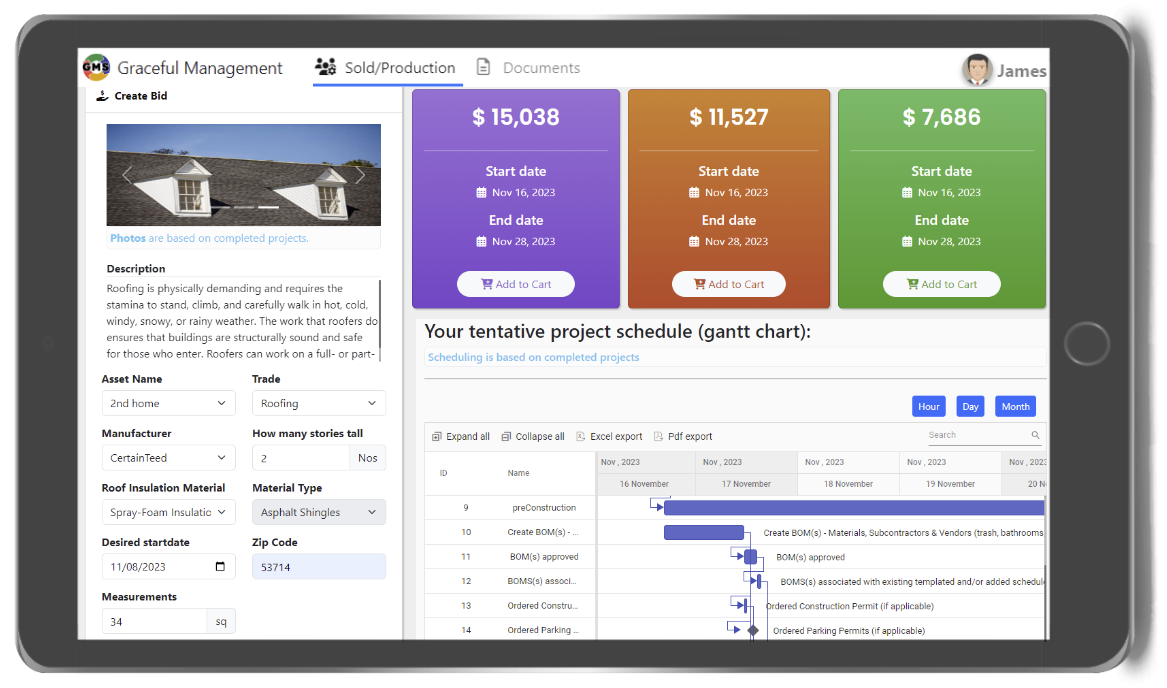
With its AI-optimized project costs, schedules and estimates, Stanek and the contractors who have used the GMS beta release said the technology does more than store their data in the cloud — it autonomously makes cost-saving adjustments.
Stanek, who took home the Rising Star award in technology at In Business Madison’s inaugural Executive Excellence: Finance & Technology Awards program, has said the software has the potential to reduce labor and material costs by up to 20% in the construction industry, which as recently as 2020 experienced $1.8 trillion in losses due to data errors, according to a study by Autodesk, a multinational software corporation, and FMI Consulting.
While GMS can’t test every plausible scenario before the technology goes to market, Stanek said once he’s seen a sufficient number of what he called “actionable insights” — adjustments recommended by the technology — he will open it up to the market.
“We anticipate that taking place in Q4 of this year or, worst case scenario, Q1 of next year,” he said.
Graceful ambition
For a company still enroute to the commercial market, things are moving fast. Stanek’s partner and GMS co-founder and chief technology officer Victor Samveda is originally from Chennai, India, and his professional connections there came into play when the company began exploring development partnerships.
While its headquarters are located in StartingBlock Madison, where it hopes to move to one of the larger offices at some point, GMS has established an overseas office in Chennai with more than 20 full-time developers.
Stanek said that connection also led to a fruitful partnership with Karunya Institute of Technology and Sciences in Coimbatore, Tamil Nadu, India, where it also has an office. The institute, which has its own departments that specialize in artificial intelligence and machine learning, is known for its collaboration with corporate giants such as Microsoft, IBM, Amazon and Nvidia.
“They actually are changing the course curriculum around developing our technology,” Stanek said. “The professors are actually guiding this development, so they take the time to understand what we’re building, they build the course curriculum around it, and students have to actually develop the technology that we’re building and they’re getting graded on that through this process.”
Five of the students have signed three-year contracts to work for GMS in Chennai, and they are helping to develop the technology that will be licensed and sold as software-as-a-service.
While much of its labor is being supplied by foreign students, GMS’ four domestic employees include two of its active investors. Most of the seed funding GMS has raised thus far come from Madison area family and friends, and it secured $100,000 from the Wisconsin Economic Development Corp. through the WEDC’s technology development loan program.
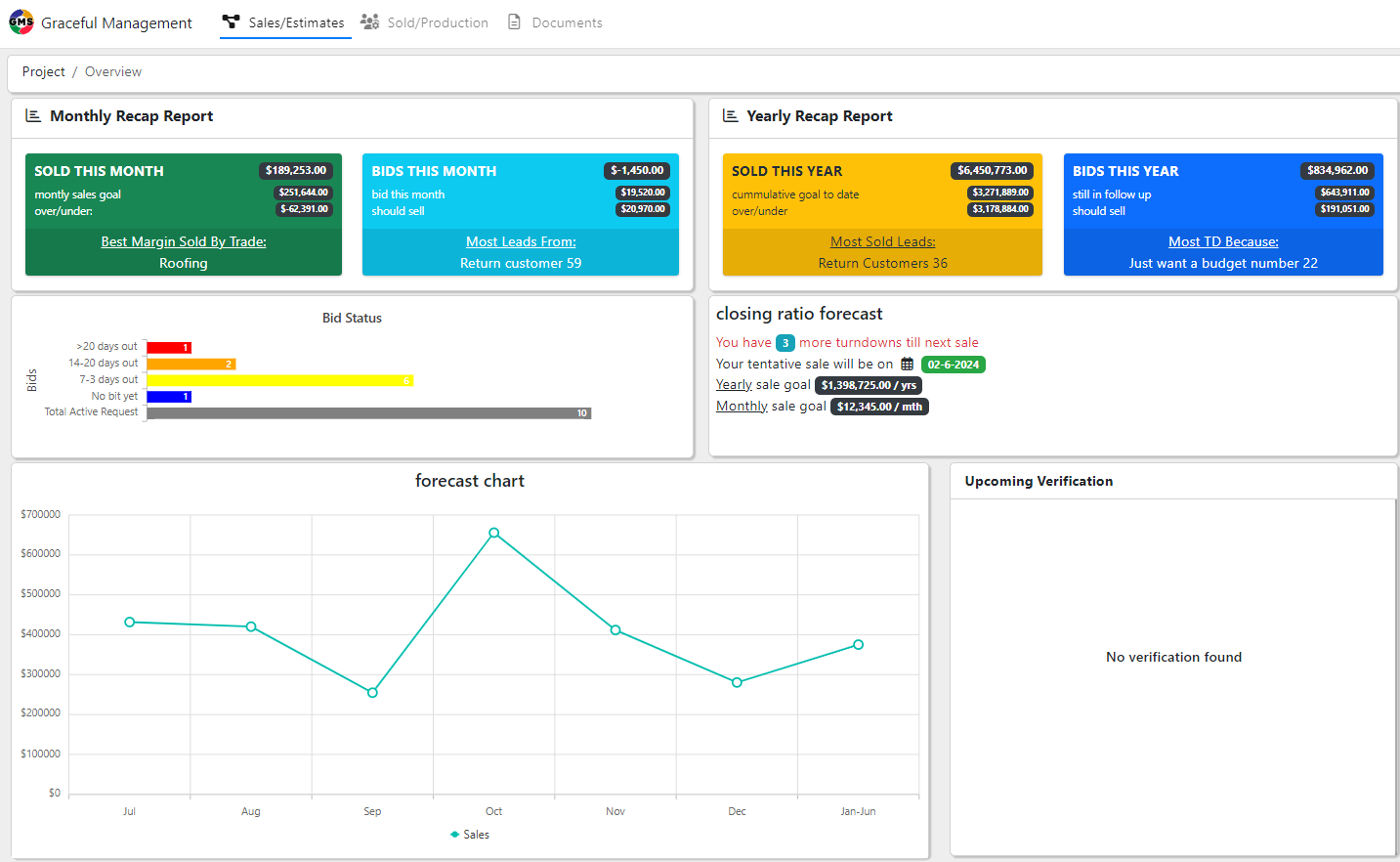
GMS forecasts $930,000 in revenue with about 120 subscribers by the end of 2026, with the goal of securing Series A financing in the 2027-2028 time frame. By 2031, additional growth would be financed from cash flow with a projected 8,030 subscribers, annual revenue exceeding $56.7 million, and net income of nearly $14.5 million.
The beta testing phase has revealed the extent of the construction industry’s interest in the GMS technology.
“Over 50 companies applied to use our beta release,” Stanek said. “We have selected three and we likely won’t be taking on any other beta users because we’re paying for them. We’re not charging them and we have enough feedback from our existing users to get the product to a point where we can start charging subscriptions, which in the best case scenario we plan to do in Q4 of this year.”
The promise of AI
For Stanek, it’s the integration of AI, which represents “a totally different technology versus the traditional types of developments than everybody’s accustomed to,” that holds the most promise.
He said the construction industry hasn’t had the tools to navigate the cost, material and supply chain challenges it’s facing, and with AI ushering in what he called the fourth industrial revolution, “it will allow industries like construction to capture billions of data points simultaneously and tell you the most efficient way to move forward.”
Stanek used phone numbers to illustrate the point. The 10 digits of a phone number can be arranged in many variations — more than ten billion — so every one of the 330 million U.S. citizens can have a unique phone number, both for landline and mobile phones.
“If you can take 10 digits and rearrange them in so many different combinations that everybody in the United States doesn’t have the exact same phone number, what does it imply for a construction project that only has 10 steps … could (you) do that project in a different order?” he asked.
“What artificial intelligence will allow us to do is take all of these billions of options and actually run these scenarios through from start to finish and calculate exactly how much it’s going to cost and how long it’s going to take in a nanosecond,” Stanek said, “and tell us that of 10 billion different options, this one is the most efficient way to move forward.”
What many people don’t realize is the construction industry is navigating variables that are continuously changing, he said. Some contractors might finish a piece of the project early, and another contractor might finish a piece of the project late. Sometimes materials don’t show up on time and sometimes people don’t show up on time.
“Every time something changes, you have to recalculate those billions of options to determine the most efficient way to move forward,” Stanek said, “and that’s if we’re only navigating one project at a time. Contractors on average are navigating more than 30 projects at a time, and one impact to one project doesn’t just impact that one project, it impacts projects that are being produced simultaneously or scheduled next.”
Stanek said it is not humanly possible for a contractor, when they get a change order or something happens within the project, to determine what is the most efficient way to move forward in the amount of time they have to make a decision.
Artificial intelligence can provide that information instantaneously, accurately and give people what they think is impossible — accurate pricing for projects — because they can learn from the history of completed projects, all of them simultaneously, in a nanosecond.
“We’re also going to be able to run through every scenario moving forward in the most efficient way from a time and a cost perspective to tell people ‘this is exactly what we have to do now,’” he said. “Here’s the impact of it, whether it’s before you’re making a decision or even after a decision has already been made to minimize any additional time or costs that need to be endured.”
Over time, as contractors continue to go through these scenarios, Stanek said costly mistakes will be less frequent because “every time we learn that we weren’t accurate, that this is the outcome of that decision — that won’t be an option the next time around. We will take that into consideration to make sure that we’re accurately estimating the costs and the time utilizing that data or that information.”
Best practices make perfect
One of GMS’s beta users, Wisconsin Greenhouse Company, is a quickly growing young company that specializes in the design, sale and installation of custom greenhouses, conservatories and garden spaces. As the company has grown its business and expanded its staff to 13 employees, Troy Curtin, its director of operations, said GMS has enabled it to establish and refine its processes.
Curtin said processes for everything — from tracking leads to ordering to fulfillment to completion and post construction —has been revamped to the point where the company now has a trainable process and standard operating procedures that are replicable, and there is constant refinement. When putting these steps through GMS, he realized that certain steps are unnecessary “if this or that happens beforehand.”
“I’m very excited about it,” Curtin said. “It’s been really interesting just to see it. When you’re working with it, you’re literally training it, so it’s an interesting process and you can see the changes that we’ve suggested, that are specific to our business, get implemented. It’s exciting to see those things get tailored to our needs as well.”
The more Curtin uses the technology, the more he expects it to pay dividends when it comes to making best practices even better.
“We’ve really seen how custom each project is,” he said. “It’s going to take time to have some historical data just because so many projects are just a bit different, but it’s almost like there’s been some business consulting built into this whole process of working with GMS that has really helped us just get in a good position to scale our company for growth and training.”
Given the potential benefits of GMS alone — not only in construction, but in other industries — Stanek said businesses should embrace AI technology while trying to minimize whatever harm it could cause. He said the intimidating aspect of AI can only be countered by leveraging the technology.
“If we’re worried about what it’s going to do from a harmful perspective, we need to take a look at how we can counter that and leverage it so that the value it brings exceeds the harm that it’s able to bring,” he said. “Every choice that we make has a risk involved, and if we dwell on the risk, that’s ultimately where we’re going to end up.
“But if we focus on the value and the benefits that it brings, we can cultivate that to exceed the detriment,” he said. “That’s where we’re all going to win, and so it’s super important to not fight this, but embrace it, capitalize on it and create opportunities.”

