
Brad James and Forrest Voedisch took different approaches to starting their Madison businesses, but both opted to go it alone.
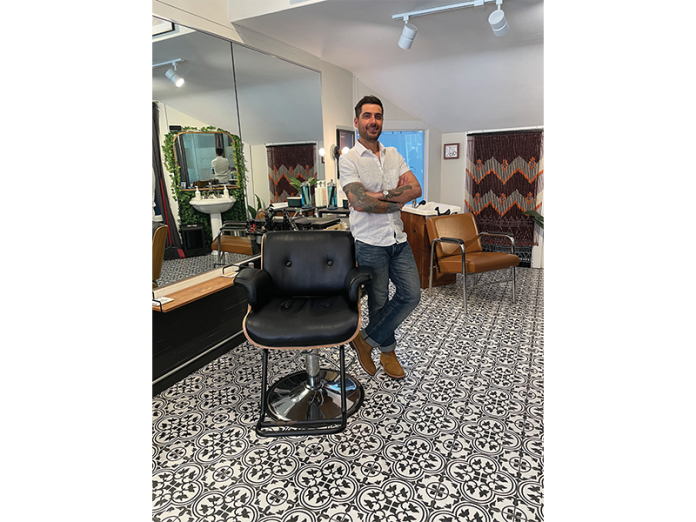
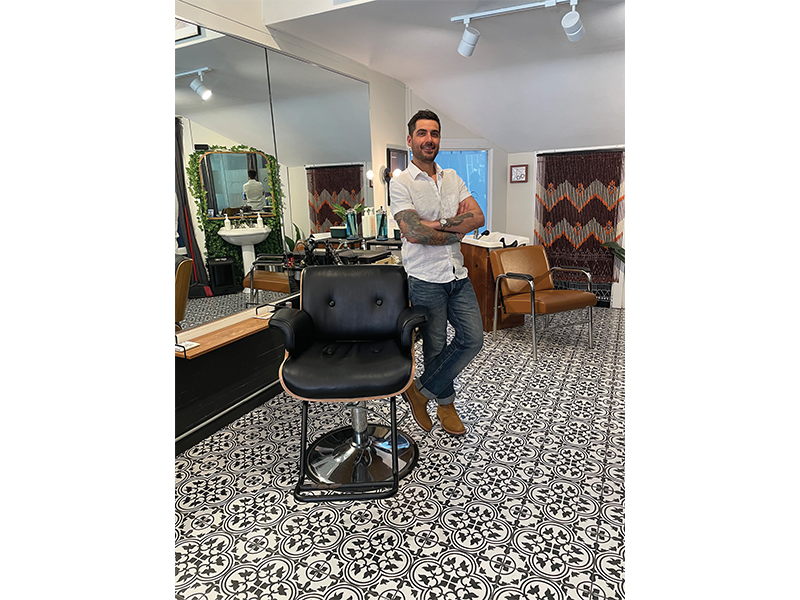
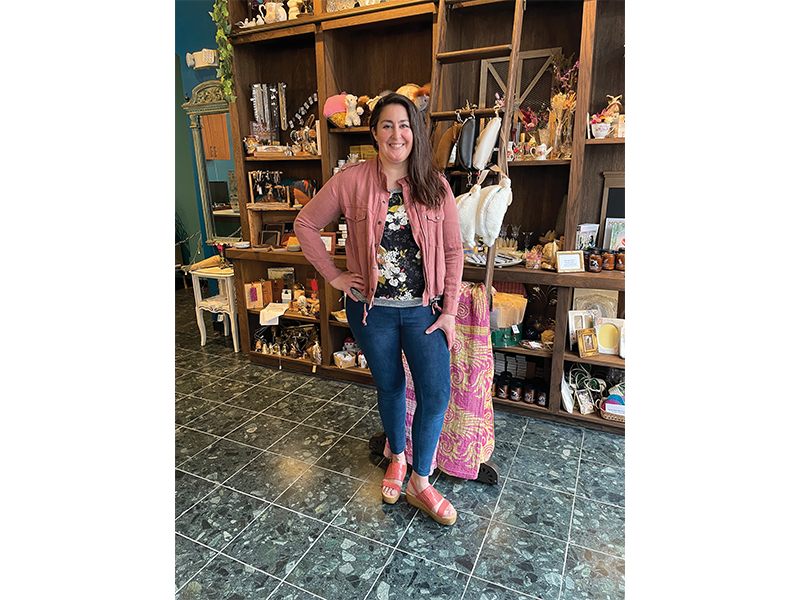
James owns Corpus, a tiny but mighty King Street hair salon that has enjoyed steady customer demand from word-of-mouth advertising. Voedisch is the founder of Metric Forrest Studio, a State Street retailer of handmade jewelry and the culmination of two previous business ventures.
Both James and Voedisch are local evidence of a growing national trend — the rise of the solopreneur, or solo founder. Intuit QuickBooks called 2024 “the year of the solopreneur,” finding that solo founder operations are on the rise in the U.S. In fact, 56% of current solopreneurs started their business post-2020.
While Intuit QuickBooks defines solopreneur as single-founder businesses with no employees, surveys of those businesses found that they don’t always stay that way. Six in 10 of over 2,000 solopreneurs polled by the company in 2024 planned to hire help that year.
While solopreneurship is not the right fit for every business and comes with a unique set of challenges, the prevalence of these operations nationally and closer to home suggests that flying solo has its perks.
Trends around town
At the Black Business Hub, solopreneurs represent a clear majority, particularly in new startups and “gig businesses,” which tend to focus on short-term contracts or freelance work, according to Ruben Anthony, president and CEO of the Urban League of Greater Madison.
“Some founders are interested in holding on to their 9-to-5 jobs but want to make extra income,” he said. “These individuals are cautiously launching their businesses. Most of them are opting to participate in the (Hub’s) pop-up markets.”
“Many of our businesses are ‘Main Street’ businesses: a beauty school, a barbershop, a coffee shop, professional services and much more.”
Susie Younkle, program director for MERLIN Mentors, a local mentorship service for those interested in starting a business, echoed Anthony’s experience, but with a twist. She said not all one-person operations stay that way — nor, indeed, want to.
“Our primary focus is on mentoring founders who are in the early stages of their ventures,” she said. “As a result, we tend to work with many one- or two-person companies. … Most of our mentees have potentially scalable business concepts, so while they may be solo when we first engage with them, their intent is not to stay that way for long.”
She also noted that solopreneurship does not necessarily mean building a business completely on one’s own.
“Far from it!” she said. “While a solopreneur may be the sole owner of her business, she likely works closely with a network of trusted partners, including multiple contractors plus mentors and fellow solopreneurs.”
Since joining MERLIN a decade ago, she’s noticed startups of all sizes relying on “more fractional talent, such as outsourced accounting services, digital marketing, virtual assistants, HR consultants and providers of third-party logistics. These contractors play a vital role in a founder’s team, providing specialized expertise.”
Younkle said single-founder-dominated industries tend to include service industries like graphic design, digital marketing, coaching and consulting.
The Wisconsin Women’s Business Initiative Corp., an economic development agency that provides resources for aspiring entrepreneurs, pointed to recent jumps in solopreneurship among its members.
Across Wisconsin, the agency served 3,208 solo founders from 2020-24, representing 18% of its total membership. During those same years, the corresponding numbers for Dane County were 443, or 3%, and they were 304, or 2%, for the city of Madison. Last year alone, WWBIC worked with 870 solopreneurs statewide, serving 115 solo founders in Dane County and 80 in Madison.
“The pipeline is strong,” said Christina Knudsen, WWBIC’s vice president of development & communications.
Dale Reeves, a small business consultant for WWBIC’s Madison region, said among his typical clientele, solopreneurship is prevalent among businesses like food trucks, salons and retail stores.
“There tends to be a couple types of business owners, especially startups: those that go after their passion — something they really love to do — and then there’s another side of entrepreneurs that are problem solvers.”
“When you see those people that have that passion, they tend to be individuals or (couples) because there’s an ownership there. They enjoy art, so they open up an art store … or something that is directly involved with themselves and not a group of people.”
More founders for complex problems
The problem-solving side of the equation, conversely, is where Reeves usually sees fewer solo founders, and other area experts tend to agree. Industries like technology and biotech remain heavily populated by multi-founder operations, largely stemming from the technical complexity of their products or services.
Greg Keenan, senior director of the Wisconsin Alumni Research Foundation Accelerator and WARF Ventures, said those in the venture capital sphere rarely, if ever, deal with solopreneurs.
“We’re investing in pharmaceuticals, medical devices, fusion, quantum computing, materials, ag tech — very highly technical technologies,” he said. “I don’t think we have a single solo founder in the over 30 companies in our portfolio.”
Many companies WARF deals with, particularly spin-outs from the University of Wisconsin-Madison, are multi-founder operations that rely on professors, students and sometimes entrepreneurs with diverse backgrounds and skill sets. One example is Realta Fusion.
“We actually helped find a co-founder, Kieran Furlong, who has experience in startups and venture capital and building businesses, and paired him with Cary Forest and the rest of the physics professors that were starting that company,” Keenan said. “There was no way Kieran was going to learn Ph.D.-level physics around fusion, and our physicists don’t have 20-plus years of business experience building companies, so putting them together was fantastic. They went out and raised their first venture round with Khosla Ventures, which was a remarkable thing to happen right out of the university.”
Keenan said around 17% of the companies in fintech platform and software company Carta’s database — a tool used by WARF and others working in venture capital — had solo founders in 2015, and that number more than doubled by 2024. However, only 17% of startup companies that received funding had solo founders, and he said companies with multiple founders tend to be able to scale faster.
So why is solopreneurship still enjoying increasing popularity?
“Part of the growth is in the segment of the market where people are able to more efficiently start their companies,” Keenan said. “With all the tools we have out here today — AI, the ability to use AI to code — there’s just a lot more capabilities.”
“More importantly, some of these companies are bootstrapping. They’re not going to venture capital. They’re a solo founder, they’re able to build their businesses without venture capital, so I think the segment of the market that is driving the solo founders is really this bootstrap (segment). There’s enough resources to get revenue and profitability faster.”
While there are other kinds of capital available for solopreneurs who can’t or don’t intend to self-fund, the Urban League’s Anthony stresses that “their personal credit and resources (establish) the basis for their ability to access it.”
“With multiple founders there is the likelihood that the business will have greater access to capital,” he said. “The more owners, the greater the possibility of leveraging more resources.”
Organizations like WWBIC are working to create opportunities where they might not otherwise be available.
“WWBIC does an awesome job providing funding to get these businesses started or to grow or expand businesses,” Reeves said. “Typically, those (seeking venture capital) are scalable, so that’s not really an area that we deal with. It’s not the lane that we’re in. We’re in the lane where people get started, and that tends to be the solopreneur.”
Local solo success
James started Madison hair salon Corpus in 2019 with 12 years of experience working for another salon and mentoring new stylists. When that business closed, he said he knew it was time to embark on something new.
“I wanted to go back to my roots of hairdressing — just me working one-on-one with a client — and do something that was mine, my own, even if it was a very micro-level of a business.”
Starting Corpus armed with his own savings was no small task. The perfect 230-square-foot space downtown, in an old atrium nestled between Ancora Cafe and the Settle Down Tavern, needed a lot of work to become customer-ready, and James was supervising renovations while traveling through Europe.
Just six months after a successful opening, the COVID-19 pandemic shuttered the business for four months.
“Because it is just me, it’s a hand-to-mouth business,” said James. “So if I’m not working, I’m not making money, and it’s a challenge. … Health insurance, vacation, things like that, you don’t get. You pay the cost of those on your own.”
Voedisch said her business, now a fixture on State Street, dealt with similarly rocky beginnings. Metric Forrest Studio effectively combined her two earlier businesses, the first of which saw a 10-year run.
“I designed and produced, in the U.S., small art kits for families and kids. … I sold those wholesale around the country, and then I unfortunately had to close that business. I ended up about three years later purchasing a jewelry business that had been in Madison for 20 years (Blue Hill by Hand).
“I bought it six months before COVID hit, and I had to let everyone go because I didn’t know what was going to happen.”
The pandemic cost Voedisch roughly 25% of her accounts, in addition to those employees, but because she had a broad enough customer base — selling her wares in grocery stores, which remained more stable, as well as the gift shops of art museums and greenhouses — she was still able to sell her inventory and keep the business afloat.
There was also the matter of what she called “cleaning up” the purchased business to maximize the efficiency of its operations, which she said can be a daunting undertaking on one’s own.
Ultimately, for James and Voedisch, the pros of solopreneurship outweighed the cons, and both Corpus and Metric Forrest Studio have seen steady business. James said the biggest challenge is deciding what’s next and when.
“I have a toddler, a 3-and-a-half-year old daughter at home that I’m raising, and sometimes I draw similarities in how I want to raise this business,” he said. “These are like the formative years of a business, so I’d rather focus on direction than speed.”
Voedisch opened her brick-and-mortar space last June, which she called a “huge milestone,” and said that while it can be scary to make serious business decisions as a solo founder, she’s felt supported along the way.
“WWBIC as a partner has been incredible because, since I don’t have a business partner, they were there for me,” she said, adding, “For me, (working for myself) is part of my blood.”
Despite solopreneurship’s obstacles, its rewards are evident in the local founders’ experiences. Their advice to anyone considering taking the plunge?
“Research, research, research,” said Voedisch. “And take your time. The details matter.”
James added, “Focus more on what your talent is, rather than what other people are saying is going to be the most successful or look the most glamorous. At the end of the day, it’s your career.”

