
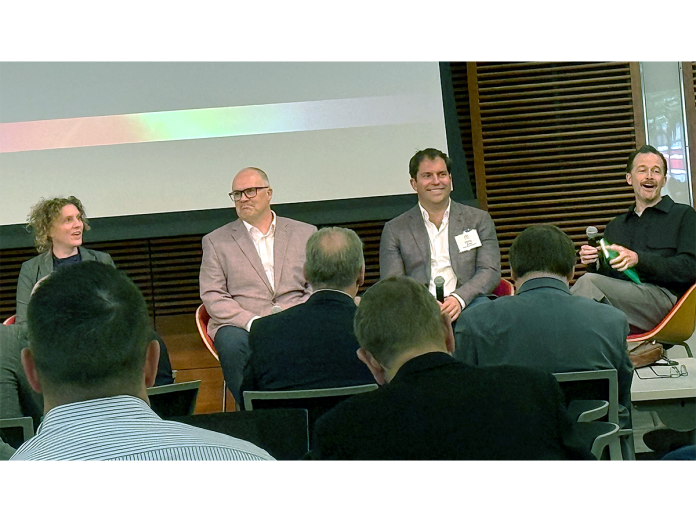

At Tuesday’s Great Lakes Fusion Energy Summit, two keynote discussions explored the importance of building a fusion supply chain in the Midwest and the capacity of fusion to help meet global energy demand — now and in the future.
The summit was held at the Discovery Building on the University of Wisconsin-Madison campus and organized by the 5 Lakes Institute in partnership with the UW-Madison College of Engineering and other members of the fusion energy community.
Refueling the Rust Belt
The summit’s first keynote panel focused on the opportunities and challenges of creating a strong fusion supply chain in the Great Lakes Region.
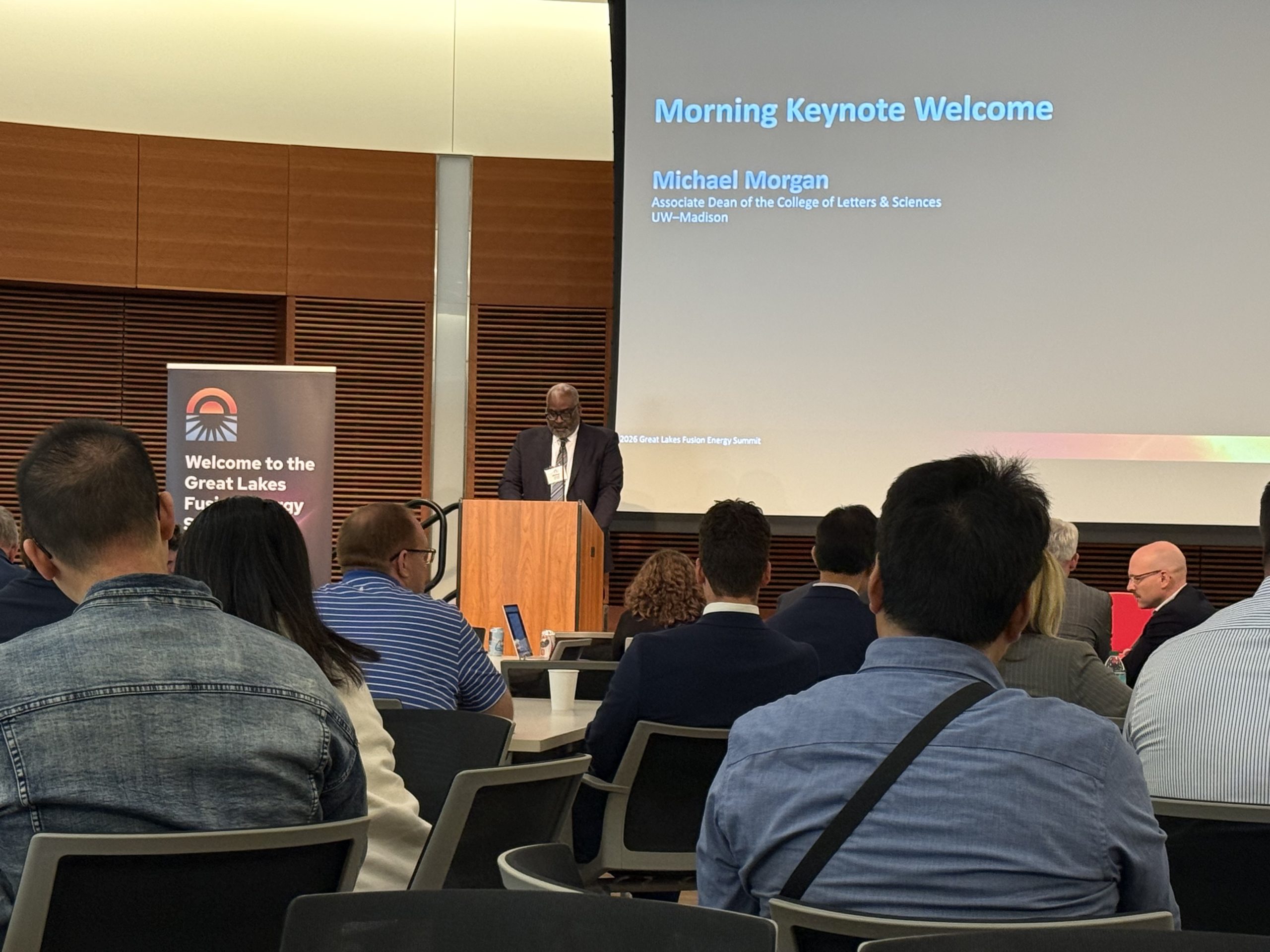
In his panel welcome, Michael Morgan, UW-Madison’s associate dean of the College of Letters and Sciences, said one of the obstacles is companies’ reluctance to commit to an industry that is still in its infancy.
“Fusion developers need suppliers to scale now, but they’re hesitant without the guarantee of long-term demand,” he said.
Moderated by journalist Tim De Chant of online technology news publisher TechCrunch, the panel included Steffi Diem, an assistant professor at UW-Madison and the principal investigator of the university’s Pegasus-III Experiment; Kieran Furlong, co-founder and CEO of Realta Fusion in Madison and Chris Good, founding partner of Induction Partners, which invests in companies solving grid infrastructure constraints.
De Chant asked Furlong about Realta Fusion’s decision to purchase magnets for its WHAM experiment from Commonwealth Fusion Systems, a competitor in Massachusetts.
“I think (it’s) a pretty savvy move,” De Chant said. “It means you don’t have to spend all that money that they did building a magnet facility, but it also means that it maybe limits some of the industrial reach here, and … suggests that maybe there are only so many things the fusion industry needs at this stage at least.”
Furlong said partnerships like these, even with potential competitors, are advantageous to research and businesses like his in the long run, helping them advance more quickly.
“It’s not just the cost of the magnets — it’s the headaches and the pain of figuring out how to make these extreme pieces of machinery work,” he said. “When it comes to fusion, it’s really an integration of a large number of other difficult things to do the one big difficult thing, which is to make a fusion power plant.”
He said currently, the company’s magnets and other supplies come from not only Massachusetts but as far away as Japan, but Realta is “actively encouraging” its suppliers to consider Wisconsin as a destination given its manufacturing capabilities.
“(The supply chain) is pretty narrow right now,” he said. “Fusion’s probably the biggest buyer of high-temperature, superconducting material at the moment … so I think it’s in the whole industry’s interest to see that supply chain broaden (with) more suppliers and more buyers.”
Diem said Wisconsin’s manufacturing industry is what has made building devices like WHAM or Pegasus III possible, but local companies are not yet equipped to meet the demands of the coming fusion power plants.
“Some of it is the capacity that they have right now,” she said. “They are really skilled at what they do, and I think (we should be) investing in them to allow them to scale up … because they really have the skills. We have a lot of exotic materials that you need to weld, you need to manufacture.”
Good said the fusion space is a challenging area to draw capital because investors have a hard time anticipating the return. In the meantime, some, like him, have turned their attention to the fusion supply chain.
“The reason for that is although there are maybe only a small handful of well-capitalized fusion companies globally, there are a lot of technologies that are spinning out from fusion that are incredibly interesting and will have a huge amount of application outside of fusion. And that for me is a much more fertile bit of land to focus on.”
He said trying to build up areas such as superconducting manufacturing is pivotal to remain globally competitive, and argued that scaling up quickly will keep Wisconsin and the U.S. from “letting perfection get in the way of good.”
“China is ramping up rapidly,” he said. “They’re investing a quarter of a billion dollars right now in the manufacturing of HTS (high-temperature superconducting magnets). Their target is to bring down the cost of HTS way below anything that the western world can do, in an effort to prevent anyone in the west actually manufacturing it. And again, there will be a grip on another incredibly vital material or product.”
During the discussion, Furlong also proposed looking at data centers as “anchor tenants” of fusion power plants, which would help reduce energy costs for ratepayers and municipalities.
Panelists also discussed the need to build up a diverse fusion workforce beyond science and engineering, and Diem said state investment in fusion can help spur federal funding in its universities and companies.
Curbing tomorrow’s energy crisis
Tuesday’s second panel discussion centered on nuclear fusion’s capacity to help satisfy the growing global energy demand.
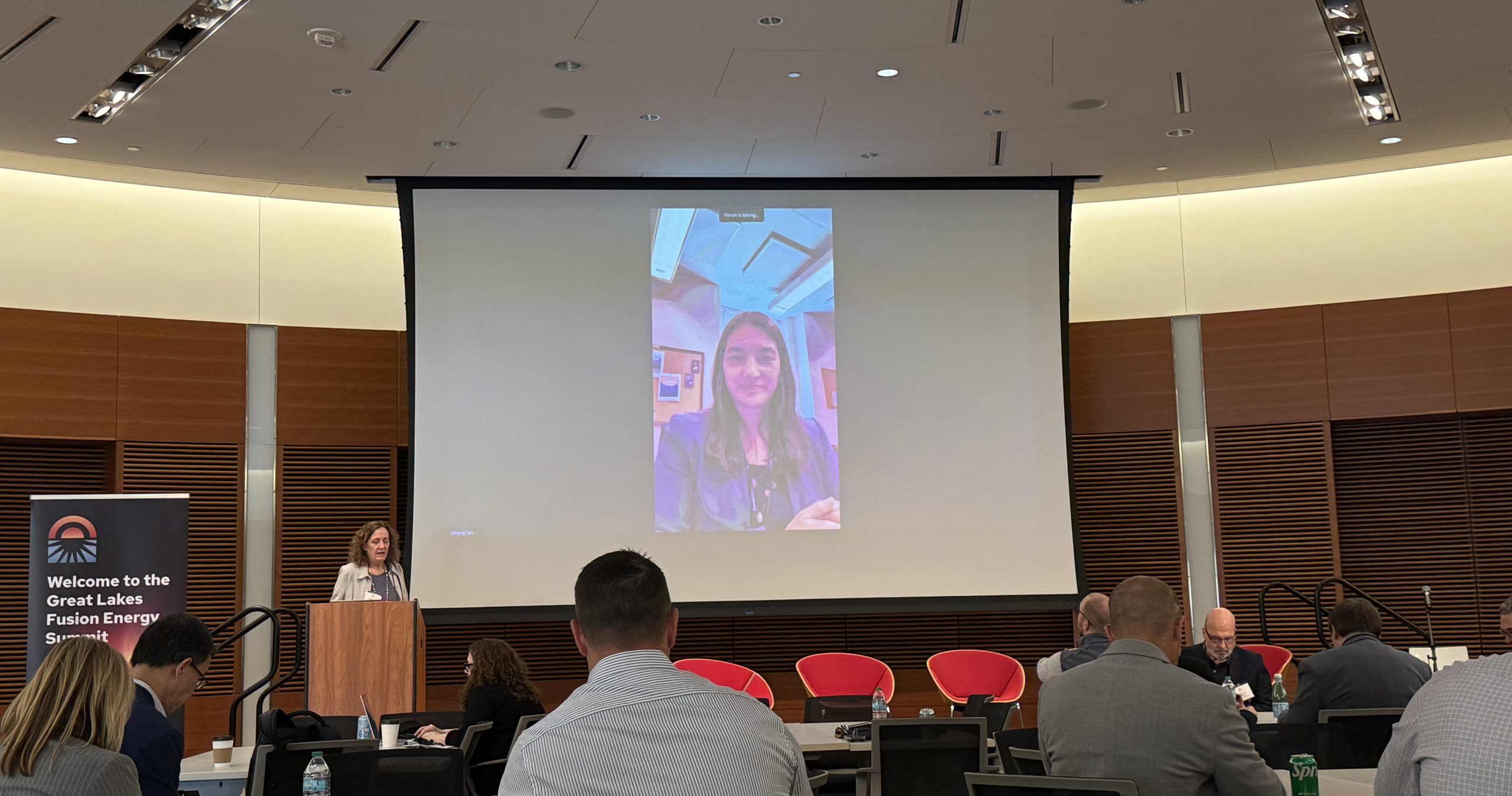
In a panel welcome, Jennifer Arrigo, a scientist at the U.S. Department of Energy, tuned in virtually to share the vision for the DOE’s new office of fusion, which was created in November.
She said the office will help execute the foundational science, enabling technology and facilities to close the gaps to fusion commercialization.
“It’s a really exciting time to be a part of fusion energy, and the work that’s happening in universities, industry, national labs and regions and communities like yours,” she said. “Our role at DOE is to support and accelerate that.”
Last October, the DOE released its Fusion Science & Technology Roadmap, which outlines its comprehensive national strategy to ramp up the development and commercialization of fusion energy over the next decade.
Arrigo said an expanded second part of the roadmap will be released in the next few weeks.
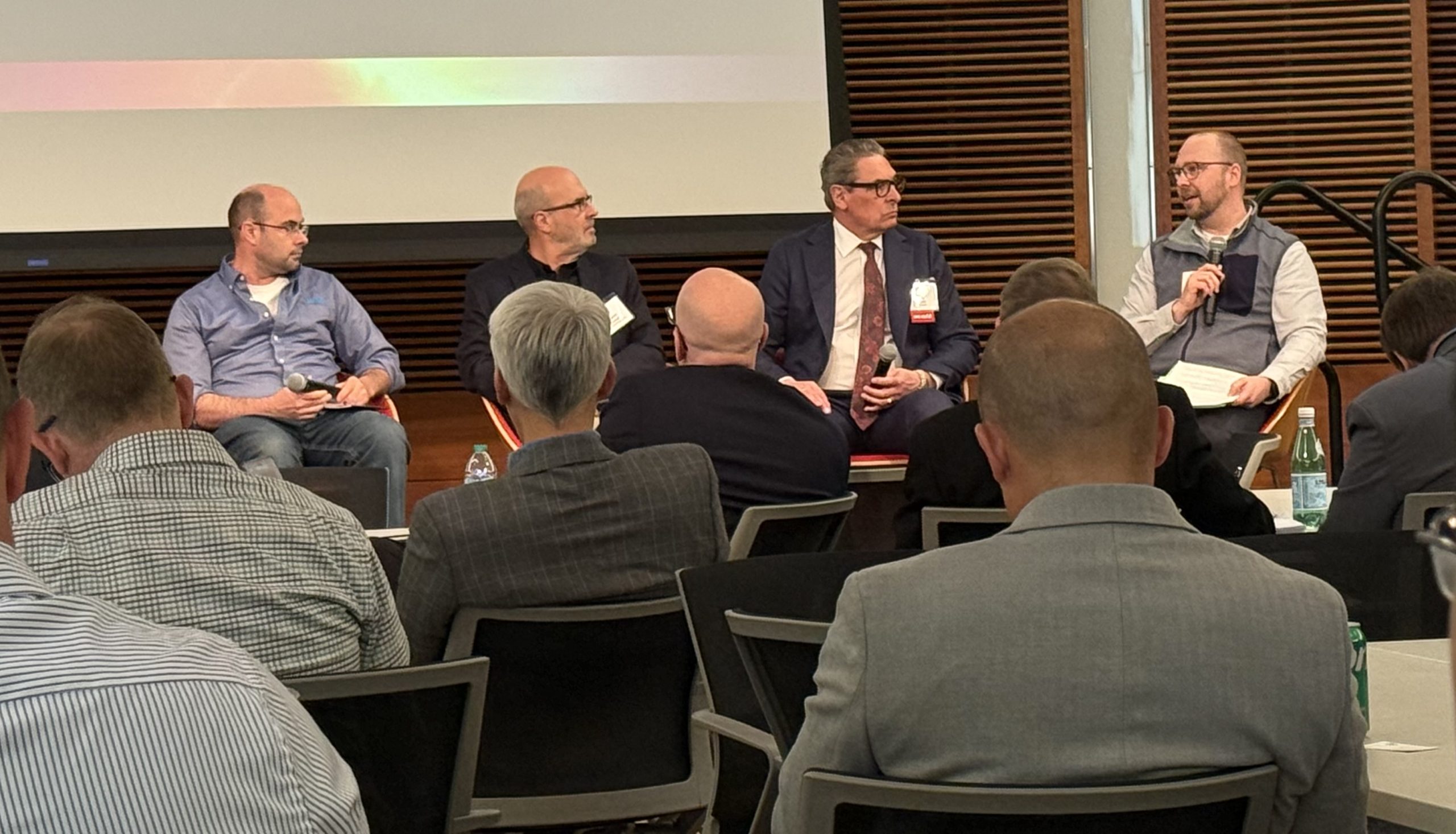
The panel, “How Nuclear Will Help Satisfy Growing Energy Demand,” was moderated by Kyle Crum, president of precision manufacturing company Infinity EDM, and featured Mark Chalmers, president and CEO of Denver-based Energy Fuels Resources Corp.; Steve Nieland, director of energy for Faith Technologies and Ross Radel, chief technology officer at Shine Technologies.
Nieland highlighted the surge in demand for energy in the U.S. driven by data centers.
“(In) the first wave, as we start to look at this wave of data center builds, we’re talking about doubling the current demand,” said Nieland. “Data centers right now take about 4-5% of our overall total demand in the U.S. By 2030, that on the conservative side … is about 9%,” while some estimates place it as high as 19-20%.
“So it’s a really significant amount. And the other problem, on the flip side of that, is it’s not just about generation. The DOE estimates that our electrical infrastructure, the delivering system, needs to double in capacity over the next 25 years to be able to meet any of that demand reliably.”
Chalmers said there is no “silver bullet” to addressing U.S. energy needs but that having multiple sources of energy will be key.
“Fusion fits into the (fuel) cycle, but don’t forget about fission (which splits atoms),” he said. “Don’t forget about natural gas. Don’t forget about coal, or hydro(electric power).
“You’ve got to make sure you have all of the above, and you’ve got to make sure you have it when you need it.”
Radel said part of using fusion to meet energy demands hinges on meeting the need for the critical minerals that enable fusion technology.
The superconducting magnets necessary “to many technologies that are leading the way on the fusion side (present) a big need of these critical minerals,” he said. “They are very rare and frankly often sourced elsewhere. … (There is) a sub-sufficient domestic supply.”
Crum asked panelists where the fusion supply chain lives today, and where there may be openings for Midwest companies and suppliers.
Radel said Shine’s “more sustainable” path to fusion — as opposed to the “moonshot” approach of many companies — is working with local companies to explore the various commercial applications of its technology on its way to fusion energy.
“Oftentimes we’re bringing them along the nuclear journey with us,” he said. For instance, “bringing welding expertise into high-tech vessels. … We oftentimes have better success with the quality of the products we get from people right here that are used to being in … non-nuclear industries.
“Encourage people that are just good at what they do to lean into nuclear because … it’s not nearly as daunting as you might think from the outside.”
Overall, panelists agreed that to meet the U.S. energy demand, fusion must be able to do so economically and reliably to drive investment, be modular and easy to deploy, and build and maintain public trust.

