


Many people are familiar with the iconic Life Alert commercial that first aired in 1989, featuring the famous line: “I’ve fallen and I can’t get up.”
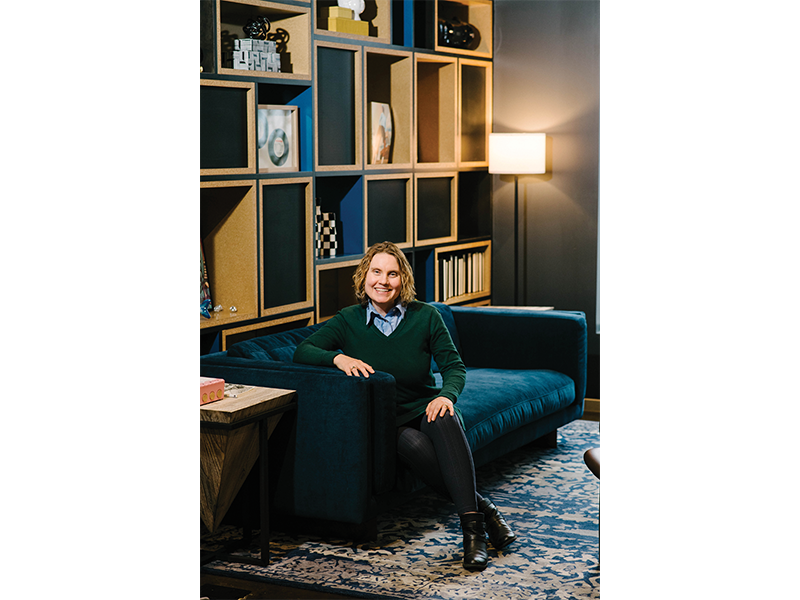
Anne Michels, the founder of a local organization working to bring supportive senior housing options to rural areas, said the ad prompts a follow-up question.
“You see that ad, and you think, ‘Oh, mom needs that,’ but dig deeper into that. Why?” Michels asked. “These problems are in our face presently, with no good solution. We can’t just do what we’ve done before. This next generation is very different.”
She’s not the only one pushing for innovation in elder care. For a year, Beth Ott has listened to pitches at StartingBlock, Madison’s hub for startups and new businesses, and she’s noticed a clear pattern. A quarter of the people she hears from are building some solution related to Wisconsin and the country’s aging population.
In 2025, the aging population in Madison mirrored a broader national trend, with 16% of the city’s population aged 60 and over, according to the World Health Organization. Across the country, this shift in demographics is straining social programs and creating gaps in safety nets that were in place for shorter life spans.
“We need to acknowledge the systems that are broken. Families are broken, people aren’t near their families; health care is clearly a broken system; even assisted living came out of a broken hospital system,” Michels said. “We need to go back to the drawing board and ask… how can we rally the resources we have and innovatively work with this population that desires to change elder care and what it looks like?”
Michels is attempting to answer that question with Green Pastures Living, which she founded more than a decade ago while searching for housing for her father, who had dementia. A farmer, he had never lived outside of his rural community in southeast Wisconsin, and she couldn’t find options that would allow him to age in place near his roots.
Green Pastures was created to fill that gap, building housing that keeps seniors in the small towns they’ve always called home.
“It was just heartbreaking to see everything being taken away from him that was familiar — his love of the country, his neighbors, his home,” Michels said. “He couldn’t remain living in his most familiar setting because those options were just not available. That’s the spark for why I’m doing this, to change the narrative for so many people who are aging.”
Michels said Green Pastures is in the process of searching for property owners who will partner with the company to launch its first site.
According to Ott, director of programming at StartingBlock on East Washington Avenue, the best ideas are coming from people who are dealing with the problem themselves.
“The elder care space is ripe for innovation, and it’s clear the sandwich generation is the right generation to solve that problem — because they are directly affected by it,” Ott said. “You’ve got a massive problem, a generation directly affected by it and technology like AI that’s suddenly accessible to anyone. You don’t even need a coding background to build a solution anymore.”
The sandwich generation refers to adults who are caring for their aging parents while simultaneously raising children of their own. They’re “pulled in a lot of different directions,” Ott said, which gives them unique insights into the cracks in the system and inspiration to build solutions.
StartingBlock prioritizes local problem-solving, Ott said. That focus has spotlighted what she calls “Great Lakes problems or South Central Midwest problems.”
Increasingly, elder care is at the center.
Targeting a broken system
There’s a saying in the startup world: “Fall in love with the problem, not the solution,” Ott said, and it’s a good rule of thumb.
“In elder care, there are so many problems to solve right now, and people are tackling them in a variety of creative ways,” she said.
That innovation was on display at an August Forward Fest panel featuring four entrepreneurs who are transforming personal caregiving challenges into businesses aimed at strengthening elder care infrastructure.
Angie Ingraham launched True North Patient Advocates, offering families one-on-one guidance through medical decisions, insurance hurdles and hospital bureaucracy. Rukmini Banerjee is developing CuroNow, an AI-powered platform that helps families coordinate appointments and manage the mental load of caregiving.
Nyima Sanyang, founder of Barako Home Care, said the compassion she received as a young immigrant mother with a sick newborn inspired her to create her non-medical home care agency. And Andrea Finck shared how “take stock moments,” including the death of her mother, motivated her to start Lightsome Estate Concierge, providing complete estate administration services so people can reclaim their most precious resource: time.
For Ingraham, a former trauma surgeon, the turning point came when her father was diagnosed with an aggressive brain cancer. She founded True North Patient Advocates after encountering little support in Madison for families navigating situations like hers.
Today, her advocates work with patients, their loved ones and professional partners to help weigh difficult decisions, understand insurance coverage and manage care transitions.
“The health care system is crazy and very, very hard to navigate,” Ingraham said.
Her family’s experience made the cracks in the system painfully clear.
“My dad had surgery scheduled for a Thursday and a functional MRI scheduled for Wednesday,” she recalled. “Tuesday at three o’clock, we got a call saying his MRI was canceled. The only reason he got his MRI was because I knew his PCP — a friend from medical school — and I texted her. She got it pushed through.”
Ingraham sat in the waiting room during the four-hour exam and overheard others being told, “Your MRI is canceled. Your MRI is canceled.”
“It was on repeat,” she said. “My dad was 69 and healthy. He passed in five months. But I know how the system works, and I can help people get the care they want and the care they deserve.”
A multi-generational puzzle
One of the biggest challenges, Ott said, comes when families are dispersed.
“If you are not in the same state or location as your elderly parent, how are you going to guarantee that they get the right support?” Ott asked. “I have (StartingBlock) members who are driving down to Rockford every weekend to support their elderly parent. I have members who have their elderly parent in Arizona because they’re the snowbird type. But how do you keep track of what they need?”
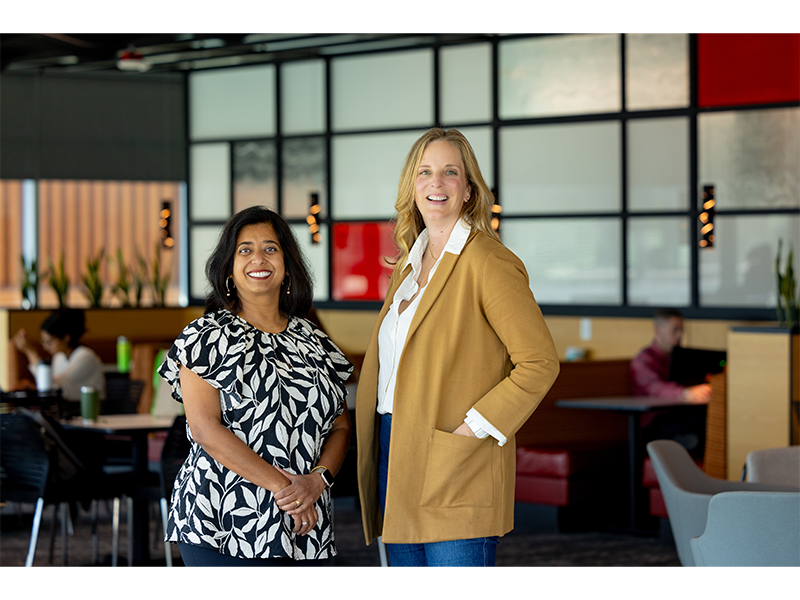
Madison entrepreneur Banerjee believes her startup, CuroNow, could be one solution. Banerjee has spent more than two decades in Madison, drawing on a career in operations and financial services before turning her attention to building new ventures.
“I was thinking about what I want to build next … and every conversation, without fail, in the first 10 to 15 minutes, people started talking about the added stress of somebody who’s aging — parents, grandparents, in-laws, aunts, uncles — and how that has not been planned in their lives,” Banerjee said.
That need resonated personally. Banerjee is raising twin 11-year-olds while also helping care for four aging parents, all in their 80s. Her father celebrated his 89th birthday in early September.
While that’s an exciting milestone, it can be overshadowed by the stressors of navigating complex Medicare and insurance decisions, coordinating medical appointments, managing finances, or just the logistics of transportation and daily care.
These stressors are often compounded by financial strain. The cost of long-term care, from in-home aides to assisted living, can quickly deplete savings.
For caregivers, supporting aging parents while managing their own households can create a dual financial burden that few are prepared for, Banerjee said.
“It seemed like the universe was telling me that everybody is worrying about this,” Banerjee said. “I looked into what’s out there, and I couldn’t find exactly what would help, primarily with this mental cognition load.”
Banerjee said the goal is for CuroNow’s guidance, organization and support to offer a peace of mind to lighten that load. She is aiming to launch the app in October.
A 2023 study in the Journal of Family Medicine and Primary Care found that nearly one-third of informal caregivers reported depressive symptoms, and almost half of those providing more than 40 hours of care per week were diagnosed with depression.
The work of elder care is fundamentally different from other startup opportunities, both Banerjee and Ott agree. For Banerjee, who was born in India, she sees elder care as a challenge that is generational, societal and cultural.
“Nothing to do with elder care is sexy. People don’t jump in unless they’ve gone through it themselves. It’s unlike AI or consumer goods. This is deeply personal and, honestly, hard,” she said. “Entrepreneurs have a big role. Communities have an even bigger one. But policymakers — from Medicare and Medicaid to insurance and government — are crucial. If we engage them together, we can come up with better solutions.”
Ott sees these diverse approaches, from AI-powered apps like CuroNow to service navigation and housing development, as part of a larger shift.
What’s different now is the timing. More people have access to AI tools, mobile-first design thinking and a generation of talent that understands both technology and caregiving.
“The biggest indicator here of why we’re seeing more elder care solutions come to market is that it takes the right people to solve the right problem,” Ott said. “And we’re going to see more solutions across every industry.”
Editor’s note: A previous version of this story incorrectly spelled Rukmini Banerjee’s name.

