
Family-run businesses account for 19% of the nearly 29 million small businesses in the United States, but they have an outsized impact in the workforce and the economy, employing 60% of all American workers and generating 64% of the nation’s gross domestic product, according to research from the Service Corps of Retired Executives (SCORE).
That’s a remarkable level of impact when you consider that only 30% of family businesses survive the transition from first to second generation ownership and just 12% survive the transition from second to third generation. In addition to the usual business issues, they deal with family dynamics and try not to bring disagreements home, but they also pitch in with a zeal that only families can generate.
Sometimes disputes over business matters boil over into their personal lives, and sometimes succession plans are rocky, but the successful ones keep their eyes on the ultimate prize — long-lasting success that enables proprietors to transfer ownership to the next generation of the family or to a loyal employee.
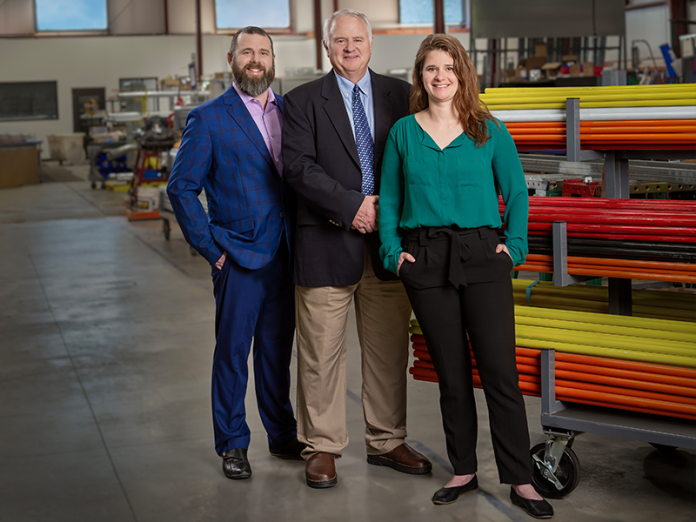
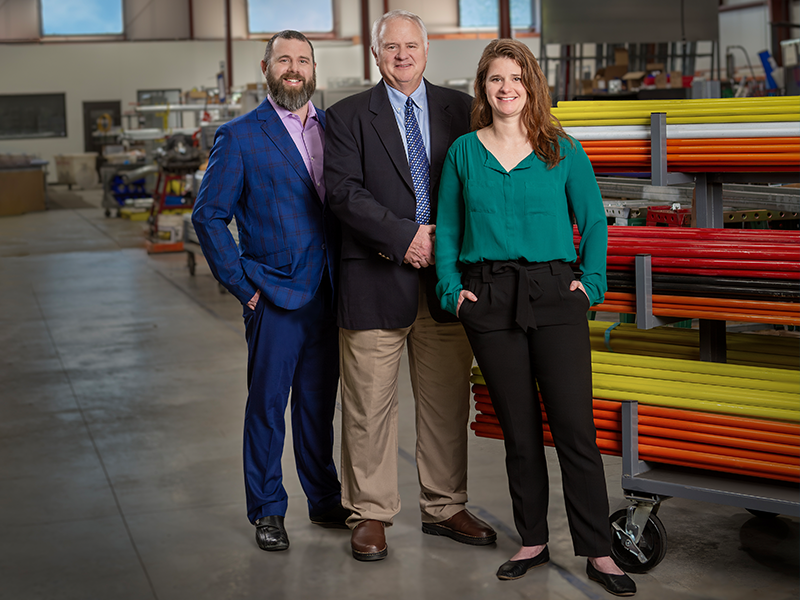
In this look at family businesses, we spoke to several local family run operators, including the following: John, Maiken, and Fritz Westphal of Westphal & Co. Inc., a Wisconsin electrical contractor; Diane Ballweg, co-owner of Endres Manufacturing Co., a steel manufacturing and fabrication company in Waunakee; Bret Newcomb, president of Newcomb Construction Co. Inc., a Madison-based general contractor; Amy Armstrong, president and CEO of Park Printing Solutions, a commercial printing business in Verona; and grocers Yashar and Saniya Tairov, proprietors of Fresh Mart Madison and Istanbul Supermarket and Café.
Smoother succession
John Westphal did not have to think long when asked if the family business was ever in crisis mode. John was only 24, just 17 months into his tenure with Westphal & Co. after graduating from UW–Madison, when his father, just 46, died. It was 1983 and the economy was in bad shape — the economic boom of the 1980s had not yet begun — and while he was terrified, John and his older brother decided that if the company was going to go belly up, it would not be due to a lack of effort from the two of them.
“How did we handle it? We tried to not be overcome by complete and total fear as young guys taking over a big business,” Westphal reflected recently as he was about to turn the reins of the company over to his daughter, Maiken, and son Fritz, who represent the fourth generation to run the family business.
That fear, directly related to what John describes as the company’s highest-ranked, near-death experience, was mitigated somewhat because of the strength in numbers represented by the employees available to help. Somebody had to assume the role as leader, but “we handled it because of the quality people that my father and my grandfather had hired that stuck with me and my brother and decided to do their best to keep our family business going,” Westphal marvels. “That’s how we handled it, and all I did was try to do the best I can, to always tell the truth, and to try to learn and make the best decisions that I possibly could.”
The most recent succession, in which Maiken became CEO, John remains with the company as chairman, and son Fritz Westphal became a co-owner along with Maiken, has been executed over a period of years. Avoiding the same scenario that took place when John took over unexpectedly has been an understandable preoccupation. “That’s been a big part of the succession plan that has kept him [John] up for years and years, and thinking that’s not a scenario we want to experience again,” Maiken acknowledges, while giving an appreciative nod to a local resource. “When I was still in college, we became members of the Family Business Center at UW–Madison, and we started attending a lot of those lectures regularly. We’re still members and outside of the succession and the planning that my dad has thought about, it’s been an education for us to be prepared for all the family business issues that come along with this life.
“Preparedness, understanding, education, and communication,” she adds, “have always been important parts of a family business.”
As Fritz Westphal recalls, business succession planning has always been a major part of his upbringing, not just his business education. “I remember from when we were teenagers, what will we do if dad falls over dead?” recalls Fritz, who also is a foreman working in the field for Westphal’s Globalcom Technologies division. “How do we go forward? How do we move it from here? How do we make sure we keep the farm going and we keep people employed so they can feed their families?”
As they assume their leadership roles, Maiken and Fritz not only inherit a stronger economy than their father did, but a much more diversified company that has entered into new markets, including electric vehicle charging stations. In addition to plentiful health care, biotech, data center, fiber optic, and solar installation work, Westphal now handles a fair amount of EV charging installations of both Level 2 stations for single-family and multifamily residential garages and Level 3 stations for the high-speed chargers along the open road.
It’s part of what gives John Westphal, who cannot adequately describe the level of pride he feels in working with smart, level-headed children, more peace of mind as he transitions the company to them. “The economy where we do business, which is Wisconsin, Iowa, is the best it’s ever been in our company’s 93-year history,” he says. “It’s as good as it’s been in my 42-year history … We are riding the wave of how the economy is growing in our geographic areas.”
Another advantage for Maiken and Fritz Westphal is that they have a business role model to pattern themselves after. “My dad has always been my standard for what I’m trying to chase, and I want to make my dad proud,” states Maiken. “We’re peers and I get to work with him as a co-worker, which is a different relationship than most people have with their parents because we are striving together, we’re fighting battles together, we’re winning, we’re losing … It’s great to be a part of that.”
Endres Manufacturing: Steely resolve
As she surveys the characteristics of the leadership team at Endres Manufacturing Co., owner Diane Ballweg appreciates the strength of each member — past and present.
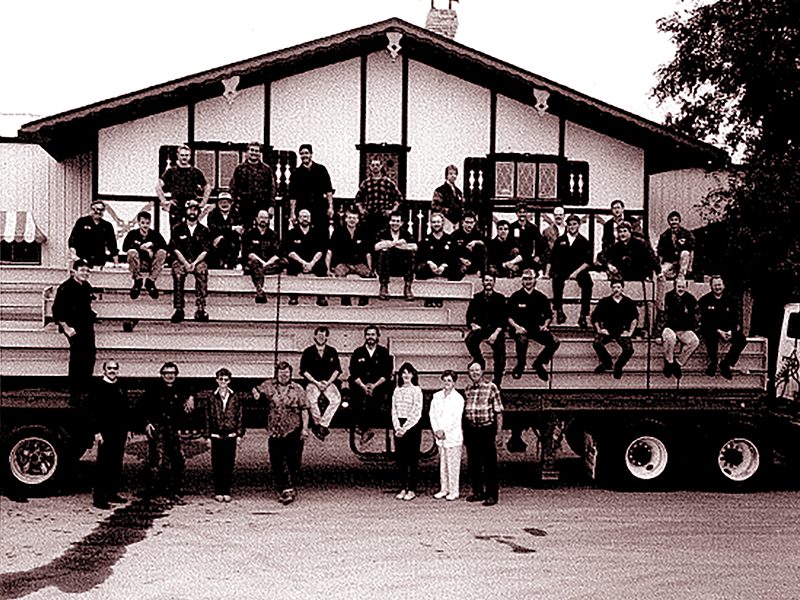
Her founding grandfather, Lawrence Endres Sr., born in 1884, was a creative inventor with multiple patents, including a folding drawbar and disc sharpener. Her father, Larry Jr., was both hard-working and creative in using his talents to give the shop a Bavarian theme that reflected his German heritage. Ken Ballweg, her ex-husband who is part of the management team, is a numbers and data man who knows the “left-brain side” of business. Sam Ballweg, her son and the current president, is a combination of both his father’s left brain and his mother’s right brain and has brought new-generation technology and innovation. Sam’s leadership makes Diane think of a telling quote from Helen Keller, who famously said, “The true disability is not being blind. It is having sight but no vision.”
To Diane, that speaks to the new management team — the fourth generation of the family to operate the steel manufacturing and fabrication business. Surviving to the fourth generation is no small achievement, considering that only 3% of family businesses make it that far, and divorce has affected the company twice — with Diane’s parents and with Diane and Ken. Appreciating the business gifts of each team member is one way to move forward, especially when your son is the best of both worlds, and with the company’s centennial year of 2026 approaching, Sam has three teenage children who could someday carry on the tradition.
While they are still a bit young to make that projection, today’s Endres Manufacturing is growing and innovating. It recently acquired Skyline Steel, a former competitor based in Arlington, Wisconsin, and has begun the integration process with 22 former Skyline employees. While that was a big step, Endres Manufacturing also has been moving on the technology front with the purchase of an Anglemaster and a power cutter that automate the cutting of steel beams.
“Where we used to have to feed all of the angles and beams and everything in by hand and measure it, now we just put them on the conveyor belt and the machine measures it and cuts it,” Diane explains. “Both of those machines were $1 million investments, but we’ve upped our game.”
Ballweg, a licensed pilot who is writing a book about her love of flying, believes the company is poised for another growth takeoff. Most of its steel is sold locally and has been used in the Overture Center, American Family Children’s Hospital, buildings on the Epic Campus, and facilities for Edgewood College, Madison College, and the UW system. The immediate future looks promising, not only because the building stock of Madison is constantly evolving, but the company has no debt, owns its own property, and has a good reputation — especially after establishing its own foundation to provide financial support to local organizations and nonprofits.
As she ponders the future, Ballweg still marvels at family businesses that keep going generation after generation, and she was recently reminded of how long they can survive. As a member of Harvard University’s advanced leadership cohort, she learned of a young woman in need of a mentor who represents the seventh generation of a Massachusetts family business that is 300 years old and now does air filtering work. “She would like some guidance to help her as she moves into the family business,” Ballweg notes. “I said, ‘Holy cats, she probably would have to mentor me because it’s incredible to be in the seventh generation.’ When I look at statistics of how few there are in that category, and when their company started 300 years ago — just think about that.”
Newcomb Construction: Tilting the field
Bret Newcomb pretended not to know a major milestone — the company’s 50th anniversary — is right around the corner. “We better start planning celebrations,” he said, tongue in cheek.
Planning celebrations is one thing, but until interest rates come down a bit, planning future projects is consuming much of the company’s time. Succession from Bret’s father, Bob, to the next generation was completed years ago, as was the company’s introduction of tilt-up construction. Bob remains involved, offering occasional guidance, and now Bret’s son Gus is the young heir apparent, advocating a more aggressive approach to growth as he works in project management. Sister Sara Bartlett works three days a week on administration and marketing, while Bret’s wife, Rachel, a former news anchor on Channel 27, serves as a valuable sounding board.
Their help is especially valuable now as work has slowed down, mainly due to higher interest rates putting the brakes on certain projects. Bret has been there before — the Great Recession of 2008–09 and the COVID-19 pandemic — and he’s well aware of his father’s experience in the early 1980s, when interest rates were at record levels, but this slowdown feels different.
“I personally feel like there are a lot of projects that are getting teed up, waiting for the interest rates to come down,” Newcomb states. “The projects are getting designed, carried through, and maybe going through some permitting … and then when interest rates start to come down, then people will pull the trigger.”
One competitive advantage could be the firm’s focus on tilt-up construction. Newcomb Construction just finished its work on the 170-unit West Edge apartment building in Middleton, which was its first venture into residential construction. It included concrete tilt-up wall panels, a more economical way to build because Newcomb manufactures the panels itself. “By doing so, we can keep our costs down, and we can become really good at it,” Bret explains. “Any company that has a niche typically becomes higher quality and lower cost because they do it over and over and over again.”
Before the pandemic slowed down office construction considerably, that price advantage helped the company secure work on projects for Spectrum Brands, Mead and Hunt, and Fiskars. Fortunately, industrial/warehouse distribution buildings — ideal for tilt-up construction — picked up where office left off, and now the company eyes more financially challenged multifamily projects where its tilt-up niche could be a cost-saver.
“The problem apartments have right now is that costs have increased by about 30% over the last three years,” Newcomb says. “There are regulation costs in whatever city they build in, there are material costs, and there are delays. The developers are faced with a huge outlay of expense to build these apartments, and while rents have gone up, they have not gone up enough to offset those costs.”
Newcomb Construction might be one of the few family construction firms that are wholly owned by the family. Many others have distributed ownership to key employees, but Newcomb’s approach is to stay small (around 20 employees) and therefore nimble and flexible, plus take care of key employees financially as if they are owners while retaining actual ownership in the family. That way, the family can make decisions “based on the DNA of what’s important to the family,” Newcomb explains. “Within the family, we all kind of recognize our particular roles and that’s important.”
Park Printing Solutions: All hands on deck
You’ll have to excuse Amy Armstrong, president and CEO of Park Printing Solutions, if she’s hesitant to grow or expand her family business. If that sounds counterintuitive, consider that on at least three occasions when the company either moved into a new facility, added on to an existing one, or purchased a new press, the event was followed by a recession or a pandemic.
The Verona-based, fourth-generation, family-run commercial printer survived each challenge just fine, in part because it serves companies in just about every kind of industry, and it has grown right along with Verona. Mind you, the company did not relocate to Verona because city officials lured them with promises that someday a giant electronic medical records maker, with a cool, sprawling campus, would magically appear to lift all boats. Park Printing moved to Verona after its inception in 1952, when it began as Hamilton James Associates, an advertising company established by Wilbur (Wib) and Marge Dudley, Amy’s grandparents. Later, as the first company located in Verona’s new business park, Hamilton James was renamed Park Printing House.
In the early 1960s, Wib and Marge were joined by Armstrong’s parents, John and Jean Bass, and the company shifted to printing in-house. It remains quite a family affair, as Amy explains: “My mom, Jean Bass, still comes in every day. Then you’ve got my brother Roger and I, my two cousins, John and Greg, and their wives from the third generation, and my daughter Molly and nephew Sam from the fourth — seven family members on a full-time basis and two on a part-time basis.”
After the pandemic scare — Park Printing was deemed an essential business but manufactured air filters to help make up for the loss of print volume — business is steady. “We had a great year last year and are trying to keep that momentum going,” Armstrong notes. “We have a diverse customer base as far as the industries that they represent, which is helpful in keeping our workload consistent.”
Involved family members each have different strengths and interests, but they all have an equal voice in important decisions. For that, Armstrong credits her parents and grandparents, who set great examples and raised their children to work hard and have fun. “We’ve always been a very close family,” she explains. “My grandparents had two daughters, Jean and Debbie, who married brothers, John and Tom Bass, and they all eventually settled in Verona. For me, it was like growing up with four older brothers, which I thought was pretty cool.
“We basically grew up working at Park Printing, so many of our employees are very much like family to us,” she adds. “There are people in this building who have known me since I was five years old. People joke about having work-wives, so in a way it really doesn’t seem like working with blood relatives would be that different from anyone else’s experience.”
The start of the pandemic was certainly a different kind of experience, especially for Armstrong, who was Park Printer’s CFO at the time. In March 2020, at the time much of the economy was shutting down, the company was installing a new $1 million digital press, a process that was 90% complete when the pandemic boom was lowered. “We were lucky to be considered an essential business, and I think for many of us, the fact that printing can’t be done from home was important for our mental health,” Armstrong recalls. “However, being considered essential didn’t mean that business didn’t drop off significantly. Seeing our cash flow evaporate overnight was scary as hell. I would be lying if I didn’t admit to sleepless nights and tears worrying about making payroll, keeping our employees safe, and wondering, ‘Now what am I going to be when I grow up?’”
The family prides itself on being nimble and willing and able to think outside the box, so it pivoted to using some of its equipment and employees to produce air filters for a completely different industry — HVAC. Armstrong attributes that to the all-hands-on-deck mentality of her workforce. “That ability to reinvent ourselves, combined with a new, state-of-the-art printing press, and the Paycheck Protection Program loans, saved us. Our employees, our Park Printing family, stepped up and together we made it through. I’m thankful that we pivoted back to printing because that’s what we love to do.”
As for a fifth generation of ownership, Armstrong’s daughter and nephew are still young, but she would hate to put that pressure on them just now. “It would be great to keep it in the family, but as I said, our employees are like family, so I’d be just as happy to see it pass to one of them someday if there was interest.”
Fresh Mart Madison: Russia’s loss, Madison’s gain
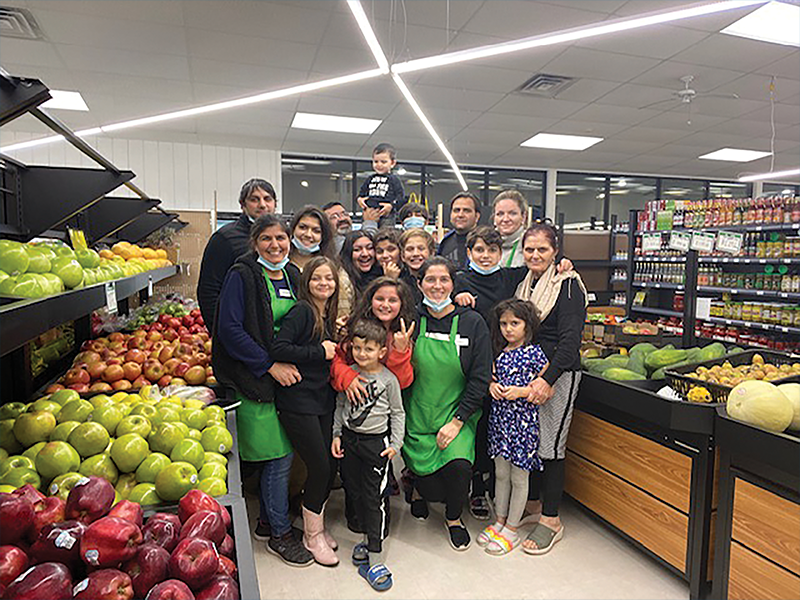
For grocers Yashar and Saniya Tairov, it’s been a long journey — from Russia with the love of food. So much love that they now own and operate three grocery stores — Istanbul Supermarket and Café on Gammon Road, and Fresh Mart Madison groceries in Sun Prairie and on University Avenue in Madison — that feature a selection of Turkish, other Middle Eastern, and various international foods and catering service.
Immigrant refugees of Turkish descent, they came to Madison in 2005 from the Krasnodar region of Russia, where a population of Ahiska Turks had been moved from Uzbekistan in the late 1980s. It’s a long, complicated story that included the exile of their forebears to Uzbekistan by Soviet dictator Joseph Stalin, but they were able to come here after the U.S. government granted them refugee status in 2004. By the end of 2006, about 17,000 Ahiska Turks had settled in 66 towns in 33 U.S. states.
Yashar summed up the reason for their latest relocation with a simple explanation — “They say Russia is only for Russians” — but Russia’s loss has been a real gain for Madison foodies because Yashar has been exposed to everything from Ukranian, to Eastern European, to Mediterranean fare, and he has brought much of it to Madison for store sales and catering. “You want kebabs, we can do kebabs. You want any Indian biryani, we can do Indian biryani. If you need something else like Italian, we can cook Italian.”
At first, Yashar tried selling smart phone accessories, but eventually gravitated to groceries with an international flavor at his original store, a small, 1,300-square-foot grocery named for Turkey’s largest city. Needless to say, the grocery operation is a first-generation venture with co-owner and wife Saniya and two of their children who have been instrumental in gradually building a customer base for the 14,000-square-foot Sun Prairie store, which opened in May 2020 — later than expected due to the COVID-19 pandemic. The University Avenue store, the newest and largest at 36,000 square feet, is still in the process of gaining traction, but if there is anything the Tairovs have learned in their 19 years in Madison, it’s the virtue of patience as they open ever-larger groceries.
Gratitude is another trait, especially for the help they have received not only from their young family, but customers they view as friends — customers who were delighted to find a local grocery option with Middle Eastern fare. One loyal customer, the late Madison businessman George Shurrush, who brought his family here from Israel in 1976, even brought the Tairovs meat cutting equipment, which helped the original store serve customers more efficiently, and did not charge them for it.
“I didn’t ask for that help,” Yashar notes. “I tried to give him money and he would not charge me even pennies. So he gives it to me, just from the heart.”
That customer devotion helps explain the Tairov’s success in a competitive grocery market. The Sun Prairie store, which might have been delayed by the pandemic but was supported with a Small Business Administration loan, is perhaps the best illustration of their tenacity. It took more time to build trust with a virus spreading. “You have to wait and wait, and it takes us a longer time to open, and we open it,” Yashar notes. “It’s OK, going slowly, so you keep at it. Because we work as a family, it helps us, so if not for family help or not for friends help, it’s going to be difficult.”

