

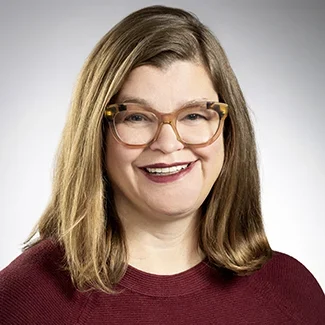
In 2016, Myra Renee Kincade, CEO and founder of the Anesis Center for Marriage & Family Therapy, was a therapist working at a community clinic in Madison. She decided to try private practice on the side two days a week, offering culturally sensitive care, which respects and adapts to the diverse cultural identities and backgrounds of patients.
Three months later, her schedule was full. There was “a massive response. I was having people traveling from Janesville, because there wasn’t virtual then,” she said.
“I was like, OK. Something’s here. People are really wanting this,” she said. What she didn’t expect was interest from clinicians looking to provide care to people within their communities as well.
“By the end of my first year, I had two other colleagues that joined the practice, and then my second year was eight people, and then it just kept growing and growing and growing,” she said.
In addition to Anesis’ main clinic, community needs also prompted Kincade to launch the Anesis Foundation for Mental Health earlier this year, which offers free mental health programming and drop-in clinics.
With a staff of around 60 — 17 of whom work at the foundation — Anesis also offers care in Spanish and Hmong. Sessions are offered in person or virtually. And the support extends beyond the Madison area: Two clinicians work out of Milwaukee, one is in Iowa, and Anesis just added a clinician in Dallas.
Tell me about your background and how you ended up pursuing the mental health field.
I am biracial, so I am Black and white. My dad is from Gary, Indiana. My mom is from Minneapolis, Minnesota, and they met each other in Grand Marais because he was in the Coast Guard. Then they moved to Texas. I was born in Texas. They ended up getting a divorce, and so I was raised in Duluth, Minnesota. I grew up with a lot of people who are indigenous, Ojibwe, white and Black, so I’ve always felt like I’ve had to move in different cultural spaces my whole life. I’ve always had an understanding for people that have to negotiate different cultural spaces, and so that’s why this is our clinic’s specialty — you can bring all of that in with you when you come in for mental health services.
My mom did struggle with drugs as well, and so I did go to therapy when I was very little. I had a child therapist, and I remember a lot of those sessions and it being very fun. It was a positive experience. We do a lot of child and family work here too, and so when I look back over my life, I think I’m supposed to be here.
When you started your business, who were you looking to help?
I have my own background in church. So I would see, specifically in Black church in general, a lot of mental health issues not getting addressed, and it being kind of this thing of, bring it to prayer, go to the pastor for everything, and seeing all of it and being like, this is not working.
The other thing that I would see too is, when I went back to get my master’s degree, I worked in the school district for a short period of time as a parent liaison. I really like family engagement and bringing families together so they can succeed and children can have healthy relationships, and I realized the school system was way too broke down. It was just so complicated. And I was like, I think I could help families more out of that system than within that system.
In terms of marriage and family therapy, when you started, was there a lack of therapists of color?
Yes. I would say though, I really feel like my clinic has really changed a lot of that. We’ve been able to train and be an internship site, not just for people in Madison, but we’ve had students from Milwaukee, we’ve had students from Chicago and students from, believe it or not, UW Superior.
I really do feel like we’ve helped that landscape where some people have chosen to stay in Madison, whether they stay at our clinic or not. Of course there’s still a shortage, but it’s nowhere what it was back in 2016.
How you are expanding Anesis through virtual care?
There are clinics that are very big and virtual, like BetterHelp. I’m just piloting and seeing, what does that look like for people to have a different option for therapists who are on their own? Maybe not a big corporate company, but launching just to certain states, and keeping our niche being that culturally competent, or culturally sensitive care. So we’ll see. I’m very curious as to what this could look like and open to however it changes.
We had a couple of people that actually moved down to Texas, and so that’s what made me start thinking about that idea. I was asking them questions around, “Well, what is it like down there?” And they were telling me about the landscape, and I was like, yeah, maybe we could expand there. I’m hoping if that goes really well, I think Florida would be a really great place, Minnesota, and then Illinois. We’re taking baby steps, but with an eye toward expanding in those states.
What have you observed in Madison in terms of the mental health resources available?
I feel like it’s getting better. It’s not what it needs to be. One big thing, I think the stigma is lifting. People are not scared as much to get help, to talk about it.
I remember when I first started Anesis, I would go to things like Black Women’s Wellness (Day). People would be scared to come to my table because it was the mental health table, right?
It is not like that at all anymore. I feel like people are so open. There was a big shift in the pandemic, but I think also locally we did a really good job about having discussions and really normalizing mental health. You had celebrities coming out talking about mental health during the pandemic. I think that’s been a really good thing.
I do think it’s really hard if people don’t have insurance… and that will be the ongoing conversation around healthcare in general. I think, too, insurance companies are really hard to work with.
And mental health continues to be the lowest reimbursement rate for any type of healthcare. You can see a client and then have one code wrong on that billing and not get paid for your work. It’s a very hard field.
I definitely think there are some ways we are on track, and then there are other things where I’m really worried about next year. When I think about the nonprofit side of things, and Dane County is doing so many cuts (and) we’re getting notification that insurance rates are going up, what’s going to happen is people are going to have to let go of people. People aren’t going to get enough services, and I’m concerned (about) youth programming, mental health.
I do think we need… to be intentional around those direct services and how we provide those services for families and youth.
I think there’s more issues with kids in schools that we’re not paying attention to. There are certain mental health issues that our youth have that parents just aren’t equipped (for). Social media and all the things that we have going on… we just didn’t have that when we were growing up. And there’s just way too much access to information and too much cyberbullying, and I mean the list just goes on and on. School shootings. Kids have a lot of anxiety.
What are the bright spots?
Oh, the bright spots are kids are so open to getting treatment. Sometimes we’re like, slow down. Don’t self-diagnose yourself because you saw a TikTok video on it. But I love how open this younger generation is talking about their mental health, and it’s so neat how they are understanding to other people’s mental health needs as well. Once they get educated about it, and they can have that empathy for others, I think it is really beautiful.
What has your experience been as a woman of color in the business community?
A little lonely. It feels like a lot of pressure sometimes to be perfect, to never make a mistake. To feel like if I mess up, not only would I mess it up for our clients and our employees, but also you feel like an example, right?
So I will say, people like Zach Brandon have been so supportive in the chamber. When we bought the building here, he and his staff and some board members came out and he gave words, and so I really think he really reflects a lot of that business community here. And another supportive person has been Camille Carter from the Black Chamber of Commerce.

