

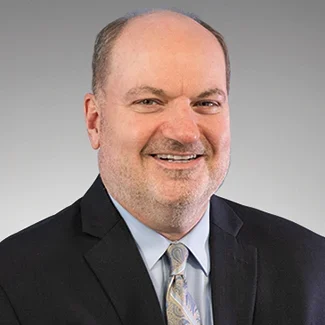
Carl Gulbrandsen, retiring managing director of the Wisconsin Alumni Research Foundation, can point to a long list of accomplishments with WARF, including stem cell patents that withstood inevitable legal challenges and the successful patent-infringement lawsuit against Apple Computers, in which WARF was awarded $234 million in damages by a federal jury.
But his ability to build a staff that helps move technologies from the University of Wisconsin–Madison to the marketplace is what made him an overwhelming choice for the Lifetime Achievement Award in In Business magazine’s Executive of the Year program. Gulbrandsen, who officially retires on June 30, has built a staff that has made WARF a pre-eminent technology transfer organization and a leading innovator in investment management.
WARF, founded in 1925, is an independent foundation that serves as the private, nonprofit patenting and licensing arm for UW–Madison. Gulbrandsen has been with WARF for 18 years, including 16 years as managing director. “WARF has an A-plus senior staff of professionals, most of who were hired during my tenure,” he notes. “It’s been a real privilege to work with them.”
Discovery steward
WARF’s role is to steward the cycle of research, discovery, commercialization, and investment for UW–Madison. When a student, staff member, or faculty researcher identifies a technological discovery they bring it to WARF to consider a patent opportunity and the research foundation facilitates that process on the researcher’s behalf. Once patented, WARF assists with licensing the discovery, which provides royalties back to the researcher and to WARF, and it completes the cycle of innovation by providing annual grants to the university to advance continued research.
The grants not only support the work of UW–Madison, they also help attract top talent and boost research endeavors. Therefore, there are three things particularly important to WARF: its tax-exempt status, the strength of patents and patent law, and its investments.
Peter Tong, president of the WARF board of trustees, says Gulbrandsen’s accomplishments have been transformational on the investment priority. During his tenure, WARF’s endowment more than doubled from $1.21 billion to $2.68 billion and the annualized return of the portfolio was 6.64% per year for the 15-year period ending in June 2015. Since 2000, this investment performance has enabled WARF to gift $895 million to UW–Madison. In recognition of that stewardship, WARF received a Triple-A rating from Standard & Poor’s.
Jeanan Yasiri Moe, director of strategic communications for WARF, cites the wide-ranging impact of Gulbrandsen’s leadership. Under Gulbrandsen’s direction, she notes that WARF has paved the way for transformative discoveries and patents that have enhanced the well being of people around the world. “The impact ranges from guiding new human health research pathways to helping smartphone users run multiple mobile apps simultaneously,” she states.
Also during Gulbrandsen’s tenure, WARF served as the developer of the Wisconsin Institutes for Discovery, a public-private facility that hosts the Morgridge Institute for Research and the Town Center at Discovery. To connect the community to science, the Discovery Town Center annually hosts thousands of people — from children to seniors — for programs and conferences.
In 1999, Gulbrandsen also helped establish the WiCell Research Institute, a nonprofit organization that advances the science of stem cells for labs around the world. WiCell maintains a stem cell bank containing stem cell lines submitted by global researchers.
WARF’s contributions to technology haven’t gone unnoticed nationally. In 2005, WARF received the National Medal of Technology from President George W. Bush, the highest honor the president can bestow on an organization that has made contributions to technology development.
Yet Gulbrandsen isn’t one to settle. Even though technology transfer has already contributed a great deal to the local economy, UW–Madison is trying to increase the rate of technology transfer with its Discovery-to-Product initiative. Gulbrandsen had a hand in developing “D2P,” which is a response to the increasing difficulty of licensing technology directly out of the laboratory to large companies, especially after the Great Recession.
(Continued)
Gulbrandsen, a patent attorney by training, says corporate risk-aversion forced the university to become more proactive in further developing its technologies and the startup companies that bring them to market. “We got into it,” he notes, “due to the attitude of large companies to shed risk.”
Another recent concern is the strength of patents. Gulbrandsen has served as a member of the Patent Public Advisory Council for the U.S. Patent and Trademark Office, and he shares the concern of local biotech executives about rule changes and jurisprudence that have devalued patents. In one patent dispute involving Myriad Genetics, a molecular diagnostics company headquartered in Salt Lake City, Utah, the U.S. Supreme Court ruled that isolated gene sequences are ineligible for patenting.
Gulbrandsen notes the 1980 Bayh-Dole Act, which many credit with a wave of university innovation in the 1980s and 90s, is predicated on strong patents and the ability to license. “For patent owners, this has been a horrible time,” Gulbrandsen states. “It’s been harder for university technology transfer offices who rely on strong patents to license technology.”
Patented retirement
|
Carl Gulbrandsen |
This year’s Executive of the Year award winners were chosen from a panel of judges that includes Deb Archer, president and CEO of the Greater Madison Chamber of Commerce, retired UW–Madison Director of Athletics Pat Richter, and Mark Bakken, founder of Nordic LLC and HealthX Ventures.
“I’m a little bit overwhelmed by this,” Gulbrandsen admits. “It means a lot to me, but I’ve had a lot of help from colleagues throughout my career.”
Asked about his plans for “retirement,” Gulbrandsen remains interested in patent law and wants to continue to lobby for strong patents. There might be business board positions he would accept, and he would be interested in teaching a college course in patents and licensing. He notes there are strong lobbying groups representing corporations that do not think strong patents are important, but in his view they are vitally important to capital deployment because investors naturally want to see a return.
Gulbrandsen also plans to devote time to local challenges like race disparities and homelessness but adds, “It will be nice to be on my own clock.”
Click here to sign up for the free IB ezine – your twice-weekly resource for local business news, analysis, voices, and the names you need to know. If you are not already a subscriber to In Business magazine, be sure to sign up for our monthly print edition here.

