
From the pages of In Business magazine.
Difference-making executives who have made their mark in banking, health care, benefit administration, and engineering have been selected for our 2018 Executive of the Year class.
With the exception of the lifetime achievement winner, this particular honor is based on company and community contributions during the past 12 months. The following executives will be honored at an awards reception on Thursday, Feb. 15, at the Overture Center for the Arts:
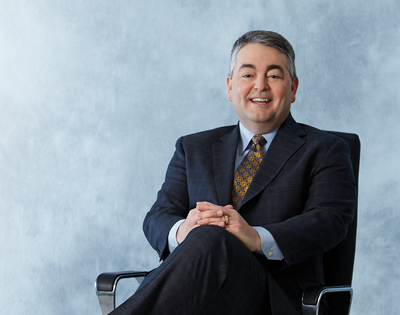
- Paul Hoffmann, president and CEO, Monona Bank
- Rajan Sheth, CEO and chairman of the board, Mead & Hunt Inc.
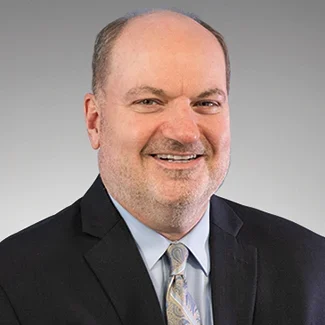
- Joe Pleshek, president and CEO, Terso Solutions Inc.
- Cliff Mason, president, Total Administrative Services Corp.
- Heather Longhenry, CFO, Settlers bank
They join the impressive array of local executives honored during the first five years of the Executive of the Year program. The “EOY” celebrates exemplary business executives based on leadership, innovation, and company success.
As in years past, judges were asked to examine all of the nomination forms to determine the winner for the top award, the annual Executive of the Year. In addition to selecting the overall winner, they chose five category winners — small, medium, and large company, lifetime achievement, and Chief Financial Officer of the Year.
For more details about the Executive of the Year event and to purchase tickets, visit IBMadison.com/ExecutiveOfTheYear.
We owe a tip of the hat to our panel of judges, among them two past Executive of the Year award winners in Beth Donley, CEO of Stemina Biomarker Discovery, and Tim Lightner, owner of TWO MEN AND A TRUCK; Deb Archer, president and CEO of the Greater Madison Convention and Visitors Bureau, and a past winner of IB’s Women of Industry award and Most Influential in Madison recognition; and Zach Brandon, president of the Greater Madison Chamber of Commerce and another past Most Influential honoree. With gratitude to them for a job well done, we present the 2018 Executive of the Year winners.
2018 Executive of the Year
Medium Company Executive of the Year
Paul Hoffmann
Merging bank with community
No chief executive becomes Executive of the Year without a significant business achievement, and in this area Paul Hoffmann led the successful acquisition and merger of Monona Bank and Middleton Community Bank.
The merger played a key role in growing Monona Bank’s assets from $330 million to more than $840 million and was negotiated after receiving more than 40 competing bids from other banks. Now with a workforce of more than 150 people at nine locations, Monona Bank was able to retain all of the Middleton bank’s former employees. Hoffmann credits pre-merger due diligence, the collaborative work done over the years with people at various local banks, and the support of Monona Bank’s shareholders and board of directors.
“It’s really exciting when I see the contributions that people are making as the two organizations come together,” Hoffmann says. “It’s special to me because I got to know them before, and so now when I see them working in different departments and thinking about what we can achieve, it’s really gratifying to see it all come together.”
Banks seldom get credit for their support of nonprofits. Yet banks, especially community banks, have stepped up in very meaningful ways to help nonprofit groups meet community needs. Whether it’s financial or in-kind support of organizations such as Madison Development Corp., Forward Community Investments, or the Goodman Community Center, or upward mobility programs such as Operation Fresh Start, Monona Bank has expanded its corporate-giving program by implementing an associate volunteer program to encourage employees to get involved with community organizations.
Lifetime Achievement Award
Rajan Sheth
A quarter century of owning it
Sometimes, a corporate decision produces so many benefits you wonder why others don’t copy it. Mead & Hunt’s decision to become a uniquely structured, employee-owned firm of engineers, architects, and planners has paid off handsomely in several respects. Rajan Sheth has seen those benefits unfold for more than 40 years, including the past 24 as the firm’s chief executive. He is the Lifetime Achievement award winner in large measure because of Mead & Hunt’s status as a bleeding-edge, creative class company.
Sheth’s career accomplishments begin with Mead & Hunt’s consistent growth and profitability during his 20-plus years as CEO, as well as the completion of wide ranging projects, including the design of buildings, highways, bridges, airports, navigational facilities, and unique structures. Mead & Hunt has grown organically and through acquisitions to more than 30 offices and more than 640 employees. The firm’s billings increased from $10 million to over $108 million, and it has been profitable every year Sheth has been at the helm.
Sheth credits the decision to become employee owned for much of the firm’s success. The industry-leading model passes ownership from one generation of employees to the next, and it allows full-time employees of at least two years to decide if they want to become shareholders rather than waiting for a company invitation.
“Today, we have close to 200 of our employees, everything from a receptionist all the way to our senior leaders, who are owners in the company,” he notes. “It’s not an ESOP model; we are a C-Corp. People invest their money and we’ve been successful. Our stock value has grow consistently over the past several years, and we don’t have any absentee owners.”
(Continued)
Small Company Executive of the Year
Joe Pleshek
A cuppa Joe for Terso
Heading into 2018, Terso Solutions CEO Joe Pleshek is as optimistic as the next business leader, but with optimism comes business culture considerations.
Now with 50 employees, Terso Solutions still manufactures and sells inventory-tracking systems for the life science and health care fields, but having moved to a new and expanded production facility in Fitchburg, it has experienced strong growth and market adoption for its inventory-management solutions. Its recent growth has been achieved with the help of strategic decisions made during the past five years.
Pleshek, who has been with Terso for 11 years, including nine as chief executive, is credited with strong revenue growth, important strategic acquisitions, and the fruitful decision to enter the dental market with RFID technology. “Things like our technology choice in ultra-high frequency RFID — that was a major win for us that we’re now realizing benefits from,” Pleshek notes. “The other thing is we’ve really brought in and developed some great talent in the organization, so as these growth opportunities come up, we’re ready to meet them.”
Yet that was the main worry employees had about the company’s recent growth — would Terso management be able to scale up its workforce enough to handle everything? Pleshek was able to detect this worry through his ongoing conversations with employees, including the “Cup of Joe with Joe” concept with small groups. “One thing I picked up, especially in the second half of 2017, was that as we’ve gained some large new customer contracts that dramatically will scale us up in the next year or two, I got a sense from people that they were nervous about how we were going to be able to do this. How are we going to be able to pull this off with the current staffing that we have? I found we needed to be a bit more definitive in our future staffing plans.”
Large Company Executive of the Year
Cliff Mason
Building his own legacy
From the outside, it would appear that Cliff Mason is trying to fill some very big shoes, but drill deeper and you see that he’s finding his own path. As Dan Rashke’s successor at Total Administrative Services Corp., he took the helm of an organization that has been forward-looking and strategic, but he is building on that legacy with impressive accomplishments.
TASC is a third-party administrator of employee benefit programs, and while Mason has only been there for three years, he’s already put his stamp on the organization by reshaping the management team and bringing key projects to fruition. Most notable is the implementation of a new, online charity enrollment and donation system for the Combined Federal Campaign (CFC), which Mason calls “a real milestone for TASC and for charitable giving.”
TASC partnered with the Madison-based Give Back Foundation to completely revamp the way federal government employees give to charities. The government’s previous charitable giving program was more than 60 years old, paper-based, inefficient, and costly. TASC’s re-do is an interactive, online program that allows charities to apply online and federal employees to pledge money “that we pull from federal payroll providers,” Mason explains. “So we completely transformed that program, not only for federal employees worldwide, but also federal retirees.”
Mason believes cyber security has become one of the most important components of business stability, and the federal certification process TASC went through with the CFC will pay dividends as the company replaces older internal platforms with cloud-based systems — with an eye toward enhanced security.
Chief Financial Officer of the Year
Heather Longhenry
Faster financial forecaster
Addressing the unique needs of a fast-growing startup bank is a bit different than doing the same for a traditional bank growing at a normal pace, and the ability to find that new path has earned Settlers bank’s Heather Longhenry the CFO of the Year Award.
Longhenry has been in her current position with Settlers bank for nine years and she is credited with shrewd financial oversight that has produced a clean balance sheet, resulted in innovative (and paperless) problem solving, and enabled the bank to be strategically proactive rather than reactive.
“Last year was kind of a whirlwind,” Longhenry notes. “We employed new technology to help streamline processes and become more efficient. There are a few items that I’m proud we were able to accomplish and we continue to work on. One of those is that given our fast-paced growth, we must be more proactive in monitoring the numbers that we in the banking industry need to pay attention to.”
Settlers bank, which boasts 33 employees and $250 million in assets, primarily serves the Dane County and Wisconsin markets. With $10 million in annual revenue, it has grown at an average annual rate of 20%. Most banks grow at a slower, more traditional pace of less than 10% and therefore can afford to use a traditional asset-liability approach in which quarterly data is analyzed for trigger points to determine whether capital must be raised for banking operations. When a bank is growing at a 20% clip, it doesn’t have that much time to make capital-raise decisions.
Using the established technology of spreadsheets and embedding new technology tools within them, Longhenry was able to turn economic forecasting into an actual forward-looking process rather than rely on older quarterly data.
Click here to sign up for the free IB ezine — your twice-weekly resource for local business news, analysis, voices, and the names you need to know. If you are not already a subscriber to In Business magazine, be sure to sign up for our monthly print edition here.

