


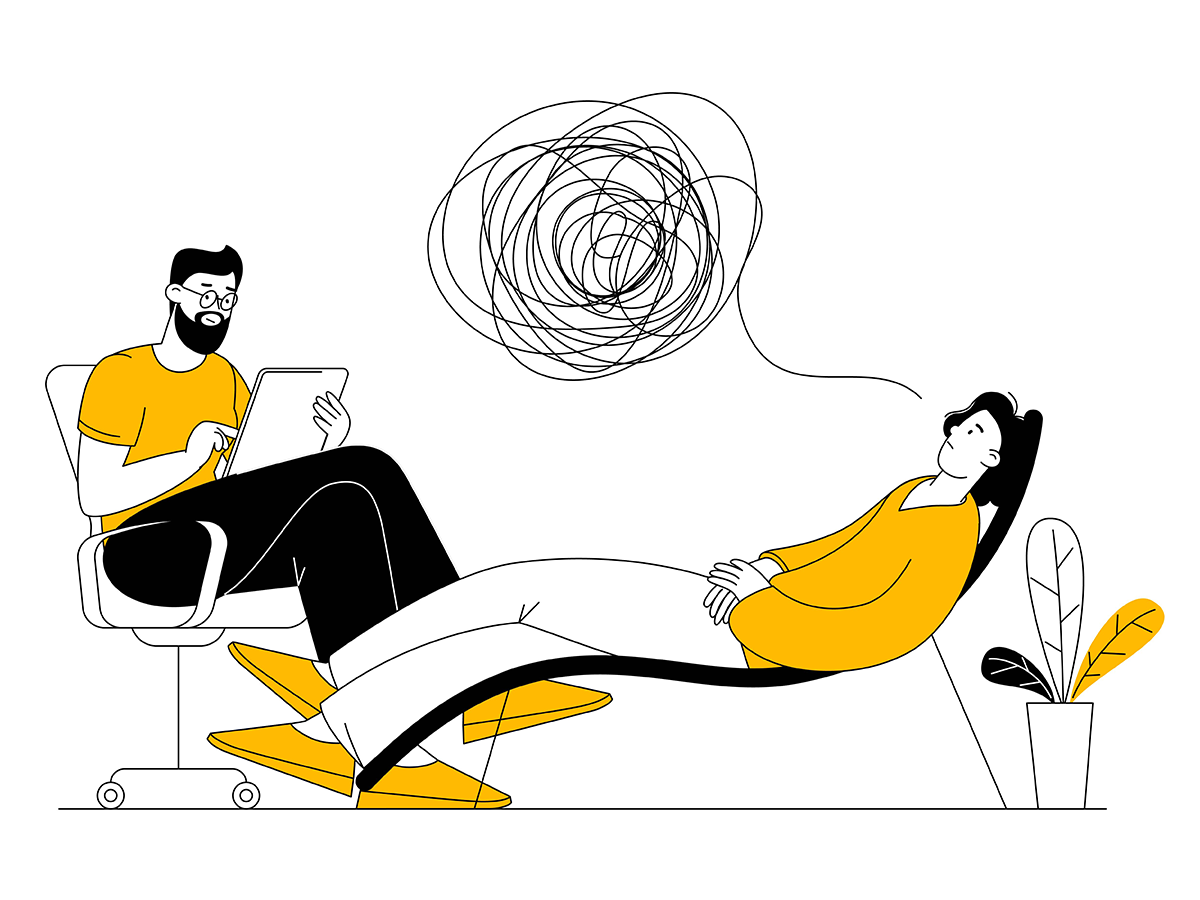
There’s one in nearly every team or company: the leader with a couch in their office, the one everyone knows they can talk to, the resident “therapist.” They’re the glue of the group who listens to the concerns, smoothes over miscommunications, and knows how to bring out the best in people.
Their days are full of meetings they shouldn’t really have to referee, Slack pings with the dreaded, “Do you have a minute?” and an evening commute that replays the 18th time they’ve had an eerily similar conversation to the one they had that afternoon.
Typically, they didn’t ask for this honor. It happened over time, as others noticed, consciously or not, that this is the most emotionally intelligent person in the building. They actively listen, understand others’ perspectives, and respond thoughtfully. As such, they’re invaluable to the health and sustainability of the organization.
And they’re exhausted.
The organization runs quietly on them, and everyone pretends it costs nothing. But even the most flexible have a breaking point.
Often, these leaders’ actual roles don’t officially include these interpersonal gymnastics. They understand the importance of supporting the well-being of their people. So they put on the “good listener hat” but are keenly aware of a mountain of leadership duties beyond the extensive relationship and communication management they do.
They’re owners who have succession plans and real estate acquisitions to drive forward, instead of cleaning up after the last leadership meeting. They’re CFOs and COOs who jump through mental hoops over the office politics of the quarterly update. They’re directors of a department that technically has nothing to do with maintaining emotional equilibrium for the whole company but find themselves managing people more often than not.
Relational triage
But “management” is precisely the approach that wears these leaders out and keeps their teams from growing their EQ, or emotional quotient, which is the ability to understand, manage and use your emotions in constructive ways.
Managing relationships between employees, teams and other leaders in their organization is the equivalent of handing out fish, rather than teaching others how to fish. It’s short-term efficient, which is naturally appealing to busy leaders. But long-term, it leaves teams dependent on an outside problem-solver. Eventually, the leader is lying next to a sleeping partner and Googling things like “how do you teach self-awareness?” and “why do some people complain so much?” or even “how do I know if it’s time to leave a job?”
The problem isn’t inherently the leader or the people they’re supporting. It’s an imbalance of accountability, an over-functioning on the leader’s part in the name of efficiency, harmony and survival.
Emotionally intelligent leaders frequently notice patterns, read social cues, are curious and growth-oriented, can handle a lot and have high expectations of themselves and how they lead. They see and encourage the best in others.
And therein lies the problem. High EQ doesn’t protect leaders from exhaustion; it often accelerates it.
Visionary leaders tend to see potential, including in people, so they meet their team members where they think they could or should be, rather than where they are. They make assumptions about an employee’s capacity (because they have quite a bit themselves) for everything from workload to the ability to receive feedback, grow and communicate effectively.
Then, based on these assumptions, they hand out proverbial fish in the form of weekly check-ins, mediating between employees or teams, or entertaining yet another impromptu knock-on-the-door vent session. Before they know it, the calendar is half full of problem-solving meetings and deep work time gets traded for relational triage.
It’s a costly but common misstep that happens when a well-intentioned leader is stretched too thin. The good news is that their strong EQ lays the foundation for lasting change, but as with many solutions, things may have to get “worse” (for the tired and busy leader) before they can get better.
Few high achievers relish the idea of slowing down to speed up, but in the case of undoing a culture of one leader compensating for the relational and communication skills of others, it’s non-negotiable. Slowing down to speed up from an EQ perspective looks like building awareness for employees so that they begin to see, and take accountability for, the relational weight that’s been carried by their leader.
And awareness-building requires curiosity and questions and guidance, rather than quick, one-size-fits-all solutions. Questions like the following:
➤ 1. What makes you say that?
➤ 2. I noticed this. Did you see that too?
➤ 3. Can you explain that a bit more?
➤ 4. Is there another possibility?
➤ 5. What are you looking for from me?
➤ 6. How can you move forward?
All six questions invite more discussion. The efficiency of a leader assuring someone their issue will be handled and promptly ushering them out the door gets traded for a productive, rather than repetitive, conversation. In the moment, such coaching, awareness-building conversations undoubtedly and unexpectedly eat into a leader’s day, but it yields a future ROI of responding over reacting and self-advocacy over victimization and complaining.
EQ transfer
The uncomfortable truth is that, for the most emotionally intelligent people in the room, the focus shouldn’t be on building more EQ. The work is to consciously transfer emotional responsibility to the people they’ve been carrying.
First, they have to catch all assumptions they have about what a person knows, thinks is possible, can handle, and wants for themselves. Rather than handing out solutions, questions that invite reflection and insight become the norm.
Then, the key is to abandon all judgment of whatever the answers are to those questions and believe them. Leading a person from a place of potential, rather than where they are, is rarely effective or efficient. Some people are comfortable in their present conditions. Some people need direct feedback, while others thrive with positive reinforcement, and some will do best if left alone to learn, even if that involves mistakes.
Finally, leaders need to know when to let their people learn. Silence is a tool. Stepping back gives people space to test new skills. Emotionally intelligent leadership isn’t about being endlessly available, patient or understanding. It’s about building a room full of people who can self-reflect, communicate and move forward without needing a couch, a closed door or a therapist disguised as a leader.
And yes, it will feel worse before it feels better. But the reward is emotional accountability shifting from one capable-but-worn-out person to a now much stronger team.
Jessica Eley is the owner of Madison Executive Coaching.

