

Regardless of where you stand on the need for — or the duration of — school lockdowns during the COVID-19 pandemic, there is little question that many schoolchildren are still playing catchup.
With the 2023–24 school year coming to a close, and with young, child-rearing professionals in mind, we contacted several local organizations to get a glimpse of their summer programming. Whether your child is still behind academically, or you simply want to avoid a stall in their development, there is plenty to offer in the way of summer enrichment.
To hit the highlights, we spoke to the following people: Nicole Schaefer, director of learning supports and summer learning for the Madison Metropolitan School District (MMSD), and Mary Roth, executive director of Madison School and Community Recreation (MSCR), the community’s public recreation provider; Tammy Ocampo, youth services manager, Madison Public Library; Kia Karlen, vice president of education and community engagement, Madison Children’s Museum; and Deirdre Steinmetz, program and operations director, Madison Reading Project.
Summer semester
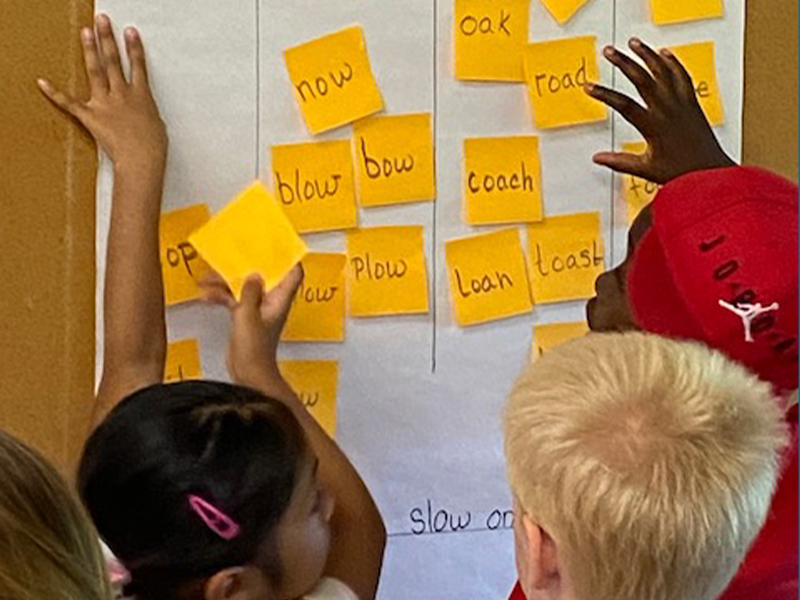
MMSD has a varied summer program, but perhaps its most important component appeals to parents who are worried that their child isn’t reading at their grade level. The program has a 75-minute literacy and biliteracy block, depending upon the student and his or her programming during the regular school year. “It’s an opportunity for them to accelerate their learning, and to be better prepared for the following year,” Schaefer notes.
Free summer programming, which begins June 17 and runs to July 26, is comprised of three sections, including a full-day, 4K–8th grade, invitation-only program called Summer Semester, offered in direct partnership with MSCR. Available on a first-come, first-served basis, it has morning literacy and math blocks and an opportunity to explore the arts before lunch (afternoons are recreation-focused with MSCR).
There also is a high school program for rising ninth graders — kids about to enroll in high school — and an existing 9–12 program for students in need of credit recovery, those who take courses to improve their grades, and for students to take a course that wouldn’t be offered during the regular school year. MMSD also has career technology education (CTE) camps. These are shorter in duration, targeted at middle school students, and offered in partnership with the Boys & Girls Clubs of Dane County.
Summer programming is open to all district students, but an extension is offered to private and parochial school students who live within MMSD.
Afternoon recreation is more enrichment based and designed to be a fun counterpart to the morning math and literacy focus. Activities range from academic and STEM focused programs to swimming and tennis lessons, sports leagues, and youth summer camps, including a variety of interest-based camps at the elementary, middle, and high school levels.
Also at the high school level, the MSCR offers more club-based, out-in-the community programming such as outdoor adventure (hiking, kayaking). MMSD residents pay a fee, though waivers are possible, but non-residents pay fees 50% higher. Most MSCR summer programming starts June 17, but some of its sports leagues and sports activities begin right after the school year ends on June 7.
madison.k12.wi.us/summer-semester
Library learning
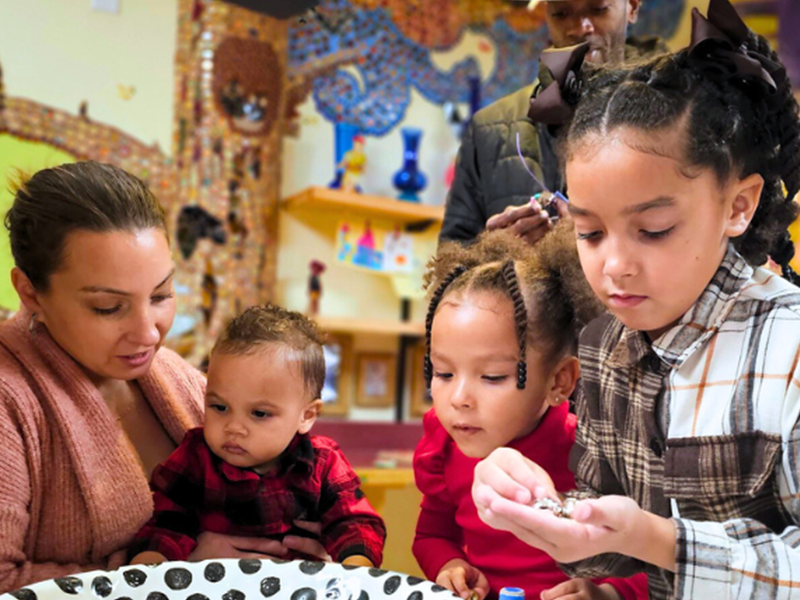
Each Madison Public Library building has a child-centered space, and thanks to a government grant, all of those spaces have new, age-appropriate play materials that enable children from infants to teens create in different ways. Examples include 12-by-12-inch magnetic tiles that stick together, allowing kids to build everything from houses to spaceships, and Lego walls.
The usual art materials also are provided, and there is a variety of what Ocampo calls “engaging programming” with something for everyone — baby play dates, preschool story times where kids practice early literacy skills, and yoga and wellness for parents and kids. For older kids, there are board games and book clubs.
Some libraries have maker spaces for people of all ages, often attended by a local artist who is “adopted” by the library to offer programming as part of Bubbler Artist in Residence. Each artist is different, so wherever their interest lies is what that individual library will focus on. That includes Madison Central Library, which has a large maker room and an artist that remains beyond the summer months.
Most libraries have a summer reading program, but a special summer campaign, We Read, includes a Youth Voices writing contest. The contest is for kids up to age 18, and they compete for a $500 prize and other prizes, or to get their story published in an anthology, and the library partners with Forward Madison to announce the winner at a soccer game.
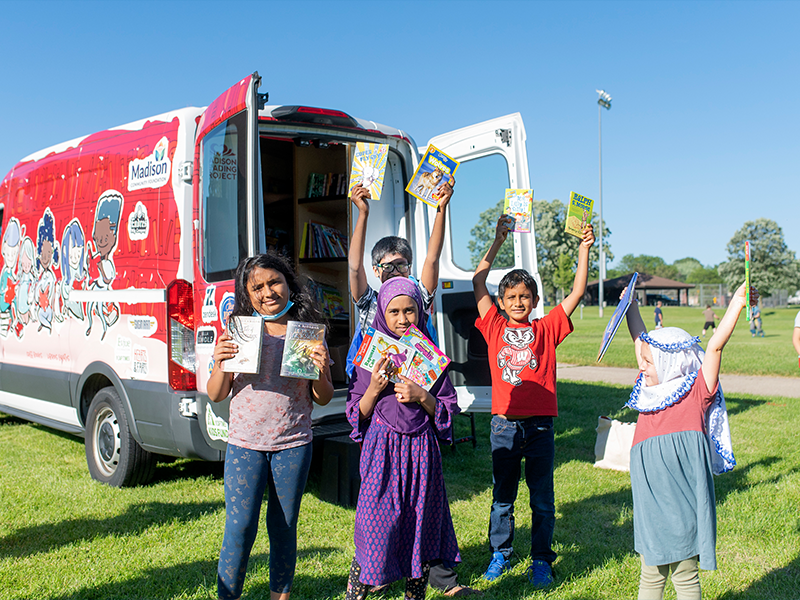
Finally, there is the Dream Bus, a mobile library on wheels that travels around the community for those who don’t have direct access to a library building. The Dream Bus also visits community events and will be at 32 different park events this summer as part of the city of Madison’s Parks Alive initiative.
“It all helps your child combat that summer reading loss,” Ocampo notes, “and keep them engaged during the summer.”
Summer programming starts on Friday, June 7, and continues through September 1. Most programs do not require registration, and Madison’s libraries are open to anyone. Participants don’t need to be a resident of Madison or have a library card, but children under seven must be accompanied by an adult.
Museum moments
Summer programs at Madison Children’s Museum are for children from birth to 12, but Karlen says within that age range, “our sweet spot is 0 to 8 years old,” particularly during the summer months. The museum features ample physical play structures and environments for active play and has an art studio open to any visitor.
“The museum also offers programming for kids in the 9- to 12-year-old range and we do see more kids, even middle schoolers, coming to visit the museum,” Karlen states. “We are focused on open-ended, play-based learning, so there are opportunities for kids to work on gross motor skills.”
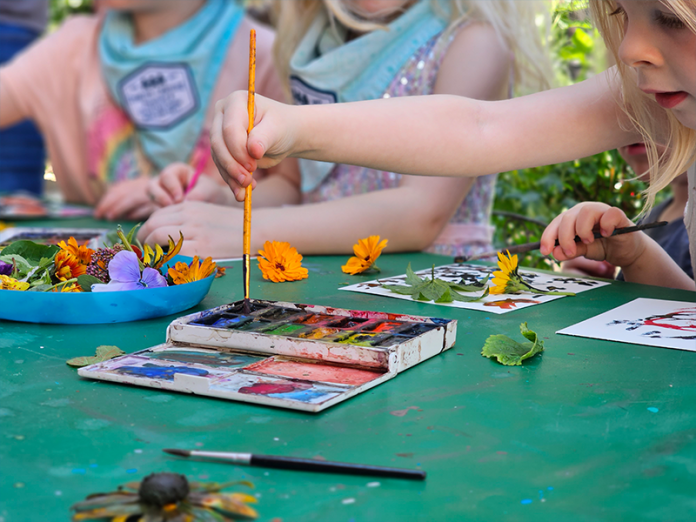
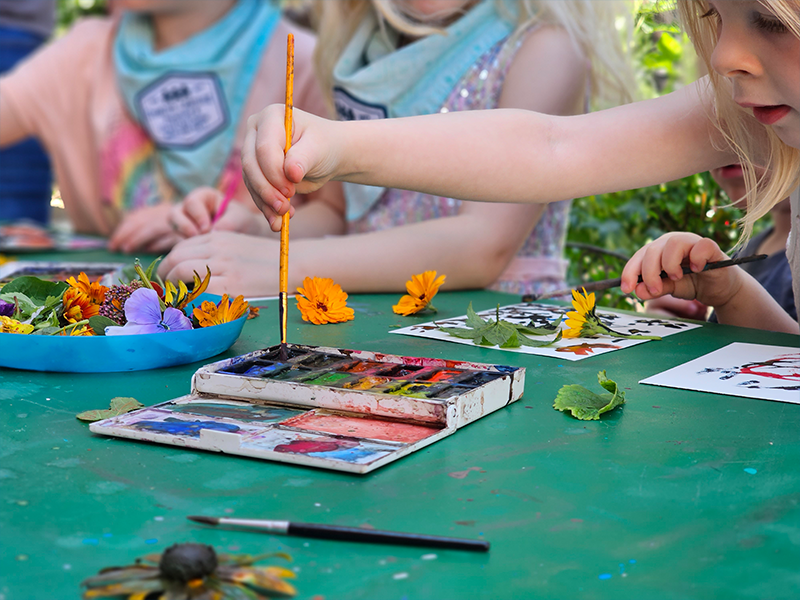
Most of the museum’s scheduled programs complement the fun and learning that occurs at its exhibits. They are free with admission, and they run the gamut from outdoor gardening and environmental education, to visual arts, to performing arts, to cultural programs and celebrations. The idea is to look at the whole child and offer programming that integrates the arts with science, or culture with history.
A key way the museum supports child development is through social-emotional learning. “What we’ve seen, especially as kids are still rebounding from isolation during the peak of COVID, is that kids need opportunities to meet kids and play with kids they haven’t met before,” Karlen explains.
One popular registered program is Camp Kindergarten, a half-day program in August to help children prepare for kindergarten. “A lot of it is simply practicing things like getting dropped off by your parents, meeting a new teacher, meeting new kids, learning how to navigate that, and getting more confidence in new experiences,” Karlen notes. “It’s led by our family learning manager, and it’s a great introduction for kids getting ready for kindergarten.”
For older elementary school children, the museum offers half-day registered workshops that include art and environmental education, including urban gardening. It has outdoor gardens, a mini nature center, and sustainability features. “We’re trying to help kids look at the environment by developing a love for nature and caring for living things,” Karlen notes, “and also learning about green technologies such as solar and wind power.”
Most of the programs take place at the downtown museum, with the exception of the Madison Children’s Museum Roadshow. The roadshow is a mobile museum program that brings mobile exhibits and hands-on activities to events in the community, including cultural festivals like Africa Fest and Disability Pride Fest, and the aforementioned Parks Alive. “We probably will be at about 70 program sites between now and the end of the summer,” Karlen says.
There is free admission on Thursday from 4–8 p.m., about one-third of museum visitors utilize Access for Everyone programs that provide free or $1 admission, and there are low-cost family memberships. Downtown parking is available in the Capitol Square North Garage in the 200 block of East Mifflin Street.
madisonchildrensmuseum.org/events
Reading 9 to 5
In terms of reading enrichment, the first thing Deirdre Steinmetz mentioned is the Dolly Parton Imagination Library program. Madison Reading Project is the local affiliate of the nationwide program, and anyone in Dane County that has a child under five can receive a free, age- appropriate book each month, including one titled In Our Garden from local author Pat Zietlow Miller, until the child’s fifth birthday. It takes about five minutes to sign up for the program on the organization’s website, and the books generally start arriving within 90 days.
“That’s a great way to have an ongoing supply of new books coming in,” Steinmetz notes. “The kids really like getting the books in the mail and they all go straight to the home address of the child. There are also reading tips and resources that come along with that.”
In addition, the wheels on a second bus will be going round to community events, including Parks Alive events, by May 1. Madison Reading Project has had a custom-made second bus — Book Bus 2.0 — built with about three times the capacity of its existing book bus. The new, climate-controlled vehicle will be available year round, stocked with more books, and jam-packed with accessibility and adaptability features, “ensuring that when we’re out and about in the Madison community, we can adapt to whichever group of children or individuals we serve or whatever environment we’re in,” Steinmetz says.

