

Venture capital and angel investments in Wisconsin companies in 2024 were the lowest in any year since 2018, according to the Wisconsin Technology Council, the science and technology adviser to the governor and the Legislature.
Just three years after its 2021 peak, when the state saw investments of $869 million in 140 deals due in part to pent-up pandemic demand, less than half of that — $358 million in 66 deals — was invested last year.
Nationally, venture capital was down 18% in 2024 compared to 2023, according to the Venture Capital Journal, but Wisconsin’s performance is the continuation of a decline since that 2021 peak. Wisconsin companies raised $640 million and $490 million in 2022 and 2023, respectively, with more than 100 deals each year.
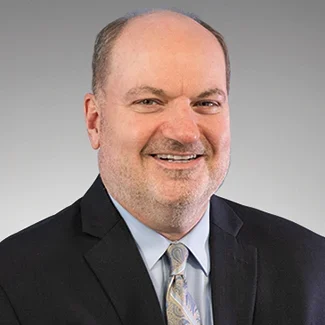
Tom Still, president of the tech council, does not believe the decline is linked to a lack of investment-worthy companies here. Following his discussions with investors, he said the decline is more about a lack of dollars at the high-end of the investment spectrum.
Still said the average investment of $3 million per company is good, but it doesn’t get companies “where they want to go.” He said Wisconsin must find a way to attract more later-stage dollars to bring investments made at more modest levels to fruition.
“There are not enough VCs at the upper end of the spectrum because we just don’t seem to be attracting those kinds of folks to come into Wisconsin deals,” Still said. “In Wisconsin’s case, we need to have more big players taking part in deals, syndicating deals, and helping these young companies get beyond the early stages.”
Still would like to see lawmakers provide more state investment in a fund of funds to attract outside firms, and those firms should be required to set up an office in Wisconsin. A logical vehicle, he said, is the existing Wisconsin Investment Fund, a public-private capital fund focused on making investments in Wisconsin-based companies (not to be confused with the Badger Fund of Funds, a limited partnership set up by the state to invest in Wisconsin venture funds).
“Let’s say XYZ Fund out of California decides to set up shop in Wisconsin,” he said. “The requirement would be that they actually have a physical presence here, and that would integrate them into the larger ecosystem and make it more possible to syndicate deals with other VCs.
“We have some really good VCs here, but they’re not that big, and the two biggest are exclusively in health care — Venture Investors and Health X Ventures,” he said. “So, it’d be great to have more diversity in the [industrial] sectors and just more hands on deck.”
In a recent Inside Wisconsin column, Still said other Midwestern states such as Michigan and Ohio have created larger funds for the purpose of investing in companies in their respective states — with encouraging results.
In its 2023 report, the Ohio Capital Fund said it invested $139.9 million in other state venture capital funds, leveraging $1.41 billion in private investments across 107 companies, creating 3,250 jobs at an average salary of $107,000, and generating $39.2 million in tax revenue.
Meanwhile, Venture Michigan Fund I and II have invested $264.5 million across 56 companies, leveraging $1.71 billion in total private investment. The Michigan funds reported the creation of 1,762 jobs with $128 million in annual tax revenue. These programs help each state raise more than $1 billion annually in venture capital.
Exit sign
Another factor in Wisconsin’s decline, according to Still, is the lack of “exits” — initial public offerings, mergers and acquisitions, or secondary sales — involving startups that have received angel or venture capital and are part of a venture capital firm’s portfolio. Whereas in 2021, there was more money on the sidelines waiting to be deployed, now a lot of the investors’ deals have not gotten close to an exit. Until those exits occur, they can’t redeploy the cash that would be generated by an exit.
With this logjam, it’s not surprising that firms such as Venture Investors and HealthX Ventures would like to see more competition from large venture firms. The reason, Still said, is they would like to have more people like themselves help syndicate larger deals.
John Neis, managing director of Venture Investors, which has offices in Madison and Ann Arbor, Michigan, said that while Wisconsin is playing in the $3 million per company range, the national range is tens of millions of dollars. Wisconsin has to play at that level, he said, and it can take a cue from the Michigan experience.
“I’ve been a longtime advocate for the state creating a meaningfully sized fund of funds, and this is really based on our experience in Michigan,” Neis said. “When we raised our fourth fund, Michigan had created the Venture Michigan Fund, and they did two of them. One was $120 million, and the other one was $95 million, and this was a fund to invest in venture capital funds.
“It’s the reason we set up offices over there,” he said. “We received $20 million towards our fund. Our fund ended up being $118 million, and you look at the activity from that and the net benefit, it was enormous.”
For Venture Investors and others to receive state money, Venture Michigan established certain requirements: They could not be more than 25% of Venture Investors’ fund — they ended up being $20 million out of a $118 million fund — and the firm was required to invest “at least an equal amount” in Michigan companies.
“The way they achieved multiples was through syndication,” Neis said. “The venture world is like a social network. People do deals with people they know and people (they) have done deals with before. So, if we got other funds to set up shop here in Wisconsin, we would not only get them, but we would get their whole network looking at deals that would be done here.”
At the moment, Neis said the median-sized fund nationally is $57 million, and Wisconsin’s median-sized fund is probably under $20 million. “Those funds just can’t write big checks,” he said. “They are investing $1 million, maybe $2 million over time in a company. They’re not really in a position to co-invest as peers in leading a large syndicated financing from national sources of large funds. We’ve been able to do that, and it’s not something that happened overnight. It took us time to build that.”
According to Neis, creating more Wisconsin funds that are above the median can consist of a combination of existing groups in the state, and outside firms that set up an office here. Getting venture firms to set up an office here takes a minimum commitment of $15 to $20 million because on average, the management fees paid from a fund are about 2%.
Two percent of $15 million is $300,000 in annual fees, “and when you think of the cost of setting up an office, having office space, putting a full-time professional here … that’s a bare minimum just to cover the cost of setting up an office,” Neis said.
Neis believes Wisconsin would find quality firms willing to set up shop here. “We need more than two funds and we need funds focused on every sector where we’re going to play,” he said. “HealthX is a digital health investor and we’re in health care. We do a broader focus including medical devices and pharma, but you need tech funds, you need clean tech funds, and you need to try to cover the broad spectrum of the deals that the state is focused on. If you had a $100 million fund, you could be committing to six funds and have more meaningful players here.
“We wouldn’t view it as competition. We would view them as potential collaborators to help syndicate and finance the companies that we back.”
Michael Thorson, co-founder and managing director of Inventure Capital in Madison, and an angel investor through Wisconsin Investment Partners, suggested a smaller scale program to attract big venture firms.
“Let’s try it out with a smaller scale type of program and see what kind of results we get,” he said. “There’s no reason we need to go in with $200 million for this type of initiative. I would say take a couple of firms that have connections to the state, or have people in them who are senior and higher up and realize the value that Wisconsin delivers. Ask them for a request for proposal and see if we can get one or two of them and see how that plays out.”
Thorson suggested that Wisconsin pick a couple of industry sectors that represent a strength — sectors that don’t overlap with ones that already have access to venture capital — execute a pilot program and evaluate the results. He pointed to advanced manufacturing and agricultural technology as sector examples.
More pieces to the puzzle
Still believes that many of the right pieces are in place, but more must be added. “We see a fair number of companies who come through our different events — our contests like the Business Plan Contest,” he said. “We see more and more good organizations like gener8tor, StartingBlock Madison, and others that are helping on the mentoring and accelerator end.
“There are some very good companies out there across the wide swaths of technology sectors. Not all of them would make it of course, but there’s enough of a critical mass there that we could see better results if there’s more money in the system.”

