
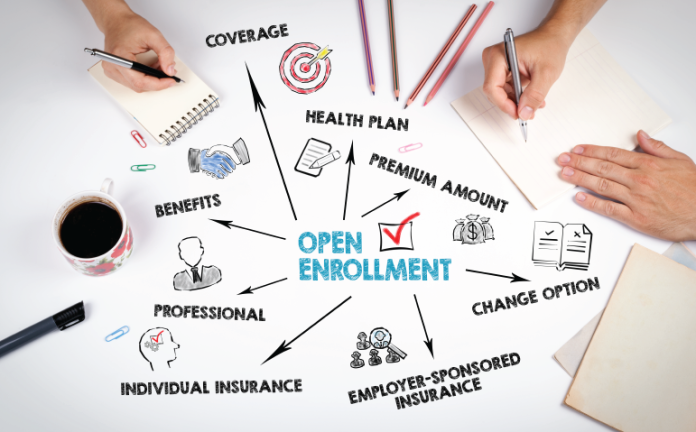

As the period for open enrollment in employer-sponsored benefit plans draws to a close, millions of professionals are likely contemplating their choices of medical, dental, vision, and supplementary benefit plans for 2022. While the right benefit plan for you varies for every individual, there are some universally helpful tips.
While sorting through your choices this year, here are seven things to consider courtesy of Amy O’Meara Chambers, a health plan expert and COO of HealthBridge, an employee financial security benefit company:
- There is no right answer for everyone.
The best choice of benefit plans will depend on your financial situation, your health, and the needs of any spouses or dependents covered by your plan, among other variables. Since these factors vary greatly from person to person, there is no one-size-fits-all answer to the question of which benefits to choose.
- There is no such thing as a perfect plan.
Every open enrollment choice comes with tradeoffs. Health plans that carry a higher deductible routinely come with lower premiums, for example, while plans with a lower deductible carry higher premiums. Be sure to read the fine print of any plan that sounds too good to be true. It probably is.
- What are your health needs in a typical year? In 2022?
It’s useful to review where your medical, dental, and vision expenses were allocated over the past year. (Your provider should make this information readily available online.) Some of these are knowable variables, such as the cost of prescription drugs you will continue to use in 2022. Do you have any life events â a major surgery, perhaps, or the birth of a child â planned for 2022? If you know you will be spending more than usual in the new year, consider choosing a lower-deductible plan over one with lower monthly premiums.
- Listen to those (sometimes tedious) HR presentations.
When the choice between two plans isn’t obvious, the answer might emerge in the details. Your employer’s human resources department will likely schedule one or more presentations for employees to review their available benefit offerings in detail. While they might seem long and overly meticulous, these presentations are useful for sifting through detailed information about each plan.
- Ask questions.
How much will you have to pay out of pocket before your benefits kick in? Do prescription drugs count toward your deductible? What are the costs associated with insuring spouses and dependents? If the answers to questions like these aren’t explicit from your new open enrollment documents, ask your human resources department. Someone there might have had a direct role in negotiating the available choices and can point to the solution that’s best for your unique situation.
- Take advantage of FSAs and HSAs.
The money you save in a health savings account (HSAs) frequently rolls over from one year to the next and reduces your tax burden (up to a predetermined limit). The money allocated to flexible spending accounts (FSAs) are available to employees beginning Jan. 1 â even if it’s deducted from your paycheck over the course of a calendar year. Find out which of these plans is available through your employer and develop a plan to maximize its effectiveness for your planned 2022 expenses.
- Enroll in a third-party program to assist with debt.
Some third-party programs, offered alongside standard health plans, exist solely to help employees address the growing national problem of debt related to medical expenses. Some of these programs educate employees on the “financial wellness” of paying for their health costs. Others offer lines of credit that allow patients to get the care they need now and worry about repayment later. Ask your HR department if any are available to you.
What if you missed your job-based open enrollment?
If you have missed your company’s open enrollment period for health insurance benefits, you could be out of luck. If you haven’t already signed up for health insurance, there’s a good chance you won’t be able to do so this year. However, if you were already enrolled last year, your plan may be automatically renewed for this year if you didn’t make any changes during your employer’s open enrollment period, according to medical and legal experts at VerywellHealth.com.
“Some organizations are more lenient than others about open enrollment, but very few will make special exceptions for someone who just forgot to show up, as exceptions are generally prohibited by the terms of the health insurance agreement,” notes Kelly Montgomery, a health policy expert and former policy analyst for the American Diabetes Association.
While missing your open enrollment period could mean you’ll be without employer-sponsored health insurance benefits for next year, a special enrollment period could be triggered if you have recently experienced a significant, life-changing event.
“A special enrollment period could be triggered if you are covered under someone else’s plan and lose that coverage,” explains Montgomery. “For example, if you are covered under your spouse’s plan and your spouse loses her job or you get divorced, this would trigger a special enrollment period that would allow you to enroll in your company’s health plan right away.
“Millions of Americans have experienced job losses amid the COVID-19 pandemic, and many have lost their employer-sponsored insurance as a result,” Montgomery adds. “There are a variety of options in this situation: COBRA or state continuation may be an option, but the coverage loss will also trigger a special enrollment period during which they can enroll in a spouse’s plan if it’s available or buy a plan in the individual market.
“Additionally, if you marry, have a child, or adopt a child, you could enroll your dependents right away during a special enrollment period.
“These special enrollment periods also apply in the individual market,” concludes Montgomery. “If you lose your job-based health insurance in the middle of the year, you’re eligible to enroll in a plan through the exchange or directly through a health insurance company, despite the fact that open enrollment for the year has already ended.”
Click here to sign up for the free IB Ezine — your twice-weekly resource for local business news, analysis, voices, and the names you need to know. If you are not already a subscriber to In Business magazine, be sure to sign up for our monthly print edition here.

