

About a quarter century ago, I knew “as close to zero” about child care as it gets.
What I did know is I wanted my two young children to enroll, learn and grow with the support of a high-quality program.
Eventually, I applied for a part-time fundraising job at the Wisconsin Early Childhood Association in 2002 and left the interview with a different job entirely: as a member of the leadership team and shortly thereafter, WECA’s new executive director.
Once I officially entered the world of early care and education, and throughout the 23 years of my current role, I have had so many sleepless nights.
What consistently worries me are persistent, systemic child care challenges and how to ratchet up public support to address them. These are realities that should worry us all — not just those of us who work in child care or child care-focused nonprofits.
These challenges didn’t materialize overnight. They were a slow but steady burn over the course of years and decades. Those decades have been filled with very little by way of funding support from the state Legislature, leading to a steep decline in programs across the state.
In fact, between 2013 and 2020, Wisconsin lost a net 2,000 child care businesses — more than a quarter of the entire industry. Low wages and few benefits for the early childhood education workforce have led to a chronic teacher turnover rate of 40%.
Public commitment
But perhaps the core factor in the sector’s instability is that it’s almost exclusively funded on the backs of young working parents through the fees they pay, which can be about 25% of a dual -income household’s wages — or at least 33% percent for a single parent.
That’s unlike K-12 education, which is publicly funded. We have long viewed that as essential because the economy would crumble if we relied on parents to privately pay for 13 years of education with no help from public funding.
There is no way to say this gently: It is long past time for state legislators to view child care as a public good worthy of long-term, significant and sustained public funding. This year, we took some major steps forward in the state budget process, but there is still so much more work to be done.
Public investment in child care is non-negotiable if we want families to thrive, the economy to grow and businesses to flourish.
Fortunately, Gov. Evers signed an emergency order on March 14, 2020, marking a turning point in public understanding of just how critical the child care sector is for working parents to stay working. That recognition came with more than $800 million in federal funding with the goal of keeping it operating at a time when those dubbed “essential workers” needed to keep the lights on and communities running through the pandemic.
Workers in hospitals, clinics, grocery stores, gas stations — just to name a few — needed the support of child care workers to keep their employees on the clock. They needed what we refer to as “the workforce behind the workforce.”
The other reality that came to light: Child care’s essential nature didn’t magically disappear when stay-at-home orders were lifted, vaccines were developed and life went “back to normal.” The need stayed front and center and has remained.
Unfortunately, the federal pandemic relief funding supporting Wisconsin’s child care sector for the Child Care Counts Program ended June 30. As this point approached — known as the fiscal cliff — child care providers, researchers, advocates, organizations like WECA and others loudly sounded the alarm.
This included the Institute for Research on Poverty, whose survey data showed we would rapidly lose about 25% of programs, see care hours dwindle, and have significant rate hikes without the state stepping up with funding to replace some or all of what was going away.
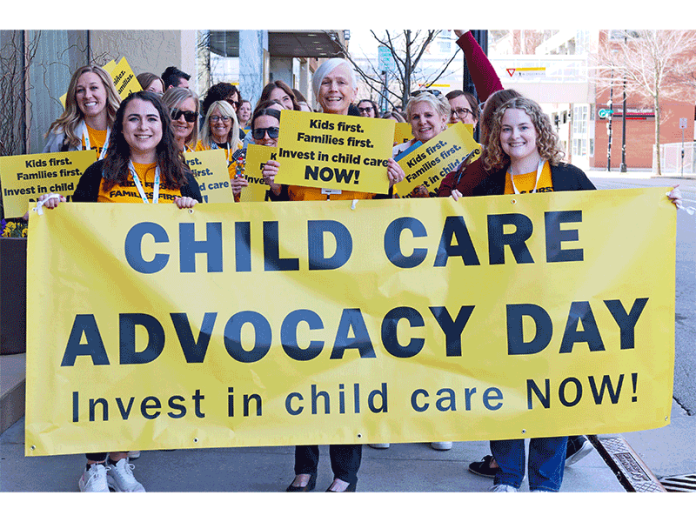
In anticipation of the “cliff,” WECA spent the last four years building strong advocate coalitions of parents, child care providers, businesses, community leaders and concerned residents from a variety of backgrounds. Ahead of this year’s final budget negotiations, 80 business leaders — from chambers of commerce to health system CEOs and many large and small employers — called for a deep public investment in child care.
What’s more, 2,500 parents from across the state — 71 of 72 counties — signed a statement calling for the same.
The result? The 2025-27 state budget saw a first-ever investment of state general purpose revenue into child care. Wisconsin now joins a vast majority of other states that (rightly) do this.
Without hard-fought yet critical bipartisan negotiations between Gov. Evers and legislative leadership, these wins would not have happened. Bipartisanship is rare in recent Wisconsin politics, and the deepening national political divide does not help.
What’s included in Wisconsin’s budget for child care — $110 million in state funding for one more year of direct payments to programs, a modest first-time investment of $66 million in general purpose revenue toward a new Elementary School Readiness program for 4-year-olds in child care, and an increase in Wisconsin Shares Child Care subsidy for low-income families to afford care — is unequivocally historic.
It’s progress for an advocacy movement that’s spanned decades of relentless effort, but it’s also the starting point of a lot of work ahead.
Let me be clear: These investments do not solve the state’s child care challenges. In addition, a surprising number of policy changes also were in the budget, some of which will certainly be harmful to infants and toddlers by incentivizing providers serving low-income children to increase the number of children they care for in their programs.
The funding is a “bridge” to another year and therefore a stepping stone to the advocacy efforts and policy changes needed in the future. That is why it is critical for businesses and economic development leaders to stay engaged and support future progress. This growing coalition of voices — which includes active, engaged leadership from business and economic development — has to keep the momentum moving forward.
Child care is your business
Look no further than other states: Historic investments have been made in places like Virginia, where the Virginia Business Roundtable for Early Education mobilized leaders and secured a $1 billion investment. Or take Vermont, where more than 350 businesses lobbied for a payroll tax to support child care. Or there’s Kentucky, where the Kentucky Collaborative on Child Care provided testimony connecting child care to increased workforce participation.
Business-led advocacy ensures child care is viewed as infrastructure that directly connects to workforce and economic stability.
To move beyond stopgaps, we look to the business community to make an investment but not of dollars. Rather, invest your political capital to get the job done in Wisconsin. It’s time Wisconsin is seen as a state young families are proud to call home.
More child care champions are entering the conversation every day. Will you be one of them?
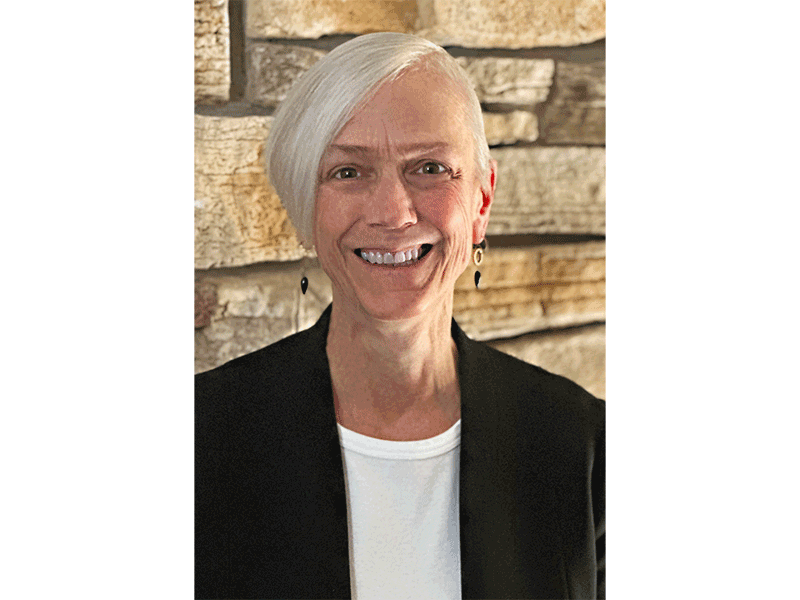
Ruth Schmidt is the executive director of the Wisconsin Early Childhood Association, a state nonprofit organization that administers programs and advocates for child care professionals and child care programs across Wisconsin. WECA is the state affiliate of the National Association for the Education of Young Children (NAEYC).
To share your thoughts on a current business topic in a future Open Mic column, email Joe Vanden Plas at joe@ibmadison.com for consideration.

