
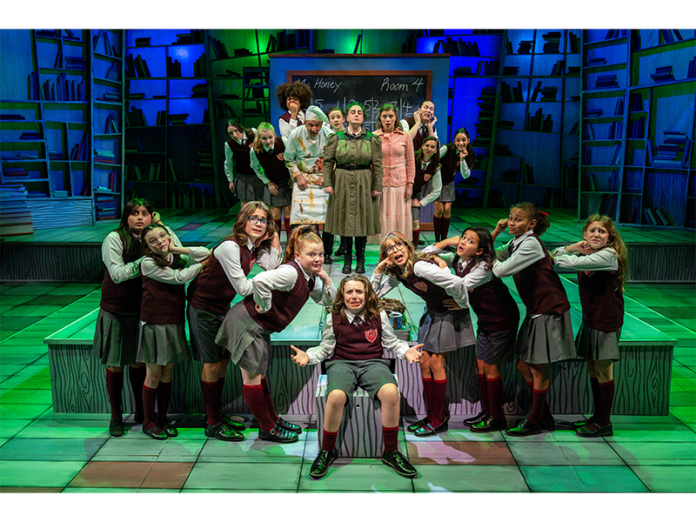

As it celebrates its 60th anniversary, Children’s Theater of Madison has its eye on its next act. It plans to stick to the script of making sure young people in Dane County have access to a creative outlet that, among other things, helps prepare them for the world of work.

As its $6 million Ensure the Future campaign unfolds — all but $1.25 million has been raised so far — Executive Director Allen Ebert and Artistic Director Brian Cowing want local employers to know their programs and productions don’t just produce actors, they produce problem-solvers, communicators and emotionally intelligent collaborators.
Just what the future workforce needs.
Through a combination of educational opportunities offered through its CTM Theater Academy, theatrical productions including summer stage programs, and programs like its Young Playwrights Festival, Children’s Theater of Madison’s 15 full-time staff and more than 125 artists, educators and technicians contribute to Dane County’s $346.7 million annual creative economy.
Since its founding in 1965, the nonprofit organization has served more than 850,000 children and entertained 1.5 million patrons, produced 255 mainstage productions and it has worked with schools across Dane County and beyond.
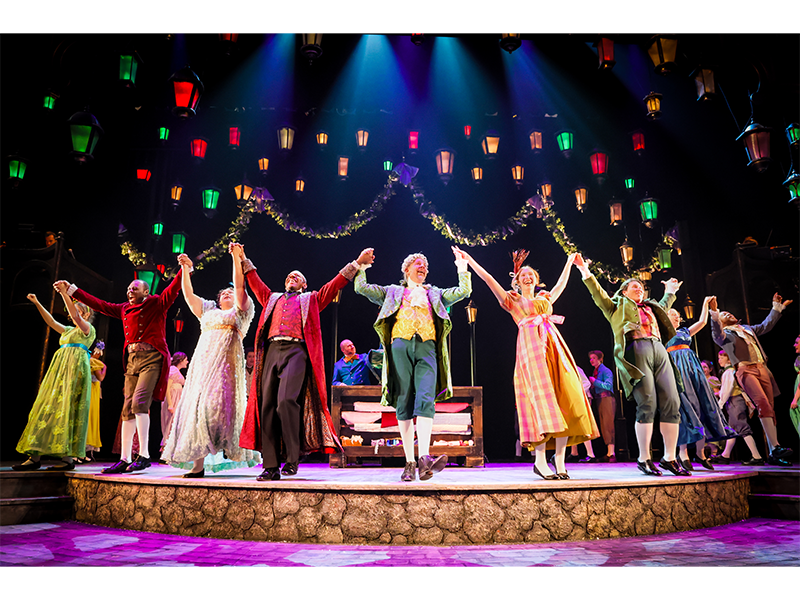
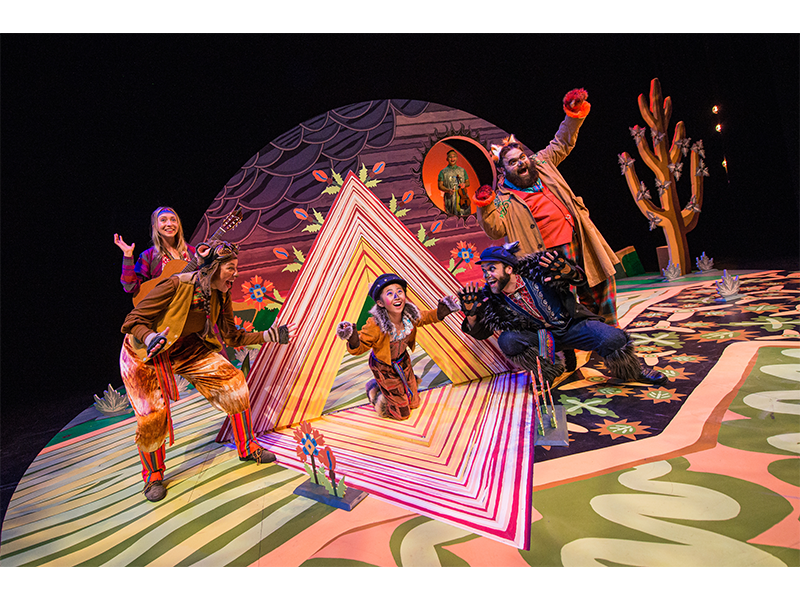
Among its forthcoming productions are its annual presentation of “A Christmas Carol” and a new show for its youngest audiences titled “The Pigeon Gets a Big Time Holiday Extravaganza,” marking the first time Children’s Theater of Madison has presented two holiday shows at the same time.
Cowing said the great thing about the organization is that it leans into whimsy.
“We always talk about whimsy in all of our (set) designs, that there’s this sense of wonder in everything we do,” he said. “Our ‘Christmas Carol’ … it features over 70 lanterns that can all light up individually, all change color, and so there’s really this magical element to everything we do.”

Ebert said the organization produces a high quality show by hiringprofessional designers and actors, as well as local performers and youth.
“It’s a professional TYA, what’s called theater for young audiences,” he said. “So really, ‘A Christmas Carol,’ we’re in our 49th year (of presenting it). Next year we’ll be celebrating 50 years of doing that here in Madison. It is a staple. It is a tradition. It is grand.
“We’ve heard comments that a lot of the shows we do rival what you would see in a regional or Broadway-type setting, and we pride ourselves on that because it’s also through that process that there’s education and growth that happens on all fronts,” Ebert said.
Dual leadership
Ebert said the organization’s dual-leadership model, which features an artistic director and executive director working in tandem, has ensured that creative excellence and fiscal responsibility are always in balance.
He said the theater is a case study in collaboration, leaning into partnerships with Madison Youth Choirs, with business leaders to sustain jobs for over 125 artists and educators, and now with statewide efforts like Wisconsin Social Rx, which connect the arts to community health.
Both Ebert and Cowing have been artists and Ebert also has been a director and a programmer, so when he engages in data analysis that he calls “‘Moneyball’ for the arts,” (referring to how the Oakland Athletics baseball team used analytics to boost success), it’s with an understanding of what the artistic side of the brain is thinking.
“I understand a lot of what Brian looks at,” Ebert said. “However, Brian’s looking at it from the standpoint of how does this all fit together — talent, product and what needs to be driven there?
“We work very closely together so that Brian will put together a couple seasons that he feels will resonate from an artistic mission, (and) that work together from a staffing-artist perspective,” Ebert said. “Then that comes to me where I run data around it. What can we project in terms of ticket sales? What are we seeing from past years?”
During the 2025-26 season, CTM will produce seven shows alongside its year-round educational programs. Given all the scene building and custom design work that occurs in addition to scheduling and marketing and ticket sales, that would be a lot of work for one person in leadership to do, Cowing said.
“The work, our level of work in professional design and creation, is really high and we want to maintain that because that’s what audiences expect from us,” he said.
Collaboration isn’t just a nice thing to have, it’s a strategy for survival and growth inside and outside the organization. That collaborative approach led to the creation of Madison Youth Arts Center (MYArts), a 65,000 square foot, $35 million facility co-developed in partnership with Madison Youth Choirs.
With a lead gift from Pleasant T. Rowland, MYArts opened in 2021 and became home to Children’s Theater of Madison, Madison Youth Choirs and other youth arts organizations. The center has two theaters, 14 studios and classroom spaces that serve over 25,000 young people each year, giving them a space to not only create, but also develop the critical thinking and collaborative skills that employers need.
Children’s Theater of Madison also builds the future of theater, serving as a feeder system for professional arts organizations.
About 70% of CTM’s revenue comes from ticket sales and class tuition, and 30% from contributed revenue such as corporate sponsorships, grants and gifts.
Ebert said there are a lot of “eyes” on the organization with 15,000 on its mailing list, more than 30,000 patrons that annually attend its shows, and more than 1,500 youth that participate in its year-round academic classes.
“So we have a big footprint,” Ebert said. “We have a big reach that can help businesses. … We are in the creative economy. A lot of the youth that go through our programs end up as the next creative thinkers and leaders in business.
“And that’s what LinkedIn said — that the No. 1 thing businesses are looking for is that creativity and that kind of imagination that we teach,” he said. “That’s what we do here.”
Children’s Theater of Madison’s newest program isTheater for the Very Young, which serves children from birth to 5 years. Cowing said the program, now in its second year, starts kids early, teaches them life lessons, gives them a theatrical sense of wonder at an early age, and lets parents know they are a companion in the learning and the development of their child in the arts.
“We try to start that at a really, really early age,” Cowing said. “That was (the production of) ‘Winnie the Pooh’ this year, ‘The Magical Forest’ last year, and that has interactive elements. We hope that marks their longevity with us at CTM and that they will continue to build audiences.”
CTM also has an essential partner in local school districts. The organization has more than 13,000 youth who come to its school matinee programs, which because it’s heavily subsidized, the average ticket price is just $7.
“If we want to continue to provide access, we need assistance (from schools) in doing that because it is really important for youth to experience live theater,” Ebert said, “and maybe the only time a child gets to experience it is through a school field trip.”
In partnership with the Madison Public Schools Foundation, CTM also has adopted a school, Samuel Gompers Elementary in Madison. Using theater, it’s helping to introduce the art into the school’s curriculum, Ebert said.
“We also do Young Playwrights for Change where we go into the schools and help them write 10-minute plays,” he said. “It helps with literacy, so we’ve had over 150 youth participate in that over the last year and it grows.
“So it’s not about competition with the schools,” Ebert said. “It is about how we can augment what they are offering? How can we be a resource to assist in the community and be a partner … to help our youth have a well-rounded experience as they grow up?”
Artistic pitch
The Ensure the Future campaign is off to a strong start and will continue through August 2026. Ebert’s fundraising pitch to the business community comes down to this: investing in creative youth is an investment in the economy.
For CTM, there remains a revenue gap stemming from COVID and the effects of inflation continue to weigh on the cost of goods.
“We are about $1.25 million away from that (fundraising) goal,” said Ebert, who said it’s time to stop looking at nonprofits as anything other than a business.
“So we’re … meeting with people, doing asks, and we’re going to be launching a more significant public-wide initiative after the first of the year,” he said. “That’s where things stand right now.”

