
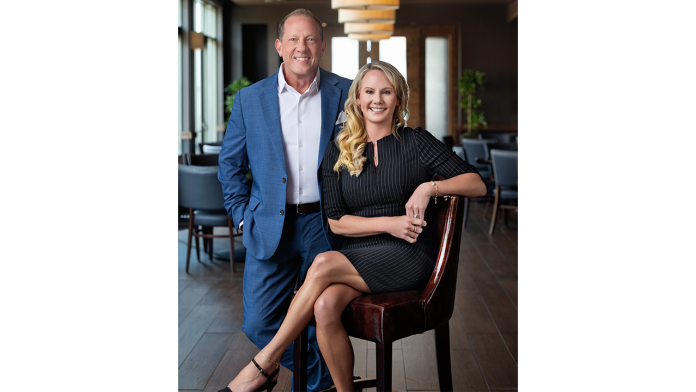


Don Fussner prefers “Below Deck” to “Real Housewives,” but nevertheless a reality television watch is an essential element of the Friday ritual that brings the CEO of Johnsonville and his wife Julie, CEO of Culver’s Franchising in Prairie du Sac, back together after a busy workweek.
“We live for our weekends at home together,” said Don, an Atlantic City native who spends his weekdays living in Sheboygan County and leading business for Wisconsin’s quintessential sausage brand. He first joined Johnsonville in 2019 as CFO, subsequently added COO responsibilities and was named CEO in 2024.
If there’s another family-owned company that holds a candle to Johnsonville’s status as Wisconsin icon, it’s Culver’s. That’s the company run by Julie, a suburban Chicago native who now calls Waunakee home.
She came to Culver’s to lead marketing in 2017 and was elevated to CMO in 2023 and to CEO in 2025. Now nine years into their marriage, the Fussners are a two-CEO household with a lot on their plate besides brats and ButterBurgers.
Their traditional Friday date nights have started to occasionally be infiltrated by their four under-4 grandchildren, so family and their marriage have become more important than ever. And Julie said it’s hard right now to envision a future that isn’t centered somewhere in the Dairy State, even after retirement.
Both Don and Julie have worked for a variety of high-profile companies all over the country. But at this point, Julie said, the Fussners’ life is about as Wisconsin as it gets: “We’ve been here as long as anywhere else. We feel very native.”
The Johnsonville Way
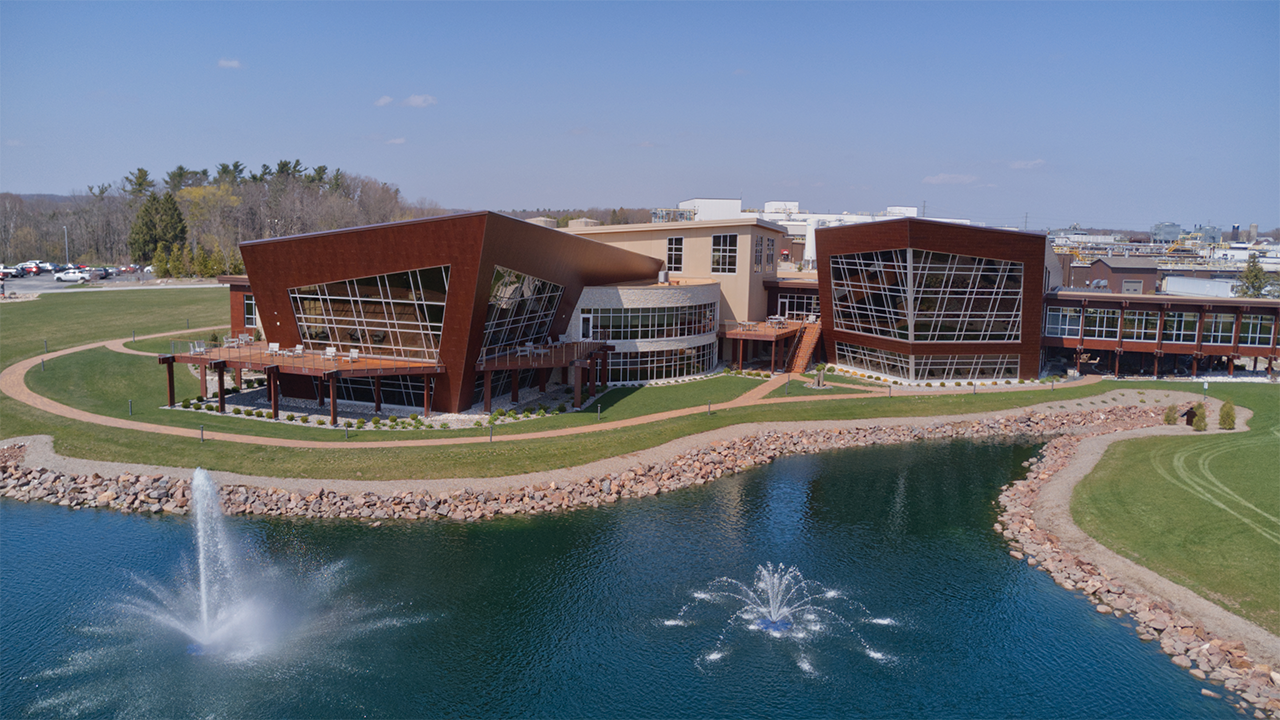
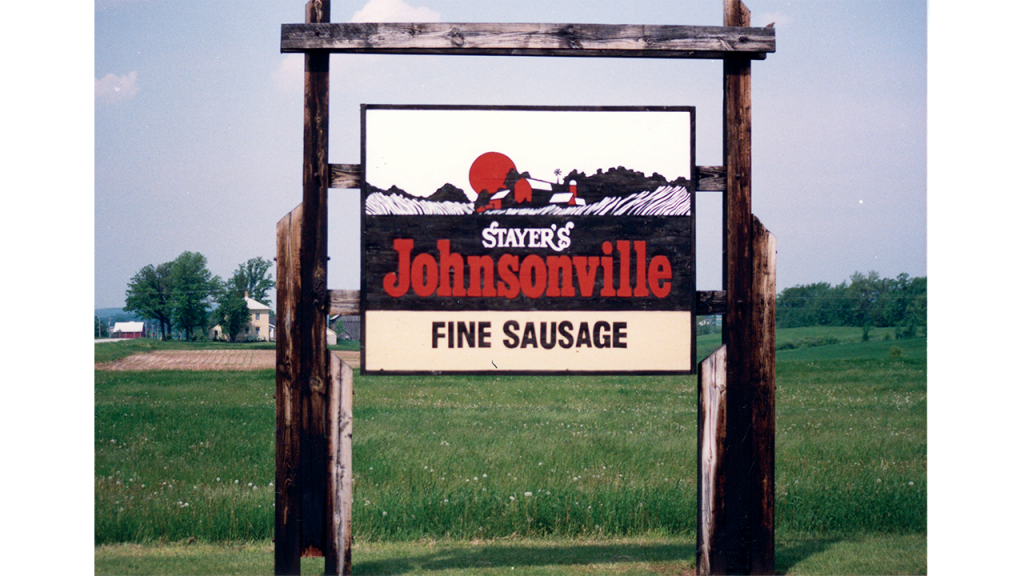
The Stayer family founded Johnsonville as a local butcher shop in 1945 in the unincorporated Sheboygan County community and today it’s the most popular sausage brand in the U.S., also sold in 45 other countries.
Mergers, acquisitions and explosive growth have defined Johnsonville’s most recent history, including its 2024 acquisition of Salm Partners in Denmark, Wisconsin, the largest manufacturer of ready-to-eat, cook-in-bag sausages and hot dogs in the U.S. and a longtime Johnsonville co-packer. Johnsonville, in fact, has doubled in size since 2019. The protein trend (which Don argued is actually here to stay) has further boosted demand and opportunity for Johnsonville products.
Leading Johnsonville in the midst of such massive growth means Don is laser-focused on maintaining the culture that has helped the company become a household name, he said. One of his proudest accomplishments has been refocusing culture around “The Johnsonville Way,” a book written by the company founder in 1980 which Don said is a “crystallized, crisp and transparent” distillation of the brand’s values that can be taught and replicated around the globe.
For Don, culture is everything.
“Growth should amplify your culture, not dilute it,” he said. “We have manufacturing plants in Asia, in Canada, in Mexico, and of course the U.S., so really doubling down and becoming really clear on how we learn and live in that culture is important.”
A visit to a Philippines-based company acquired by Johnsonville was particularly eye-opening for Don. Whereas Johnsonville’s team has members and coaches, the acquired company had bosses and employees — and even that terminology was generous.
“Every employee on the line had a number on their shirt, and that’s what they referred to,” Don recalled, cringing as he likened the practice to that of a prison. “That had to be changed immediately. It was the beginning of introducing them to the Johnsonville Way, which is definitely the core of our success.”
Alex Castillo, Johnsonville’s chief people officer, has worked alongside Don since 2022 and said he has been a great leadership fit in this era, which Castillo called “one of the most exciting and consequential points in (Johnsonville’s) 80-plus-year history.”
 “Growth creates complexity,” Castillo said. “Expanding markets, evolving consumer expectations, increasing competition and globalization all require us to operate differently than we have in the past. Don’s role is to ensure we do not view those challenges as trade-offs. He has brought the organization together around a shared vision in a way that I do not believe we have seen before.”
Don said economic volatility is currently his most pressing challenge as CEO — and may continue to be.
“Whether it’s pork commodities, inflation, labor costs, supply chains, geopolitical events like a war, or tariffs, uncertainty is constant,” he said. “So, the way I think about it, it’s not my role to predict every disruption, but what I focus on is building a business and an operating model that can perform through disruptions. … So it’s a lot about that operating model, so we can navigate the volatility, because the volatility is there every day, every week, every month.”
Nathan Ganfield, Johnsonville’s chief corporate development and legal officer, described Don as a leader who can “see around corners.”
“Don possesses a remarkable combination of strategic foresight and urgency in execution,” Ganfield said. “Our brand … is beloved across several continents. That … offers a mandate to our leaders to preserve what we’ve built over 81 years.”
From Wisconsin with love
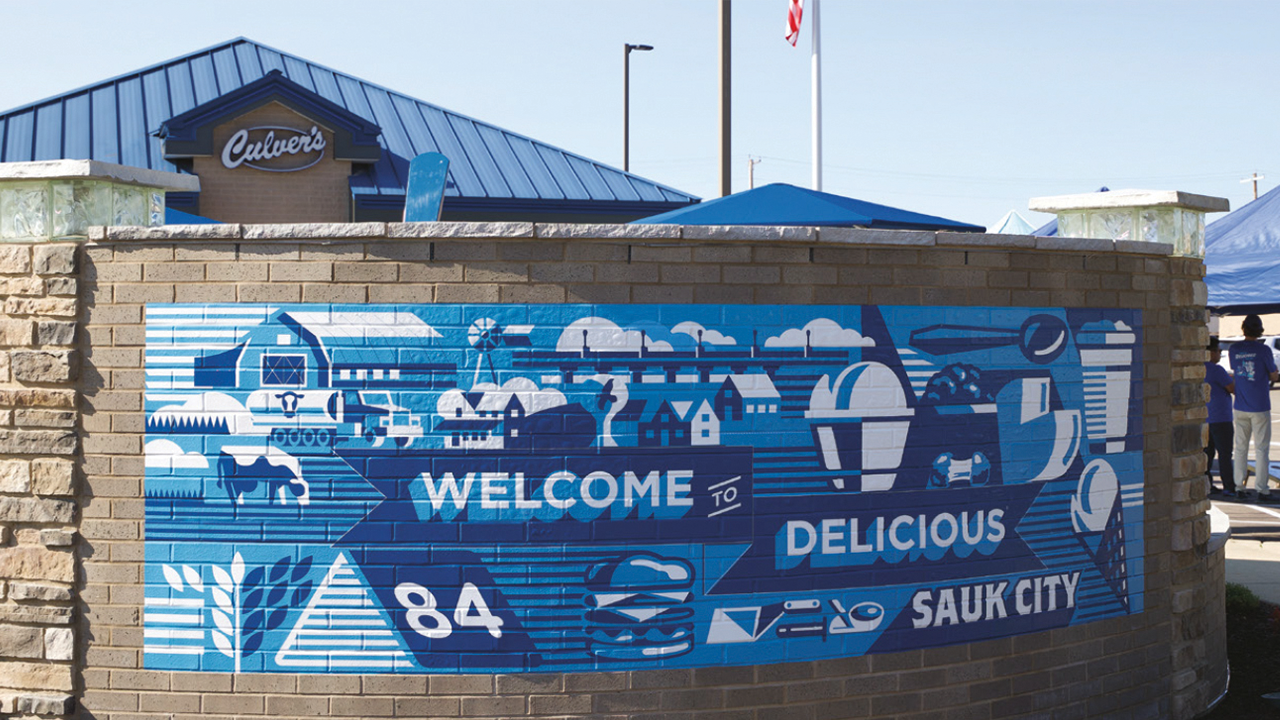
The first-ever Culver’s restaurant opened in Sauk City in 1984, specializing in freshly made hamburgers and frozen custard. It was the brainchild of the Culver family, which had experience as A&W franchise operators and owners of the Farm Kitchen Resort in Baraboo. In 1990, Culver’s became an official restaurant chain with the opening of its second-ever location, in Baraboo. Culver’s today has 1,080 restaurants in 26 U.S. states, and Julie said people everywhere are “bursting at the seams” to open new locations.
Even though its food is priced higher than other restaurants in the fast food category, Julie said, Culver’s has become synonymous with quality, consistency, freshness and friendliness. Culver’s typically opens about 50 locations per year, but there is enough demand to double that, she said.
“Our goal is to meet the demand in the system at the right pace, so that everyone stays successful,” she said. “But,” she added, “you’ll see us in 31 states next year.”
When Julie first joined Culver’s as vice president of marketing in 2017, she inherited a team that was already thriving under its successful “Welcome to Delicious” campaign, said longtime employee Emily Patterson, who is today Culver’s marketing VP. Julie’s ability to ask profound questions, listen carefully and gently nudge the standard higher made her successful as chief marketing officer, Patterson said, and those same attributes make her a successful CEO.
Like at Johnsonville, scaling the brand without losing culture is one of Culver’s most important challenges.
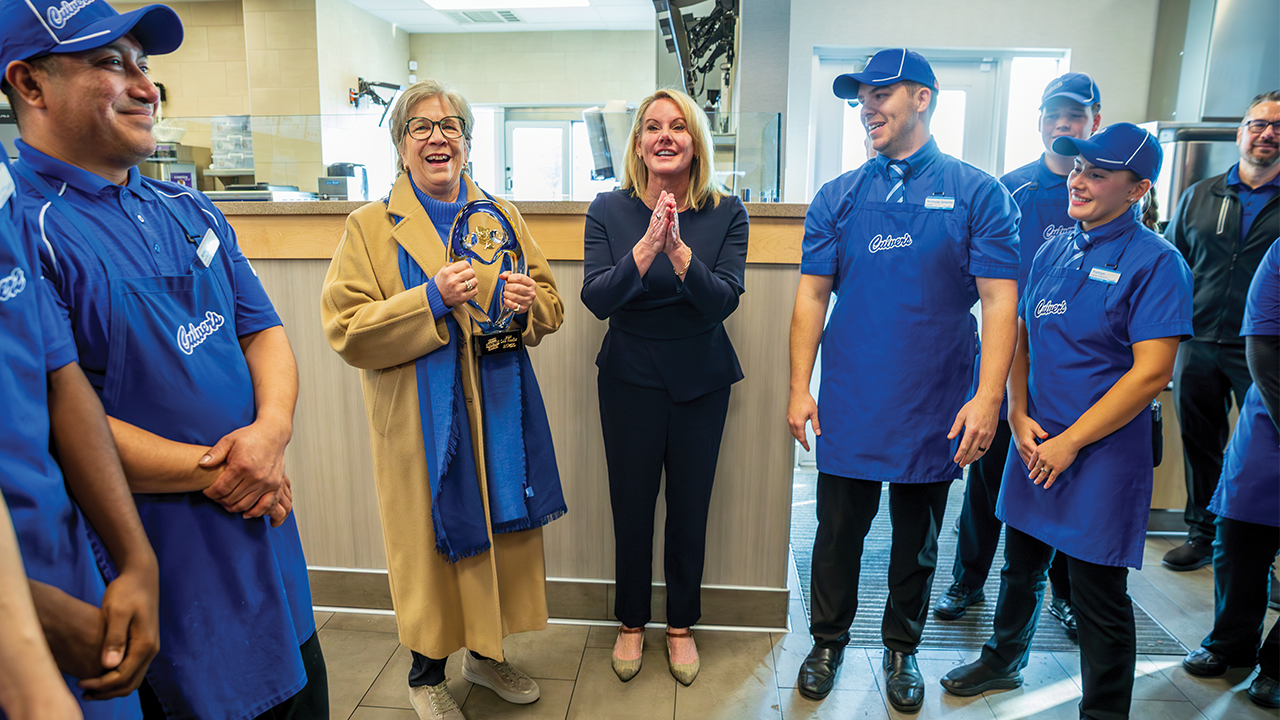
“As we continue to grow, she remains focused on protecting the values, relationships and guest-first mindset that define the brand,” Patterson said. “We are a much larger brand than we were when Julie joined. That means embracing new opportunities in areas like digital engagement, loyalty, technology and menu innovation.”
It’s also a tough time to be in the restaurant business, Julie said. May was the worst month for restaurant traffic this year, down 4.4% overall. But Culver’s was up 5.2% in May.
“We have been able to buck that trend because of what we always talk about, which is not changing anything in the experience that we offer, unless we’re going to make it better,” Julie said. “This is not an easy industry, so you know it’s very difficult to attract people, it’s difficult to retain people, and then when the whole pie isn’t growing and you don’t get any bite of that, things get really tough. Luckily, we’ve been able to overcome that.”
Quality and consistency are paramount, but data-driven decision-making has been a particular hallmark of Julie’s tenure as both CMO and CEO, according to Patterson as well as Chief Operating Officer Rich Modjeski.
“She brought greater rigor and research to the process so we could deliver on guests’ expectations for new menu items without complicating execution,” Modjeski said. “That balance is critical in our business.”
Modjeski acknowledged it is somewhat unconventional to promote a CEO from the marketing chair, but in Julie’s case it was exactly what the company needed. Modjeski has been with Culver’s since 2000 and worked closely with Craig Culver, now the company’s chairman of the board. He said he believes Culver encouraged Julie to apply for CEO because her clarity and conviction would help the brand live on as the family intended.
“I think Craig saw in Julie someone who could honor the past while leading Culver’s into the future,” he said. “Julie brought strategic vision, compassion and operational discipline to the business.”
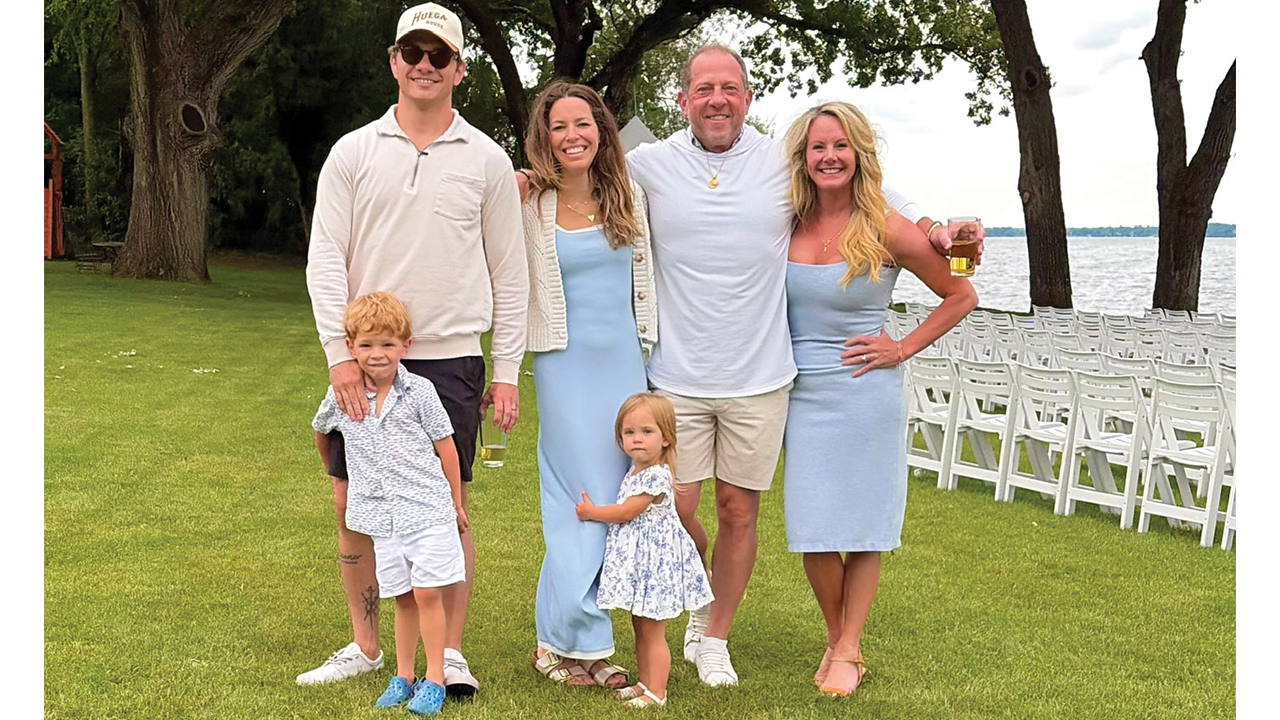
Love and leadership
Don and Julie first met 16 years ago as colleagues at Oscar Mayer in Madison — Don in finance, Julie in marketing. It wasn’t love at first sight, but “we did say we really enjoyed working together,” Julie said. More of life happened, including divorce and job changes, then the couple’s paths converged again. Their blended family now includes five sons, three grandsons and, most recently, a girl: their granddaughter.
“Julie has never been able to buy dresses, dolls, pink stuff until now,” Don said. “So yes, our granddaughter is spoiled.”
Most of their marriage has been spent working in separate cities, but they have always made it work. It was even harder when Don worked in Chicago and Julie’s kids were younger, she said, so having him only two hours away has been a welcome change to their busy lives.
“The thing that people underestimate the most is the sacrifice it does take for jobs like these,” Julie said. “We love these companies, and we love what we do … but it is a sacrifice. You’re going to give up other things; there’s just not a lot of outside distractions other than spending time together, with our family, and doing work.”
As CEOs, both Don and Julie sometimes have to work on weekends, but they do their best to preserve their Friday routine of coming back together over dinner at their favorite Waunakee restaurant, a glass of wine and, yes, that mindless reality television watch.
“It’s like a light switch,” Don said. “That little dinner, being able to sit down, just talk to each other. That’s kind of the re-entry, and then we prioritize ourselves and our family all weekend long. And then we do it again.”
Their businesses are very different, and there’s always a line to toe when it comes to talking shop, but the Fussners do occasionally lend one another professional advice, or at least a listening ear.
“What we talk about is people, culture, customers, growth,” Don said.
It’s not lost on Julie that, while manufacturing and hospitality are different industries that demand unique business strategies, Culver’s and Johnsonville share an important throughline.
“I do really think the values and culture of Wisconsin permeate both of our companies. That matters to our companies, and it matters to us,” she said. “From a values standpoint, we come at it from a very similar place.”
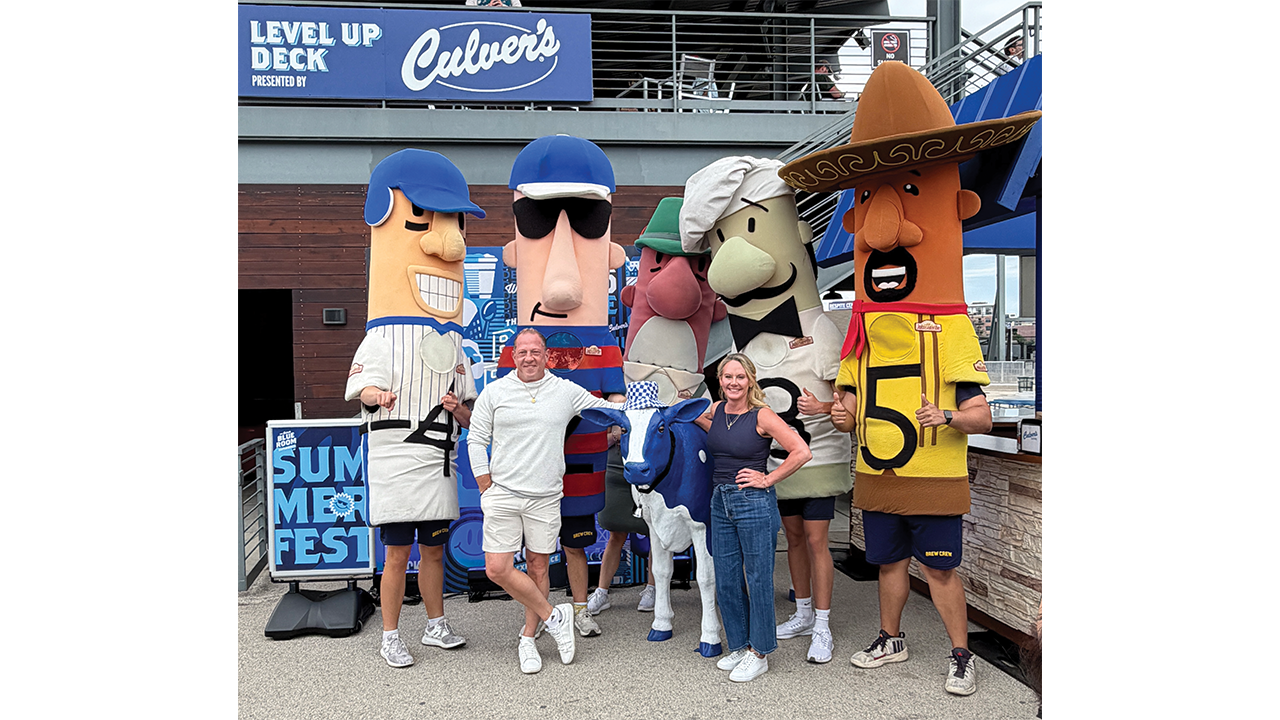
Both CEOs said taking time to engage with people, building alignment before taking a leap and embracing culture with confidence are among their best leadership insights.
Perhaps the best advice one has ever given the other, Julie admitted, was when Don told her to apply for her job.
“It didn’t occur to me to even consider this position. I don’t know; maybe that sounds irresponsible, but if you’re a marketer by trade for 30 years, that’s the coolest job you could ever have,” she said. “I thought I had my dream job. But I’m just thrilled that I’m in this role. I think I’d be very disappointed looking back had (Don) not pushed me to go for this.”
The initial push actually came from another source: Craig Culver. Julie told Don in passing that the founder had reached out to her to inquire why she hadn’t applied for the open CEO role. She told him she’d think about it, she supposed.
“I’m like, ‘Julie, you call him back. Call him back right now,’” Don recalled. “It wasn’t about creating a two-CEO household, of course. It was that I didn’t want her to miss an opportunity she has earned over her entire career. I knew she was the right next version of leadership that company needed.”
Julie said one of the biggest surprises she’s experienced since taking on the job was hearing how much seeing her in the CEO chair has meant to young women in the company.
“I’m very proud and surprised, but also very humbled by the fact that they feel comfortable saying that to me,” Julie said.
Don also went through a period of his career in which he didn’t necessarily see himself as a CEO and has since gained new appreciation for what it means.
“It becomes less about yourself and more about everyone else,” he said. “The first time I was introduced as CEO of our company, my words carried a different weight — not only what I said, but how I said it. That is never lost on me.”
Both Julie and Don see their jobs as stewarding family-owned companies into the next generation, preserving the past and ensuring the future. It’s a lot of responsibility, but one they each take on with pride.
The Fussners are the family behind the families, in a way.
“I hope to God I retire from here,” Julie said of her career with Culver’s. “It’s such a unique place to be where (I) can, like Don, literally carry on a legacy, leave something better than it was.”

