
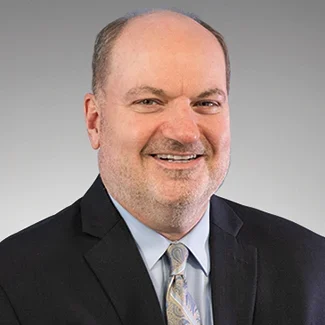
Gov. Tony Evers’ “safer-at-home” order identified the building trades as an essential business, but that doesn’t mean the commercial-construction industry didn’t have to make adjustments to mitigate the negative impacts of the COVID-19 pandemic. In this, our annual Construction and Development Roundtable, we virtually convened a panel of three industry experts to shelve lengthy discussions about tax increment financing, opportunity zones, and material sourcing and instead explore lessons learned from the pandemic, how this industry will be driving design and material solutions for the office of the future, and what can be done to revive downtown Madison, including a bruised and battered State Street.
Panelists:
Tim Cleary, executive vice president, Ideal Builders
Holly Brenner, senior vice president of strategic development and marketing, C.D. Smith
Richard Schmidt, attorney, Boardman & Clark LLP
Moderator:
Joe Vanden Plas, editorial director, In Business magazine
Lessons learned
Vanden plas: The first question pertains to the events of the past year. What lessons (good and bad) have been learned — for your company and the construction industry — from the COVID-19 pandemic?
Brenner: I’ve thought about this quite a bit, and it’s been something we’ve thought about for the past year, really, but it’s amazing to me how much a company, a community, and even an industry can come together to overcome any obstacle. We’ve all seen this, I believe, throughout the pandemic and certainly it goes beyond our industry, but I would consider that to be one of the silver linings. We formed some terrific alliances with other companies, including our competitors, and all in the name of safety. Being united against a common threat is something that tends to bond people, and it certainly has done that in a number of ways. We came together. We took off our competitive hats. We shared best practices. To me, it was very fulfilling to see people within our industry rally for the greater good.
Another thing in this category for us and many others is that we became very proficient at being virtual. There are some parts of our business and our workflow that I believe will remain virtual, even for the long term. The use of technology really plays a main part in this topic. Through the use of technology, we have the ability to do many things virtually that we would normally do in person. Of course, there is less travel, and there is greater efficiency because of less travel. There are safer meetings, especially in light of the way COVID-19 is transmitted. Another big part of that is the greater flexibility that we’re able to offer to our teams and still remain very highly productive.
That said, and probably like my colleague’s companies here, we are all about building relationships and we value face-to-face interaction, and we still believe that face to face is best for many things, most things even, but we have found significant value in our ability to connect differently through technology. This will benefit us and be helpful to us in ways that we can’t even foresee today. I also believe it will be helpful in recruiting top talent, especially as we look to future generations and generations that have literally grown up with technology. It’s an expectation for them and this will help us be more prepared for that in the future.
Another thing is adaptability. It’s one of our core values and we have definitely leveraged that daily throughout the pandemic, whether it was navigating CDC [Centers for Disease Control and Prevention] rules and guidelines, customer preferences, job site demands, local and municipal requirements, and you name it. We have proven over and over again to ourselves and to our customers the importance of being able to adapt to a changing environment. It’s easy for me to think about the office environment because I sit in an office on most days, but when I think about the job site environment, we implemented many COVID prevention measures there as well. With everything from modifying the way and frequency with which we clean break areas and tools, to a reduction in carpooling, to minimizing job site tours, to reducing the amount of traffic on the sites, we have taken many steps there and precautions to keep our teams in the field safe and protected.
One thing that is a little bit more tangible is that we have seen a drop in other illnesses, things that were not COVID. This is largely a result of us staying home when we are not feeling 100%. How many of us, and I’ll raise my hand on this, but how many of us have felt a little under the weather and pushed through, just trudged into the office anyway? That was probably how a lot of people ran prior to COVID-19, but we’re paying more attention to personal hygiene, hand-washing, sanitizing surfaces, masks, physical distancing, and all that. Over time, the masks probably will not be as prevalent, but I can see people continuing to keep a little distance, maybe continuing with fist bumps rather than handshakes, and I’m hopeful that hand-washing will stay at the higher level. Maybe that’s my health care background coming out, but I hope that one sticks around. And there is less pressure to come into working environments when you’re not feeling well, especially now that the ability to work from home has been demonstrated successfully. Those trends will continue to contribute to an improvement in overall health and well-being.
One thing in particular that started out to be a bit difficult for us, but we have certainly learned from, is that work-from-home culture early on. As office activity was reduced to minimal levels and people were instructed to work from home, frequency of job site visits and nonessential team members being reduced — things like that — we were quick to try to adopt some, but the protocols and rules that we established were not super clear and they weren’t comprehensive enough. It was new territory for us. We learned very quickly and, thankfully, about the importance of increased communication. It was fairly easy for us for the normal interactions. They still went on strong.
The planned meetings and things like that, they just moved to [Microsoft] Teams or Zoom or Google Meet or whatever, but we found that we needed to do something to replace the impromptu hallway conversations, the water cooler conversations that happen very organically when you are working in close proximity to one another. So, we were intentional about setting up more frequent virtual communication methods and social opportunities for that employee connection and the management that happens outside of the formally scheduled meetings. So, it took a bit to work through that, but we’ve come a long way.
Vanden Plas: Thank you, Holly. Tim, what’s your take on the lessons learned from the pandemic for your company and your industry?
Cleary: Well, a lot of what Holly had to say was relevant in our experience. I’m sure we can all use different words, but there is a lot of reinforcement there. An important lesson learned for us, too, is that there was appreciation for the fact that we were allowed to continue to work. At the beginning of the pandemic, it was very touch and go about who was going to be deemed essential, if you remember that. People were literally sitting around waiting for the various political experts or industry experts to make decisions on whether or not construction gets to continue or not, and what type of construction? In what way? In what fashion? As I’m sure Rick can comment on, too, we had to consider the various legalities or liabilities that we all were going to assume by continuing in that manner.
Some of the silver linings and some of the benefits were a lot of the things that Holly said, but it also allowed us to make sure that we were reinforcing an ability to reinvest in technology, in technological infrastructure. It was a reminder that we’re in the problem-solving business, that building new buildings is just a component of what we do, and this opportunity leans into our client relationships and has our clients leaning into us to ask us about our best practices.
It also reminded us that we’re all human beings going through this same, unexpected trauma at the same time, so the reinforcement of teams, the reinforcement of culture, the reinforcement of not only the appreciation that I talked about before, but the fact that one of the beautiful sidebars of being a contractor is that we are expected and need to be absolute experts at safety. We have to put the safety of all the given stakeholders on a given job first and foremost, so the fact that we were already predicated on having a caring and empathetic and diligent way of caring for people, this was just further on display.
We had to be ingenious in a lot of ways. We all did. Holly is right about talking to your competitors and leaning on industry sources. There was a time when it was highly questionable if we would be able to continue to work. So, that element of appreciation of the fact that we get to continue made us put our competitive fists down a little bit and realize we’re all in this together. That was a really wonderful part of this whole journey that we’ve been on together. With all due sympathies … not everybody was as fortunate to continue to work or was deemed essential. So, appreciation is one of the key mantras about what this has hopefully taught an awful lot of us, not just in construction.
Vanden Plas: Richard, what do you think about the lessons learned, good and bad?
Schmidt: A lot of lessons learned in the legal community really mirror those in the construction industry. First of all, the need to be flexible. Both legal services and construction services were deemed essential work, so we were all allowed to proceed, which was a great thing. The way of doing so was drastically altered. From our perspective, the biggest change was that for a period, nearly all and since then most of our workforce has been working from home. The good part is less commuting time, more family time, and flexible hours. The bad part of that is you miss the people, the collaboration, bouncing creative ideas off each other, and the supervision and training that goes into that. As attorneys, the rules of ethics place special requirements on us. For example, to maintain confidentiality and working from home presents challenges in that respect for maintaining documents so that files aren’t corrupted using dual factor authentication to sign in for remote services. We’re required by the rules of ethics to provide competent legal services but that sometimes means you would prefer to meet person to person as opposed to remotely, and yet we’ve been able to stay flexible and make it work. So, those have been the best things.
Tim, you mentioned changes. I’m sure OSHA [the Occupational Safety and Health Administration] had rules about cleanliness and maintaining distance. We haven’t had those projects, but it was interesting because we had a large remodeling project that was wrapping up just as COVID hit. So, it was interesting and flexibility in construction had some advantages in work that a lot of times was done at night, or in off hours, but because of the lack of people around, they were able to do the work during the daytime with little disturbance. So, that was one way that COVID actually benefited construction, just allowing that difference in flexibility.
Flexibility from our standpoint could mean you could change your schedule. You could go care for a parent or you could do appointments, or you could teach your children. You could do things you normally would not be doing on a nonbusiness day. Overall, we found that our productivity for the year actually increased as a result of the flexibility, which was a shock. It’s not what I would have expected going in, so that was great.
The second big takeaway was communication. That’s been key. I have been on more Zoom and Teams meetings than I ever want to do for the balance of my life, but they work. We were able to continue to bounce things off each other and — I can see the others smiling here — I’m guessing you’ve had similar meetings. Sometimes, just seeing other faces helps maintain sanity.
And third, resilience. It’s kind of like the line out of Jurassic Park: ‘Life finds a way.’ Well, I remember being on a Zoom meeting and one of my partners was in a space down in his basement next to his water heater, and that was always the image I saw on every call that we were on. Whatever it takes. I’ve seen construction workers out in 10-below weather, so I know you guys are resilient. I wouldn’t worry about that, but as for other things I noticed, the spirit of cooperation was higher among parties than I’ve seen in the 29 years before that. For example, landlords were more willing to work with tenants to adjust or defer rents to keep places going. Tenants were changing their way of doing business to keep things going with curbside delivery, changed hours of operation, and ways to accommodate the high-risk population. The ‘we’re-in-this-together attitude,’ that was genuine.
And then, finally, I guess the last takeaway that I got out of this is that words matter. I spent a lot of time in the past year reviewing contracts, leases, and construction agreements to see what effect the pandemic would have on a party’s obligation to perform. A lot of people discovered the term force majeure [a clause in contracts that frees parties from liability or obligations when an extraordinary event or circumstance beyond control of the parties prevents one or more of them from fulfilling their contractual obligations] and the effect that may have. Again, the contractors on this panel are smiling. Those clauses were closely examined, and one takeaway is that if you haven’t already done so, take a look at your agreements and see if your obligations are adequately covered. If force majeure comes into play, what limits on liability might come into play?
Tim, one of the concerns you brought up was being essentially blinded if somebody gets sick or ill. Just last month [February], Gov. Evers did sign into law a bill for limited immunity for employers and others related to COVID illness or injury. It’s Section 895.476, so it’s actually pretty broad [but not unlimited] immunity.
Vanden Plas: Holly, I wanted to go back to something you mentioned about recruiting with remote capabilities. Has that expanded your reach in terms of employee recruitment?
Brenner: It’s just a cultural element that more people are looking for. Really, the word is flexibility — a more flexible culture, working from home remotely and using technology to facilitate that. Construction, as a whole, is very much about showing up and doing the work in person because of the nature of the work, and so the idea of working remotely and having that additional flexibility, at least for us, is something that was a little different. Now, having been successful with this technology and working remotely, it makes us more attractive for job candidates.
Office of the future
Vanden Plas: In COVID-19, some believe new commercial construction has met the ultimate opponent, but has it? Even though some employees would prefer to return to the office, a significant segment of the workforce prefers to keep on working remotely. So, does this necessarily place limitations on the future of commercial construction, or does it create different growth opportunities?
Cleary: The initial impression, without question, is that the pandemic in the year 2020 was a catalyst for organizations to test and explore and somewhat out of necessity how to work remotely. Clearly, there is always going to be a percentage of any employee base that would prefer to work remotely if they can. If it’s proven to be productive, capable, and efficient, that might be the way things look in the future. But to Rick’s point and to part of what Holly was saying as well, the need to have in-person ties to one another, the connection to each other, the human interaction, is an innate human need.
It’s funny for those of us that are in, around, and aware of what’s happening in the school systems — most people have said that kids need to go back to school for any number of reasons. A lot of what they talk about is the social interaction. They talk about the social interaction among kids as part of their development. Well, I don’t think that necessarily turns off at the age of 18 or 22. The need to interact with individuals on an in-person basis is innately human, and so while it’s something that can be done, and it’s something that some may prefer to do virtually, I almost wonder if the pendulum doesn’t swing back the other way and some of the shortfalls of working remotely also start to come around, which could be the emphasis on training and mentorship and feeling connected to your colleagues or to your employer.
The ability to learn and to do what Holly talked about, the conversations around the water cooler, I don’t think we can get back to that rapidly. I don’t think the office environment locally is going to quickly snap back to the way it was, but I do think there is going to be the realization that, ‘Hey, we’ve proven we can do this if we need to. The next question is whether we want to.’ If it’s proven that people want to and that they can be efficient or productive in wanting to, the best employers will figure out a way to accomplish that. But I also think people will start to realize that with the office of the future and office construction of the future, maybe it is programmed a little bit differently. Maybe the layout is somewhat different. People are still going to want to have the in-person connection to each other. Maybe it’s their clients, their colleagues, or their company.
In doing a fair amount of office builds locally, we’ve seen a lot of evaluations around what does it look like? Certainly, projects will hit pause. Maybe this isn’t the right time. Maybe we need to evaluate this. Maybe the way we intake visitors will look differently in the future. Maybe the way we gather will look different. Maybe the way we cowork will look different. Maybe the hoteling strategy will be different than it was. All of those things are under consideration but we’ve also — and I know we’ll talk about manufacturing later — but we’ve got a lot of employers who were, out of necessity, required to go remote. It’s largely proven to be successful but there still is this undercarriage of wanting to get back in the office at some point, for some people.
And so, getting back to your question, it does create opportunities about the traditional office space. What is that going forward? It creates opportunities for people on how we work and the spaces we work in. To your earlier point about has commercial construction met its ultimate opponent in COVID-19, I don’t think so. If anything, it has continued to challenge an already industrious and creative industry to continue to be so. It’s going to create a lot of great dialogue about what it looks like next, which is really exciting, while also acknowledging that some companies may have seen a great new way to make improvements. Ideal Builders is that way. We saw a need to increase technology and lean in on team. That’s part of the earlier question about lessons learned, but moving forward, the office of the future might figure out how to accommodate remote and in-person workforces, whereas it didn’t in the past. I think that’s a great opportunity.
Vanden Plas: Richard, what’s your thought about that?
Schmidt: The office is not dead. It’s definitely changed but not dead. In the fourth quarter [2020] in the Madison and Greater Madison market, vacancies were 11.2% overall, including the east and west suburban markets, which is up from about 8% pre-COVID. That number will go up, but people will return, and what we’re finding is that it will be on a hybrid basis. Within our firm, I asked a number of my partners what they think. Only one likes working remotely all the time. A handful said they would rather be here all the time, and everyone else preferred a mix of days between home and office. It’s that trade-off.
So, what you’ll find is there will be less office space per person and per business, but offices are going to be here and for the reasons Tim said. Just the collaboration — that’s how you stimulate creativity among your colleagues. It provides for the training because there are resources available that you just don’t have at home. The nice computer system, the audio-visual room, the conference rooms, the ability to meet with clients. People don’t like being pinned up at home all the time. Sometimes, you need to get away from the office to think, and sometimes you need to get to the office to think.
The basic item is that you want happy, productive employees, and the office provides that for the most part, but the hybrid model is what we see going on. What is that going to mean? Maybe it’s some office sharing. Maybe it will be particular spaces used for more sporadic offices. So, there will be construction needs for designs like that. I think you’ll find more offices, just in total, so more tenants — each of whom needs less space.
I also think you might start seeing more offices in nontraditional areas just because of the whole idea of flexibility. For example, shopping malls. That might be an area where space can be converted for that type of use. All those are going to require construction.
Vanden Plas: It sounds like that’s going to happen for the minority business hub on South Street Park Street. They plan to convert a shopping mall.
Schmidt: Yes, and likewise I think you’re going to see other kinds. I remember in Parade of Homes, years ago, you would see a home office the minute you would walk into the door of someone’s home — the nice, big homes — but then that got phased out. Now, it probably won’t be in the front when you walk in, but you’ll definitely see some nice home offices again just because people want the flexibility, and it works. I did see one analysis of a number of studies [“Purpose of Place: History and Future of the Office,” by the Cushman & Wakefield Center for Real Estate and Urban Analysis at George Washington University]. It was back in 2007, but based on 42 different studies, they concluded that 2.5 days is about the right mix. If you’re remote more than that, you become less productive. Up to that point, you are kind of gaining productivity. So, who knows if that’s the right mix? I think it varies from person to person. The real takeaway is to keep everyone motivated and happy and give them the tools that they need.
Vanden Plas: Holly, do you agree that we’ll have more of a hybrid approach in terms of the growth opportunities for new construction and retrofitting and renovation?
Brenner: I do. I believe that Rick’s comments are on point, at least with my experience both personally and just observing the activities of my colleagues here. There is value to having that focus time when you’re at home and presumably, you’re at home working and not like in the early days of COVID, when you might have had a child or two or more and a couple of pets zooming through your Zoom call. But when you can actually be there and focus, you can definitely be productive. It’s interesting, the study that you reference, Rick, I would be interested in reading that, as well, because that amount of time seems about right.
The solution
Vanden Plas: There may be some overlap here, but speaking of the office of the future, including new construction and retrofitting/renovation trends, in what other ways will the construction industry be part of the solution when it comes to protecting the workplace from COVID-19 and future viruses or variants of COVID-19?
Schmidt: First of all, I don’t think we should let COVID be the sole driver of the bus. We need to focus on overall general health, safety, and well-being of employees and take into account more than that. The construction and architectural industries will be major parts of the solution. There are concerns about safety, viruses, and other things. In our building, for example, the U.S. Bank building, in June the landlord installed a bipolar ionization system in our air handling system, which uses an ionization field in the air stream, and it migrates throughout occupied spaces to kill viruses, bacteria, and mold spores. It takes out over 90% of the viruses. I know our air turns over very quickly — I want to say two minutes, but I’m not certain of that — but I know this is a much better system than UV [ultra-violet] light systems. In fact, it’s used by a lot of hospitals. So, that was one way that our landlord really promoted that as an amenity.
Vanden Plas: Is that expensive or difficult to install?
Schmidt: No, I don’t believe it was. It didn’t take that long to install. Likewise, other innovations you’re going to see is that items will become much more contact-free. Touchless or contact-free will become the plastics of this decade. With payment systems, fobs for entry, and lights that turn on automatically, there are just not as many surfaces that are going to be touched. Likewise, a lot of companies have self-cleaning tables and countertops. The ones I’ve seen use copper ions in the material that bombard bacteria and viruses. Some use nanocrystals that, when they are charged with light, they create an oxidation reaction.
Other items to think about include the open floor plan. When we remodeled, we did not go with an open floor plan. We still have cubicles in offices, which in some cases has been a benefit now because we are able to stagger employees coming back. It has made the return easier. But open floor plans still work, and they are easier to clean, so either one can be made to work. But with overall employee health and safety, more plants and green plants are becoming coming more prevalent. In our area, we have an entire fourth floor rooftop that’s turned into an outside terrace with huge planters, outdoor furniture, and an open-air shelter to take advantage of the outdoors, and so we’re all looking forward to spring. So, it’s a matter of making a space that’s usable, inviting, and safe for your employees.
Vanden Plas: Holly, what do you think about that?
Brenner: Well, I do think the workplace of the future will definitely be different than what we’ve experienced over the past decade or so. We expect a heightened focus on collaboration areas and technology and flexibility, as we’ve been discussing, and it’s clear to me that just as we, as individuals, have had to be flexible and adapt, our workspaces will have to be designed and built that way as well. The growth of new commercial construction will need to support that, to support these functions and preferences. The key to making that all happen, and what our role will be in that, is to have a lot of open dialogue and collaboration. It probably goes without saying, but we’ll continue to work closely with our architectural partners, and our mechanical trade partners certainly will have a significant role as we talk about air handling and things like that.
I think we start with evaluating what’s working. Some things that were working before will continue to work. They might need to be adjusted a little bit, but we’ll work toward creating cleaner, safer spaces. We’ll have to upgrade some systems. More robust mechanical systems will certainly be needed to accommodate the fresh air intake and air changes per hour, for example. Having our HVAC innovator partners heavily involved in planning is a must. They have been at the table with us almost always, but this is another level of that.
As for social, physical distancing and gathering spaces, I’m not sure that offices will necessarily be smaller because we’ll need more space per person to operate in. I guess we’ll see how that sorts itself out, but larger break rooms and outdoor amenity spaces will be needed. We actually today — what is it, about 60 degrees here? — we put our outdoor furniture out on our balcony so people can start heading out there. Yes, we’re hearty in Wisconsin, but we’re ready. People are ready to start gathering a little bit more for meetings in person. Outside, the masking rules are little bit different. Point-of-entry configuration is something we’ll have to talk more about. I have a fair amount of experience in health care and from day one of this, everyone going in and out the same door, there is a lot of potential for cross contamination, so looking at that beyond health care, of course, in office settings and beyond will be important. Think about not only the front-door access but traffic patterns in general.
As Rick was saying before, there are products now, including anti-microbial counters and artwork and other things that people touch that can be sanitized or are self-sanitizing in a sense. Those kinds of things will become more mainstream and will be required rather than be a nicety, if you will.
Vanden Plas: Tim, what’s your take on that?
Cleary: If you think about office space and the evolution of office space over the course of the last few generations, even recently, pre-pandemic, how differently did it look in 2019 and 2020 than it did a generation or two or three ago with the various amenities that became commonplace in the office? Think about collision spaces, collaboration rooms or various other amenities, even some of the things that were considered recreational, the modern office that had pool tables or foosball or common areas or grilling spaces — all those things that we used to talk about as being amenities in office space before. Well, now we’re talking about amenities, too, aren’t we? We’re just talking about completely different safety and different human element features that will be part of the future. The same amenities that we had pre-pandemic, are they even a thing post-pandemic? That will have to be studied.
But Rick is right with all the things he was talking about relative to sterilization, contact-free elements, and really challenging whether or not certain meetings need to be in-person or virtual. And Holly is right in terms of leaning on all of the various stakeholders. So, if Rick’s company is going to build a building, there could be a developer involved, there is the owner, and there is the tenant. There is a general contractor or a construction manager, and then there is all of the trade partners, as well as the design team. Thankfully, over the course of time, in order to compete and be successful, you have to be experts at problem solving and creativity. Now, we have to take our expertise, creativity, and problem-solving techniques and apply them not only to the office post-pandemic, but also the human element, human safety, and really people’s individual preferences. Are some companies going to want to mandate sterilization when people come in? Are they going to spend the money to review HVAC systems or find ways to import more clean air from the outside or install anti-microbial services?
So, the same general principles of the evolution of office remain omnipresent the way they were generations ago in evolving to the office that we had before the pandemic. Now that we’ve learned a thing or two and have to react to it, it’s just further testing the development, design, and construction communities to do what we’ve always been able to do, and that’s be creative, solve problems, adapt to needs, and figure out the careful balance of what’s appropriate, what’s not, what’s cost efficient, and what’s not. But more so than anything else, it’s putting the person first. Putting the employee or the space first. That alone generates tremendous opportunity for all of us.
Making stuff
Vanden Plas: When we think of manufacturing in this era, we think of clean manufacturing, especially in Dane County. I’d like to direct a question to the panel, starting with Tim Cleary, about how manufacturing facilities have changed and will continue to evolve with safety considerations, traffic flow, HVAC/clean-air requirements, and social/physical distancing (perhaps even on the plant floor) factored in? Tim, what can you tell me about that?
Cleary: When you look at manufacturing as a sector of our state’s economy, I believe it’s the largest component of our Wisconsin economy. Wisconsin manufacturers have to compete on a global stage every day and because of that, pre-pandemic, they had been conditioned and have excelled at being masters of efficiency. Because of that element and because of how they are trained to compete, when the pandemic hit, every one of them started to quickly mobilize and figure out their risk in terms of facing a shut down. It was challenging supply chains, challenging what the manufacturing floor looked like, and challenging how the office was going to evolve.
You mentioned clean manufacturing. What we experienced was there was a high amount of dialog around what are the practical steps that we could take to make the manufacturing workplace as safe as possible? A lot of what we talked about was, in terms of what we applied in the office, also applicable to manufacturing, particularly in the office space of a manufacturer. On the actual production floor, what we found was that a lot of manufacturers realized they were not going to be in a position, being as lean as efficient as they were, to pick up production lines and move production lines in any meaningful way. Before they would do that, they would take every human precaution needed for distancing, or PPE (personal protective equipment], or sterilization, or maybe removing what Holly had talked about before about the stigma of when you don’t feel well but you try to tough your way through it, and you go to work, removing some of that plus travel restrictions, scanning temperatures for employees, and all of those things that manufacturers started to deploy.
What we haven’t necessarily seen, or hasn’t proven to be a need, is to have massive manufacturing overhauls of significant HVAC, mechanical, or other expenditures needed to accommodate a very safe and healthy workplace while maintaining production lines. We’ve seen changes in shift schedules, we’ve seen changes in the use of plexiglass, we’ve seen common sense approaches to clean air, clean surfaces, reducing common areas, and maintaining distances, but we have not necessarily seen a dramatic overhaul of how companies can go about manufacturing their goods, and it’s in part because of how efficient and lean and productive they are anyway. The concept of just simply changing a manufacturing line wasn’t going to be a solution, and so a lot of manufacturers have been very wise in reading the situation, taking in the data they could take in, preparing themselves for what needed to be done, and also taking the common sense, wise approaches to keeping people safe. So, it’s maybe not the sweeping HVAC or facility changes in new or existing construction that some people assumed right away, but nonetheless the dialog occurs to talk about what could happen in the future. Those are some of the initial impressions.
Vanden Plas: Holly, what do you think about that?
Brenner: I agree with Tim on so many of these points. In current times, the impact on the workforce is the most important factor to consider. Manufacturing facilities have changed quite a bit, significantly even, over the past several decades with a focus on employee safety. We’ve had that in the past, but they continue to do that as the environment changes. So, what do I mean by that? In the past, the focus might have been on PPE or ergonomics. However, since the beginning of the pandemic, and as knowledge increased of how COVID-19 spreads, as we learn more about that, it becomes more important. That’s probably why a lot of my comments have been focused on the HVAC systems and clean air requirements and distancing because we’ll continue to focus on employee safety. We’re not going to stop using PPE. We know all these things, and hopefully they are hard wired, and so the next thing we approach is how to fight a virus.
With anything that spreads through the air, you start to think about particulate size and filtration requirements. However, just increasing the size of the unit filters can have an effect on the existing systems and energy usage. There are all kinds of ‘what happens if you do this?’ conversations that need to be had. At the end of the day, we’re looking for cleaner and safer spaces, and we know that improved HVAC systems can do that and help limit the spread of viruses. We also have to think about the budget on that. Upgrading to more efficient systems comes with a cost, but are there operational savings that can offset that? That’s something that manufacturers and others — this goes beyond manufacturing — have to consider. Does it make sense?
Even further — identifying warning signs. Monitoring those systems allows us to identify early warning signs and to avoid costly, unexpected repairs. In general, it’s a great time to really look at how facilities are set up and whether these are changes that should and can be made.
Schmidt: Well, Holly and Tim have covered it pretty well. I did communicate with a couple of manufacturing clients on this very issue. From a physical standpoint, they didn’t alter their facilities that much. Plexiglass shielding — I think Dane County has gone through more plywood and plexiglass this year than it probably will go through over the next decade.
Vanden Plas: Thank goodness we have a lot of plastics manufacturers in this state.
Schmidt: But most were able to accommodate the pandemic by way of staggering when employers were on location or physical separation. That covered a lot of it — that and cleaning. But of the two other items that really cropped up in every communication, one was technology. They relied heavily on either file sharing or web applications for communications as well as scheduling and knowing what people were doing and providing customer service. That was accomplished remotely, whereas it had not been before, so as I said before, we’re turning into more of a remote economy. That surprised a number of clients in terms of how well they were able to accommodate not being in their plants with certain people. The other one was the concern over collaboration, and we touched on that early on. Heavy concerns, including in manufacturing, about loss of the ability to collaborate when you’re not in person. That’s one area that will come back as soon as it can.
Are hot spots still hot?
Vanden Plas: Has the pandemic altered Dane County’s development hot spots — either by geography or commercial building type — or has it reinforced them?
Brenner: The pandemic has altered much of our normal lives, and we’re all looking at what we do through a different lens. If you think about demand and consumer trends, they are very different now than they were pre-pandemic. For one, we’ve noticed that more people are staying home. Home Depot stock is through the roof and things like that. People are revisiting what they want for their communities, and we’re seeing this as well with live, work, and play. Mixed use developments in urban settings continue to grow in popularity and I don’t see that slowing down. As more businesses contemplate long-term, work-from-home strategies, as we’ve been discussing, professions like ours will look for more living environments with more at-home office space and more common amenity spaces. We will see more people looking for what are called walkable living communities with amenities that are closer to home and have more green space to go along with that. It’s a positive that one byproduct of this pandemic is that more people are focusing on … health and well-being and improving their overall quality of life. So, that’s a positive and the pandemic has reinforced this as a direction that we’re heading in from a development standpoint.
Vanden Plas: Richard, how would you answer the hot spot question?
Schmidt: Well, first of all, ask me in a year. That’s when we’ll know one heck of a lot more because right now, the development that is going on was put into place pre-pandemic. That aside, housing is still the biggest driver. Around 2007, you did not see raw land really even being developed and now it’s back and continuing. There are a lot of developments in Madison and all the cities and villages surrounding Madison. The inventory of existing homes is extraordinarily low, and homes are getting built very quickly. Two things that are pandemic-related that might affect that are the price of lumber, which has nearly doubled in the past year and that’s mind blowing. So, that would affect single-family as well as frame-built multifamily housing. Just to put it into context, on average that would add about $24,000 to the price of a home, which is quite a bit.
Secondly, residential markets might be affected by changes in real-estate taxes. Madison has relied heavily on commercial properties for real-estate taxes, but in January the city of Madison assessor put out questionnaires to commercial property owners to inquire about the effect of the pandemic, which would seem to signal that there may be at least, if not big increases, decreases in tax assessments. It’s hard to tell where it’s going to fall, but certainly the pandemic has hit commercial properties much more harshly than residential properties. So, if taxes on commercial properties stay the same or go down, then residential real estate will need to pick up the slack. Is that going to affect the market? I don’t know but it could.
Overall, single-family is still a key driver here. One thing the pandemic did is alter views because before, your home was your castle, but now it’s your office, your school, your health club, and it’s your night club [laughs], and people are willing to invest in it.
In other areas, retail overall has been pretty weak. The bankruptcy of CBL [Properties], which owns East Towne and West Towne, is certainly an indicator of that. COVID has heavily impacted the online retailing segment like Amazon. There are some exceptions. Grocery stores are still doing well. Convenience stores are expanding. There is a Costco slated for Verona, so those have been expansion areas.
We’ve discussed office. It will be affected in Madison, but that drop hasn’t hit yet. The suburbs are not as reliant on office for their economies, other than perhaps Epic, which does not seem to be as heavily affected by COVID. Geographically, the hardest hit area might well be downtown, on State Street, where a lot of retailers and restaurants were hit very harshly by the pandemic.
Vanden Plas: Richard, do you expect the high cost of lumber to last very long as we get out of the pandemic?
Schmidt: Well, Tim and Holly can probably weigh in more heavily on that, but I’m not sure about the reason why. I don’t know if it’s a matter of taking advantage of demand or if it’s a shortage of supply. If it’s a shortage of supply, that would take a while to build back up. If it’s demand, that’s a matter of economics. So, that one I really don’t have the answer to.
Vanden Plas: Tim, let’s go to you next on that one.
Cleary: Material costs are clearly a concern right now. It’s hard to predict when exactly the plateau will happen. We do know that most demographers will talk about the millennial generation replacing the boomer generation at a pretty extraordinary rate. If form follows form, the demand for single-family home construction over the next generation will be exorbitant and because of that, there will be more vertical pressure on the cost of building materials of every type, clearly. Whether lumber and/or steel is a short-term cost increase plateau remains to be seen, but from the points made before about residential construction, the need for all types of residential construction — affordable, apartment, and single-family homes — will continue. As long as Dane County continues to be a place that is desirable in which to raise a family, grow a career, or operate a business, Madison will be well poised in the future.
Vanden Plas: Now regarding the hot spot question, what do you think?
Cleary: This is a generational thing. I can’t remember if it was Life or Time magazine that featured a family on its cover and talked about living the good life in Madison, Wisconsin going back many decades ago. Before the pandemic hit, there was all sorts of data and has been for a long time about Madison being one of the 10 best places to raise a family or one of the best places to live or the emerging place of Madison being called arguably one of the high potential tech cities in the United States. So, with the pandemic, with COVID, what we’ve seen out of the research park and other places is the whole science lab/biotech — that whole space continues to be one where it’s been projected into a realm of growth. It continues to fuel a lot of development opportunities in those business segments.
Rick’s point, and I know we may touch on downtown Madison, is also really salient. If there’s a place that’s been hard hit, it’s not just downtown but certain sectors of our economy. Hospitality, restaurant, elements of health care, and gym space and things like that are certainly areas of development that have been hard hit.
But going back to hot spots and going back to Madison, on top of Money magazine calling it one of the best places to retire, Forbes and other places calling it one of the top 10 cities to weather the pandemic, there is a lot of national data and research that suggests that we also live and work in a wonderful place to withstand, recover, and grow in the future as well.
Saving downtown
Vanden Plas: Now about that last question, a parting shot of sorts. There is a lot of concern in the community about the future of downtown Madison. Thanks to the pandemic and the shelter-at-home orders and the social unrest of the past year, an area that was alive with office, retail, restaurants, arts facilities, and pedestrian traffic has been effectively shuttered. What will it take to return the area to the way it was on March 1, 2020? Is it simply a matter of putting the pandemic in the rearview mirror, or given the trauma of the past year, will it take more than that? If so, what exactly will it take?
Schmidt: This is a tricky question because a little over a month ago [in February 2021] Core Spaces from Chicago said they have plans for a $100 million, 10-story structure on the 300 block of State Street with 481 units and retail space and parking. Some might argue that well, State Street is back, but I’ve been downtown for 33 years and it’s definitely different now than it was. To figure out what it’s going to take to put back to pre-pandemic, first you have to determine where you want to end up, and the country has changed. We are an experience economy now. People like experiences and downtown Madison needs to be an experience. We’ve got the lakes, which are great, and they are not going anywhere. We’ve got the UW–Madison vibe. We’ve had a lot of neat shops, neat restaurants, live performance venues. It was a cool place to watch people. There were a lot of recreational activities, but a lot of that has changed regardless of what plans might exist for development. So, putting downtown Madison and State Street back to where it was pre-pandemic is going to take some work.
I do remember being downtown back in the late 1980s, and on the Capitol Square in the late afternoon, you could watch the tumbleweeds blow across the Capitol grounds. There was no one downtown because all the state office workers left. It developed with restaurants and then with people coming downtown because people really wanted to be here. This time, it’s going to take even more than that.
So, my thoughts are, in no particular order, money. The federal government has passed a lot of COVID-related relief, now totaling $6 trillion, which is mindboggling. Hopefully, the PPP loans have helped some of the downtown businesses stay alive but there is $350 billion slated for state and local governments, and $90 billion for transportation and infrastructure causes. Hopefully, Madison uses some of that money to revitalize State Street. What I was thinking of would be similar to Pearl Street in Boulder, Colorado, where it’s just a neat pedestrian mall. Here, it’s not quite as practical because of transportation concerns but perhaps some of the infrastructure funds could be used to reroute transportation around State Street.
The COVID relief also included $15 billion for grants for shuttered venues like museums and performance venues. Hopefully, Overture and the local music venues can use some of those grants to revitalize those facilities and keep them going.
I do recommend, if you’re interested in everything that’s out there for relief, treasury.gov is a pretty good site to get an overview of all of the various relief that’s available.
It’s going to take local government action in the form of being flexible in what’s required for redevelopment downtown. It may require retooling some of the comprehensive plans. For example, would food trucks in a downtown parking lot, a church parking lot, be a draw? I don’t know but I would look at it. To some extent, tax incremental financing [TIF] could help with downtown redevelopment, but given that it’s the increment that’s really the basis of that, I’m not really sure how much increment would exist.
But then, there are also social problems. I know this doesn’t sound like a construction issue, but if you figure out where you want to end up, you do at least need to address some of the social unrest. Local government might be able to help on that front, facilitating talks about race relations and police relations. The local citizens and businesses need to do the same. We’ve engaged with a consultant to help us address issues of race and talk about it within the firm with hiring and other decisions. Those are not easy discussions, and they make you squirm, but it causes you to think differently. I will say that. It’s better than shying away from it. By doing that, those things are going to help State Street return and be vibrant and be a place that people want to go to.
I guess the last piece would be to address affordable housing downtown and homelessness. That’s also a tough one, but that’s all part of the downtown. That has to tie into revitalizing State Street. Can unused buildings be converted into affordable housing? I don’t know. It’s going to take a lot of smart people, smarter people than me like city officials and developers to sit down and figure out where they want State Street to end up. The city did discuss funding some of the local businesses, but Madison only has so much money and it has a lot of needs, including schools and other areas of town, and so far, no money has been slated for local businesses. But I guess that’s what I see as far as helping downtown and State Street because I do think that area is kind of the golden goose that keeps Madison a great place and makes people want to come here.
And given that we’ve talked about remote working, remember that people who work for businesses in other cities could live here, which is what we should want.
Vanden Plas: That’s a pretty comprehensive look at it. Tim, what do you think about the best approach to revitalizing downtown?
Cleary: It certainly provides a tremendous opportunity. A lot of the things that I just mentioned about top 10 rankings or best place this or best place that, a lot of those national publications that study data look at information and then apply it to a geography. Often times, when you see those stories, the pictures are not necessarily of the suburbs. The pictures are oftentimes downtown. They are the Square and the vibrancy of the Square. They are the pedestrian mall element, the State Street component, and the connection to the university. In a lot of ways, a lot of our imagery of Madison is exactly that. A lot of how people who aren’t from here define Madison as that very small piece of real estate that adds symbolism and definition to who we all are. To me, part of the answer is, and I think Rick hits the nail on the head in so many areas, there are a lot of constituencies that need to be involved to make this work.
Madison has, right or wrong, developed a reputation over the long term that it can be a difficult place to build or develop. What an opportunity for us to correct or improve that in a lot of ways. We now have an environment in which we have the opportunity to look critically at arguably the heartbeat of the city and make it truly not just what it was before but potentially make it even better. Sometimes, when people get something taken away from them, that’s when they truly generate an appreciation for it.
Ideal Builders was down on State Street boarding up windows a number of times. The number of shopkeepers, innkeepers, and property owners that I talked to and the stories that they had of loss or desperation or disappointment was moving. It was very emotional, and we have an opportunity to make this right collectively if we can shift to an era of positivity to look at the opportunity that we have to get the heart of the city beating again. I don’t think we can have a successful Madison without a successful downtown and without a successful State Street. I would hope that all the various community stakeholders, politicians included, are aligned with making this work. I know we’re smart enough. I know we can get it done and I know we want it.
It’s to that point I made earlier about how people often don’t realize what they’ve missed out on until it’s taken away. I know a lot of people talked about what a shame it was about what was happening downtown. And then, in somewhat of a rhetorical nature, they were asked when the last time they were down there and spent a dollar. So, this proves again how much we need our downtown festivals, how much we need the farmer’s market, how much we need a vibrant State Street and the university. Somewhat to its core, it defines who we are as Madisonians. For those of us who are from here or multiple generations here, went to school here, operate a business here locally, we need that. We want that and we want to have a seat at the table to play a role in helping to create wonderful downtown Madison development.
Speaking of a live-fire example, we’re talking to employers from other areas in the country that are interested in moving their offices, their talent, and their people to Madison. What a tremendous opportunity we all have to return and improve State Street and downtown to its rightful place as truly one of the jewels of our country, let alone our city and our state.
Brenner: Those are two excellent answers and very comprehensive, so I’ll just keep it pretty high level and say that much like we’ve been talking about people and businesses, I think cities and communities are also resilient and they evolved. It’s easy to forget about how certain things like the retail landscape was already changing prior to the pandemic. Yes, the pandemic fast tracked some of that evolution and it will take some time, but I have no doubt that downtown Madison will once again thrive. We’ll probably see more restaurants than retail, more open-air gathering spaces, more housing, more permanent sanitizing stations, more personal care services, more salons and yoga studios, that kind of thing. We’re reinforcing the idea that people will be looking for places to live, work, and play that are close together and close in proximity. I do believe it will all come back strong. It just may take a little while.
Click here to sign up for the free IB Ezine — your twice-weekly resource for local business news, analysis, voices, and the names you need to know. If you are not already a subscriber to In Business magazine, be sure to sign up for our monthly print edition here.

