
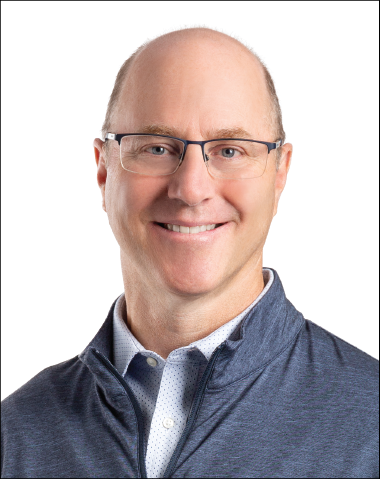

Raised on an apple orchard near Milwaukee, Tom Foti, vice president and general manager of the protein business unit of North Dakota-based Aldevron, was a science-minded kid whose advanced biology course in high school set him on his career path, studying DNA, genes, and chromosomes.
Foti, 54, attended North Dakota State University on a basketball scholarship, playing four years while pursuing a double major in biotech and microbiology with a minor in chemistry. In year five, he served as a student assistant basketball coach. Later, after moving to Madison, Foti earned a master’s in business administration from Edgewood College, and received a management and leadership certificate from MIT in Boston.
A devoted father of three, Foti is passionate about family, leadership, and building high-performing teams. He’s been a part of Aldevron’s growth from just a handful of employees to nearly 1,000, with roughly 100 in Madison.
In 2021, Danaher Corp., a publicly traded company, acquired Aldevron for $9.6 billion.
Tell us about your company.
Aldevron is a contract development and manufacturing organization. We develop methods to manufacture proteins, DNA, and messenger RNA at large scale. Our clients are pre-clinical discovery-based clients that move into manufacturing new cell and gene therapies for phase one or phase two clinical trials and eventually become new therapies deployed to patients.
Is Aldevron working on COVID therapies?
It’s public knowledge that we work closely with Moderna on COVID-related vaccines. There’s a new variant that just was detected recently in Michigan, so we are continually on COVID surveillance and working with the vaccine companies to support them for any responses that are rolled out to the general population.
How did you get involved with Aldevron?
Michael Chambers and John Ballantyne co-founded Aldevron on the campus of North Dakota State, my alma mater, in 1998. They manufactured plasmid DNA for clients and built the company brick by brick.
Fast-forward to 2009, I was working for a company here in Madison until it consolidated and left the market, so I used the opportunity to call Michael and suggest we join forces. They were building a plasmid business and we were building protein in Madison. Together, we could go to market with a broader product line, and that’s what we did.
Interestingly, Aldevron was initially funded from the profitability of the organization and did not take money or loans from private equity companies or banks. You don’t often see that in biotech because companies are relatively capital intensive.
Describe your management style.
I think my coaching mindset translates directly to my management style. I’ve always been fascinated by the relationships that people have in high-performing teams, and how great leaders can empower their teams to achieve higher goals than any one person could do
individually. I think about that a lot, how we interact with each other to solve problems that create value for our clients.
Tell us about the science involved.
Many drugs treat symptoms, not root causes of disease. Aldevron is powering the new wave of genomic medicine that will have the ability to more specifically deliver cures to patients by empowering the immune system or, with new technologies, correct the genetic code at the molecular level. The technology behind it, CRISPR-Cas9, was discovered in 2012 by Jennifer Doudna, a researcher at the University of California–Berkeley. It accelerated the possibility of curative therapies at the DNA or molecular level, and Jennifer won the Nobel Prize in 2020 for her discovery. Her vision is to make CRISPR available for curative therapies at scale.
We recently co-authored a paper with her in a journal called Molecular Therapy. It was a career moment for me to be a co-author with a Nobel laureate!
Impressive! What diseases are in the crosshairs?
To be clear, Aldevron supplies the raw materials to develop the curative cell therapy that our clients are developing. We’ve worked with clients on cell therapies for Duchenne muscular dystrophy, cystic fibrosis, or solid tumors and blood-based cancers, to name a few.
Different diseases are caused by mutations in different areas. For example, there’s a widely known mutation for sickle cell anemia on chromosome 11 that’s been studied for years. When it’s a very specific root cause, it’s easier to fix, and there is good news to report: Before the end of this year, we expect the first FDA approval of a curative cell therapy for sickle cell anemia.
That’s fantastic! Do you have any spare time?
I have three daughters ages 27, 24, and 20, so I’m a girl dad and heavily involved in their lives. We’re a very sports-oriented family. My youngest plays on the Marquette University volleyball team, my middle daughter is pursuing a doctorate at Creighton, and my oldest daughter and wife also played college volleyball.
Our family always recognized that playing at the college level is a privilege, and athletes are often viewed as role models, so my oldest and I started a nonprofit, Milotso [milotso.com], a turnkey mentorship and life-skills platform for college athletes to mentor young kids in the community. We’ve partnered with Marquette volleyball and we’re perfecting the model in the Milwaukee area now but hope to take it national. Milotso received a BioForward Community Service Award this year!
Whom would you most attribute to your success?
My late grandpa Foti, from Sicily. He immigrated in 1929 when he was 17, at a time when you had no idea whether you would even survive a trip across the ocean. His spaghetti dinners launched a major tradition of potlucks — gathering, eating, and enjoying time together, something the Italians do well.

