
If business coach Susan Thomson could issue a certain kind of cease-and-desist order, she would. Thomson wants Wisconsin small business people to know that they can still operate their businesses online, even if they are confused about whether they are a nonessential business and even if the word “cease” in state of Wisconsin’s Safer-at-Home order is giving them pause.
In the swarm of news coverage about the controversial order, Thomson says a number of clients, as well as a number of business owners she’s been talking to, have understood Safer at Home to mean that if their business is not listed as essential, they must completely shut down operations. That’s not the case, says Thomson, a partner with ActionCOACH in Madison.
Her reading of the order is that if someone’s business can be operated virtually, they can and should continue to operate. She notes that the order includes the following language from Section 2: “All for-profit and nonprofit businesses with a facility in Wisconsin, except essential businesses and operations as defined below, are required to cease all activities at facilities located within Wisconsin …”
|
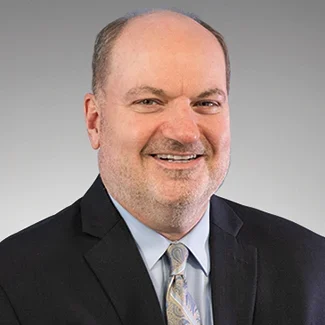
Susan Thomson |
“I think the spirit of the law is that if you are not listed as essential, you should stay home so you don’t spread the virus — not that they intend on shutting down all commerce outside of the essential list,” Thomson states.
Yet just prior to that language, Section 2 begins with the following sentence: “Nonessential businesses and operations must cease.” Thomson believes this is where the confusion and mixed messaging lies, and since state government has yet to provide clarifying guidance, she’s taking matters in her own hands by emphasizing to clients they are required to cease all activities at their physical facilities.
“You know, it’s really one word in the directive from the government that’s so confusing,” she said in a phone interview Wednesday afternoon. “If you just stop at the title, the title says businesses must cease or business must cease unless you meet these requirements. So, you really have to read through and read that ‘at facilities’ in the directive that so many people are not hearing. It’s not coming out of the official sound bites, either.”
Thomson’s initial email highlighting her clients’ confusion came Wednesday morning, and by the time she spoke with IB on mid-Wednesday afternoon, things weren’t any clearer. “They are still thoroughly muddled and confused,” she says, “and they are in a state of, ‘Oh, my gosh, if my business isn’t on the list [of essential businesses], I must have to go apply to be a business. If I’m in the construction industry, but I do kitchens, are those considered essential? I’m in landscaping, which is listed as essential, but we largely do aesthetic landscaping,’ so they are thoroughly confused.”
The only blowback Thomson has received by encouraging all businesses to function online has come from her own stepdaughter, who works in a retail gallery in Beloit. “It’s like sweetheart, you can still do all the ecommerce stuff,” Thomson notes, while laughing about the conversation. “The whole spirit is that they don’t want you out in the store potentially spreading germs, but whatever you can do from your apartment is fair game.
“Even with the fitness centers and the gyms, we’ve had a couple of our people who were impacted by those shutdowns. We’ve just moved them to online. They are doing Zoom
classes and things like that.”
Asked whether her clients are inquiring about how the federal government is going to administer recent legislative changes, such as paid sick leave, she answered in the affirmative, but added: “We’ve just been trying to calm them down and say, ‘Look, until all this stuff makes its way through the legislature and we have more details, don’t worry about it because there is nothing you can do,’” Thomson states. “So, with respect to how they are going to roll out some of the stimulus stuff, we’re directing them to talk to their local lender first, and then depending on what their local lender tells them, we’ll direct them to one of the SBA lenders.
“As for the legislative stuff, we’ve told them to just compartmentalize as best as they can, and we just have to wait and see how this plays out,” she adds. “So, don’t worry about something that hasn’t happened yet.”
Fever pitch
The National Federation of Independent Business has been taking the temperature of business operators nationally, and COVID-19 is giving them a fever. The NFIB Research Center’s latest survey on the current impact of the COVID-19 outbreak on small business offers a stark contrast from a survey released 10 days ago. The center found that the magnitude of disruption on the small business sector is profound, as 76 percent of small businesses are negatively impacted by the outbreak of the coronavirus, a dramatic escalation from just under one-quarter of small businesses reporting the same earlier this month.
|
Bill Smith |
In addition, 20 percent of small businesses are not currently affected by the outbreak, but 77 percent of these organizations anticipate that this will change if the outbreak spreads to, or spreads more broadly, in their immediate area over the next three months.
Only 5 percent are positively impacted, and these firms are likely experiencing stronger sales due to a sharp rise in demand for certain products, goods, and services. This is likely to ease in the forthcoming weeks as consumers feel more secure about their personal supply levels.
Bill G. Smith, NFIB state director, sees the same confusion among small businesses that Thomson does. “It’s also consistent with the calls I’m getting from members — confusion,” he states. “They are confused. Am I an essential business? Am I a nonessential business? There are so many exceptions and definitions in the executive order that it has created considerable confusion on Main Street.
“So many business activities simply aren’t covered by the executive order in terms of whether it’s allowed or isn’t it allowed as a business activity. I can’t say I’ve been overwhelmed with calls, but I know WEDC, the Wisconsin Economic Development Corp., has had a lot of calls, a lot of questions.”
Smith adds that another layer of uncertainty pertains to the administration of mandates in the federal legislation passed to ease the effects of COVID-19 disruption. “There are lots and lots of questions out there, and sometimes it’s a circuitous route to find the answers,” he notes.
The NFIB has a website dedicated to providing answers as they come. As the federation learns what’s required of employers in terms of paid sick leave, unemployment compensation, and other matters, it is posting that information to the site. Smith’s hope is that the government, when it does structure rescue programs, does so in a way that’s helpful to small employers who, by definition, have limited bottom lines and don’t carry a lot of cash reserves.
“It’s important to note that small business owners in general are very resourceful,” Smith notes. “They are very creative and innovative, and they will continue to meet this challenge. Everything rides on the duration of the crisis.”
Click here to sign up for the free IB ezine — your twice-weekly resource for local business news, analysis, voices, and the names you need to know. If you are not already a subscriber to In Business magazine, be sure to sign up for our monthly print edition here.

