
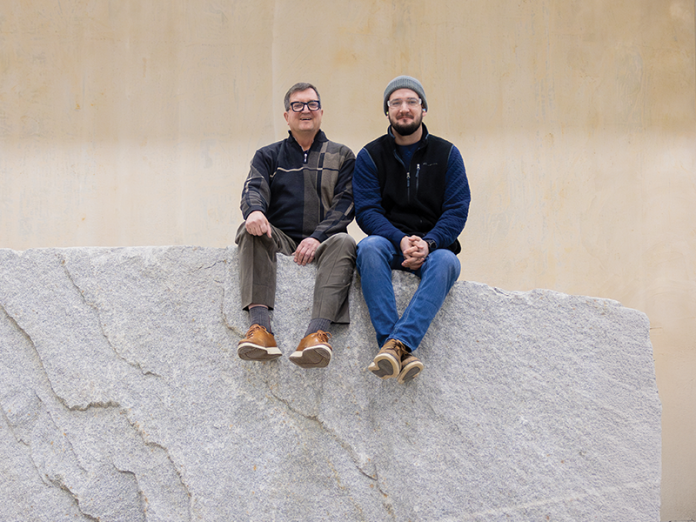

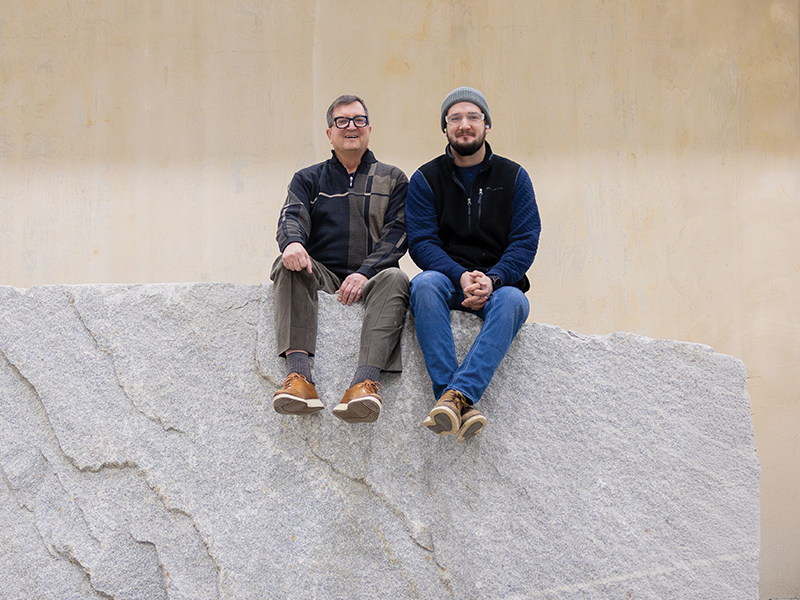
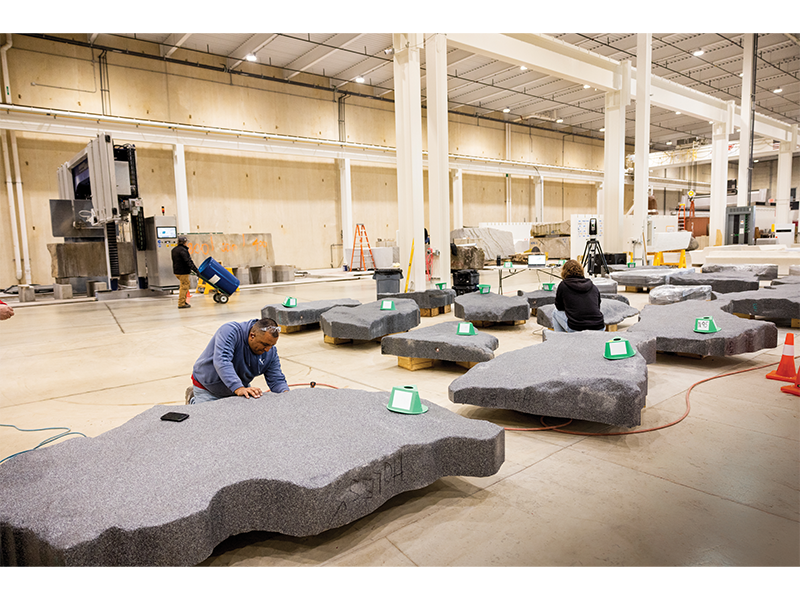
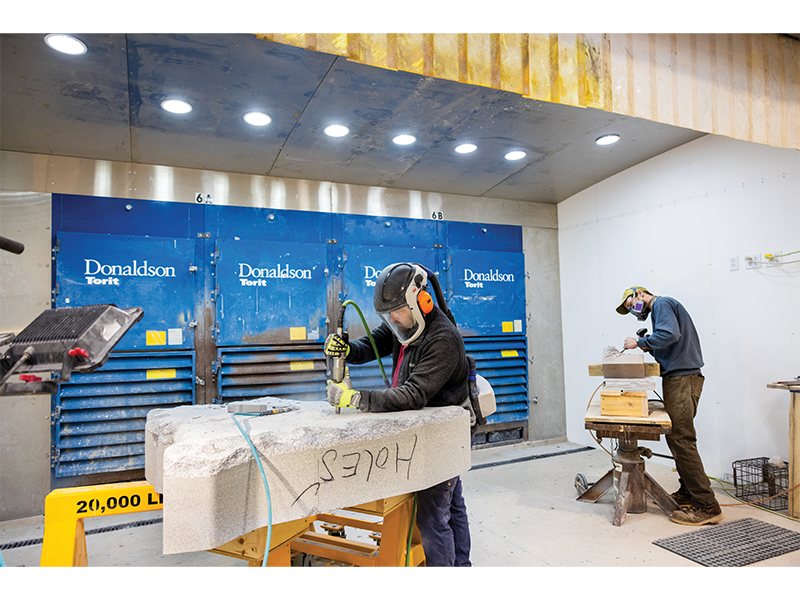
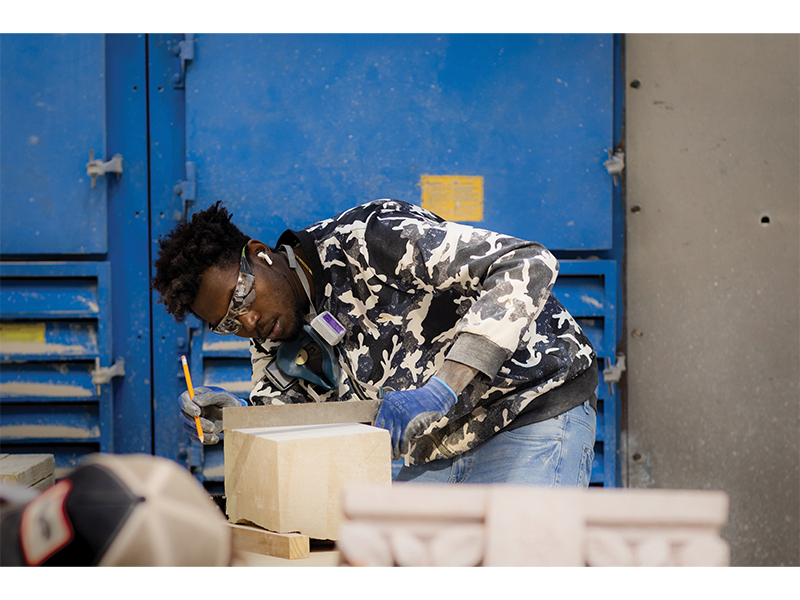
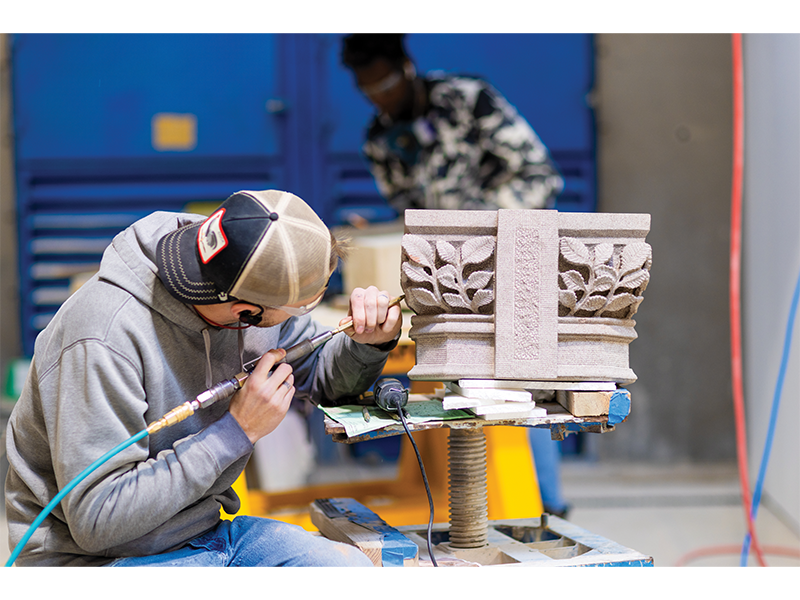
Transforming natural stone quarry blocks into fine art and historic monuments requires a lot of moving parts, and all of those pieces — people and high-tech equipment — are working in unison at Quarra Stone Company’s new 65,000-square-foot headquarters in Sun Prairie.
The facility, which the 36-year-old company began to occupy in 2023, has opened a world of new possibilities evident when walking the factory floor. Visitors can see massive stones slated to be part of the Obama Presidential Center in Chicago, the new JP Morgan Chase headquarters in New York, and a memorial for the nine victims of the mass shooting at Emanuel African Methodist Episcopal Church in Charleston, South Carolina, in 2015.
This high-level project work illustrates the status enjoyed by Quarra Stone, a company launched in Madison by one-time quarry operator Jim Durham. It also bodes well for the financial future of the company, which reports $20 million in revenue and is a recognized expert in natural stone, especially for fine art and historic preservation monuments.
The use of stone in architecture is to be a keeper of history, Durham said. With its long service life, stone presents history and messages that outlast the people who build them, and serves as a place of reflection and remembrance for community residents and tourists.
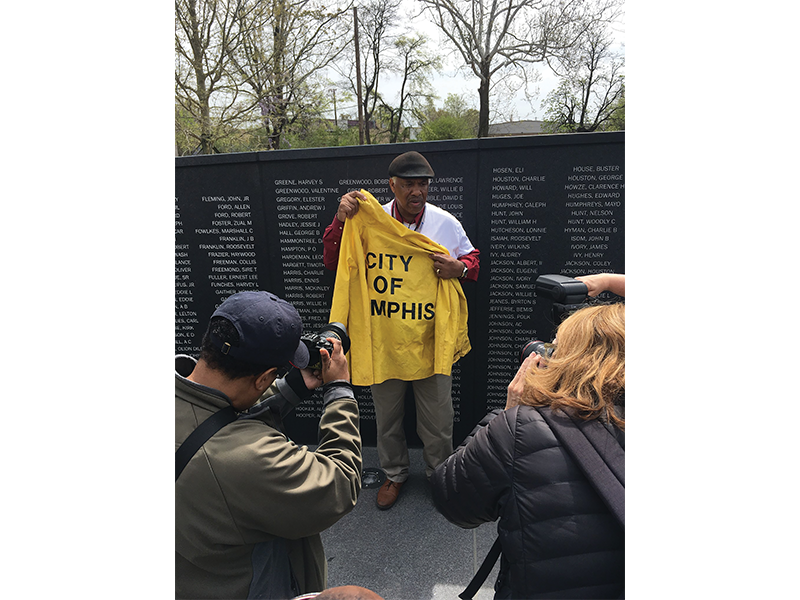
Durham pointed to the I Am A Man memorial in Memphis, Tennessee, which recognizes the workers involved in the 1968 sanitation workers’ strike. Rev. Martin Luther King Jr. was in the city to support the workers at the time and was assassinated. In collaboration with artist Cliff Garten, Quarra Stone carved the monument’s marble gates and fabricated its black granite columns, a granite timeline, and a dedicatory wall.
Vice president of operations “Alex Marshall and I got to take one of the original strikers [Roosevelt Franklin] over and show him where his name was engraved in the wall,” Durham said. “He was in his 80s at that point, and the idea that it will be there 100 years after he passed away was important for him, and for the community to remember how they got to where they are.”
Combining old and new
With its 85-member workforce, Quarra Stone supplies and fabricates architectural and interior stone for building projects, including prominent landmarks, throughout the United States. The meticulous process of designing, building, and installing a new monument is time-consuming, requiring the fabrication of hundreds of pieces.
Its new state-of-the-art facility, situated on a 25-acre, wooded campus in the Sun Prairie Business Park, is much larger than Quarra Stone’s previous location on Atlas Avenue in Madison. It features larger-scale CNC (computer numerical control) machines and other high-tech tools like 3D scanners and robotic milling devices. Those large-scale operations are combined with traditional, European-style master-carving skills for its projects. Among Quarra Stone’s workforce are 15 carvers who create intricate details on stone.
The company has provided stonework for college campuses, the U.S. Capitol, and famous museums. Monuments can run into the millions of dollars; in most cases, the projects are a multiyear effort.
The collaborative process, one that involves working with architects and artists, typically begins when Quarra receives a project order and must determine the stone type and color. The next step is purchasing stone from quarries — in blocks and by tonnage. Durham has spent much of his time traveling to quarries around the world in search of large blocks of stone. Each quarry produces stone of different textures, colors, and strength.
The blocks usually range between 10 and 20 tons and can cost up to $20,000, and shipping the stone can account for up to 20% of a project’s expense.
The factory floor has about $1 million worth of laser scanning and measuring equipment that are accurate to within three one-hundredths of a millimeter for the roughly 50 projects Quarra Stone is currently working on.
“Everything in here is rated for 50 tons, so our work has gotten heavier and heavier and bigger and bigger, and this facility really addresses that,” said Durham, who founded the company in 1989. “Right now, we have at least three blocks that are 50-ton blocks in the factory, and I’m guessing that today, there isn’t another place in the country that has three 50-ton blocks in the factory.”
Central Park inspiration
One 50-ton block has been transformed into an art piece for the new JP Morgan Chase headquarters on Park Avenue in New York City. Designed by artist Maya Lin, who also created the Vietnam Veterans Memorial in Washington, D.C., the art piece consists of two 60-by-60 foot stone blocks which will flank the entryway of the JP Morgan Chase building. Attached to the large stone blocks are 250 fabricated stone panels that were measured and cut in Sun Prairie and will be transported by semitruck — about 40 semitruck loads in all — to Manhattan.
The work is complex and began with a visit to New York’s Central Park, located two blocks west of JP Morgan’s headquarters. Durham, Lin, and others spent the better part of a day walking through the massive park, seeking rock-solid clues about which local stone material to model.
“Much of Maya’s work has the effect of tying your project to your place, and so she’s interested in exploring how these super-tall buildings get built in Manhattan,” Durham said. “That’s enabled because of the bedrock that’s on the island, and you see that with most outcroppings [rock formations] in Central Park, which are natural places where you can now find that stone. So, we walked with a geologist and film crew in Central Park all day long.”
Lin picked the area she liked best, and the bedrock there was scanned for modeling the two pieces that will be placed on both sides of the building entrance. Quarra is fabricating the public-facing side, which includes the carved details.
“Maya didn’t want the facade to look like a puzzle; she wanted her bigger zones that she called city-states,” Durham added. “We’re kind of playing with the depth of that. We have to flatten the back and be able to register it to the building, and three anchors are put on the individual stones. We do that here [in the factory], which is a little unusual. We’re doing engineering. We’re doing anchoring. We’re doing the fabrication of those and we’re scanning it all so that it fits exactly to the model.”
Referring to the two 60-by-60 foot stone panels, Durham further explained that “we’re putting up steel on the concrete wall, and then insulation, and then half the anchor system is on the wall, and the other half is on the [fabricated] stone that attaches to what they call ladders. They have to be put in a certain sequence, and it enables them to drop straight down into place.”
Making its mark
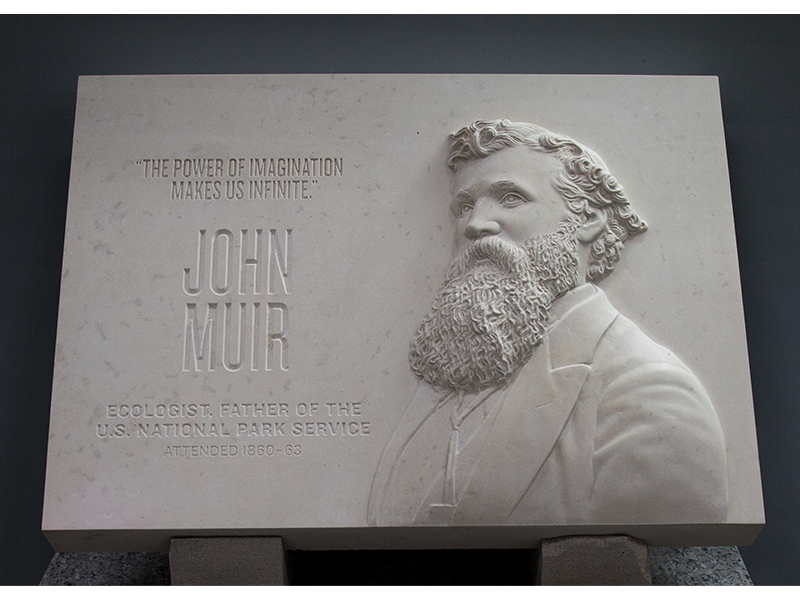
Locally, Quarra Stone was one of several partners that worked on the renovation of the University of Wisconsin–Madison’s Memorial Union. As part of that project, Quarra fabricated the stone panels now featured in Alumni Park, where the achievements of more than 100 of UW–Madison’s most distinguished alumni are recognized.
Paula Bonner, now retired, was president and CEO of the Wisconsin Alumni Association at the time of the renovation. Prior to the decision to give Memorial Union a makeover, she was unaware of Quarra Stone’s work. Now, she’s among its biggest fans, and she’s not surprised that prominent artists like Lin have partnered with Quarra as well.
“If you’ve got Maya Lin and other internationally recognized artists turning to you to help execute their concepts,” Bonner said, “that means you have had an incredible impact on architecture, art, and landscape design.”
Durham acknowledges that there is a “coolness factor” to what Quarra does, especially with fine art and historic monuments. Five years ago, COVID-19 wasn’t the only tumultuous event. The unrest that followed George Floyd’s murder by police in Minneapolis included the takedown of more Confederate and other Civil War monuments and placed a spotlight on the kind of monument that deserves to be in the public square — those of historical figures who were on the right side of history.
Quarra Stone has helped create some of those monuments, including the Memorial to Enslaved Laborers in honor of the 5,000 people who built the original academic village at the University of Virginia in Charlottesville. The company has also done impressive work in the nation’s capital. At 150,000 square feet, a recent five-year project for the new U.S. Capitol Visitor Center in Washington, D.C., was Quarra Stone’s largest to date — so large that each shipment had to be reported to the Senate Appropriations Committee. The company fabricated and delivered 150 truckloads (between 200-300 large blocks) of custom-finished sandstone that was matched to the stone in the Capitol rotunda.
Durham is convinced this work, and the facilities that make it happen, make his company more attractive to prospective employees, especially college students who have studied design. Among its growing workforce are people who have master’s degrees in architecture, computational design, or digital fabrication, and they have come from the Massachusetts Institute of Technology, Carnegie Mellon, and the University of Michigan in Ann Arbor.
The latter institution “has one of the most robust programs for what we do,” Durham said. “They know design and they know how to fabricate, and they’re interested in doing both. So, we have a crop of newer, eager people and they like the idea of being able to do the theoretical — doing the drawing on a computer — but then actually get dirty and go make it.”
Areas for growth
Quarra Stone regularly produces sculpture pieces for some of the top artists in the world. Fine art, one of seven revenue streams, now represents the company’s biggest growth area.
“It’s certainly where there is super interesting growth, and one of the advantages is that fine art can be shipped all over the world,” Durham said. “There are opportunities opening up for us internationally that we haven’t had before. You wouldn’t ship a whole building facade around the world, but you could ship a multimillion dollar fine art piece.”
In addition to fine art, Quarra Stone’s revenue also flows from installation, digital fabrication, cladding, historic preservation, consulting for entities such as the Smithsonian Institution, and the use of Vals Quartzite, a stone from the Swiss Alps. Quarra Stone is the exclusive North American distributor of Vals Quartzite.
“It’s good to have diverse revenue because if one area is not super busy, another one is,” Durham said.
Quarra Stone’s enhanced ability to scale means that in about five years, more than half of its work will be exported. “We’ve done international work, but it hasn’t been a huge driver for the company,” Durham said. “I think it’s going to become the thing because now our work is all over. It’s going to China, Japan, and New Zealand.”
From quarry to Quarra
For Durham, stone work was not always a high-tech experience. He was introduced to the stone fabrication industry as a college student, when he worked as a laborer in a retail stone yard in Washington, D.C., filling bags of gravel and sand and carrying flagstones to customers’ vehicles.
He then ran a crushed stone and building-stone quarry in South Elgin, Illinois, and along with a business partner, he later purchased Madison Stone Co., which dabbled in masonry supplies, landscaping supplies, plants, and mortar.
Durham’s partner bought out his interest in the company, and that’s when he started Quarra Stone on the east side of Madison.
According to Durham, it was a lean manufacturing principle that worked in Quarra Stone’s favor when Cold Spring Granite (now named Cold Spring) passed some granite work to Quarra, which was one of its subcontractors.
“In lean manufacturing, if you find that one job is causing a bottleneck in your operation, one thing you can do is take that job out because it’s not only hurting the job you’re doing, it’s also hurting all the ones behind it. So, they just yanked that job out of their factory, gave it to us, and we did it in Madison.
“They were a huge, 2,500-employee company with 30 quarries all over the country,” he added. “They trained us to do it their way, they gave us equipment, and they sent people down here to train our people.”
Facilitating the future
The move from Madison to Sun Prairie has not only doubled the company’s production capacity, it enabled the organization to add more skilled workers. Construction work on a new office to accompany the factory could start by early summer and there is room on the site to expand further.
Durham estimates that the Sun Prairie campus will cost upwards of $21 million when complete. The facility was financed with the help of a Small Business Administration (SBA) loan through the Bank of Sun Prairie, $975,000 in tax incremental financing (TIF) through the city of Sun Prairie — the business park is located in the city’s industrial tax increment district — and a state grant.
Taylor Brown, Sun Prairie’s economic development director, said the Quarra Stone development had added $11 million in property value to the city as of Jan. 1, 2024, and that’s just the manufacturing portion of the building.
The company also added land to the business park by acquiring about 24.5 acres from a neighboring farmer.
Eventually, the campus will include several “comfort rooms,” which are spaces for use by employees, clients, and artists to monitor project work.
It was Brown who introduced Durham to Jimmy Kauffman, president, CEO, and chairman of the Bank of Sun Prairie, which helped the city recruit Quarra Stone.
“It was a perfect union,” Kauffman said. “We had a large space in the business park that we wanted to fill, and Quarra Stone was looking for an area where it could expand. By expanding, they’re able to scale their business to do things that their direct competitors don’t have the scale to do.”
Marking the succession
In addition to the new facility, Durham also has given plenty of thought to management succession.
Last year, he hired Kate Crowley, a past principal with the accounting and advisory firm Baker Tilly, to serve as president, and he declined to identify himself with any particular title other than owner and founder. Asked if he would become chairman of a board of directors, he said Quarra has always had a flat organizational chart and would like to maintain that.
Durham’s son Lincoln, who once worked at a quarry in Switzerland, has become a vice president and is involved in the day-to-day operation, taking on some of his father’s traveling and working in sales.
Alex Marshall is vice president of operations and the leader of the “Qlab,” the company’s robotic and digital fabrication department.
The plan is for the more experienced Crowley to take over for a while. “She’s going to be a bridge for five to 10 years to let Alex and Lincoln get a little bit more seasoned, and then she’ll phase out and they will take over,” Durham said.
“We have an executive team that’s very active, but we’re run fairly flat. Our company mantra is that the best idea wins, and it doesn’t really matter who has the best idea.”