
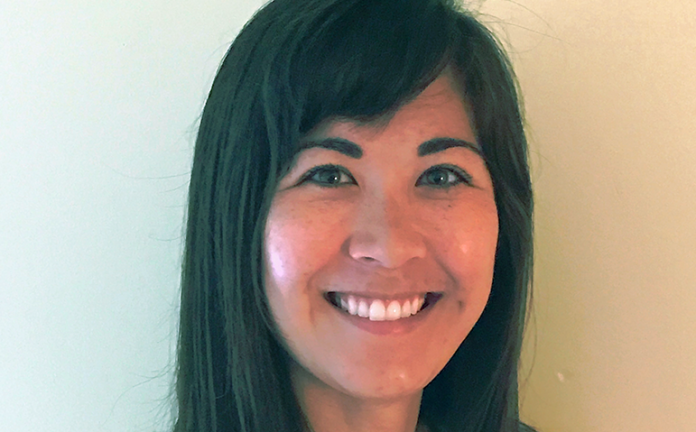

When interviewing someone on the subject of diversity, equity, and inclusion, one local training program invariably comes up. Led by Naomi Takahashi, its race and gender equity manager, the YWCA of Dane County offers training to businesses and nonprofits that want to create equitable and inclusive organizations. The organization has been doing so for the past 15 years, and in that time participating organizations have experienced some anxious moments because the training often required painful self-reflection.
It was painful because of the bias that’s often unconscious and yet inherent in virtually every person and organization. Acknowledging this bias isn’t a sign of weakness but a necessary step in organizational transformation, which is something the YWCA has learned as it has taken on the role that a diversity and inclusion professional usually plays. “A lot of change creates fear in people who have been really comfortable with the way things have been going, so we try to be that person and be that guide on the outside that helps support the folks who are doing the hard work internally,” Takahashi explains.
Be prepared
The training is actually the beginning of an internal process that often is a bit of a wretch, especially when it includes the topic of implicit bias and how it impacts hiring decisions. This level of introspection can produce a fair amount of organizational shame, but it’s important to face up to it. Sometimes, the response involves tearing down destructive cultural norms that undermine the D&I process; other times, it involves reconsidering inappropriate, unnecessary job requirements that make building a diverse organization impossible.
According to Takahashi, many times the effort starts as a diversity focus, but very quickly the focus becomes retention, not only to increase the number of diverse hires but also to sustain them. Then it becomes a matter of breaking down counterproductive norms within an organization’s established culture.
“These are norms that are detrimental to more diverse folks being successful, and that might include inappropriate job requirements related to education,” she explains. “By inappropriate, I mean they are unnecessary, that some of that can be on-the-job learning versus a degree that you have to hold, or it might be looking through the hiring process itself and seeing where people’s biases are playing out. That can actually impact the way people perceive the organization from the outside.”
Since every person and every organization has biases, the point is not to engage in racial or gender shaming, but learn to recognize discriminating policies. Organizational leaders who enroll employees in the training already recognize the business case for diversity and know they need to be responsive when it comes to racial disparities in the workforce, Takahashi notes. “And also being strategic because that’s something that organizations don’t usually do, and also really being purposeful about the kind of person you’re really looking for and creating a process around that.”
As painful as the process can be, it’s also potentially rewarding because of the business benefits of a more diverse workforce — more customers, higher revenues, greater market share, less absenteeism, and less turnover. “The world by 2042 will be much more diverse than it is now,” Takahashi notes, “and we’ll have to include all kinds of folks in the workforce to continue the work that we’re doing.”
Training the trainers
The YWCA program has undergone it’s own transformation. Initially, it entailed a mixture of pre-training consultation and post-training follow up. At first, the organization offered such training as part of an individual skill-based model, where people engaged in racial-justice learning at a speed that was comfortable to them. However, there were certain practical realities that soon became evident.
“We thought a lot of organizations would send individuals to these trainings to build their own capacities and increase awareness,” Takahashi recalls, “but it was hard for folks after they left the training, even though they had a wonderful experience and they made great connections, to actually translate that into practice within their own organizations.”
More recently, the YWCA has used a model developed by Dr. Kathy Obear, author of Turn the Tide: Rise Above Toxic, Difficult Situations in the Workplace. Obear has developed a multicultural organizational development tool, which Takahashi describes as a method that moves organizations along a continuum of equity and inclusion. There are six stages to the model, each with specific action steps.
Obear’s train-the-trainer approach led the YWCA to develop a program whose mantra could well be, “Organization, heal thyself.” The last part of the training is an assessment where people actually stand up and assess where their organization is positioned on the continuum. People have an opportunity to work in shared groups to create those specific action steps their respective organizations can move forward with.
“As consultants or people from the outside, we don’t really know the internal culture and organizational needs, so it’s really up to folks in the organization to dedicate themselves to doing that assessment,” Takahashi explains. “We move people from understanding organizational culture at the start of the workshop to seeing how it plays out in their own organization.”
For the purpose of continuing diversity work, the YWCA has created post-training partnership opportunities for participating organizations, and it accommodates this follow-up with a change team. “We realized that after we offered this service, with one-time training and a little consultation on the front end and afterwards some follow-up training, that people actually needed more than that to continue the work,” Takahashi notes.
(Continued)
Easy business case
What are program participants told about the business case for becoming a diverse, equitable, and inclusive organization? “Oh gosh, it’s so important,” Takahashi says. “I would say diversity expands your talent pool, it creates better recruitment opportunities, not only a specific person that you’re looking for that maybe has a degree, but you expand it to the point where you are not cutting. You’re actually creating more opportunities.”
Takahashi cites the research on diverse teams making better decisions, and more good ideas are generated when people from different backgrounds get together. “You’d better serve your customer base, and there is actually a lot of research that says businesses with a more diverse workforce have more customers, higher revenues, greater market share, less absenteeism, and less turnover, which is always costly to an organization,” she states. “People are more engaged in the organization overall.”
Click here to sign up for the free IB ezine — your twice-weekly resource for local business news, analysis, voices, and the names you need to know. If you are not already a subscriber to In Business magazine, be sure to sign up for our monthly print edition here.

