


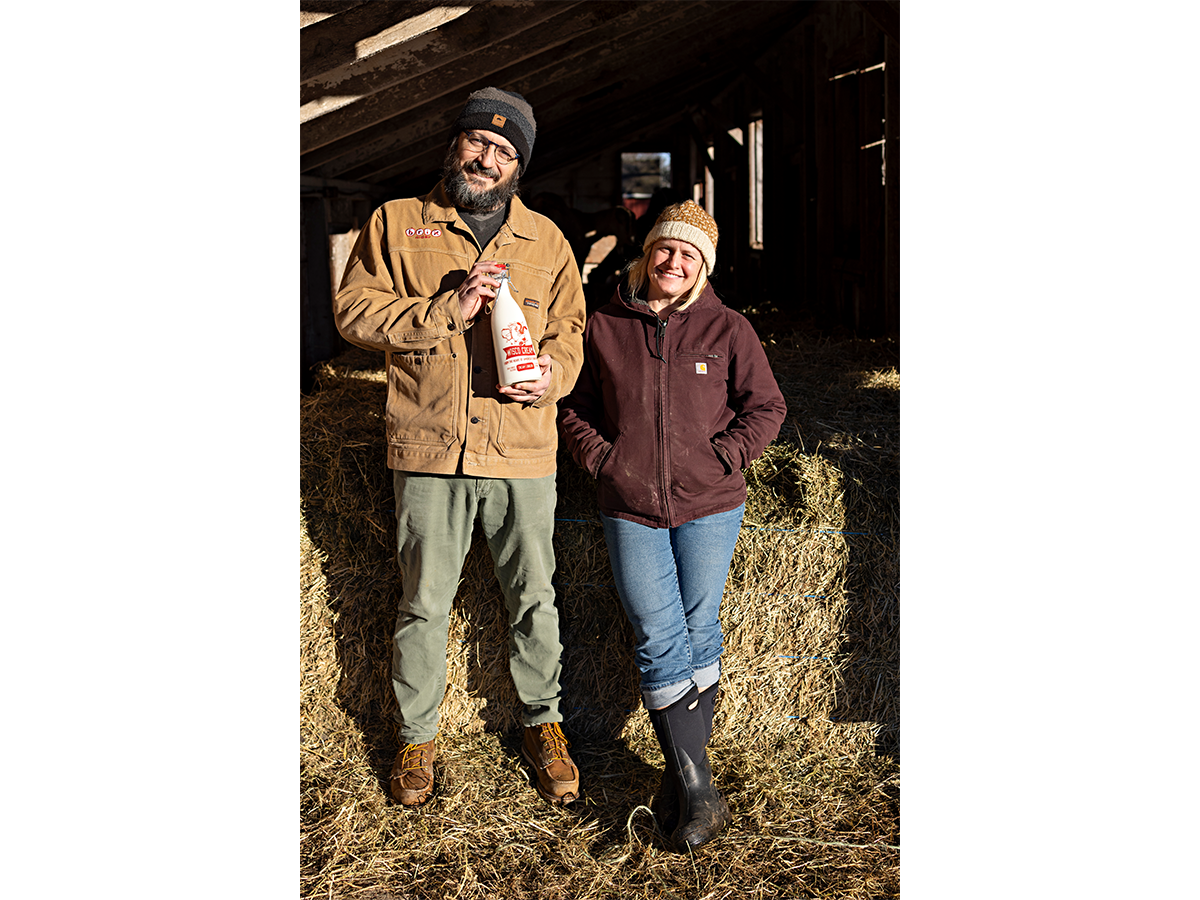
Farmers Matt and Marie Raboin are under no illusions of toppling Bailey’s Irish Cream as the top selling cream liqueur in the world, or even Wisconsin, but they see their new product, Wisco Cream, as a matter of dairy state pride.
The Raboins are the proprietors of Brix Cider, a farm-to-table restaurant in Mount Horeb. They have produced and sold hard cider, so they are familiar with the process of bringing an alcoholic drink to market.
But hard cider, which has about the same alcohol content as beer but is more expensive to produce, has proven to be a hard sell.
While they certainly aren’t giving up on what they consider a quality cider product, their cream liqueur quickly sold out its first production run of 1,300 gallons during the holiday season.
By mid-January, another batch was made available to a growing number of retail sites throughout the state. Steve’s Wine, Beer & Spirits, 3618 University Ave., is one retailer selling the product, for $29.
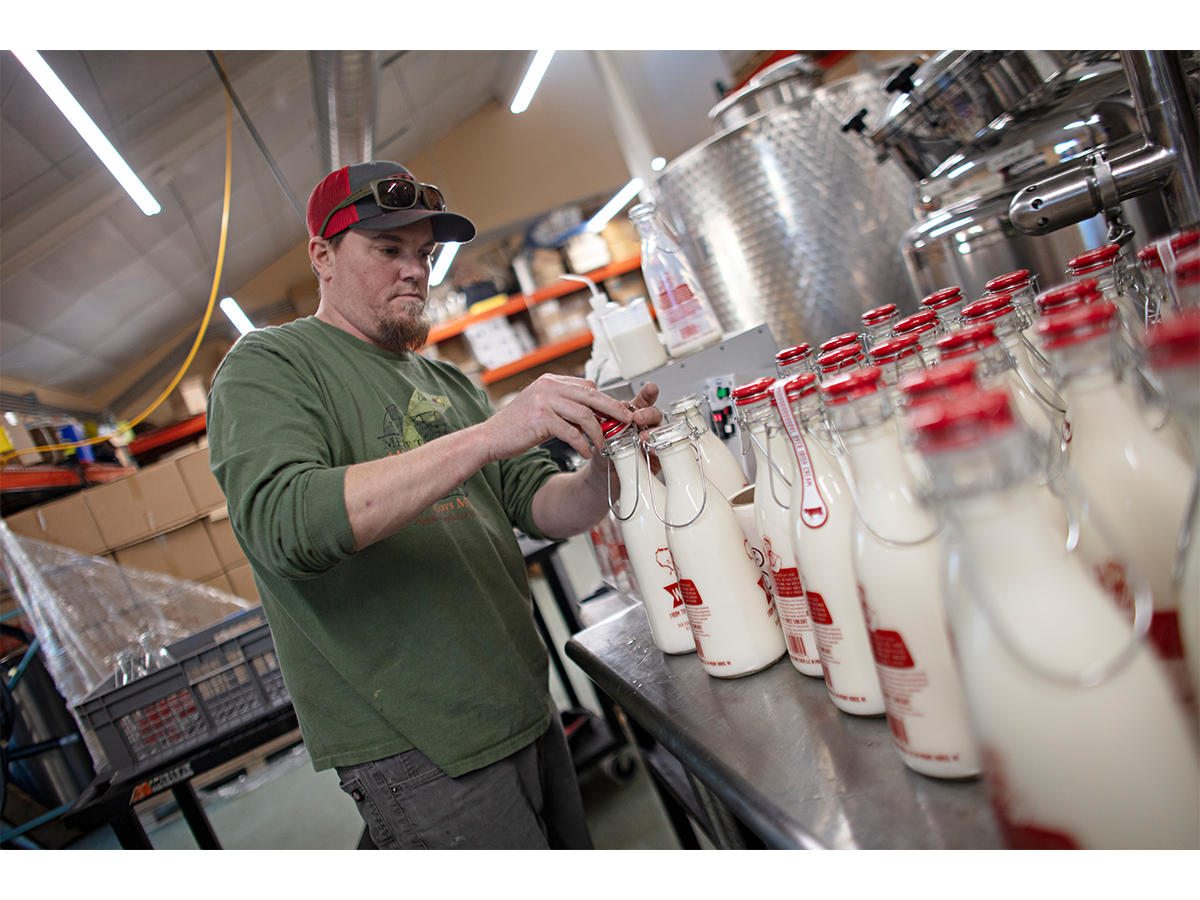
The Raboins came up with the idea several years ago, and are executing it with the help of a distilling permit from the state, plus Galloway Co., a Neenah dairy processor. Left Bank Wine Co., a McFarland distributor, brings Wisco Cream to 80 retail sites, up from 50 when the first batch was prepared.
Galloway makes the base, which features rum, and places it in IBC (intermediate bulk container) totes, a reinforced cardboard box with a bag inside to contain the beverage.
The IBC is brought to Brix Cider, which adds a couple of (secret) ingredients and bottles Wisco Cream in Mount Horeb.
Apples versus cream
When they first opened the restaurant and focused on hard cider, made from fermented apple juice, the Raboins worked with Tera Johnson, founder of the Food Finance Institute at the Universities of Wisconsin.
“She was really helpful when we were opening up, just figuring out how to get a bank loan,” Matt Raboin said. “She’s the one who said, ‘Hey, you should start at someone else’s winery, prove you have a product that you can sell, and then a bank might be willing to give you a loan to get started.”
For the cream liqueur, the Raboins haven’t needed “a ton of extra financing,” he said. Now they are looking to construct a storage building at their farm, located about five miles south of Mount Horeb, to house supplies such as empty bottles and boxes.
“The orders are coming in faster than we can fill them right now, and so we think we need to beef this thing up a bit,” he said.
The main difference between Wisco Cream and Bailey’s Irish Cream, other than their locales half a world away, is that Bailey’s uses whiskey and Wisco Cream uses a neutral rum “like a Caribbean rum,” Raboin said, and of course Wisconsin milk.
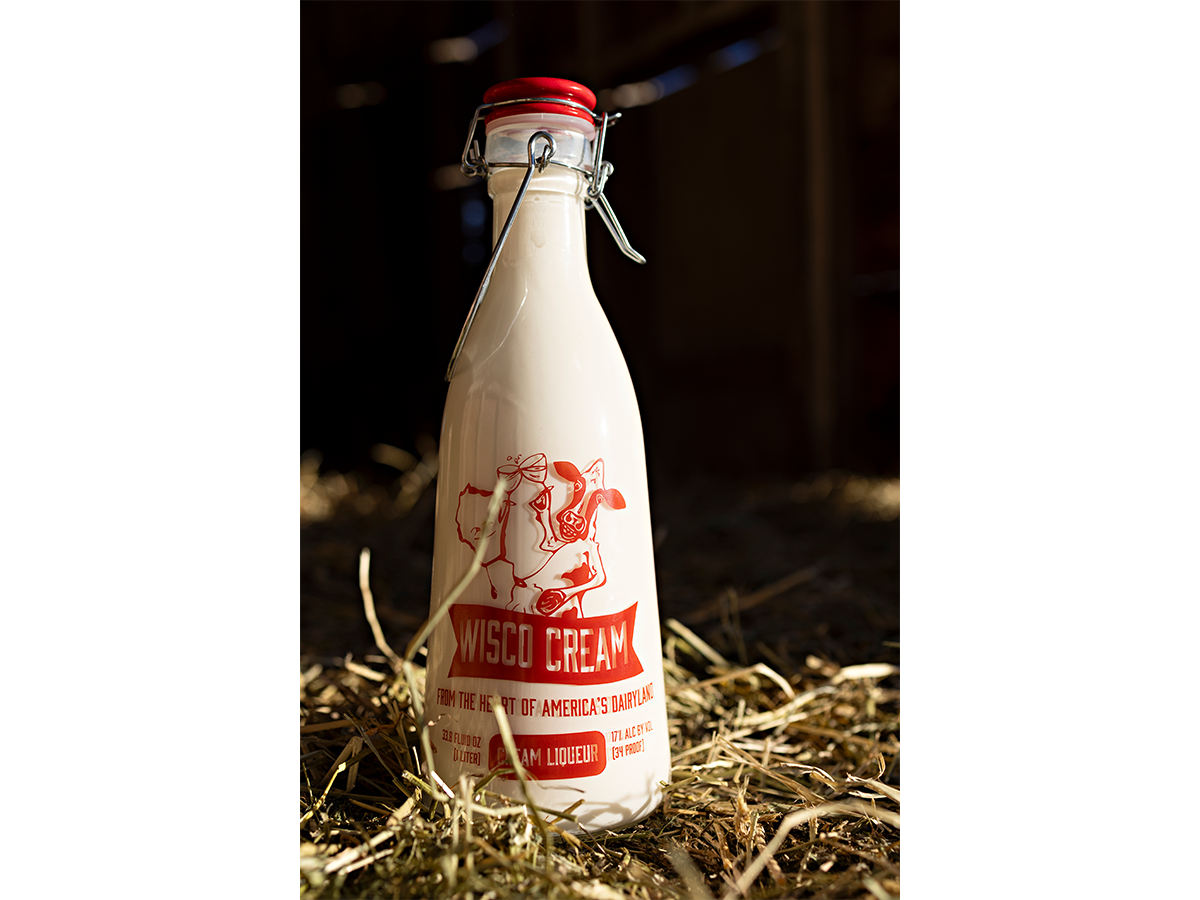
Wisco Cream is packaged in a milk bottle, akin to what an old milk bottle delivered by a milkman looked like. Social media advertisements used the image of a milkman character as a fun way to highlight that it’s made with Wisconsin dairy products.
“It’s subtle because the dairy and the cream is more the focus, and that just makes it a really versatile cream liqueur where you can just blend it with just about anything, and it adds a nice rich, creamy sweetness,” Raboin said.
“It’s great in coffee, and it’s great in hot chocolate,” he said. “We make our version of a White Russian where we just mix it with coffee liqueur. It’s just delicious that way.”
The Raboins hope Wisconsin drinking establishments start “playing around and making their own cocktails with it,” he said, “because it’s a Wisconsin product, it’s Wisconsin dairy and not imported from Ireland.
“Why don’t we just make our own?” he asked. “We’ve got our own creative uses.”
Already, Wisco Cream customers have concocted drinks like the “Tim and Karen,” a hot beverage takeoff on a Tom and Jerry made by a couple named Tim and Karen with Apple Brandy and Wisco Cream, Raboin said.
He also envisions Wisco Cream mixed with espresso or with ice cream and root beer in a float.
People typically associate cream liqueur with the holiday season, but Raboin said it also has potential when used as an ingredient in cool, summer drinks.
“We’re actually considering whether to find a local coffee roaster and work with them on a cold brew to mix it in and make a coffee or cream-and-coffee liqueur,” Raboin said.
In a way, the Raboins used restaurant patrons as a focus group for Wisco Cream, and that’s based on their experience with hard cider.
“We’ve learned a lot over the years,” he said. “We’ve been trying to sell hard cider for years and it’s not an easy sell. We’re a little more expensive than beer with similar alcohol percentage.
“We have been sourcing from all these small local apple orchards, so we don’t have any economy of scale. It’s sort of a small craft product.”
In contrast, the cream liqueur is supplied by the $53 billion Wisconsin dairy industry “and so, we’re able to ride on that as opposed to these tiny apple orchards where our costs end up being pretty high. We don’t have a super price-competitive cider product.
“If you want to compare it to beer, (the cider is) more expensive,” he said. “We can’t make it cheaper. We’re not set up for it, we don’t have a large industry surrounding us to make it efficient.”
Wisco Cream, made with 17% alcohol by volume (making it 34 proof), could be scaled up by working with a larger partner.
“That’s probably one way it could work,” Raboin said. “We’re limited here but we’ll try to grow as much as we can, get some name recognition and see where it takes us.”

