

For more than five years, the site of the former Madison Area Technical College (MATC) downtown campus has sat as a glaring reminder of halted progress. Despite being in a prime location, just a block from the state Capitol and in the heart of a bustling urban environment, the fenced-off and partially demolished block remains a significant urban eyesore. Developers, city officials, and residents alike have been waiting, hoping for a transformation that has been promised and repeatedly delayed.
Now, the question remains: What will it take to finally break the gridlock and bring this vision to life?
A promising start, then stagnation
The saga began when MATC, also known as Madison College, closed its downtown campus in 2019, redirecting resources to its newly built Goodman South campus. As a result, the downtown property, located at 33 W. Johnson St., became a prime candidate for redevelopment. Initial plans seemed promising, but progress has been anything but straightforward.
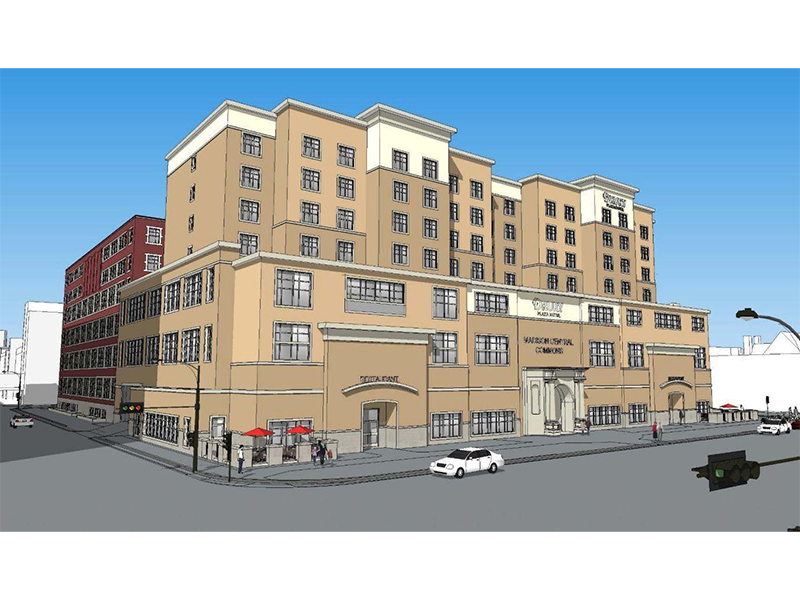
In 2020, Missouri-based Drury Southwest was one of the early players in this redevelopment drama. After signing a 98-year ground lease with MATC, Drury aimed to transform the block into a 200-room hotel. The company promised payments starting at $750,000 per year and increasing to $4.5 million annually by the end of the lease term. However, Hovde Properties, Drury’s local partner in the initial project, withdrew, citing concerns over the lease structure. “We just didn’t have a confidence level moving forward,” said then-Hovde president Michael Slavish in 2021.
Undeterred, Drury pressed on independently, setting an ambitious goal to complete construction by spring 2021. But as with many grand plans, the unforeseen struck. The COVID-19 pandemic effectively halted the project, leaving behind a partially demolished site. With little construction activity since early 2020, the project seemed indefinitely stalled.
Furthermore, while Drury paid its $700,000 rent for the first year, Mark Thomas, MATC’s then-chief financial officer and current chief strategy officer, noted in July 2021 that subsequent payments had been delayed, further complicating the situation.
“The college is working with Drury to understand what, if any, future revenue impacts there may be and will adjust its budget accordingly,” Thomas said in 2021, signaling the financial uncertainty facing MATC due to the stalled project.
NCG Hospitality steps up
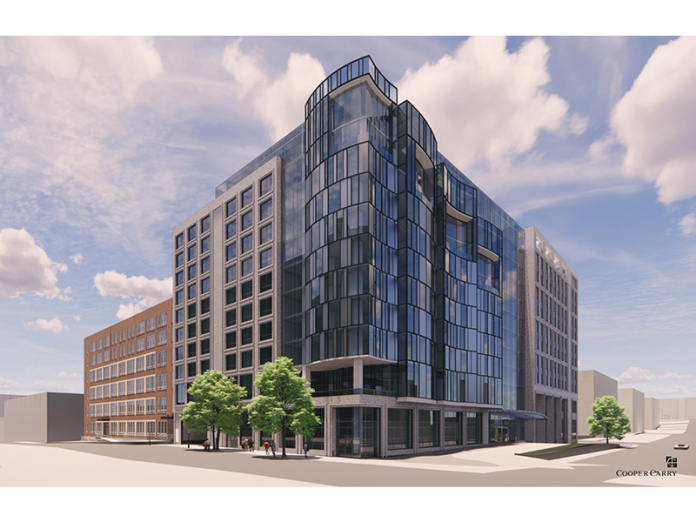
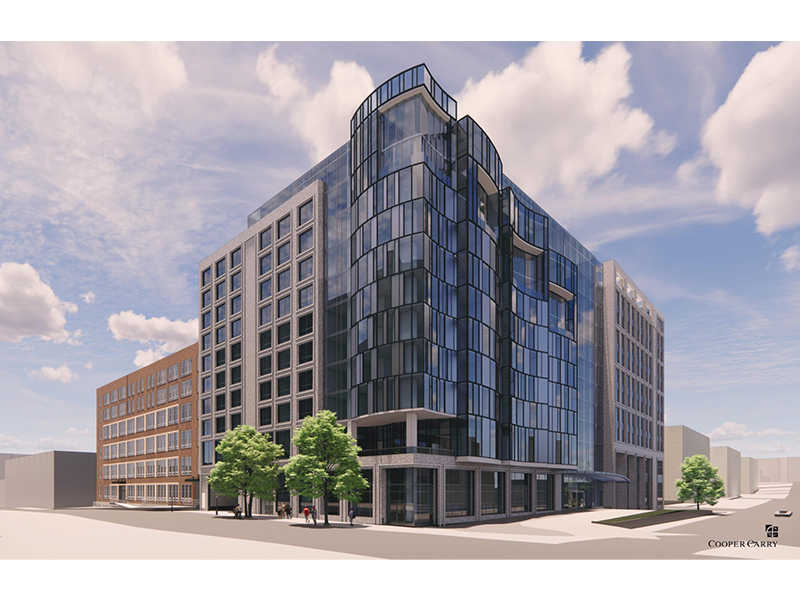
Amidst growing frustration, Middleton-based NCG Hospitality, a seasoned developer with an extensive portfolio of hotels and properties across Wisconsin and beyond, stepped forward. In June 2023, NCG unveiled an ambitious vision for the site: a sprawling redevelopment featuring an 11-story, dual-branded Autograph Collection Hotel and Residence Inn Hotel by Marriott, alongside the adaptive reuse of the historic MATC building for 126 loft-style housing units. The project also promised unique commercial spaces, a rooftop restaurant, a winter garden, and a midblock courtyard intended to serve as a public gathering space.
“This is a once-in-a-generation opportunity to contribute back to Madison in a significant way,” said Andy Inman, NCG’s chief development officer, in June 2023. “Our goal is to offer Madison’s visitors and locals a one-of-a-kind vibrant downtown hub with stunning and unique spaces not currently available in the city.”
The architectural plans, designed by the firm Cooper Carry, envisioned over 10,000 square feet of meeting and event space, including a 5,000-square-foot glass-enclosed winter garden, which would connect the hotel lobby with the midblock courtyard. The development aimed to create a lively atmosphere, complete with live music, community events, and entertainment for both hotel guests and local residents.
Alder Mike Verveer, who represents the district, expressed initial optimism about NCG’s plans. “The neighborhood is very pleased that there is now movement toward redeveloping the highly visible downtown block that’s been all but abandoned,” Verveer said in June 2023, adding that he appreciated the inclusion of housing and the preservation of the historic MATC building.
Financial reality sets in
Despite the enthusiasm surrounding the announcement, NCG soon faced familiar hurdles. Rising construction costs, complex lease agreements, and ongoing economic uncertainties presented significant financial challenges. By August of this year, NCG announced it was suspending the project, citing difficulties in assembling the necessary debt and equity structure.
“This is a much larger project for NCG that would require more time and resources,” the company said in a statement, adding that terms with Drury Southwest over the ground lease couldn’t be agreed upon without more nonrefundable deposits.
A neighborhood in waiting
Local leaders and residents, who have long awaited the revitalization of this central block, are increasingly frustrated. Ald. Verveer voiced his disappointment in August. “The hole-in-the-ground eyesore will persist for the foreseeable future,” he said, adding that neighbors had built a strong working relationship with NCG and were hopeful the project would finally break the cycle of failure.
This sentiment isn’t new. The neighborhood has watched successive redevelopment plans falter, from Drury Southwest’s initial hotel project to a workforce housing proposal by Wisconsin Housing Preservation Corp. (WHPC) that crumbled under the weight of soaring construction costs and interest rates. “These challenges … create an unfortunate set of circumstances prohibiting developers from providing much-needed workforce housing in our community,” Slavish, who moved on from Hovde to become chief operating officer of WHPC, said in 2022.
NCG’s proposal seemed to offer hope, blending residential, hotel, and commercial spaces with vibrant public areas. Yet, the specter of economic uncertainty has kept the site’s redevelopment in limbo.
“We can certainly speculate about the impacts of uncertainty in 2020 due to the pandemic, more recent increased interest rates, and construction costs,” notes Matt Wachter, director of the Department of Planning, Community and Economic Development for the city of Madison, “but it’s hard to know the mix of reasons that have stalled each individual idea for the site.”
The environmental debate
One of the more contentious aspects of the redevelopment has been the impact on Madison’s urban tree canopy. The construction of a driveway for the new development would require the removal of two mature ash trees on Wisconsin Avenue and a locust tree on Dayton Street. City Forester Ian Brown raised concerns about the loss of these trees, emphasizing that replacing mature trees with saplings is not an equal trade.
“Trees are not a one-to-one replacement thing,” according to Brown. “You remove a big tree, replant a new tree — that’s not equal math in my book.”
To address these concerns, NCG negotiated with the city to incorporate additional green space and a grass terrace that would allow for future tree plantings. Despite these efforts, the environmental impact remained a sticking point for many residents.
“I have great confidence in both the applicant as well as the city’s team on what we were able to reach as far as negotiations around those trees,” Brown noted this past January, but the loss still left a mark on the community.
The stakes and path forward
What will it take to turn this beleaguered site from a stalled dream into a dynamic downtown hub? Several issues are at play: financial feasibility, lease agreements, and community expectations. The ground lease arrangement with MATC is a significant barrier, with some developers wary of investing under such terms. “At this point, I have not had any conversations with any potential developers that are seriously eyeing the redevelopment of the site,” Verveer notes, emphasizing the ongoing uncertainty.
There is some hope that tax incremental financing (TIF) support from the city or federal historic tax credits could alleviate financial burdens. NCG’s Inman has suggested that TIF support might even incentivize the inclusion of affordable housing, a feature sorely missing from the current plan. “Obviously, affordable housing is a crisis in our community,” Verveer acknowledges. “The developer attempted to make the numbers work but simply couldn’t.”
While Wachter concedes city leaders view this as an important downtown site, so far the city hasn’t had any direct involvement as a property owner or funder.
Still, says Wachter, the city doesn’t want to stand in the way of developing this site, in whatever form it may take. “The city is fairly flexible with regard to the ultimate mix of uses on the site. We strongly support adaptive reuse of the existing building covering a portion of the property, which has been reflected in each proposal to date. Residential and hospitality uses are still looking quite strong citywide and seem to be the most likely, but if the market were to change, the city could also support office or institutional uses.”
MATC, for its part, has defended its decision to retain ownership of the property. “The leasing finance structure provides additional operating revenue that supports the annual operational expenses of the college,” says Sylvia Ramirez, MATC’s executive vice president of finance and administration. The college’s priorities, however, may just be complicating efforts to address the city’s broader housing needs.
Looking ahead
While the future of the former MATC site remains uncertain, one thing is clear: the community, city officials, and developers all recognize the urgent need for progress. Whether through financial incentives, renegotiated lease terms, or new development partnerships, all parties involved seem eager to find a way to break the impasse, noting Madison’s downtown deserves more than a fenced-off lot — it deserves a vibrant, bustling space that reflects the city’s dynamic spirit.
The city stands ready, according to Wachter. “We’re poised to assist the next development team interested in joining the steady, strong level of investment in Madison’s downtown by moving forward on this site.”
“The world is very different than it was in 2019,” Inman adds, “but NCG is committed to bringing vitality back to this vacant city block.” Now, it’s a matter of finding the right mix of resources, vision, and community collaboration to make that dream a reality.

