


In the quiet village of Paoli, where the Sugar River flows past historic buildings and rolling farmland, an unexpected hospitality revolution is taking place. What was once a 25,000-square-foot cheese factory dating to 1888 now stands as a testament to innovation in the face of adversity — a boutique hotel that emerged not despite the COVID-19 pandemic, but in some ways because of it.
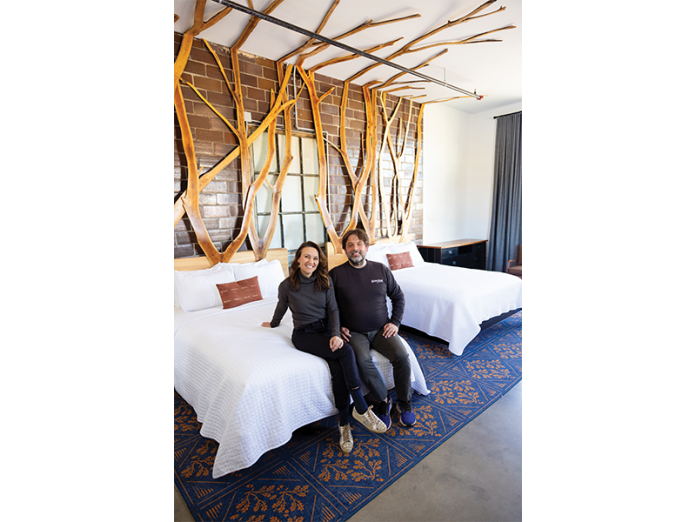
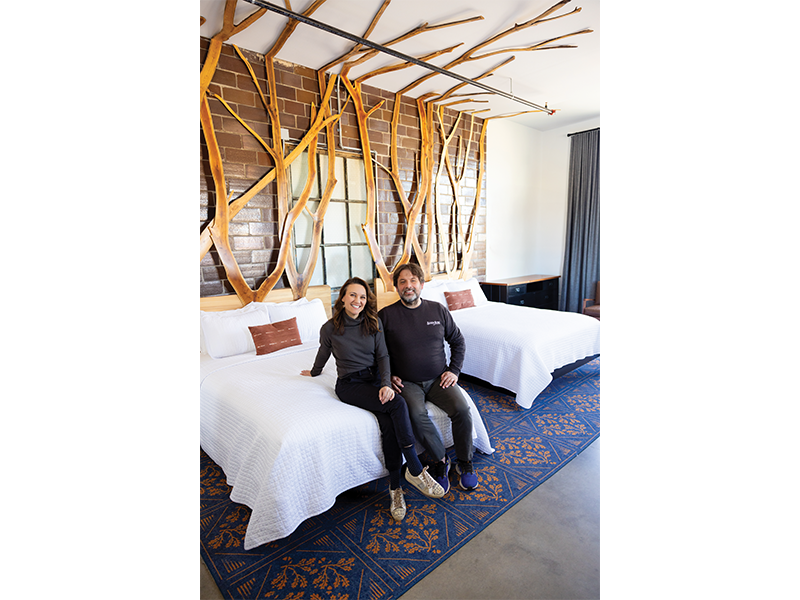
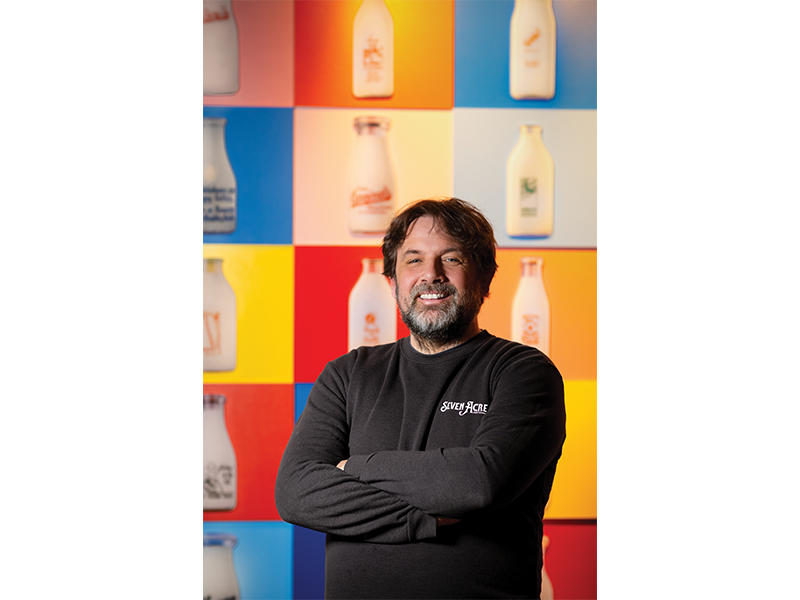
“We both adored the history and landscape of Paoli, an affinity that only grew during the pandemic,” said Nic Mink, who along with his wife Danika Laine transformed the historic creamery into the Inn at Seven Acre.
For the couple, the journey to hotel ownership came through an unexpected route. Initially, they wanted to open a pizza restaurant in a town they loved. They were part of the “great resignation” at the beginning of the pandemic, leaving their “stressful, travel-heavy jobs” — Mink as co-founder of Sitka Salmon Shares and Laine as the communications director for the River Alliance of Wisconsin — to look for something closer to home.
“We approached a friend who owned a business there [to see] if any buildings were for sale,” said Mink. “She pointed us toward the historic creamery building. It was a much bigger building than we were looking for, but also provided the opportunity to create the inn concept.”
That serendipitous discovery set in motion a transformation that would not only breathe new life into a historic structure but also position the couple at the forefront of a shift in the hospitality industry — one that has seen boutique hotels emerge as key players in the post-pandemic travel landscape.
From dairy to destination
Established in 1888 by local dairy farmers, the Paoli factory produced award-winning Swiss cheese and sweet cream butter for nearly a century before closing in 1980 due to industry consolidation. The building served various purposes until Mink and Laine began its restoration in 2021, a project that would ultimately place it on the National Register of Historic Places.
“Renovating a historic building that is on the National Register of Historic Places is a big process,” Mink said. “It requires lots of consultants, and approval from local, state, and national governing bodies. But to be able to preserve such an incredible piece of Wisconsin dairy history was worth it to us. The total remodel took about two years, and to be honest, we’re still working on the site.”
The restoration transformed the former factory into a multifaceted venue featuring not just the boutique hotel but an upscale farm-to-table restaurant; a casual spot serving breakfast, lunch, and house-made soft-serve ice cream; and a micro-dairy. The renovation preserved original materials, such as red quarry tiles and yellow structural blocks, maintaining the building’s historic character while introducing modern amenities.
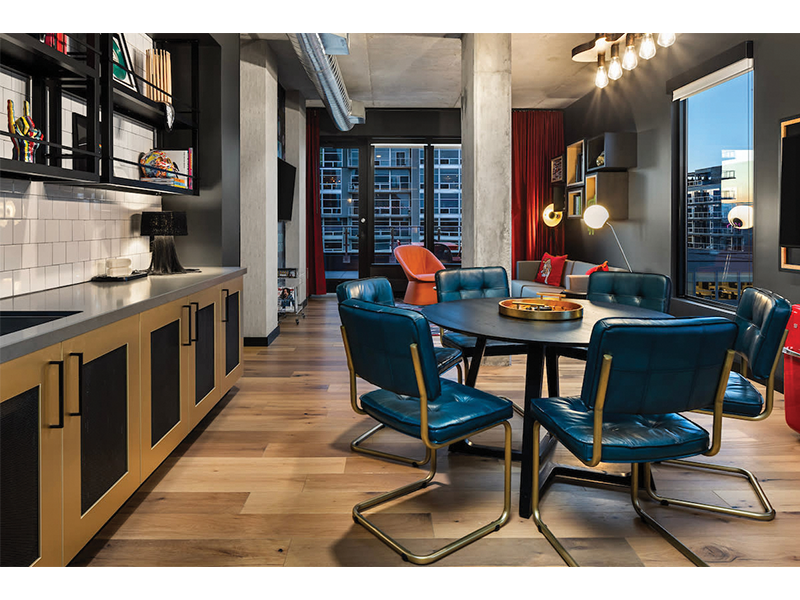
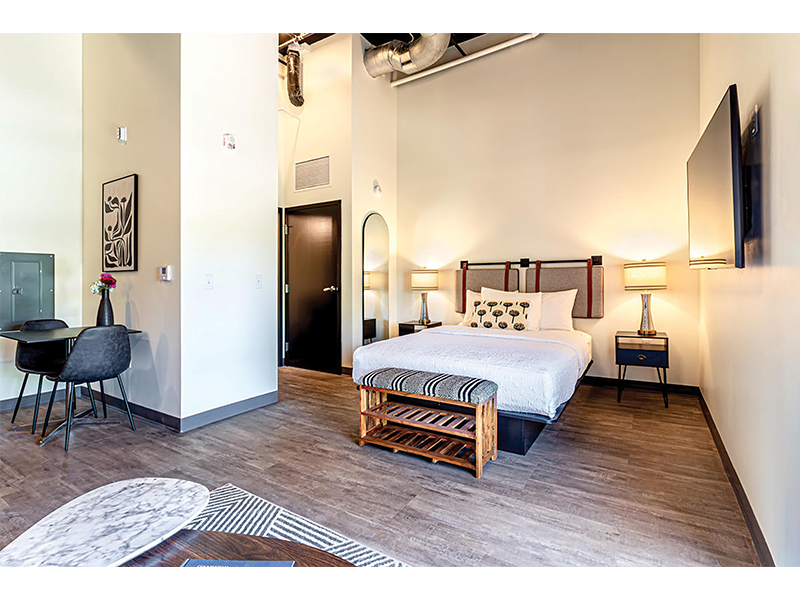
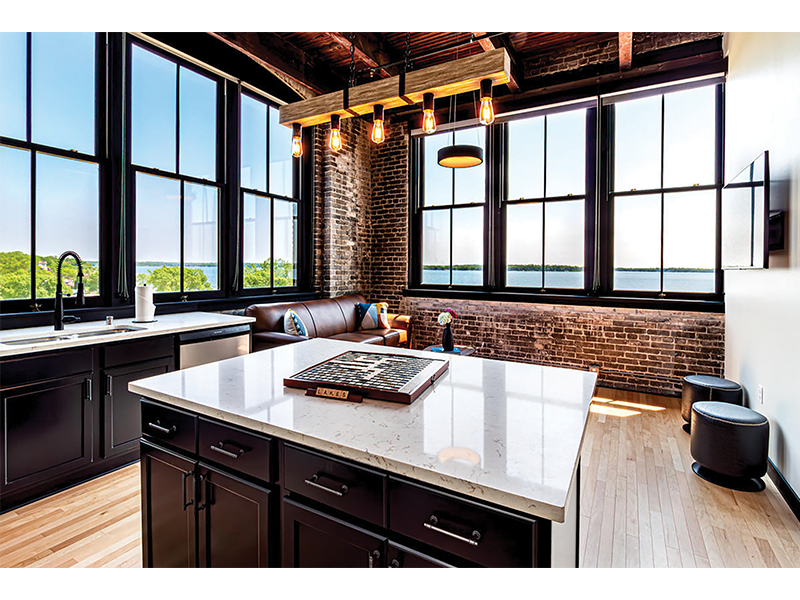
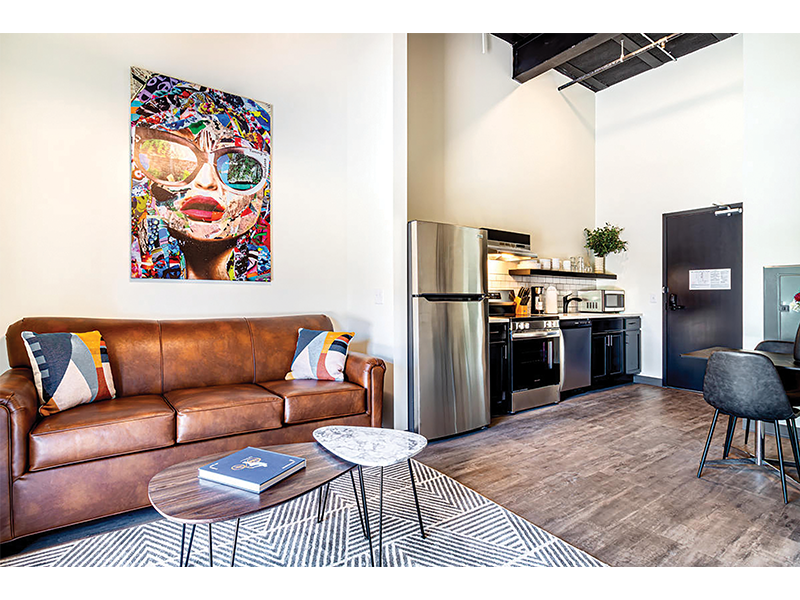
The Inn offers eight rooms and suites with local artwork and custom-crafted furnishings made from reclaimed wood. It includes the Creamery Room, featuring an 8-foot circular window where the cream tank once stood, and suites with views of the Sugar River. The location also provides guests with scenic outdoor spaces that connect them to the landscape in ways standard hotels often cannot match.
Business and leisure travel blend
When asked if they had reservations about opening a hotel in the wake of COVID-19 when some were still wary of travel, Mink’s response revealed an important insight about post-pandemic travel patterns: “We’ve found quite a bit of success with business travel, [although] we always envisioned our market being leisure and group travel. If you can remember, there was a big spike in travel to rural areas near larger metropoles. That is still largely true.”
This observation aligns with broader industry trends that saw travelers seeking out less densely populated destinations during the pandemic — a preference that has persisted even as concerns have waned. Boutique properties in rural settings, particularly those within driving distance of major metropolitan areas, are uniquely positioned to capitalize on this shift.
For the Inn at Seven Acre, location has proven to be an advantage. Situated just 20 minutes from Camp Randall Stadium and 30 minutes from downtown Madison, the property offers visitors the experience of being “a world apart” while remaining accessible to urban amenities and events.
“We do receive some nice traffic from friends at Epic and a few other local companies,” Mink said, referring to Epic Systems, the health care software giant headquartered in nearby Verona. “At the same time, most of our travelers are leisure and are driving from larger Midwestern cities like Chicago, Milwaukee, Minneapolis, Rockford, and, of course, Madison.”
This blend of business and leisure travel — sometimes called “bleisure” in industry parlance — has become increasingly important in the post-pandemic landscape. Business travelers, many now accustomed to remote work and flexible schedules, are more inclined to extend business trips to include leisure time. Traditional business travel, characterized by quick trips to urban centers and stays in chain hotels, has given way to more varied patterns that include longer stays, remote work components, and preferences for unique accommodations.
This rise in digital nomads who leverage technology to work while exploring new destinations, and bleisure travelers who blend business and leisure during trips, has resulted in a global economic impact exceeding $500 billion, according to the American Hotel & Lodging Association (AHLA).
The boutique appeal
A boutique hotel is smaller than an average chain hotel, often with less than 100 guest rooms. These smaller hotels can be viewed as stylish properties that offer a personal experience to each guest. They tend to be in city centers or other fashionable urban locations, but they can be located just about anywhere.
In the heart of the near east side of Madison, there is the Marquette Hotel. Close to the Capitol visitors can stay at the Saddlery Madison or the Hotel Ruby Marie. Near James Madison Park and Lake Mendota are the Mansion Hill Inn and Governor’s Mansion Inn.
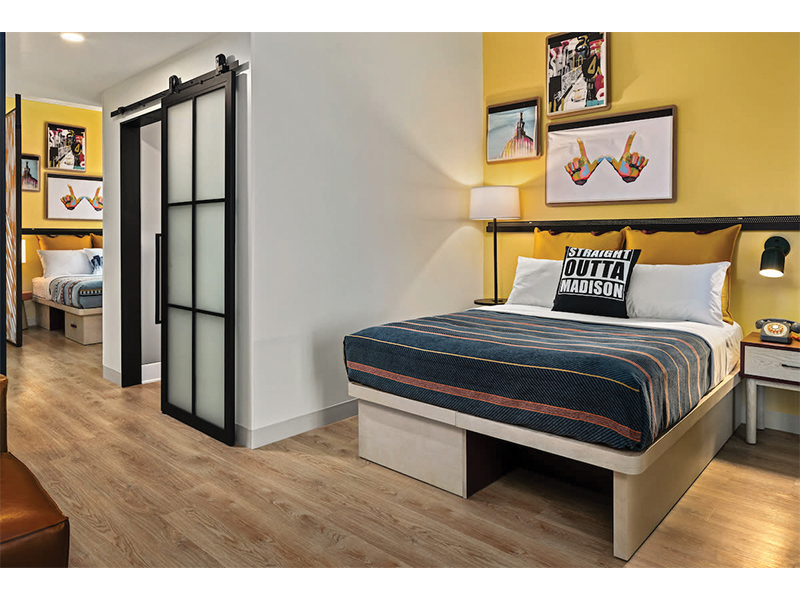
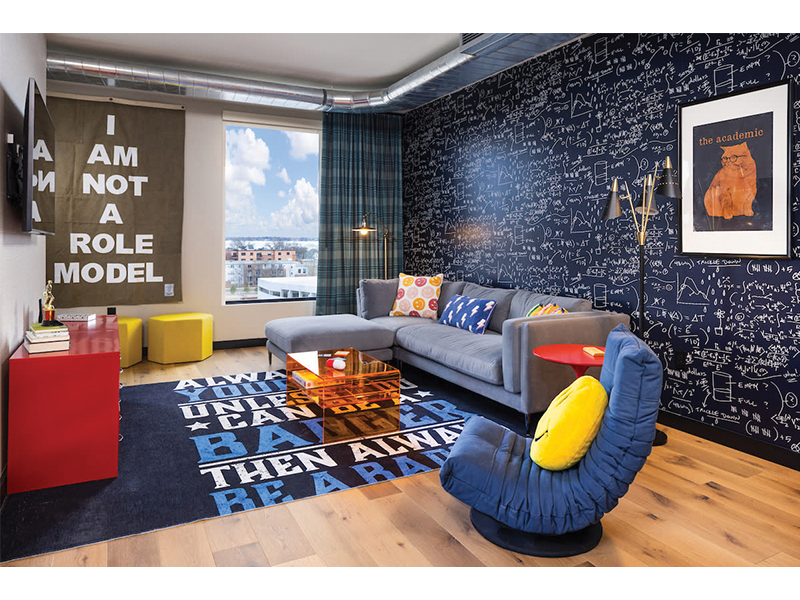
Campus visitors might opt for the Graduate by Hilton Madison or Wisconsin Union Hotel. Though a bit bigger, hotels like the Moxy Madison Downtown (151 guest rooms) and Hotel Indigo (144 rooms) offer unique rooms in the busy East Washington corridor and have also been referred to as boutique or lifestyle hotels.
“I think it all ties back to ‘sense of place,’” Mink said. “There’s something about smaller hotels that reflect where you are in such an intimate way. It’s something larger hotels can’t replicate.”
This sense of place — the ability to connect guests with the distinctive character, history, and culture of a location — has become increasingly important to travelers in all segments, including business travelers.
“With only eight rooms, it really is nice to have the possibility to know all our guests,” Mink said. “We already have a wonderful group of regulars who feel like family. These are guests that have stayed at the property a dozen times since opening.”
As travelers seek experiences and connections during their trips, the individualized attention and service possible at smaller properties becomes more valuable.
Andy Inman, chief development officer for NCG Hospitality, which owns and operates eight hotels in the Madison market, including the Saddlery and Moxy Madison, notes the hotels, while both on the “smaller” side, serve different clientele.
“The (Moxy) brand [created in 2013 in a partnership of Marriott International and IKEA] is not geared toward a business traveler, per se. It’s more geared toward that fun seeker,” Inman said. “This corridor and downtown Madison offer a lot for the guest to experience the best of Madison.”
The Saddlery, meanwhile, offers rooms for short-term stays as well as longer-term rentals of weeks or even months. It’s what NCG refers to as an “aparthotel,” a nod to its functionality as an apartment building and hotel.
According to Inman, travelers to Madison looking to take in a Badgers game have enough space for their entire group at the Saddlery. Those staying longer for work, however, “could enjoy all of the benefits of home in their hotel room,” including plenty of space to conduct remote work outside of the confines of a bedroom.
“There are a number of other brands out there doing similar concepts in larger markets,” Inman said, including in Chicago, Minneapolis, and Phoenix, the latter two of which NCG also has a presence in.
The financial dynamics of boutique hotels differ significantly from those of larger chain properties, offering both advantages and challenges. With fewer rooms, smaller properties must maintain higher occupancy rates and daily room rates to achieve profitability, but they also benefit from lower staffing requirements and more flexible operational models.
Industry data suggests that boutique properties have generally been able to command premium pricing in the post-pandemic market, with average daily rates at independent hotels in secondary and tertiary markets increasing at rates exceeding inflation. This pricing power reflects the distinctive experiences they offer and the broader shift in traveler preferences toward unique accommodations.
For small communities like Paoli, New Glarus, and Viroqua, which is home to the 14-guest room Hotel Fortney (another recently renovated property), boutique hospitality also offers economic benefits beyond direct revenue generation. By attracting visitors who might otherwise stay in larger urban centers, these properties drive spending at local restaurants, shops, and attractions. They also create employment opportunities and support local suppliers, from food producers to artisans whose work may be featured in the properties.
The success of the Inn at Seven Acre has inspired Mink to undertake a similar project in nearby New Glarus. In 2023, Mink’s company, New Glarus HG LLC, acquired the historic New Glarus Hotel with plans to restore it to its former glory.
Established in 1853 by Melchior and Rudolph Baumgartner, the New Glarus Hotel served as a hotel and social hall before evolving to include amenities such as a dance hall, theater, and dining facilities. The building has a rich history, including a notable visit from John F. Kennedy, who dined there after delivering a campaign speech at the New Glarus Theater during his 1960 presidential campaign.
Mink’s vision for the New Glarus Hotel includes reintroducing lodging accommodations by transforming the upper floors into suites that reflect the building’s historic character, while reviving the Swiss-style supper club on the main floor to offer authentic cuisine and cultural experiences. The project emphasizes community involvement, inviting people to shape the hotel’s next chapter through crowdfunding campaigns and local collaborations.
The business travel rebound
Overall, data from the Wisconsin Department of Tourism show visitor spending in 2022 surpassed pre-pandemic levels, reaching $23.7 billion statewide — a 6.3% increase over 2019 figures. Industry analysts note that business travel has played an important role in this recovery, particularly in regions like Dane County where educational institutions, health care facilities, and technology companies drive business visitation.
According to the American Hotel & Lodging Association’s 2023 State of the Industry report, business travel revenue across U.S. hotels was expected to reach $95.9 billion in 2023 — nearly matching pre-pandemic levels — but with significant shifts in how and where that spending occurs.
“The hotel landscape in the Greater Madison area rebounded strongly in 2022 and especially 2023 after the pandemic lows,” said Jamie Patrick, executive vice president of sales and sports strategy for Destination Madison. “[Our] team was able to help accelerate the rebound with successful sales efforts to bring meetings and events to Madison, and successful marketing campaigns to increase leisure travel and to encourage business travelers to extend their stays.
“We’ve seen several boutique hotels open post-pandemic, particularly extended-stay hotels, which indicate business travelers find value in not only coming to Madison but also in exploring Madison.”
Destination Madison figures point to not just a recovery, but a travel boom in Greater Madison.
Visitor spending in 2023 was $1.5 billion — a record — and lodging spending that year was $85 million, about $1.5 million shy of the record 2019 total.
Madison has emerged as an unexpected leader in the business travel rebound. The city’s mix of corporate headquarters, government offices, and university-driven events has helped fuel a resurgence in hotel occupancy rates.
In the heart of it all stands Epic Systems, the Verona-based health care software giant whose sprawling campus draws thousands of business travelers each year. Even during the leanest years of the pandemic, Epic-related travel never fully disappeared. Now, with in-person training and corporate meetings back in full swing, the company has once again become a pillar of Madison’s hospitality economy.
Beyond Epic, Madison’s Monona Terrace Community and Convention Center has played a pivotal role in revitalizing the local industry. The convention center hosted over 600 events in 2023, filling hotels with attendees from across the country. Conferences focused on biotech, education, and government affairs have been particularly strong, contributing to the city’s midweek occupancy rates, which are a critical indicator of business travel health. Hotel managers who once worried virtual events would replace in-person gatherings now find themselves racing to accommodate an influx of corporate travelers.
CoStar, a hospitality analytics firm, reported that Madison’s hotel occupancy reached 59% in 2024, ahead of the statewide pre-pandemic average of 54.2%. This momentum is mirrored in Madison’s room tax receipts, budgeted at $21.8 million for 2025, ahead of the pre-pandemic peak of $18.9 million in 2019. Even after adjusting for inflation, the numbers indicate a return to strength, underscoring the role business travel plays in sustaining the broader tourism economy.
Nationally, corporate travel is not just recovering; it is transforming. The way professionals travel for business is no longer the same as it was before the pandemic. Companies have restructured their travel policies, balancing the necessity of in-person meetings with the cost-saving benefits of remote work.
Yet, despite predictions that business travel might never fully return, companies are rediscovering the irreplaceable value of face-to-face interactions. Sales teams are once again hitting the road, corporate retreats are making a comeback, and executive summits are filling event spaces.
According to the World Travel & Tourism Council, business travel spending in 2024 surpassed pre-pandemic levels by 6.2%. The U.S. is leading the charge, with corporate travel expenditures reaching $472 billion last year, marking a 13.4% increase over 2019.
Challenges and opportunities ahead
While the post-pandemic period has presented significant opportunities for boutique hotels, challenges remain. Labor shortages continue to affect the hospitality industry broadly, with rural properties often facing difficulties in attracting and retaining staff. Rising costs for everything from construction materials to food and energy have squeezed margins, even as room rates have increased.
For properties like the Inn at Seven Acre, there’s also the need to balance preservation with profitability. “We’re still working on the site,” Mink said, highlighting the continuous nature of maintaining and enhancing historic properties. These ongoing investments require sustainable revenue streams, making the ability to attract a diverse mix of travelers particularly important.
Still, for Mink and Laine, the journey has been transformative.
As Mink put it, “Paoli, Wisconsin, just seems like a timeless place that we both wanted to be a part of.”

