
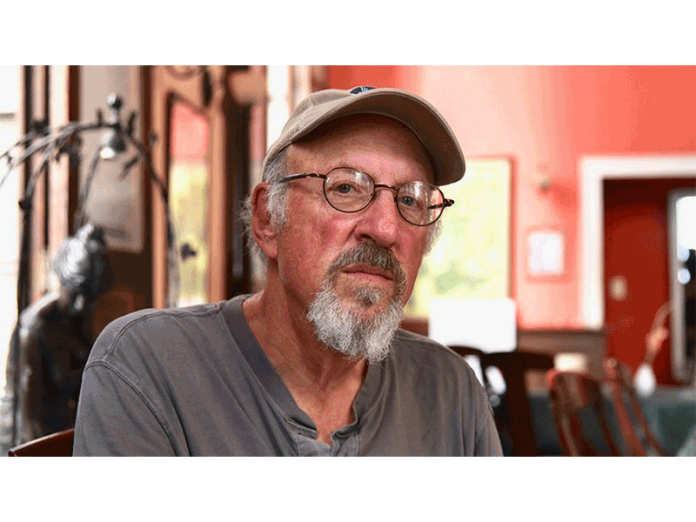

During the Willy Street Festival on Saturday, there was a moment of silence on the main stage as the Rolling Stones cover band, Loving Cup, was about to begin its set. Band members bowed their heads and held hands in honor of Bob Queen.
Queen, who died Sept. 15 at age 76, was considered the innovator of the near east side free music festivals, such as the Waterfront Festival, Orton Park Festival, La Fete de Marquette and more.
“Bob wandered into the Wil-Mar office in autumn of 2005 and asked if we’d be interested in producing a festival around the Bastille Day dates; says we could call it La Fete de Marquette,” said Gary Kallas, executive director of the Wil-Mar Neighborhood Center.
“He further notes he’d like to curate the music, and we handle the rest. Together, we forged a partnership with the owners of today’s McPike Park and staged the first Fete in 2006. He continued to curate the music through 2018. By then, Fete … was considered Madison’s best summer festival.”
Proceeds from the festivals support neighborhood nonprofits including the Wil-Mar Center, which offers youth programming and emergency food services, and Common Wealth Development, which focuses on economic development, health equity and housing, among other groups.
That Loving Cup was the name of the band that made the tribute to Queen on Saturday was appropriate, and spoke volumes about the love and appreciation musicians and music lovers alike had for Queen’s contributions to Madison.
Andy Moore plays saxophone with the group and continues to carry on Queen’s musical and community magic.
“It has been a sad week…talking about the loss of a giant here in Madison, the passing of Bob Queen,” Moore said on his Sept. 19 morning podcast, Eight O’Clock Buzz, on WORT 89.9 FM. He noted Queen’s key role in the festivals, adding “Bob was equally adept at community organizing.”
Queen also fought to save Marquette Elementary from closing in 1989 when his kids were in school, and in 1996 created a free drop-in summer camp/day care for kids at Marquette known as the East Side Express.
The East Side Express often has members of the University of Wisconsin athletic teams teaching sports skills to kids, while the camp can also provide first-time jobs for teenagers in the community.
“Bob dedicated a large chuck of his life to bringing sounds and languages, culture and music from around the world right here to the east side of Madison,” said Moore, noting his first exposure to Cajun and zydeco music was when he and Queen scouted for musical talent in Lafayette, Louisiana.
“I worked with Bob on those festivals for several years and I learned so much from him about production and promotion,” Moore said on his podcast. “Dealing with agents and artists, contracts, vendors. These are business things, but there is an art to this as well.
“A lot of people asked, ‘How did he do it?’ The answer is Bob never took ‘No’ for an answer. This was his strength, but for some this was his annoying superpower. But he made these festivals happen by asking, asking and asking some more… of sponsors, of vendors and often the artists themselves. His wife Nancy also had superpowers. Together they were a force of good — Bob opening the ground for new shows and Nancy catching whatever fell through the cracks.
“A lot of people don’t understand how the proceeds from these events help community members… for Bob, that was the point, that was the magic.”
Moore said Queen exposed the neighborhood to culture and new music, with “those proceeds, in turn, (raising) the quality of life in a quantifiable way” for the community.
“Ever hear someone tell a story and halfway through say, ‘You can’t make this up?’ There are scores of such stories where Bob Queen is at or near the center of said story,” said Kallas, of the Wil-Mar Center. That’s the stuff of an impactful life.”

