

At a time when the founders of Apple and Microsoft saw their net worth expand exponentially following initial public offerings, Epic Systems CEO Judy Faulkner was determined to keep her company private.
This and other key judgment calls are explored in a new case study from Harvard Business School chronicling the history of Epic, the Verona electronic health records (EHR) giant. “Epic: The Future of Health Information Technology,” was published in March and speaks to the company’s pioneering position.
Authors Regina Herzlinger, a professor of business administration at Harvard Business School, and Brian Walker, an executive fellow there, recount the history of medical records and Epic’s role in the transition to electronic records.
They declined to be interviewed for this article. Faulkner, who leads a company with over $4.9 billion in annual revenue, 14,000 global employees and which has played a significant role in the Madison area’s economic growth, also declined to be interviewed.
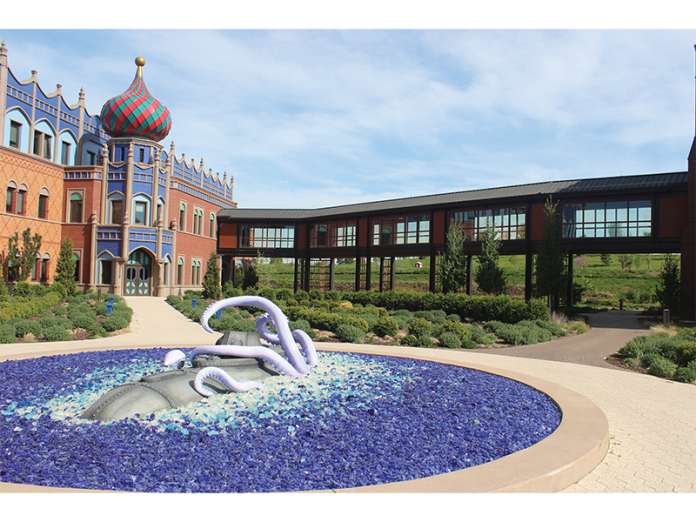
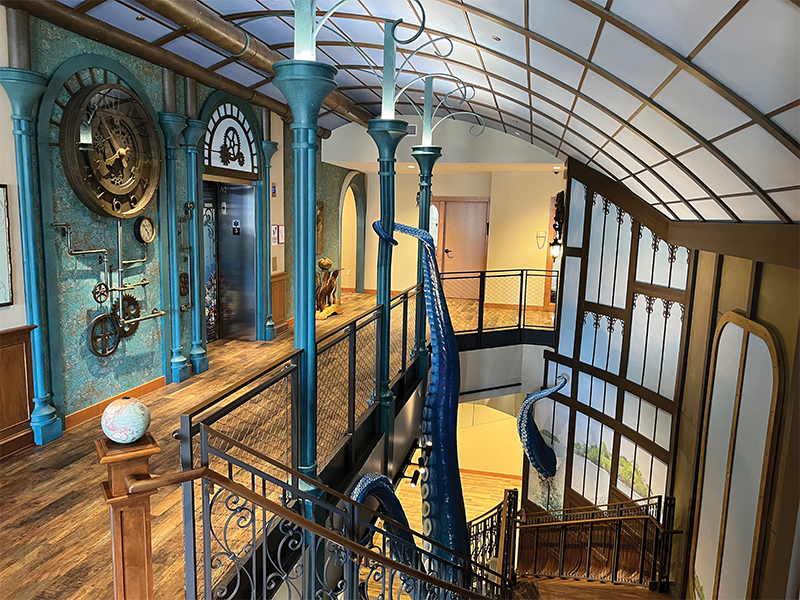
A one-time graduate student in the University of Wisconsin-Madison’s computer science department, Faulkner launched the company in 1979 in the basement of a University Avenue residence and built it into an industry powerhouse — one that remains debt-free, has never pursued venture capital or an initial public offering for listing on the stock market, and continues to expand its campus in whimsical ways.
Epic has become the go-to EHR vendor with a long-term focus on enduring customer loyalty.
As the study outlines, the entire staff is trained in the Epic way of doing business. New hires attend an orientation, job-specific training sessions and a five-hour corporate philosophy class led by Faulkner.
During the class, she poses the same question to each group of new staff members: “Why do you come to work?” The correct answer, according to Faulkner, is: “For the customers.”
“I explain to our new staff how critical the decision to choose our software is,” she is quoted as saying in the study. “It changes the whole organization — the success of the health system, the jobs of leadership, the happiness of the clinicians and all the health system staff, and the health and lives of the patients.”
A study in business
After 45 years, Epic’s market-leading EHR software is deployed across the world in hospitals, health systems and homes. The case study chronicles the historical events that enabled Epic’s founding and subsequent growth, and it explores the unconventional — and successful — way the company operates.
That history includes the development of health information technology and EHR systems — from the American Medical Association’s initial discussions about the state of clinical records dating back in 1912, to the introduction of Social Security amendments in 1965. Those amendments established Medicare for senior citizens and Medicaid for people with low incomes and provided a significant source of revenue for hospitals and health care providers. The background also notes the improvements in and proliferation of computers, including the development of software systems for clinical and business functions.
The study traces a pivotal moment in 2004, when President George W. Bush established the Office of National Coordinator for Health Information Technology (ONC) and introduced a 10-year health information technology plan. At that time, an estimated 13% of health care facilities had implemented an EHR system, and by the end of the decade, technological advancements, customer demand and new legislation further accelerated adoption.
The 2009 Health Information Technology for Economic Clinical Health (HITECH) Act, signed into law by President Barack Obama, provided financial incentives for demonstrating meaningful use — adoption that improves care — of EHR systems in health care facilities.
By 2021, the study said 96% of non-federal acute care hospitals, which provide short-term care for patients with severe or urgent conditions, and 78% of physician offices had adopted EHRs, and the global market is expected to grow to $71 billion by 2026.
The records are used to store, share and analyze health data, and they cover everything from inpatient and ambulatory (outpatient) care, to image archiving, to laboratory information systems.
Customer-centric approach

At the time the dotcom era began in the mid-1990s, Epic employed over 70 people and had moved to the former Odana School building in Madison. Its Epic Care product became an industry leader in the ambulatory EHR space, and by the end of the 1990s, Epic was generating over $50 million in annual revenue. Its software was already considered to be “a foundational health information technology (HIT) solution” embedded in the U.S. health care infrastructure, the case study said.
While the company has faced litigation, including a May lawsuit from CureIS Healthcare claiming unfair competition and false advertising, among other charges, the study notes that in its 45-year history, Epic has never had a lawsuit, mediation or arbitration with a health system customer and no direct hospital customer has left Epic’s enterprise suite by choice.
“Key aspects of Epic’s partnership approach,” the study said, “include designated implementation and support teams for each customer, rather than general call centers; the promise of a ‘lifetime system’ with new releases and upgrades included with maintenance; and an unusual approach to the software lifecycle that saw Epic improving its software over time, rather than periodically sunsetting products and asking customers to relicense replacements (a common practice by other vendors, which provided health systems an opportunity to reevaluate the relationship — often resulting in a switch to Epic).”
Like other aspects of the business, Epic’s sales team is nontraditional. Individuals have experience with customer installations rather than with marketing or traditional sales roles.
They work without quotas or commissions, and are directed not to oversell, overpromise, “or use any unsupported superlatives when working with prospective customers,” the study said. They focus on getting to know the prospective customer, understanding their needs and helping them understand Epic.
Today, Epic’s comprehensive EHR system is in use at 40% of U.S. hospitals, including each of the top 22 hospitals named to U.S. News’ 2023-2024 Best Hospitals Honor Roll. The study said its entire community consists of 2,900 hospitals, 65,000 clinics, 570,000 physicians and 280 million patients in the U.S. Since the study was conducted, Epic software is now in use in 3,300 hospitals, according to a company spokesperson.
Dr. Frank Byrne, president emeritus of St. Mary’s Hospital in Madison, had an administrator’s eye view of the Epic EMR when he managed the hospital from 2004 until his retirement in 2015.
“I have told everybody who would listen that Epic is the most customer responsive business partner I’ve ever worked with,” Byrne said.
As it grew, Epic’s innovations continued. They include MyChart, a patient portal that serves an astounding 190 million patients worldwide; Care Everywhere, Epic’s interoperability platform; and Cosmos, which the study describes as “the largest universe of EHR data for research and evidence-based medicine at the point of care.”
While vendors such as Oracle Health (formerly Cerner), Veradigm (formerly Allscripts) and Meditech continue to compete, Epic has fended off other competitive threats from well-funded startup entrants and Fortune 100 giants alike.
Faulkner’s approach hasn’t changed. She eschews annual budgets, is committed to staying private and does not pursue venture capital.
According to Tom Still, president of the Wisconsin Technology Council, the decision to remain private is one ingredient in Epic’s success.
“Many have wondered why Epic never went public, which is the path often followed by young companies hoping to monetize the hard work of founders,” Still said. “It’s also fair to ask: Would Epic be today’s industry leader if not for the decision of Faulkner and others to stay the independent course?”
Another ingredient in Epic’s approach is what the case study’s authors called its “resolve to perpetuate a culture of independent, cultural, customer focused excellence.”
They wrote that Faulkner’s commitment to research and development is evidenced by the company’s significant ongoing investment in software development, which consumed 35% of its annual expenses in 2023. Throughout its history, Epic has built its products in-house, while most of its competitors have acquired systems through mergers and acquisitions.
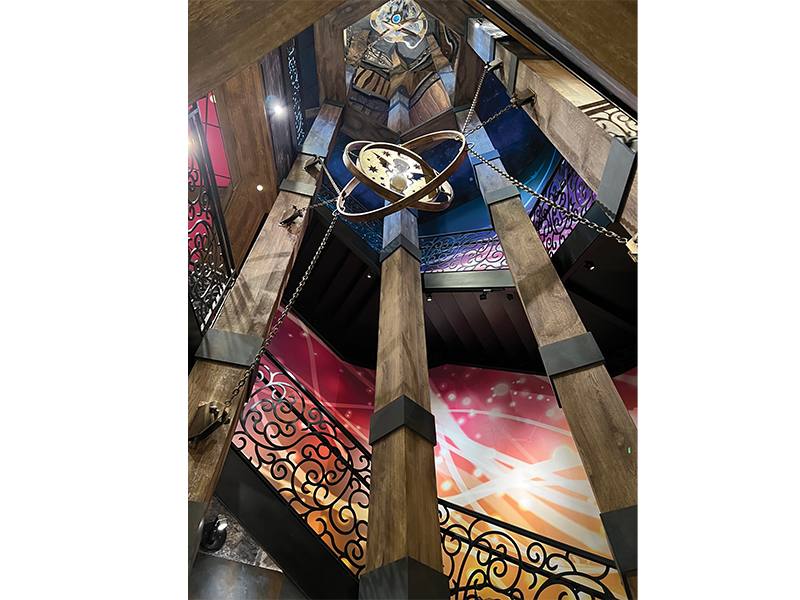
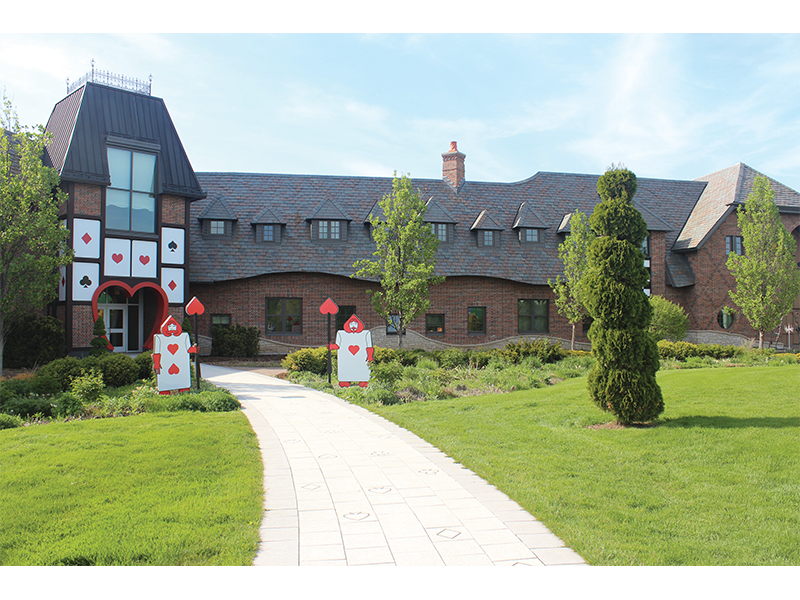
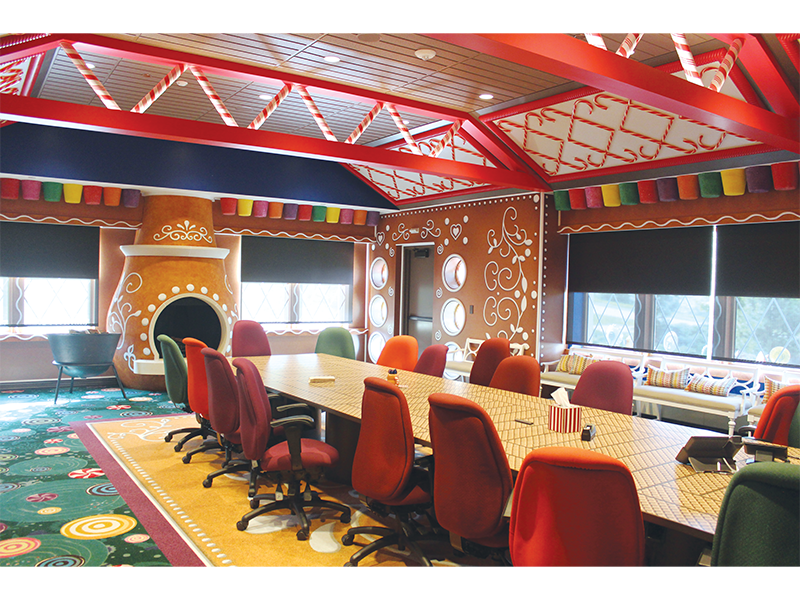
The study also delved into the company’s culture, citing its 1,670-acre Verona campus that is full of imaginative spaces designed to foster collaboration and creativity, including theme buildings “from a rural farmhouse, to cozy Scandinavia, to fantastical Alice in Wonderland.”
The campus, which is now undergoing another expansion with even more whimsy in store, is organized not by job function but by product, so staff learn to appreciate each other’s roles and collaborate to help customers.
An Epic transition
To safeguard the company’s autonomy and provide a framework for decision making after Faulkner, the study notes she has established a Purpose Trust composed of five Epic staff members and four members of her family. Among other priorities, the trust is required to oppose any efforts to take the company public or be acquired, and it requires the next CEO to be a longtime Epic employee and a software developer.
In its conclusion, the study notes that “Epic followed a moderate and untraditional path as it molded the health information technology sector and became the foundational software system for hospitals and health care systems.”
In reflecting on Epic’s dominance in the EHR market, Still said, “Epic became the world’s market leader by setting high standards within its workforce, encouraging creativity from the top down, maintaining a sharp focus on customer service and never losing sight of the need for interoperable, patient-driven data.
“The rise of Epic is unique in many ways, from how it approaches new projects to how employees are treated, to the whimsical, artsy design of its Verona campus. It may be a business story that cannot be easily replicated.”
Correction: An earlier version of this story incorrectly stated the number of hospitals using Epic software.

