
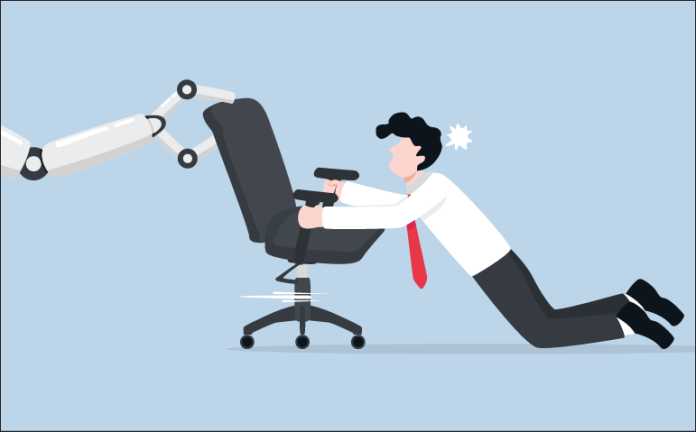

Virtual editor is the futuristic title that should most concern people in my position. Not myself, obviously, because I’m near retirement and I’ll be long gone (from the profession) before such a calamity occurs, if it ever does.
However, other professionals have more realistic worries about the impact of artificial intelligence (AI) on their jobs. A new study, conducted by GenAI customer support experts at Palo Alto, California-based DevRev, analyzed online search data for terms relating to a list of careers. The Silicon Valley tech firm used search queries such as “AI’s impact on …,” “will AI replace …,” and “how will AI affect …” to determine Wisconsin’s (and the nation’s) top five jobs believed to be most at risk from AI advancements.
Based on the results, the top five Wisconsin professionals most anxious about AI are artists, attorneys, doctors, accountants, and teachers. A deeper DevRev dive explores the reasons that each professional class is worried, and the caveats that should tell them to relax:
- Artists
American artists are the No. 1 career most worried about advancements in AI. To illustrate, AI can create book covers, album art, and music videos within a short space of time. However, the generative artificial intelligence tools used in this process gather data from existing work without the original creators’ consent and without crediting them personally or financially, so it would expose violators to copyright infringement. Don’t worry too much about starving, artists.
- Attorneys
Lawyers are the second most cautious of AI, which is used in law practice to review and analyze large volumes of legal contracts, research relevant law case studies, and communicate with clients through chatbots. However, the absence of human input can often lead to biased results depending on the data, so curation by human beings is still required and there may be no reason to sue for peace.
- Physicians
Doctors rank third because AI assists health care professionals by helping to spot early signs of disease, collating large numbers of medical images, and scanning patients’ medical records. Helpful? Yes, but insufficient malware protection can overlook examples otherwise seen by doctors, posing a threat to patients’ health. So, the prescription for AI is to view it as a health care tool that is no substitute for judgment and expertise.
- Accountants
Accountants place fourth on the AI depression side of the ledger. AI is used in accounting firms to generate financial reports and arrange expenses efficiently, but despite these benefits, using AI within accounting can lead to harmful data breaches. Without more than an ounce of cybercrime prevention, CPAs can pay now or pay later.
- Teachers
Teachers come in at No. 5 as the professionals most worried about AI advancements. They can use the technology to plan lessons, prompt discussions in the classroom, and check assignments for plagiarism. That’s all good and can lead to more one-on-one attention for students, but educators also worry that with continuous advancements in machine-learning software, their jobs have the potential to be replaced or reduced by AI. However, given the value of those one-on-one encounters between instructor and pupil, if there is one profession in which AI is likely to be used alongside human beings, rather than fully automating jobs, it’s teaching.

