
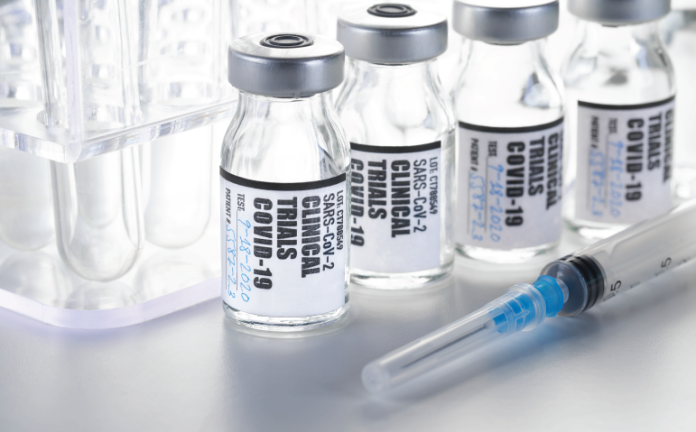
The Wisconsin biotech and life science industry is stepping up to try to develop both short-term and long-term solutions to COVID-19, including an international collaboration of virologists at the University of Wisconsin–Madison and the vaccine company FluGen in Madison (and Bharat Biotech in India). In addition to its work on a flu vaccine candidate known as M2SR, FluGen will attempt to develop a COVID-19 vaccine called CoroFlu on the back of M2SR, which we recently addressed with Paul Radspinner, co-founder, president, and CEO of FluGen. In this interview, he talks about the work his company is doing to develop therapies that induce immune response against the flu and viruses.
How has the pandemic affected your business operation so far, first in terms of the work on CoroFlu, which is the obvious example?
“With that project, we’re taking our M2SR universal flu candidate — and that’s our candidate that’s in phase-two clinical trials — so we’ve got a nice safety database so far that shows it’s in a couple of hundred patients, almost 300 patients now, and it’s been well tolerated and shown to be safe so far. So, that gives a lot of confidence that the vaccine can be tested for something like COVID and at least the fundamental vector or the flu vaccine component of it won’t be dangerous. So, the premise that the M2SR virus that we use for flu is a single replication, live virus. It goes into cells one time, replicates, and stops. That’s why it generates an immune response, but it doesn’t make the recipient sick.
“What happens here is that we insert pieces of the COVID virus into that vector. So, you can think of it as a Trojan horse, and it goes in and goes through that replication cycle and generates immunity to COVID. That’s the goal. Dr. Yoshi [Yoshihiro] Kawaoka at UW–Madison’s Influenza Research Institute is generating the construct from doing the animal testing, and we are working with Bharat Biotech in India to share our GMP [good manufacturing practices] materials that we’ve been running our trials on, and so we’re collaborating on the technology transfer. They [Bharat Biotech] have the capabilities, and they have delivered over 5 billion doses of vaccine, so it’s a very accomplished commercial vaccine manufacturer, primarily to India and to the developing world. They have the skills to really get the project going and scaled up and to be able to make vaccine quickly and then test it. So, that’s where we are with that.”
What is the timetable for that CoroFlu clinical trial? Based on what they are talking about with COVID-19 vaccines, 18 months for a clinical trial is very accelerated to some.
“Yes, there are two challenges. When you’re working with a treatment, for example, you’re talking about typically some scenarios where a patient is in distress, maybe very far along in developing breathing problems, maybe even approaching being on a ventilator, so the idea of treating someone with something that could be effective but has risks is not surprising when the outcome could be death. With a vaccine, you have to look at it completely different because you’re providing a vaccine to healthy people, and safety with vaccines is always the most important thing. The number bounces around, but it takes about 15 years to develop a vaccine normally, and everybody is talking about 18 months [for COVID-19]. I would be surprised if it’s that quick, but what’s really going to be the most important component is how the regulatory agencies in different countries view this. How soon the number of subjects can be tested safely and get results that show safety? Those are things that are going to be really important now. Given the focus, I can imagine them starting with smaller clinical trials. You might have seen the one with Moderna that started with 40 patients. So, that’s very typical. You would move your dose up slowly and very carefully see what happens and make sure it’s safe, and that it’s immunogenic [it can produce an immune response].
“Once you get that data, you can start to expand into a larger group, but you really do have to look at it in large numbers to discover whether or not there are any idiosyncratic side effects or anything that would show up in one out of 1,000 or one out of 10,000 people. That’s balanced with the challenge of COVID and the impact that it’s having on society, as well. A lot of us are hearing a lot of projections about it coming out really quickly, but nobody really knows how long it’s going to take.
“Coming back to our project, I can tell you that the initial constructs are being tested in two clinical models at the Viral Research Institute with Dr. Kawaoka. We expect that to be done in the next month or two. We’re working on scaling up the production process in India right now, and then once we are able to safely manufacture that material, they will then begin clinical trials in India right away. The president of Bharat Biotech [Dr. Krishna Ella] has indicated that it could be as early as August and so we’ll see if that happens. When those start, then I think it becomes a question of how many people can be enrolled in trials to safely evaluate the vaccine and then how regulatory agencies look at that, as well.”
When you talk about inducing an immune response, are you talking about doing that especially in patients that are immune compromised, which is among the most vulnerable populations with COVID-19, or are you referring to the general population, or both?
“That’s always the challenge. You have four primary groups: healthy adults; children and adolescents; older adults whose immune systems are weakening with age —immunosenescence is the term that’s used; and then the fourth group is immunocompromised. So, typically what you’re going to do is test in healthy adults first because you certainly don’t want to test in those subpopulations that might be a greater risk. For example, with the flu, the most infected group has always been kids. They are the vectors in a lot of ways because they have infections rates of up to 10 percent with the flu, but while there are illnesses and deaths with kids, the percentage is really small, whereas the percentage of infection is much smaller, but the morbidity, mortality, and death numbers are much higher in those over 65.
“And so, that’s the challenge here [with COVID-19]. We’re seeing a somewhat similar response, so initially it will be tested in healthy adults because you want to make sure it’s safe there first. Then, I would imagine it would expand out into some of those other specialty populations to make sure that it’s available for them, as well. The bottom line is let’s say that it’s not something you want to use in those more vulnerable populations. If you can reduce the number of people [in less vulnerable populations] that are infected, that can have a dramatic impact in making sure those vulnerable populations don’t get infected, as well.”
It sounds like you may be developing something, and I hate to use the term all-in-one solution, but if you can induce an immune response to this and other viruses, that’s huge. There are hundreds of thousands of viruses, potentially, and we’ve only studied a couple of thousand or so. If you can demonstrate that this is an effective way to combat both influenza and other viruses, the future of FluGen is very bright due to the enormity of the challenge.
“Flu is a challenge in and of itself because every year we have our current flu vaccine. I get a flu vaccine every year and I highly recommend that everyone get a flu vaccine, especially this year because we could get a co-circulation of flu and COVID at the same time. But the vaccine efficacy is not as great as it should be, and we don’t have the breadth of coverage when the strain drifts, which it often does. So, from our perspective, flu is the most important piece because it’s so prevalent.
“However, we have seen and tested M2SR, our vaccine, as what we call a vector — again, that Trojan horse concept. The idea is that it is a platform that you could put pieces of different viruses on, and you hit it right on the head. But there are other diseases out there, particularly respiratory diseases like RSV [respiratory syncytial virus], which is very dangerous to children and to older adults, that we could test as well if the COVID project works out. So, we’ll be very interested to see the results of this. If we’re able to generate immunogenicity to COVID and also to flu, that would be a nice plus.
“Having said that, we’re not going to be testing whether it’s effective against flu at the same time as COVID. That would just take too long. Right now, our number one goal on the COVID project is simply does it work against COVID? If there is an upside of some flu protection, that’s fantastic, but that’s what we’re going to do. In the meantime, we’re going to continue separately conducting our clinical trials on the flu and looking at it as a universal flu vaccine.”
You mentioned operational issues that you’ve had to deal with. What are you referring to there?
“The challenge is that even though we’re considered an essential business, that’s great. That’s the good news. The bad news is that we still have to practice social distancing and all of the precautions of using the facility and so forth. So, what we’ve gone to, and it’s worked fairly well, is kind of a shift-work process. We’ve developed four shifts where we minimize the number of people in the facility, so anyone who is not working in the lab — people like me — are working from home 100 percent of the time. Then, the people who are working in the lab, who have to work in the laboratory, they obviously can’t do that from home. Those people we’ve broken into shifts where they do any of their deskwork from home, but then they are in the lab for half a shift, and then another two or three can come in and then they have to practice social distancing, wear masks, and all of those things.
“So, it’s difficult, it becomes more complicated, and it’s harder to get as much work done. We’ve now taken on this second project, so that’s a challenge. Having said that, I feel grateful that the company can have revenue when our customers can’t do anything, so I’m not complaining by any means, but it has affected what we do on a daily basis.”
Tell us about the partnership with Bharat Biotech. Is Bharat, in part, a financial resource for you?
“Bharat is supporting the work being done in Dr. Kawaoka’s lab. We are making our contribution and Bharat has kind of the heft. They’ve got facilities that are full-scale manufacturing facilities, so what we’re providing are the tools for them to begin growing up qualified cell lines that can make the virus and then the pieces of the virus that we use in clinical trials. That’s a huge step because when you think about it, if you’re starting from scratch, you have to go through a lot of qualifications because you have to make sure those materials are made in a safe way, in a totally clean way that’s called GMP or good manufacturing practices that are required by the FDA [Food and Drug Administration] and other agencies.
“So, we have all of those components already because we’re further along, so we’re able to share those materials with Bharat, which is already a commercial manufacturer. They are then able to take those tools, grown those up, and start to manufacture the vaccine. So, all three groups are working together to make this happen. We anticipate that once we have proof of concept in the preclinical models and we begin to scale the manufacturing piece, that we will be able to, at that point, secure funding from other sources, as well, whether that’s the U.S. government, whether it’s the Gates Foundation, and other groups. So, as of right now, Bharat will focus on the developing world, and we will be working with the developed countries such as the U.S., the EU, and so forth.”
It seems that with our strained relationship with China, India is going to be very important in terms of rerouting supply chains, especially if we’re still going to have some pharma products made abroad. You’ve already established an important partnership there, so it seems you’re really well set up for the future, given some of the things that have unfolded during the COVID-19 pandemic.
“Yes, we hope so. You make a good point. India has very strong vaccine production capabilities. For example, Bharat Biotech was founded by a UW–Madison grad. Dr. Krishna Ella [chairman and managing director] earned his PhD at UW–Madison, and his son, who is the head of their business development group, was born in Madison. So, there is a great connection there. He started the company in 1996 and, as I said, it has already generated more than 5 billion doses of vaccine — everything from rabies to polio to rotavirus. They are very successful and very accomplished at what they do. So, I agree with you. I think India will be a fantastic partner going forward, a central partner going forward.”
When you see life science companies like Exact Sciences and Promega step up to help ramp up our testing capability here in the state, the Wisconsin biotech industry is poised, given its strengths, to play a leading role in the pandemic response. Right now, we’re talking about the immediate response but there is also medium and long-term response, as well, as we pursue a vaccine and maybe antiviral treatments, too. I would have to think that bodes well for the local industry.
“Yes, I think so. It’s not a surprise, actually. Wisconsin is one of the centers that the Centers for Disease Control counts on for monitoring, for example, bird influenza. So, when we’re monitoring and testing to see how good or bad the flu season is, Wisconsin and New York and a couple of other states are really ground zero for that. So, that’s not surprising at all. Add on top of that the companies like Exact and UW Health that are active in this area, that’s not a surprise and hopefully we can continue to play a strong role there.”
Click here to sign up for the free IB ezine — your twice-weekly resource for local business news, analysis, voices, and the names you need to know. If you are not already a subscriber to In Business magazine, be sure to sign up for our monthly print edition here.

