


WARF VENTURES PORTFOLIO
• AIQ Solutions Inc.
• Alithic
• Atrility Medical
• BrainXell
• C-Motive Technologies
• Co-D Therapeutics Inc.
• Cold Water Technologies
• DataChat Inc.
• Elephas
• Elucent Medical
• FluGen Inc.
• Galilei BioSciences Inc.
• Gregor Diagnostics Inc.
• Hubble Therapeutics LLC
• Imbed Biosciences
• Immuto Scientific
• Infleqtion
• Isomark
• Leo Cancer Care/Asto CT
• Lynx Biosciences
• MadSci
• PROMISS Diagnostics Inc.
• Pyran
• QoLab
• Quiver Quantitative
• Realta Fusion
• SHINE
• Stemina Biomarker Discovery
• Stuart Therapeutics
• Ubicept
• Voximetry
• WIN Therapeutics
When biochemistry professor Harry Steenbock filed to patent a groundbreaking vitamin D-fortification process in 1924, he also sparked the creation of an organization primed to bolster innovation for the next century.
The University of Wisconsin-Madison professor’s achievement increased the accessibility of vitamin D and its health benefits to the general population. At the same time, it created a new approach to bringing life-changing research to market, supporting the university’s work in the process.
Such is the origin story of the Wisconsin Alumni Research Foundation (WARF), a technology transfer office which, in the past 100 years, has quietly funded, supported and invested in the pioneering work coming out of the UW to benefit the public.
“There’s a story you can tell, that (Steenbock) is this singular hero, a kind of genius, Thomas Edison type,” said Kevin Walters, WARF’s public affairs associate and resident historian. “But I think the more interesting story is that he needed a lot of help, and it brought together different strands of UW-Madison, and Wisconsin and the people around it.”
To capitalize on his discovery, Steenbock needed business expertise. He teamed up with Graduate Dean Charles Schlicter to recruit alumni to negotiate contracts with companies interested in applying the vitamin D-fortification process to their products — among them Quaker Oats, which is still well-known today.
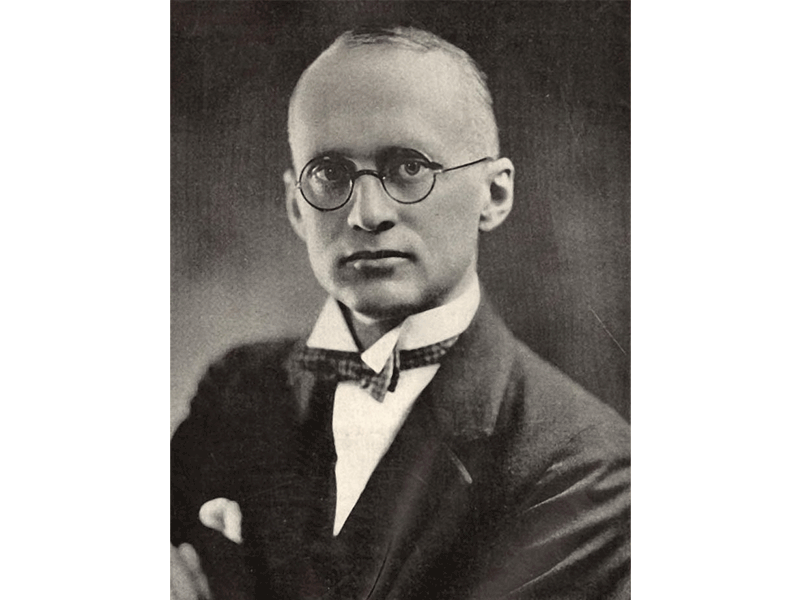
“Steenbock had the science and the original motivation” to protect the dairy industry, which had long drawn state support to UW-Madison, said Walters, “but he needed administrators to figure out how to make that work in an organizational way, and then he needed alumni and business acumen to figure out how to turn that into a successful business.”
For a century, WARF has retained that successful formula to keep UW-Madison research and innovation on the bleeding edge, and the organization’s ability to adapt and sustain itself amid uncertainty — economic and otherwise — may be more important now than ever before.
Erik Iverson, WARF’s CEO, is shepherding the organization into its next century, when inventions center on sectors like biotechnology and fusion.
“It’s an honor to be at WARF after 100 years,” Iverson said, “being an institution that is globally known for what it does, and associated with one of the world’s great research institutions.”
The early days of WARF
As Steenbock’s innovation met success, it was followed by thousands of others who sought to find solutions to complex problems close to home. WARF funding helped lead to a patented process for making iodine stable in table salt, and the discovery of a coumarin derivative called Warfarin — which credits WARF in its name — remains the world’s most commonly prescribed blood thinner.
Hector DeLuca, one of Steenbock’s last students, developed several major pharmaceuticals to treat bone diseases and chronic kidney failure with WARF support, and the organization’s investments have also funded significant advances in semiconductors, stem cell research, cancer diagnostics, fusion and more through the decades.
Yet on the path to its current operation, WARF faced multiple challenges.
In the wake of World War II, a massive increase in federal funding for research sparked a key argument concerning patent policy, Walters said.
“The default had been basically, if the federal government was funding it, then the federal government should own the inventions,” he said.
“That was never really true. … You need a company to come in and invest in the basic research to turn it into a commercial product, and understand the market, and then have the incentive to go out and make a profit.”
In the 1960s, WARF’s patent counsel Howard Bremer took on the sticky policy issue with help from Norman Latker of the National Institutes of Health. They helped establish a first-of-its-kind contract between the university and the government that would allow the latter to waive its patent rights to discoveries yielded by federally funded research.
As it turned out, this was a precursor to the Bayh-Dole Act of 1980, which, according to Walters, “basically said, we’re going to allow universities all across the country to patent their own research on federal funding as long as they meet certain conditions.
“They have to make it available for licensing, they have to allow companies to license it on reasonable terms, they can’t sit on it, they can’t try to extort companies … and if the government needs it, the government can use it.”
In the late 20th century, WARF adapted again in response to the biotechnology boom, which led to an evolution that still influences its activities today.
In this era, WARF largely turned its focus toward developing and investing in startups spun out of the university in what has become a critical role.
“What used to happen,” Iverson said, “is a very nascent technology … would come to us. Companies don’t want to license super, duper early stuff, so it really wouldn’t go anywhere.”
Through its investment and support, WARF assisted those fledgling startups.
“Existing companies don’t often want to take risks on basic research patents, what we call ‘deep tech,’” added Walters. “They don’t want to reinvent the iPhone. They want to issue the iPhone 13, or 14, or 15. … To take the massive risks, you’ve got to create a new company.”
That’s exactly what happened in the early 1990s, when UW-Madison professors Jim Dahlberg and Lloyd Smith pitched WARF the idea of forming a company — Third Wave — around Dahlberg’s discovery of the cancer detection enzyme cleavase.
Lacking the funds to cover licensing fees, they offered WARF equity in the company.
Over roughly a decade, Third Wave worked to commercialize diagnostic tests, went public and was purchased by Boston-based Hologic. WARF made around a million dollars from Third Wave, Walters said, and the company later sold for upwards of $500 million.
Incidentally, before Hologic bought Third Wave, Kevin Conroy, then living in Boston, became its CEO. He would later lead Exact Sciences, maker of the Cologuard diagnostic test, and move that company to Madison to play a leading role on the biotechnology scene.
“We like to think Google is the Stanford (University) version of Exact Sciences, or that Bill Gates is the Kevin Conroy of Seattle,” Walters joked.
He also emphasized that while WARF has historically issued over 4,000 patents, the organization has had to accept the risk of commercializing innovations that don’t go anywhere in pursuit of “the diamond in the rough.”
Yet WARF’s operations are self-sustaining, as it invests the royalties from these inventions to fund its work.
‘The envy of all the universities’
Iverson joined WARF in 2016 and set out to reorganize and revamp the organization with three strategic initiatives — WARF Therapeutics, WARF Accelerator and WARF Ventures — to encourage new companies and propel growth.
Annual grants to UW-Madison from WARF — which over the last century have totaled $4.5 billion — fueled these initiatives by funding critical research in areas that might yield discoveries with startup potential.
“WARF as an institution is the envy of all the universities in the United States,” said Dorota Grejner-Brzezinska, UW-Madison’s vice chancellor for research. “It adds significant funding to the research enterprise. … And we can then invest in a number of research areas — biotech, engineering, all sorts of health sciences, agricultural sciences, many areas that UW excels in.”
Many campus innovations are supported by federal grants before they reach WARF, she said, or vice-versa. Sometimes, it’s a cycle, with WARF seeding an idea that then receives funding from the federal government, propelling the technology to a new level, where it’s ready for additional WARF investment or to be spun out into a startup.
That’s where WARF Accelerator and WARF Therapeutics come in.
The WARF Accelerator initiative had previously existed but took on a new form under Iverson’s leadership.
“The point of an accelerator is to take a certain number of nascent technologies … put a bit of resources behind them … (and) mature the technology sufficiently that somebody would be interested in it,” said Iverson.
Greg Keenan, the senior director of WARF Ventures and WARF Accelerator, added, “We’re really focusing our dollars to translate that lab discovery into something a business can understand, or figure out how to start a company that solves a particular problem.”
WARF Accelerator initially encompassed drug-related innovations, but Iverson felt the high cost to develop them justified a sister initiative. WARF Therapeutics establishes a path from drug research to commercialization, helping translate UW-Madison discoveries into market-ready therapies.
WARF Therapeutics’ portfolio is made up of programs in therapeutic areas that have a high degree of preclinical validation and address needs in the medical world. Most are in the early-stage research phase, but a few occupy what WARF calls the “monetization zone.”
In fact, Iverson said, WARF is “likely going to license our first drug to a big pharmaceutical company in the very near future.”
According to Keenan, WARF receives roughly 350-400 disclosures (of new technologies) from UW-Madison each year and reviews these monthly to identify those best suited for the patent process — usually around half. The next step is to discuss which technologies would benefit from further de-risking (to maximize their chances of future success if they go to market) and investment.

Graduating to WARF Ventures
Discoveries from all sections of scientific research may proceed to WARF Accelerator and usually number between 10-15 per year. These projects often become startups and ripen for investment by WARF Ventures.
“We had our investment team when I came in,” said Iverson. “They were managing the billions of dollars of money that we’ve got … and making some venture investments into spin-out companies from campus, but it wasn’t really robust, cohesive or well coordinated.”
That prompted WARF’s board of trustees to ask, “How could we be more impactful with our venture capital dollars?” Keenan said.
Iverson wanted to formalize a venture fund and team to support university spin-out companies — in particular, companies that receive a license to technologies patented by WARF. That team would also help to syndicate investments with investors to distribute risk.
“One of our highest priorities is building bridges to coastal capital,”
said Keenan, referring to venture capital dollars on the west and east coasts. “We work very hard to make connections to these pockets of capital by building strong relationships with industry there, and making sure they get exposed to our technologies. So not only are we investing money, but we’re also deploying our network to help our companies get access to more capital.”
The rollout of WARF’s strategic initiatives created a pipeline, with WARF’s annual grant funding potentially patentable research, and intellectual property licensing feeding WARF Therapeutics or WARF Accelerator and WARF Ventures, which could develop startups and set them on the way to commercialization.
The cooperation of all of these parts meant that the research coming out of UW-Madison at the front of the pipeline could be better directed to meet industry demand, and WARF could pinpoint the research areas most worthy of investment through grants.
“If we kept (nascent technologies) on campus, provided some grant funding, directed some level of the research toward industry input, and it stayed on campus another six months, 12 months, 18 months, 24 months, not only were they maturing the technology, but they were getting additional grants from funding institutions nationally and otherwise,” said Iverson.
“Suddenly the technology was more attractive. Then, when it’s time to license, we’ve got a broader, syndicated set of people interested in looking at the technology. The researchers had more data to publish … and we had better technologies to license.”
The establishment of WARF Ventures in 2019 created a positive cycle that continues to bolster university research, cultivate a better market and create better products for that market over time.
“Since we stood (WARF Ventures) up, they have invested somewhere in the range of $50 million dollars,” said Iverson, noting that co-investors have added another $900 million — “a huge amount of money, and a representation of the amazing technologies coming off this marvelous campus.”
“There’s some really awesome opportunities we have that are playing out,” said Keenan, pointing to fusion, quantum computing, gene therapy, cancer diagnostics and more.
In the last six years, WARF Ventures has invested in over 30 companies, placing it among Wisconsin’s most active investors. Among its “active startups” — companies in which it holds equity — are DataChat Inc., Elephas, Hubble Therapeutics LLC, Imbed Biosciences, QoLab and SHINE.
Navigating COVID and market volatility
The WARF of the 21st century, like its past iteration, is not immune to fluctuations in the broader economic climate.
In some cases, external obstacles have prompted the organization to develop creative solutions.
“During COVID, there was a dearth of invention disclosures because labs were shut down, and people went home,” said Iverson. “We were wondering how we were going to foster (researchers) disclosing inventions to us so that we didn’t have periods of months where there was very little going on as far as patenting goes. So we put out what we call a challenge grant.”
These grants identify and target key research areas. WARF’s first grant was geared toward those on campus working on a COVID-19 diagnostic test, and a few were selected to receive funding of between $10,000 and $15,000 to advance their research.
Over the years, WARF has put out multiple challenge grants, and Iverson said they have helped prioritize areas of campus research that are most critical.
As a positive byproduct, the grants have also fostered industry partnerships.
Companies that learned about the challenge grants began approaching WARF with issues they wished to put to campus, co-funding projects and working to build relationships with researchers and students representing their future workforce.
“It really has blossomed into building a collaborative relationship between industry and campus, with WARF in the middle,” Iverson said.
The economic uncertainty of recent years has presented another difficulty, this time in the realm of WARF Ventures and the companies in its portfolio.
“The IPO window kind of slammed shut during COVID and never really opened again,” said Mike Partsch, WARF’s chief venture officer. “We had a lot of political uncertainty … and then, once the (presidential) election was over, and we started to think markets might open again, there was a lot of tariff brouhaha created.
“That led to more uncertainty. And if there’s one thing I know about financial markets, they hate uncertainty.”
The typical journey of an idea from its inception to commercialization spans an average of seven to nine years, Partsch said, but the protracted downturn has created a challenging environment for fundraising and prolonged this window. When money isn’t flowing back to investors, they tend to hesitate to commit additional funds.
“It’s not a very pretty graphic, but the term that’s often used is, the system is kind of ‘constipated,’” he said. “It’s backed up until the money starts flowing again. You’re not going to get the recycling of the capital.”
While WARF Ventures has a number of fairly mature, “well-positioned” companies in its six-year-old portfolio, it is still somewhat beholden to larger market trends and has not seen any company exits since the initiative was established. In the meantime, the organization’s general stability leaves room for patience.
“It’s something that I think about every day,” Partsch said, “but the saving grace is that no other venture funds are really having those big exits either. … Everybody realizes this is across the industry, this problem.
“If we’ve done our job right, we tee up companies so that they’re an attractive investment opportunity for larger, bigger, later stage investors to come in, and we have a number of companies that are in that situation.”
Iverson added, “The challenges we have in the Ventures portfolio are not because of the technology, or the professionalism, or the team or the investors. They are largely because of the market difficulties and volatility.”
The next frontier
Among the companies in WARF Ventures’ portfolio is Madison’s Realta Fusion. It works to develop economic, zero-carbon energy for global use.
Co-founder Kieran Furlong consulted on a WARF Accelerator project before WARF helped pair him with Cary Forest and other UW physics professors to establish Realta Fusion in 2022. Furlong, who had experience building businesses, secured the team’s technology license from WARF.
Within WARF Accelerator, Furlong conducted discovery interviews to assess the possibilities for applying fusion technology in the real world.
“This is a perennial challenge with technologies that are getting developed within academia,” he said. “It’s one thing for a scientist to think, this is a great idea. It’s another thing to find a user or a customer or someone who says, ‘Yes, I agree. I need that.’”
Furlong said the energy path offered a large market with ample opportunity for fusion, and those discovery interviews laid the foundation for the investments his company would garner later, from WARF and others.
“WARF is an equity holder in Realta Fusion,” Furlong said, “partly through the technology license and partly through WARF Ventures. Their investment arm invested in our company in our seed round of financing back in ’23, and also more recently in our Series A, which we just closed in May of this year.”
Khosla Ventures, a well-known, west coast venture capital fund, led Realta Fusion’s initial seed round — the first external capital it raised — and Future Ventures, which made early investments in companies like SpaceX and Tesla, led the 2025 round.
“We’ve managed to attract pretty high caliber, top tier venture capital investors,” said Furlong, “and then WARF continues to invest.”
“It’s not an overstatement to say that (Realta Fusion) wouldn’t exist without WARF’s involvement,” he added. “At that early stage, they obviously were supportive with the Accelerator program. Continuing now, as investors as well, they’ve helped make introductions … to other investors. They’re always looking for ways that they can contribute to the success of companies in their portfolio.”
Up-and-comer Ubicept is another company in WARF’s portfolio. The company, which combines next-generation image sensors with advanced computer vision algorithms to revolutionize how machines perceive the world, was one of two winners of this year’s TitletownTech Startup Draft in Green Bay and received a $1 million investment.
Ubicept CEO and co-founder Sebastian Bauer said a discovery he made with a colleague at UW-Madison ignited his interest in creating a startup.
“I’ve always wondered … how do you spin out a new technology and get it into the real world?” he said. “I’m not a big believer in ‘ivory tower research’ and doing research just for the sake of it. I want to see how it gets real and gets into the hands of as many people as possible.”
When Bauer and his professor, Andreas Velten, were accepted by WARF Accelerator, it meant grant funding for another year of work, a pitch meeting with WARF and meetings with external consultants to assess startup viability. Bauer said funding provided stability so he could remain employed by the university and continue his research, while also having “the freedom to drive the startup forward.”
Realta’s Furlong was a mentor to Bauer and helped him and Velton to spin out the company, and by 2023, Ubicept had secured an investment from WARF Ventures.
Propelling new discoveries
Grejner-Brzezinska, UW’s vice chancellor for research, met with the WARF board of trustees in late June to present UW-Madison’s proposed research spending. The final amount and distribution for the annual grant will be discussed and voted on by the board before it is published in the fall.
Last year’s “base” research grant from WARF was $68.8 million and accompanied by additional funding for a variety of other UW-Madison programs, university operational and functional support, and the Morgridge Institute for Research. The total funding came to $159.8 million.
“A relationship with WARF is indispensable for the university,” Grejner-Brzezinska said, noting that amid the current economic climate, its annual grant is as critical as ever — “maybe even more important.”
Iverson said since he joined WARF, he has come to “appreciate very quickly that this is a very complex and multifaceted institution.”
“I knew of WARF, I respected WARF,” he said, “but I entirely underappreciated the magnitude of its importance to the campus, and how seriously WARF takes the well-being of UW, of Madison and of the state of Wisconsin.
“It’s our responsibility to make sure that this place is stronger when we leave it so it can go on for another 100 years-plus.”
Click here to see WARF’s 100 year timeline.
Editor’s note: A previous version of this story has been corrected to reflect that all sections of scientific research, not solely those which are non-drug-related, may proceed to WARF Accelerator.

