
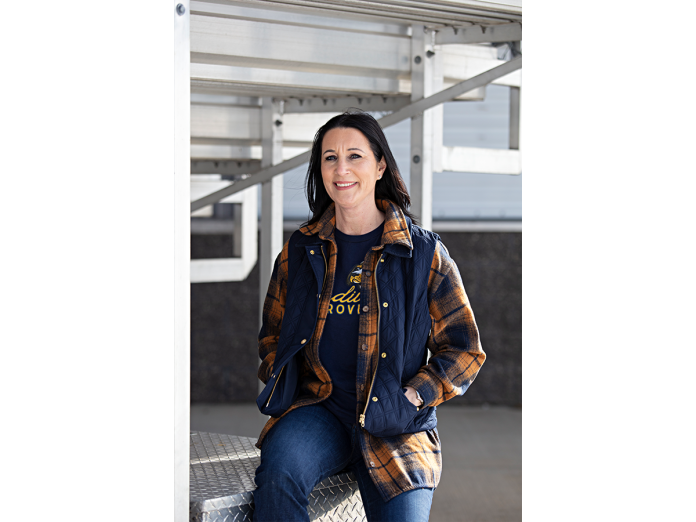

When Kerin Rue’s friend was diagnosed with multiple myeloma and told her his bucket list included a visit to every Major League Baseball stadium, she and their other friends joined the quest.
The troop would download game schedules and map out efficient routes to hit as many stadiums as possible in a single trip. While Rue characterized her friends as “fanatics” and said they were fairly strategic in their approach, the task of hitting 30 nationwide stadiums was daunting, and when the friends reached their final milestone, it was underwhelming.
“(There were) tons of cool, fun stories along the way, but it was difficult,” Rue said. “When we went to our 30th (stadium) — it would have been in Seattle — I checked into the MLB app, and there was no digital confetti. There was no email. We had spent so much time, money, resources … there just had to have been a better experience.”
Rue joined forces with Jason Weaver to devise a new app called Stadium Rover — one that would give fans that “better experience.” Weaver, a prominent Greater Madison angel investor who founded the AirDeck software company, among others, helped create the screens for the app, Rue said, and “then we had a prototype pretty quickly.”
“I had the chance to assist with early product invention alongside CEO Kerin Rue, and it was clear from the start that she had a strong vision for how Stadium Rover could bring fans together,” said Weaver in a statement. “The product creates a shared game day experience that goes beyond the stadium seat, with real potential to connect sports fans in Madison and well beyond.”
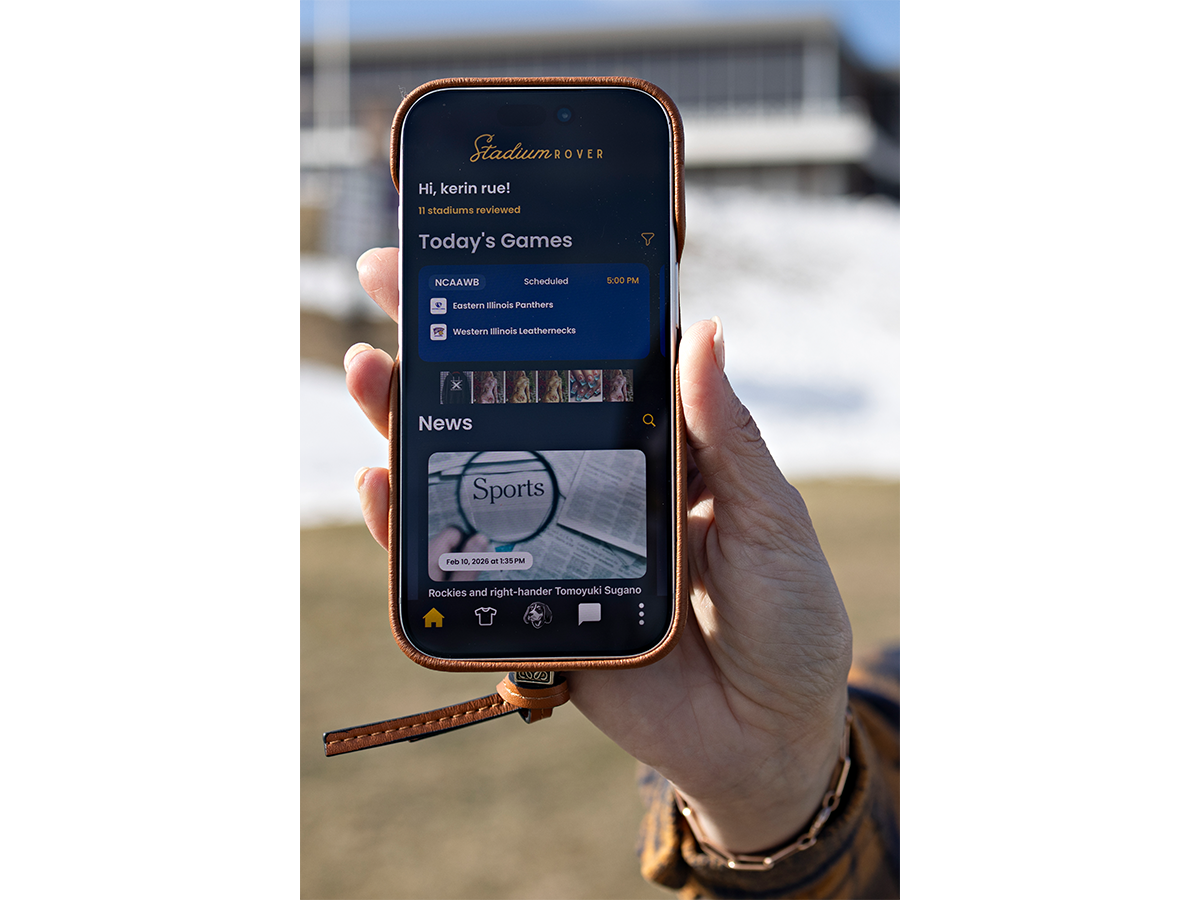
The aim of the app is to create a community for sports superfans like Rue and her friends. Users can create profiles, connect and chat with one another; rank and review their experiences at nationwide stadiums to create a “digital diary” visible to other fans; purchase tickets to games and sports merchandise; and access information like schedules, venues and game updates — all in one place.
The app “leverages everything that’s out there to come back to you and say, ‘Here’s an efficient way of doing what you want to do,’” said Rue. “We had to do all of that manually in the past. … The intention here is that these are enthusiasts leaving their opinions on (each stadium) and building that community… that the Ticketmasters, the StubHubs, the DraftKings are not. This is a little more all-inclusive.
“My end goal with this is to … bring people together, as opposed to so much of media now that just drags us apart.”
Other perks of the Stadium Rover app include built-in trivia and sweepstakes that provide additional user rewards.
And the community is not just for baseball zealots: It also encompasses the National Hockey League, the National Football League, the National Basketball Association and Division I of the National Collegiate Athletic Association.
Rue laid the groundwork for Stadium Rover prior to the COVID-19 pandemic but didn’t officially found the company until 2023, and it hit Apple’s App Store in July 2025. She maintains a full-time job as the vice president of business development—Town News and Amplified for Lee Enterprises, and runs the company as a side hustle.
Rue said in today’s climate of political division and online discord, positive environments that help people find points of connection are critical.
“(During) COVID, I felt like the one thing we all learned was … people want to be around other people like them in niche communities — almost like these families that you create,” said Rue. “I love sports because (when) you go to a baseball game, you are a fan of your team. Race, religion, politics — nothing matters other than you’re there to root on your team.”
Rather than relying on venture capital investment to launch Stadium Rover, Rue put in her own money and raised more than $800,000 in additional funding from an investor group made up of family and friends.
That money will give the company a year of runway as it begins to amass users, and she said in the initial round, she turned some funding away and has a “bench of people” who are ready to contribute or give more as needed.
“I want my investors to win because they are all just such good people,” Rue said. “I love being the underdog. … (We’re) trying to be very, very careful on how we spend money. … We have a really, really good foundation because we’ve test-measure-refined it.”
The app is still in its infancy, however, and expanding Stadium Rover’s user base is crucial, she said. The company’s two main goals are to reach 250,000 downloads and generate a daily active user base of 100,000.
“We have to get the community to understand the concept and download (the app) … because we need your reviews,” Rue said. “We need people to go in there and connect.”
Another key move will be securing a strategic partner to help with distribution. Rue said she’s in discussions with media companies to find “the right kind of distribution.”
“My background has been (in) sales and media. I’m really good at building things, and I’m good at monetizing them,” Rue said. “The distribution part, that’s where maybe partners come into play. … We’ll give them equity, it’s a cool brand and we’ll run at this together.”
Rue has set a revenue goal of $2 million for the company once Stadium Rover hits its daily active user target. That revenue will come from sponsorships and purchases via affiliate programs through the app.
For instance, an affiliate program with StubHub informs Stadium Rover users’ default preferences when it comes to ticket purchases, and the app’s merchandise store is connected to Fanatics.
“Within the app … any time someone purchases (items), we earn commission off of that,” Rue said.
She hopes to have an array of sponsors committed by the end of 2026 so that 2027 can begin with recurring revenue that catapults the company to profitability, which “will only improve as we gain additional users.”
“We can’t do this without businesses who believe in our mission,” she said in a statement. “Those who sponsor are helping us build this community. We need their help in keeping fans engaged, rewarded and keeping the game human through human connection.”
The company has no full-time employees, but Rue said kickstarting her side hustle has been a team effort, with two contributors on the payroll: Jordan Jones, who takes care of bookkeeping and customer support, and Michael Grego, who is in charge of social media and communication.
Everyone else lending a hand is working for equity, according to Rue, who stipulated that she won’t make any money until the company does.
“The other people involved with Stadium Rover, most of them have other jobs too,” she said, adding that it’s all about “balance” and leveraging different skillsets.
In the meantime, two spinoff apps are in the works — Links Rover and Parks Rover, which cater to golf lovers and parkgoers, respectively. Rue said Links Rover is being developed now and will be available this spring. Parks Rover should be in the App Store by summer.
And while she is proceeding cautiously to make the most of Stadium Rover’s funding while amassing users and sponsors, establishing key media relationships and securing revenue sources, she is also reflecting on the guts it took to reach this point.
“Just do it!” she said. “It’s easy to talk about. It’s easy to dream about. The reason why not everything’s successful is because less than 1% ever do it.”
On the web: stadiumrover.com
Stadium Rover snapshot:
▶ Industry: Sports technology
▶ Total funding: >$800,000
▶ Revenue goal: $2 million
▶ Revenue sources: Sponsorship, commission
▶ Year of origin: 2023
▶ Location/headquarters: Arena
▶ Staff size: 3
▶ Business classification: C-Corp.

