
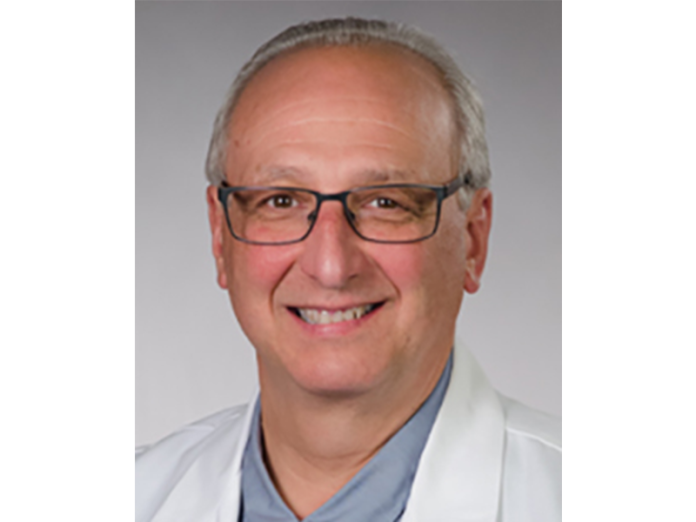
Dr. Al Musa is retired now, but the promise of artificial intelligence in health care has him very excited about the future of medicine.
Having retired from SSM Health Dean Medical Group in May, he’s been a four-decade part of medicine’s unfolding technological journey.
Among other advances in care delivery, that journey has taken medicine from paper charts to electronic health records and now AI promises more innovation.
Musa, winner of In Business Madison’s inaugural Health Care Heroes award in the physician category, said there’s a great opportunity for the health care industry to use this technology to elevate clinical decision support.
The possibility of AI enabling clinicians to move beyond time savings with ambient listening technology and diagnose ailments quicker and more accurately — especially difficult diagnoses — and pool that data to improve the population health of communities, “we’re just scratching the surface (with that),” Musa said.
“I’m really looking forward to continuing to launch beyond improving our time capabilities and efficiencies,” he said. “That’s all wonderful, but I think the opportunity to really impact the public and population health is just immense and I’m looking forward to that.”
The digitization of information through EHRs set the backdrop for what lies ahead, but so did something called the SOAP note (Subjective, Objective, Assessment and Plan), a way to categorize medical information developed by the University of Vermont’s Dr. Lawrence Weed.
Weed, who died in 2017 at the age of 93, was a hero of Musa’s and many others in the medical profession. “I saw a lecture he gave when he was about 90 years old, and he said, ‘You guys are there now. You can take the format I gave you and really use computerization to take those discrete elements and create (the most likely) diagnosing,’” Musa said.
“That certainly doesn’t remove the human element of the cognitive responsibility we have as physicians, but it really enhances it.”
Musa said patients should not fear a loss of privacy from AI because protections are embedded within EHR formats. They might also worry the technology will depersonalize their experience with the doctor-patient relationship, but Musa sees it as an opportunity to “re-personalize” it in ways that enable physicians to be more present.
“We’ve struggled with how to maintain the continuity in the relationship-based practice,” Musa said. “The thing I value most in my 40-year journey was the relationship with patients. … I really do think we can get back to emphasizing the continuity and the relationship side of this, and I think AI will enable that, not detract from it.”
Whether paper or electronic, patient charts don’t heal people, human interaction does, said Musa, who was known to make an old-fashioned house call — or “home visit” in the modern vernacular.
“I predict (AI) will let us become more patient-centered, not less, and right now with the volume of challenges and complexity of technology in general, we are battling time to be able to be more patient-centered,” said Musa.
“So AI is an avenue and an opportunity to get back to that. We’ll never get all the way back to (TV doctor) Marcus Welby, but let’s try.”

