
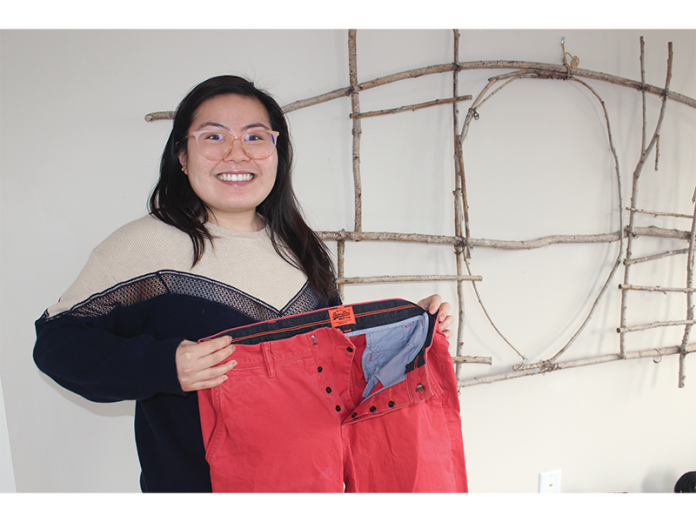
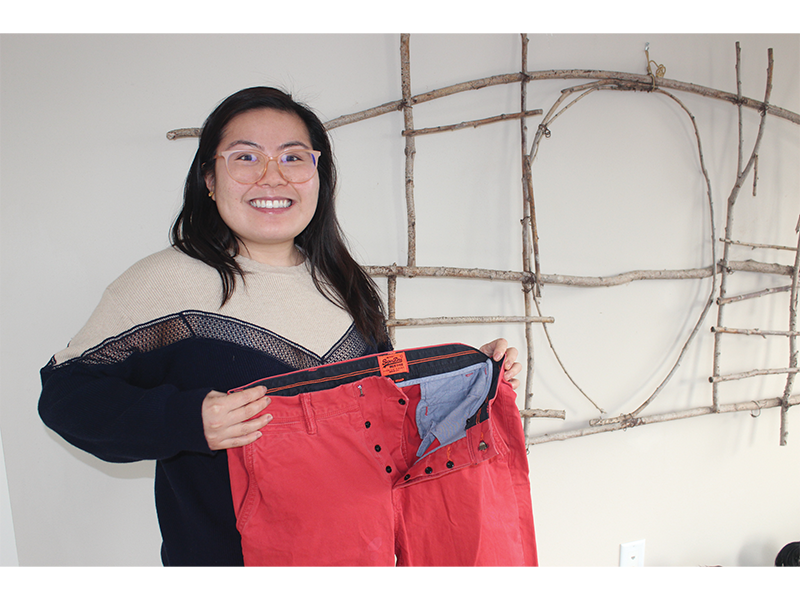
Hilary Pham may not be able to sew, but that hasn’t stopped her from creating more options for people with adaptive clothing needs.
Equability, the company she founded in 2020 and officially launched in Madison just under two years ago, offers a service, rather than a product, distinguishing it from other adaptive clothing companies. While some businesses sell clothing with built-in features that accommodate disabilities, Equability adapts clothing people already own.
In doing so, the company provides greater variety, affordability, and sustainability, offering people with disabilities the same choices as other consumers.
Pham’s entrepreneurial venture was sparked by her personal, rather than professional experiences. “I don’t really have a design background at all,” she said. “I work in tech. I’m a data analyst for the state right now. … So not at all the same industry.”
For over 10 years, however, she has watched her mother’s arthritis and carpal tunnel syndrome make tasks like dressing for work increasingly difficult, and this prompted her search for a solution.
“Little buttons and little zippers are really difficult for her to grab. It’s pretty painful. So I think it just took being around my mom … watching her struggle to get ready when she is a really independent woman.”
She added, “When you get older, or when you get into an accident, and your entire life is changing, maybe your mobility or your dexterity is being impacted, it’s a very scary feeling. And you kind of want to have the comfort of your own clothes.”
Pham explained that the adaptive clothing items sold by other companies — like button-down shirts with embedded magnets, for instance — are often expensive, selling for as much as $70–90 apiece. They also may not cater to buyers’ stylistic preferences.
“My mom wants to keep wearing her favorite pair of jeans… the jacket that she’s had for the last 10 years. … She wants to keep shopping at the stores that she likes,” said Pham. “People who want to be thrifty, or people who just want to be more sustainable and not buy more clothes as well, that’s definitely a group that we’re trying to reach.”
Kaylin Chiolino, a local neurologic physical therapist and founder of Resilience Neurologic Physical Therapy & Wellness, reinforces this concept: “Many of the clients I see have lost so much because of [an] injury or disease process, that being able to wear clothing they would typically choose is a beautiful way to preserve their sense of self.
“Autonomy and independence matter so much, and the ability to choose clothing based on what you like is something that has long been an afterthought for people with disabilities.”
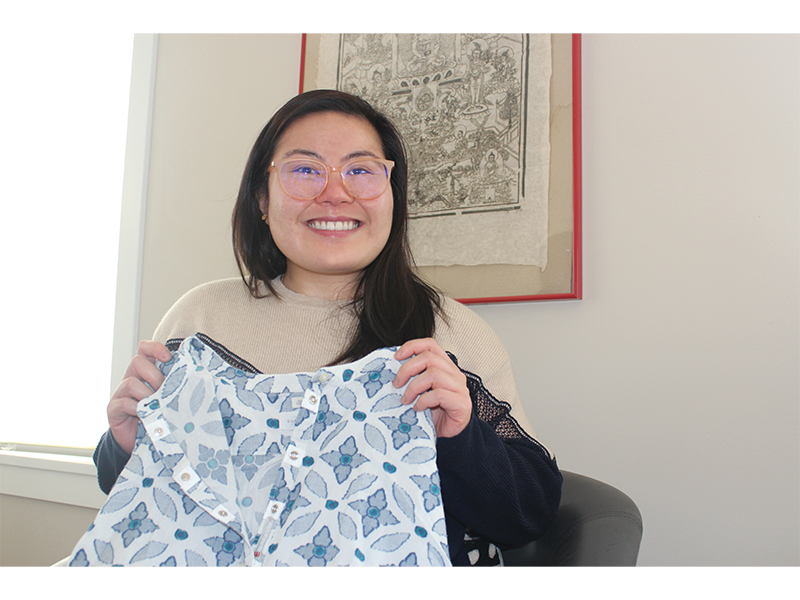
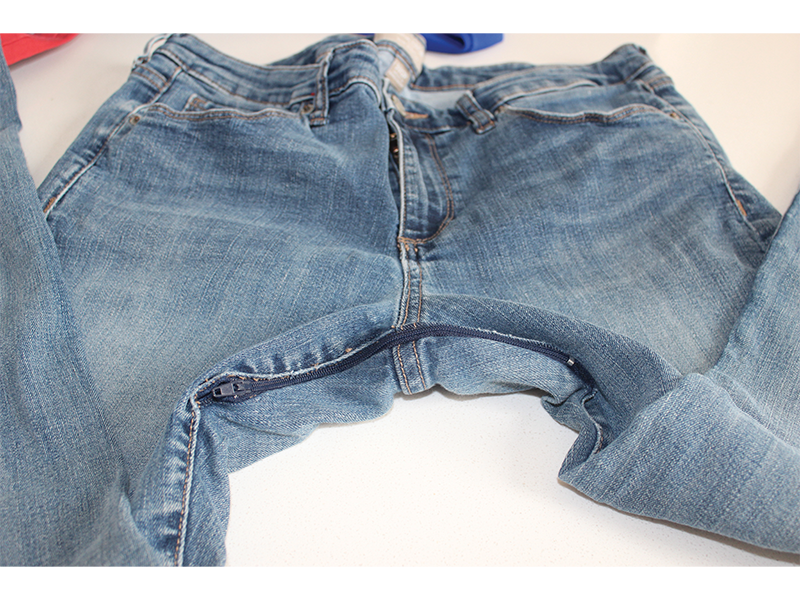
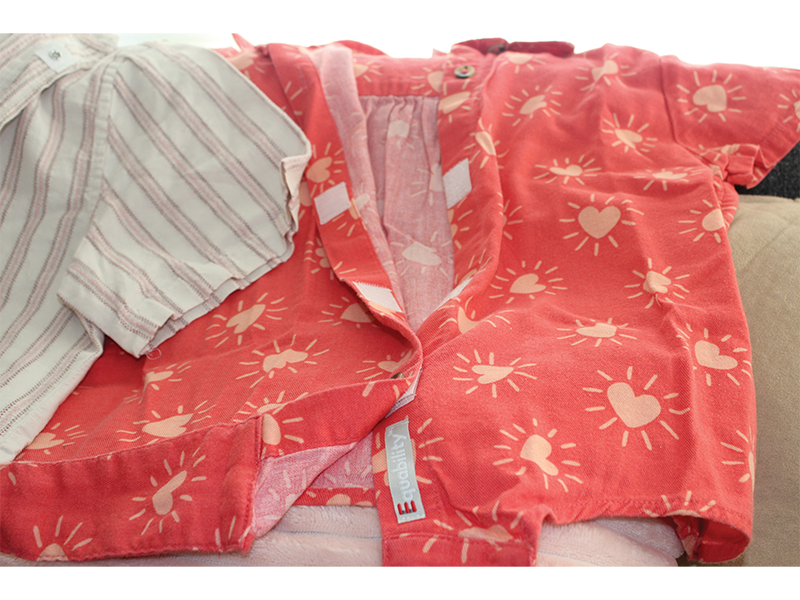
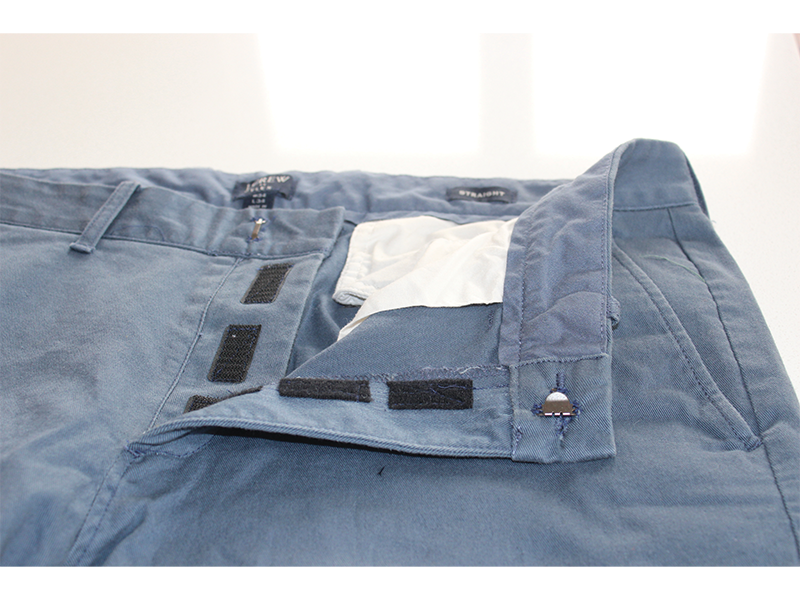
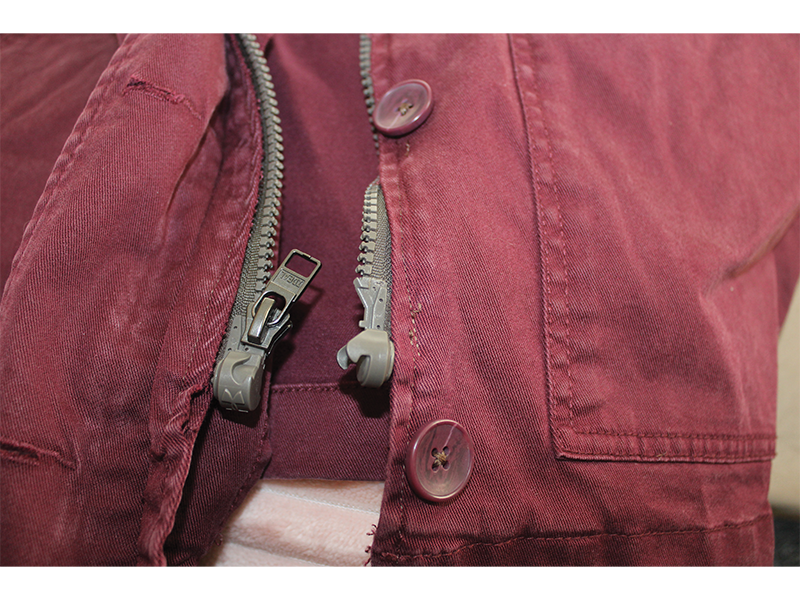
Equability offers a set of services that include adaptations for button-down shirts, jeans and pants, and jackets. Customers can place their clothing orders through an order form on Equability’s website, which offers a selection of adaptive materials and other preferences. They send their clothes to the company in the mail or via a community drop-off center, Equability’s two local sewists adapt the items, and customers receive them in under a month. Materials like magnets, snap buttons, and velcro transform elements of a clothing item based on individual needs.
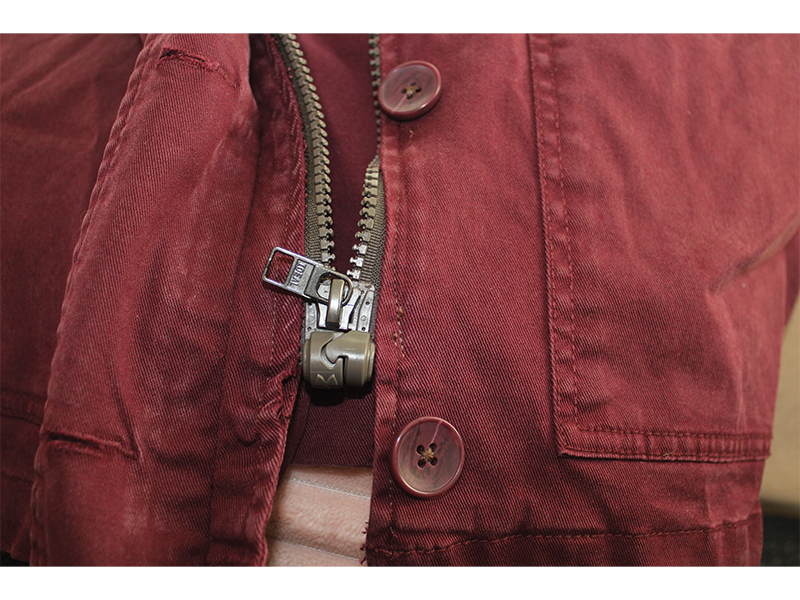
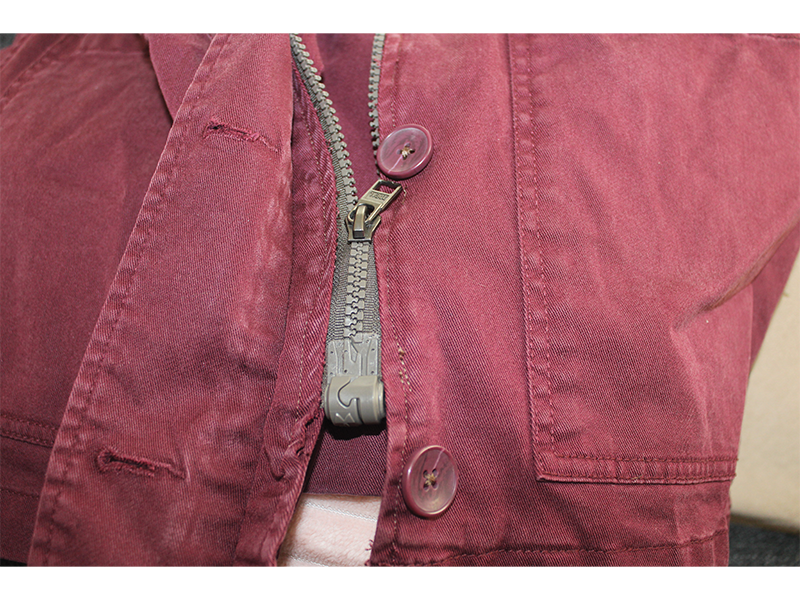
For instance, traditional jacket zippers can be replaced with one adapted for people who have use of just one hand. The adapted zipper has a magnetic bottom to align the teeth for the wearer before the slider is pulled upward. Likewise, button-down shirts can be adapted using magnets as fasteners to accommodate individuals with limited dexterity. And in alignment with its focus on affordability, Equability’s services are priced at $45 or less.
Pham said she also has been moved by conversations with caretakers of people with disabilities. Families often find the search for adaptive clothing burdensome, and Equability looks to “turn clothes into a positive experience again.”
Growing the business has been a slow but steady process, which Pham said stems largely from Equability being “a pretty new concept.” She bootstrapped the company as a solo founder, crediting local accelerator programs like StartingBlock’s MadWorks Accelerator with helping the company find its footing, and she raised roughly $20,000 in seed funding through various small pitch competitions.
“I like to keep my expenses low,” she said. “I’m used to being scrappy.”
Attending local resource fairs and connecting with occupational and physical therapists has helped Pham grow Equability’s customer base, as have its biggest milestones so far — becoming an approved vendor with the Wisconsin Department of Workforce Development (DWD) and Child Long Term Support (CLTS), a Wisconsin Medicare program. CLTS provides funding for parents to use in caring for children with disabilities, which Pham said can be used for Equability’s services.
Building out Equability’s drop-off network is next on her agenda. One of its current drop-off sites is Common Threads Family Resource Center, 1717 N. Stoughton Road, a Madison clinic that provides psychotherapy and occupational therapy services. Pham hopes to connect with other businesses that can provide similar options — especially those with accessible features like a first-floor lobby.
“I’m always thinking about … how to make the entire service more accessible,” she said. “I just want to give people options.”
Equability
773-357-5022

