
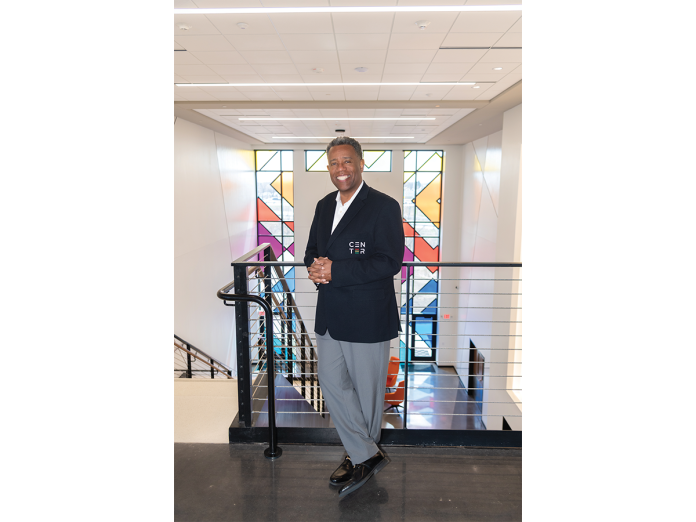

Rev. Alexander Gee, Madison’s longest tenured pastor, said at 16 years old, he told his sister Lilada he’d had a vision: Someday, they would work together and create something extraordinary for the city and for the Black community.
“I told her, I have this strong sense that … we are going to be a part of something,” he said. “It’s going to be up on a hill, it’ll capture the whole city’s attention, and it’s going to do good for our community.”
Decades later, Gee’s vision has come to life through the Center for Black Excellence and Culture, a 37,000-square-foot, first-of-its-kind Madison facility he co-founded with his sister. The building is next to Fountain of Life Covenant Church, which he has led for 40 years at what he calls “the southern gateway to the city.”
“Faith is a big part of my life, and I’m a visionary,” Gee said. “This is a place where we can enhance the Black quality of life … where Black people feel that they can exhale, collaborate and dream.”
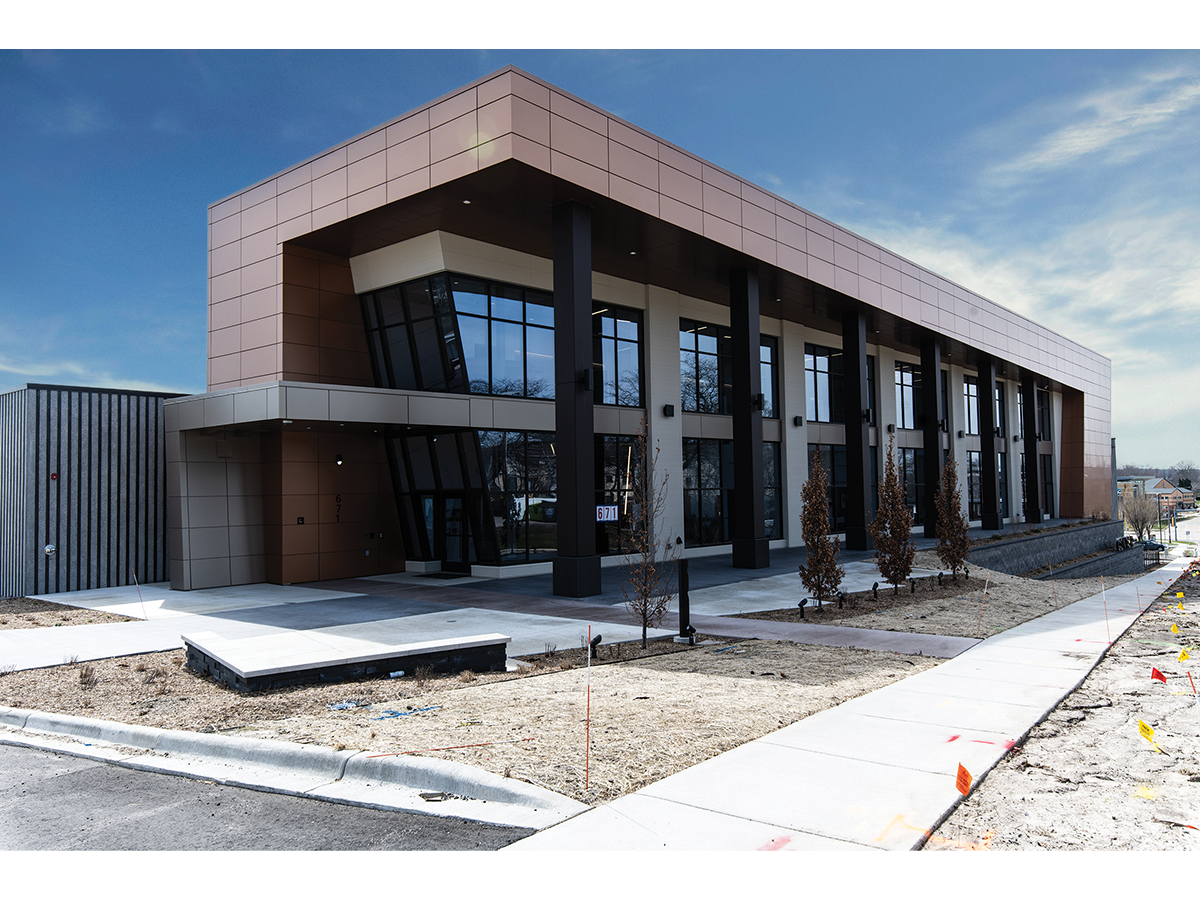
Nearly two years after breaking ground, the Center will host a grand opening on May 6 at 671 Badger Road, with an open house from 2-6 p.m. The event will cap years of efforts by the Gees and the surrounding community to build a space that bolsters the Black entrepreneurial spirit and celebrates Black excellence.
There will be areas for gathering and events; programming — including leadership development and the arts — for all ages; and research focused on promoting Black wellness.
The Center looks to address a gap for Black-centered cultural spaces in the Greater Madison landscape at a time when Dane County is still contending with racial disparities. The 2023 “Race to Equity 10-Year Report: Dane County,” from the statewide nonprofit policy center Kids Forward, found persistent racial gaps in areas like economic well-being, health and education.
Gee said the facility will recognize Black achievements while protecting Black health and centering the Black experience in a new way.
“The Center … is more than a building — it’s a bold declaration that Black excellence belongs at the center of innovation, economics and community life,” said Jason Fields, the Center’s chief strategy officer, in a statement. “A space where culture meets capital, where ideas turn into opportunity, and where the next generation can see, experience and become what’s possible.”
Gee purchased the Center’s future home in 2012 and said it took nearly a decade to conceptualize the project, but local Black business leaders convinced him that the property could be a boon for economic development.
Fundraising efforts for the $32 million facility were spearheaded by 300 local Black donors.
“Black people creating solutions for Black issues is really, really important,” said Gee.
Thanks to over 1,200 donors, including many local businesses and individuals, it will open debt-free.
Most importantly, Gee said, the space will celebrate the Black diaspora and “Black flourishing.”
“What we held in common was our song, our dance, our music, our joy, our faith,” he said. “I want young
Black kids to know that, and — when we’re doing it well — I want my non-Black friends to come and see us at our best.
“This (is) a national example of what happens when Black people dream, and the broader community supports that dream.”

The Black aesthetic
A team from JLA Architects led by Rafeeq Asad designed the Center around a concept called the Black Aesthetic.
“It’s a set of design principles that are indicative of African American culture and style,” said Asad, vice president and director of team development at JLA. “Having a Black designer work on a Black-centered project was that much easier because I’m familiar with those elements.”
The building’s modern design features unexpected angles and a rich color palette, with art installations and bold patterns that all hold particular symbolism or significance.
For instance, Adinkra symbols — integrated throughout the facility — originated in Ghana hundreds of years ago and represent a visual language, conveying sayings, philosophies and values. On the Center’s upper level, they cover panels of stained glass —also a nod to the Black church.
Kente cloth, a textile likewise originating in Ghana, appears in the facility as well. It is a widely recognized symbol of African heritage, and its patterns tell stories and preserve cultural histories.
“Everybody loved the atypical (design) elements,” said Asad. “The colors, the textures, the patterns, the rhythm. … It’s just that much cooler.”
Lilada Gee created works of art for the Center and chose the colors of many of its paints and materials.
“Every color choice matters,” she said in a statement. “Every piece of art says something beautiful about Blackness. With every piece of furniture, every room, every image, every color, my hope is that every Black person from the African diaspora sees themselves reflected here. Because when Black people see themselves reflected with respect, dignity and beauty, there is a powerful spiritual shift.”

In rooms dedicated to meetings or instruction, even the dry-erase boards are black in color — an intentional departure from whiteboards.
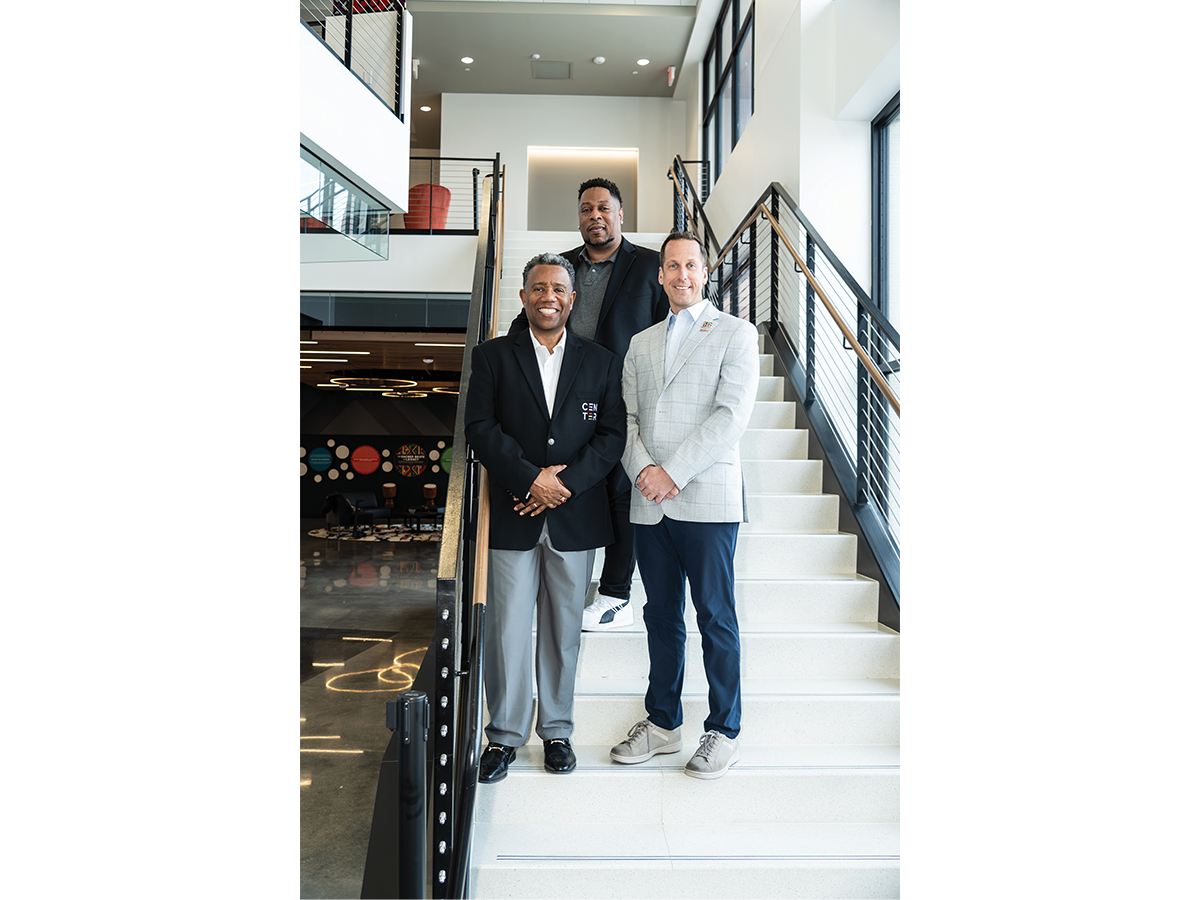
A large commons on the Center’s main level contains one of two towering staircases which appear to float, despite weighing thousands of pounds, and natural light floods from huge windows throughout the building.
Outside, walking paths — including a sidewalk that connects the Center to bus rapid transit — and electric vehicle charging stations will increase the site’s accessibility.
Asad and Jim Yehle, the president and CEO of building partner Findorff, both noted that the project received overwhelming support from the Madison and statewide community.
“This is a special project because I think it’s one of the first projects where, as a Black designer, I was able to work with a community that I’m a part of. That never happens because of our numbers (in the field),” said Asad. “We know what the project represents to the city, to the region.”
The Center has been “a Black-led, Black-designed, Black-supported project, and obviously we’re here to support it,” said Yehle. “This will be a place where many people come together … not just people from Madison,” but from across the broader region.

A place to ‘recombobulate’
While it fittingly broke ground in 2024 on Juneteenth — which recognizes the end of slavery in the United States — the Center’s roots date back further. The facility will look to address Madison’s fundamental, historical lack of Black-centered spaces.
“My family came to Madison in 1970 when it was a really different world,” said Alex Gee. “It was a very small Black community, but it was tightly knit. … We knew each other. We held onto each other.”
But while he and his parents stayed in Madison, many of his friends did not, despite their successful careers.
“They gravitated toward … Atlanta, Dallas, Chicago and Detroit, where there were a plethora of places like (the Center) where Black people could gather,” he said. “I realized, if I want Black families to stay here and thrive, they’ve got to feel like this is home.
“Around the same time, white business leaders were saying, ‘We can’t keep Black talent here,’ but they never thought it was because of culture. They assumed (people left because) it’s cold. Chicago is cold. There are a lot of cold places. … We can do cold, but we can’t do a cold culture.”
Gee — who also hosts the “Black Like Me” podcast, helped develop the Nehemiah Center for Urban Leadership Development and in 2013 wrote the seminal Cap Times story “Justified anger” calling out racial injustice in Madison — is personally familiar with the racial issues with which the city has grappled for decades.
He said a concept called “racial battle fatigue” inspired his vision for the Center as a place of healing.
“For people of color — or in my situation, Black people — constantly traversing non-Black spaces … brings about a stress that has a physiological impact,” he said. “It’s a social determinant of health and now being tied to premature death. … And it just makes me wonder, how much do you have to pay a person in Madison to come here and die earlier?
“One hundred years ago, when Black families were leaving the sharecropping South and coming to the North, we saw the proliferation of Black art, poets, playwrights, authors, singers, dancers. … The art and the music was the mechanism for turning the years of stress and turbulence and slavery and pain and second-class citizenship into joy … allowing that pain to be processed through … storytelling, through celebration, through cultural gatherings, through food and dance and faith.”
In 2020, Gee began assembling a project team. He said community focus groups ensured Black voices had a central place in the Center’s plans.
Prior to official planning, the Center’s organizers held listening sessions with over 700 Black Madisonians, and amid the COVID-19 pandemic, they held Zoom meetings with over 100 more.
They were asked what it would take for them to stay and thrive in Madison. What emerged was a need for what Gee refers to as “recombobulation.”
“At General Mitchell airport (in Milwaukee), I love this sign when you go through security… that says ‘recombobulate,’” said Gee. “That’s what (the Center) is really about — recombobulation.”
Recombobulation refers colloquially to reorientation, with everything in working order.
“There will be things that we can measure to show (the Center’s) impact on the Black psyche,” said Gee. “(It’s) built to bring us … together to have a stronger sense of identity and produce a sense of wellness in us.”

Strength in numbers
The Center’s debt-free opening this month comes largely as a result of a domino effect set off by the project’s first 300 Black donors, according to Gee. Four Black women — Lilada Gee, Kirbie Mack, Kesha Bozeman and Frances Huntley-Cooper, the former Fitchburg mayor and Wisconsin’s first Black mayor — approached community members and kicked off funding efforts.
Gee said this caught the attention of the Madison business community, which quickly stepped up as well. Kim Sponem, president and CEO of Summit Credit Union, made a $2 million gift — the largest in the organization’s history.
“When I heard Dr. Gee’s vision of building a place in Madison … where the Black community would gather to celebrate Black culture and excellence, create synergy, hold performances, gatherings and share ideas, I immediately thought this was something that needed to happen,” said Sponem in a statement. “Meaningful change happens when we listen, learn and lead together.”
Other major fundraisers included Ascendium, American Family Insurance Dreams Foundation and TruStage. Governmental funding added roughly $10 million, including gifts of $1 million or more from Dane County and the state of Wisconsin.
“I think the government was inspired by the business community, which was inspired by the 300 folks in the Black community,” Gee said. “The general white community was watching … and the individual donors started coming. A third (of the funding) just came from them. Our largest individual gift was $500,000.”
“The big donations were really big,” said Findorff’s Yehle, who was also on the Center’s capital campaign committee. “We put together Executives for Excellence … (and) said, ‘Hey, let’s get a group of executives to give … at least a million dollars.’ We raised it just like that.”
He said the success of Executives for Excellence prompted organizers to replicate the model with Attorneys for Excellence.
“Early on it’s, ‘Here’s some money. I hope it happens.’ Then it became more real,” Yehle said. “We could get through any problem because of the greater goal of providing this facility.”
A wall on the Center’s main floor entitled “The Sacred Beats of Legacy” is covered with over 1,200 donors’ names, and mounted djembe drums — which have West African cultural significance and are used to gather people together — pay homage to the cooperation and support that helped make the facility a reality.
Fundraising to support the Center’s programming is ongoing.
Programs with purpose
Plans for the Center’s programming are in motion as organizers solidify local partnerships.
There will be opportunities for businesses to learn about recruiting and retaining Black talent; programs designed to promote a better quality of life for Black Madisonians; and spaces for individuals and groups to showcase their skills and achievements.
Gee said the Center will provide 30% of the programming, and the remaining 70% will be led by other organizations. He underscored the importance of diverse offerings for underserved groups.
“Some of the people we’re partnering with want to do things for Black neurodivergent children, or they might want to teach yoga to Black seniors. … We’re really trying to find small, Black-led, mom-and-pop shops to do programming in here.”
The Black Renaissance Theatre on the Center’s lower level will host performances like plays and films.
“Performance and art have been the centerpiece of Black culture since (its) beginning,” said Dana Pellebon, the Center’s director of performing arts, in a statement. “We have a unique opportunity to present performance art in a community that has not had the space or resources to produce that art — a space that is supportive, accessible, welcoming and wrapped in the culture we are celebrating.”
On the Center’s main floor, a cheery, bright yellow children’s library will feature books by Black authors and about notable Black figures.
“For me, yellow is life. It’s light,” said Lilada Gee in a statement. “It’s joy that refuses to be dimmed. … Too often, Black spaces are designed around survival. I wanted this one to be designed around Black joy.”
At the library’s helm will be Lexi Gee, Alex and his wife Jacqueline’s daughter, who formerly worked for Dane County Library Services.
The facility also houses youth classrooms, an art gallery, meeting rooms, a recording studio, a maker space, areas for events, a catering kitchen, coworking offices and two licensed bar areas — including one called Club Afrique with an indoor/outdoor fireplace and balcony.
Gee said Black sororities and fraternities, also known as the Divine Nine, are being enlisted to help youth realize their potentional through leadership development.
He recalled, as a child, ordering items from ads in comic books to sell to neighbors.
“I was entrepreneurial as a kid and didn’t know it,” he said. “That was a precursor of a skill, 40 years ago, that I (later) used to raise $32 million.”
There is also a senior center, which Lilada Gee had painted red in honor of her late mother Verline’s favorite color. Verline Gee was a founding member of Fountain of Life and the Nehemiah Center for Urban Leadership, a social worker and a family therapist.
“You have all these (seniors) with wisdom and time on their hands, who don’t just want to sit at home isolated,” Alex Gee said. “In our communities, they used to sit on the front stoops.”
An interior wall of the Center houses an array of African masks, reflecting the diverse beliefs and practices of people across the continent. On a touch screen across from it, visitors can find information about the masks, other artifacts and influential Black historical figures.
Gee said it’s critical for all students and community members to gain an accurate and comprehensive understanding of Black history — across the region and the globe.
In the Center, “we’re not going to pay homage to slave ships,” he said. “I want to talk about where we used dance and music to celebrate, and the bad parts of meat that were thrown to us because we were poor. … We slow roasted them in sauce that is now a Kansas City and Chicago delicacy called barbecue.
“We knew how to turn pain into something that was succulent, that was beautiful. … I want to tell that story. … The ones who have built our community should not be forgotten.”
The Center is talking with UW Health, UW-Madison’s Department of African American Studies and the Center for Healthy Minds about programs, Gee said.
UW Health plans to “support the Center’s health and well-being programming,” said its press secretary Emily Greendonner.
Hope Kelham of the African American Studies department said its research lab, the SoulFolk Collective, will launch a Saturday school program next year within the Center.
“The SoulFolk Saturday School will work with Black high school students in the Madison Metropolitan School District… through mentorship, mental health counseling, academic coaching and youth-led social action projects,” Kelham said.
Richard J. Davidson, founder and director of the Center for Healthy Minds, said CHM will partner with the Center “on initiatives focused on flourishing and wellness, and on reducing disparities in health outcomes.”
Tony Chambers, CHM’s director for community wellbeing, added, “Black members of Madison’s communities will benefit greatly
from the community-led research and programs that will evolve from the collaboration between (the Center) and CHM. This unique relationship is a marriage of soul and science.”
Gee said the “real programming” is about bringing the Black community together to solidify identity and “mitigate premature death.”
“We need a space to heal. We need … to decompress,” he said. “To know that this space energizes people (will) make me really pleased.”
According to the Center’s website, each year, the facility is expected to support:
▶ 2,000 students learning Black history;
▶ 5,000 people through Black performances and art;
▶ 250 seniors; and
▶ 175 members through the Center for Black Innovation and Leadership.
The Center’s project team members said they are looking forward to seeing the public’s reaction to the new space at the facility’s grand opening.
“It’s been a great partnership, a great team … and I think the public will see that greatness manifested in the programming and the building,” said JLA’s Asad.
“My hope is that this will be a place for everybody,” said Yehle of Findorff. “I’m excited for it to be activated with the human spirit. … We’re super proud to be a part of it. And it doesn’t end (here) — we’re going to continue to support it.”
Gee is hopeful that the Center will forge ties between Black communities across the state and serve as a national beacon. He envisions a place where visiting dignitaries converge, weddings are held, small businesses grow and neighbors bond.
“This is what it looks like to design with Black intention,” said Lilada Gee in a statement. “This is what happens when Black life is centered not as an afterthought, but as the standard.”

