


In an era of rapidly evolving health care needs and challenges, UW Health is embarking on an ambitious expansion plan that promises to reshape the medical landscape of Madison and perhaps beyond. This comprehensive strategy, representing an investment of over $900 million, aims to increase UW Health’s facility footprint by nearly 1 million square feet in an attempt to meet the growing health care demands of south-central Wisconsin.
Madison’s magnet
The impetus behind this monumental expansion is multifaceted, reflecting a complex interplay of demographic, economic, and health care trends. “We’re just trying to keep up … with the demand for health care, really, across the board,” Dr. Peter Newcomer, UW Health’s chief operating officer, told the Wisconsin State Journal. “We’re seeing more and more patients come to the Madison area for their health care.”
Newcomer’s statement underscores a confluence of factors driving this unprecedented demand:
1. Dane County’s robust population growth has led to an increased base of potential patients requiring a wide range of medical services;
2. The aging baby boomer generation is entering a phase of life that typically requires more frequent and complex medical care, putting additional strain on existing health care infrastructure;
3. A concerning trend of rural hospital closures and capacity limitations has resulted in a surge of patient transfers to UW Health facilities, further taxing their resources; and
4. Recent closures of significant regional health care facilities, such as HSHS Sacred Heart Hospital in Eau Claire and HSHS St. Joseph’s Hospital in Chippewa Falls, have redirected patient flow to UW Health.
The numbers also paint a vivid picture of this surging demand. In fiscal year 2023, UW Health witnessed record-breaking figures across the board — from surgeries performed to emergency department visits and clinic consultations. Over a mere two-year span, emergency visits rose by 20%, while surgical procedures saw a 9% uptick. These statistics highlight the urgency of the situation.
However, these aren’t just numbers on a chart. Each percentage point represents hundreds of individuals and families who are turning to UW Health to fulfill their health care needs. As such, the expansion efforts have become less about growth than they are about ensuring the health care provider can continue to offer high-quality services and procedures to every single patient who walks through its doors.
Strategic square footage
UW Health’s expansion strategy is as diverse as it is ambitious, encompassing multiple projects across various locations.
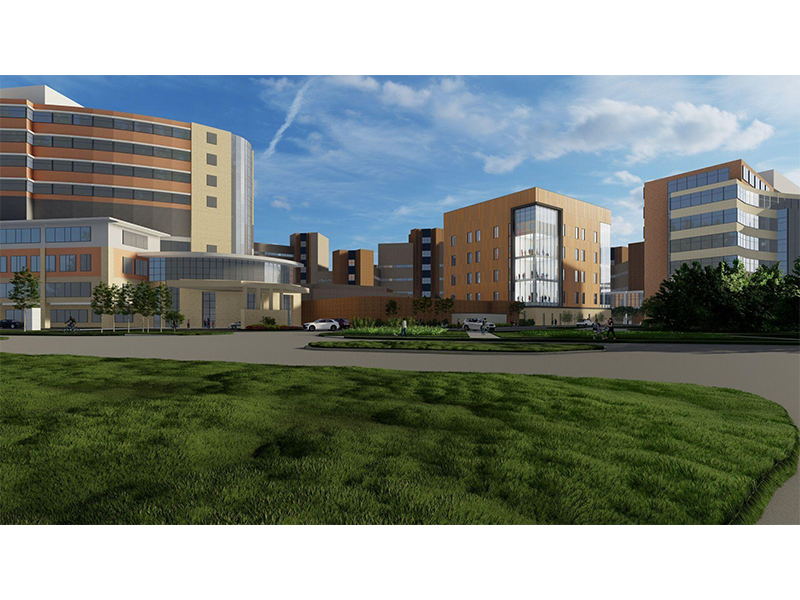
At the heart of UW Health’s expansion lies a $177 million, six-story addition to the main University Hospital. This new structure represents more than just additional square footage — it’s a strategic enhancement of the hospital’s ability to handle complex and urgent medical situations.
The expansion will introduce 22 new emergency department rooms, significantly boosting the hospital’s capacity to handle urgent cases. Additionally, 22 flexible care beds will be added, providing the versatility needed to adapt to fluctuating patient needs. Perhaps most crucially, 48 new inpatient rooms will be created, addressing the growing demand for extended hospital stays and complex treatments.
Dr. Ciara Barclay-Buchanan, vice chair of clinical operations for the BerbeeWalsh Department of Emergency Medicine, explains the impact of this expansion: “The additional space will allow us to continue to provide remarkable health care to the growing number of patients needing emergency care within our community and beyond. This isn’t just about adding beds — it’s about creating an environment where we can deliver the most advanced, compassionate care possible.”
Located strategically between the UW Medical Foundation Centennial Building and the existing University Hospital, this expansion is designed for seamless integration with current facilities and has an expected completion date in 2026.
The East Madison Hospital, a vital component of UW Health’s network, is set for a transformative expansion that will increase its ability to serve patients across multiple specialties.
The approved plans include six additional operating rooms (ORs), a significant boost to the hospital’s surgical capabilities. This expansion will allow for more procedures to be performed, reducing wait times and improving patient outcomes. Complementing these new ORs will be 40 recovery rooms and 20 rooms dedicated to post-anesthesia care, ensuring that patients receive comprehensive care throughout their surgical journey.
The emergency department will see substantial growth with 20 new rooms, enhancing the hospital’s ability to handle a higher volume of urgent cases. In an innovative move, four shared care rooms will be added between the emergency department and medical imaging, facilitating faster diagnoses and treatment plans for emergency patients.
Flexibility is a key theme in this expansion, with 14 flexible care rooms designed to adapt to varying patient needs, allowing the hospital to pivot quickly in response to public health crises or shifts in patient demographics.
Dr. James Arnett, market president at UnityPoint Health – Meriter, a key partner in UW Health’s expansion efforts, underscores the importance of this project: “At UnityPoint Health – Meriter, we are committed to expanding our rehabilitation services to meet the growing needs of our community, fostering healing, restoring lives, and promoting a healthier future for all. This expansion at East Madison Hospital is a crucial step in that direction, allowing us to provide more comprehensive care to a wider range of patients.”
Like the University Hospital expansion, this project is slated for completion in 2026.
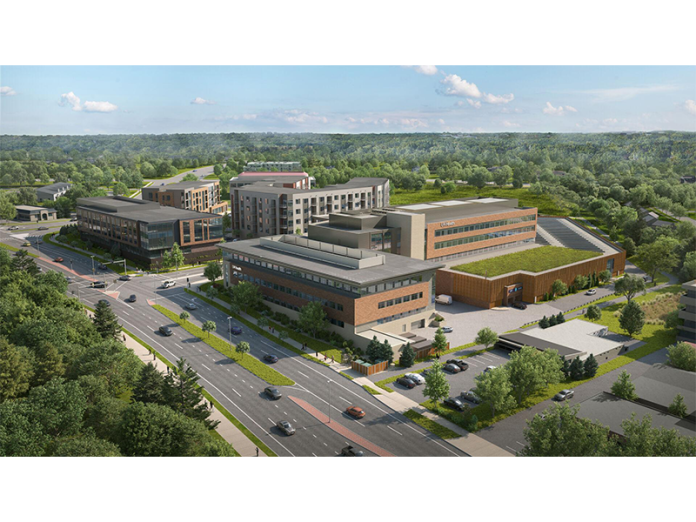
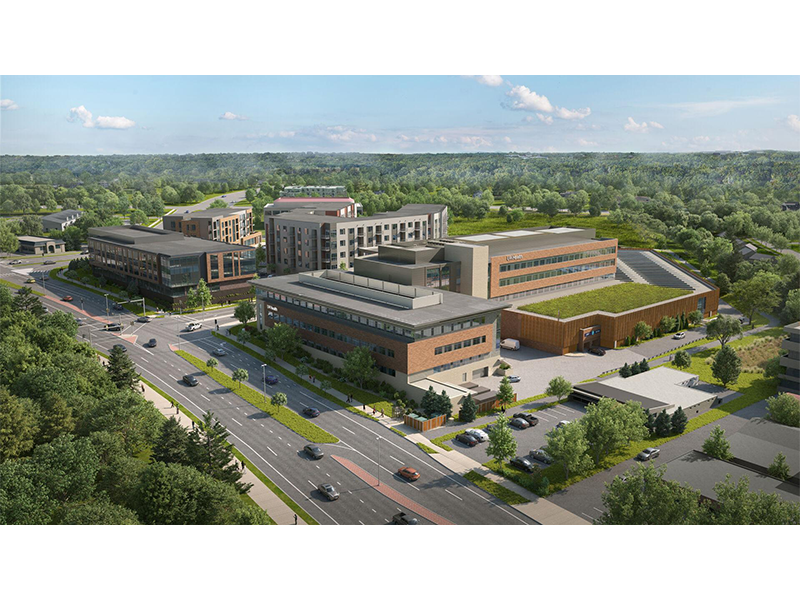
Perhaps the most ambitious component of UW Health’s expansion strategy is the Eastpark Medical Center. Set to open its doors this October, this $465 million facility represents a step into the future of specialized medical care.
Located on Madison’s east side, the seven-story, 470,000-square-foot center is designed to be a hub for oncology and integrated women’s care. However, its scope extends far beyond these specialties, housing over two dozen medical disciplines under one roof.
Dr. Newcomer elaborates on the patient-centric philosophy behind Eastpark: “Whether it is managing a preexisting heart condition while undergoing cancer treatment or understanding the potential impact of a unique genetic mutation, there will be a team dedicated to the care and treatment of every patient — having experts together under one roof.”
By bringing multiple specialties together, Eastpark aims to reduce the need for patients to travel between different facilities, streamlining the treatment process and improving overall outcomes.
The center’s opening will be phased, with most areas becoming operational by mid-November 2024. One of the most anticipated features of Eastpark is its state-of-the-art proton therapy center for cancer treatment, expected to come online in late 2025. This advanced technology offers more precise and less damaging radiation therapy.
The human impact of Eastpark is equally impressive. Once fully operational, the center will be staffed by over 540 clinical and 300 nonclinical personnel, creating significant employment opportunities and contributing to the local economy.
Complementary clinics
UW Health’s vision extends beyond its main campuses, recognizing the need for accessible health care across the Madison area. The University Row Clinic, a $122 million, four-story facility set to break ground on the West Side in spring 2025, represents this commitment to community-based care. While details are still emerging, this clinic is expected to offer a range of outpatient services, bringing UW Health’s expertise closer to residents in the western part of the city.
In a strategic move that underscores the importance of post-acute care, UW Health has partnered with UnityPoint Health – Meriter and Lifepoint Rehabilitation to plan a new 40-bed rehabilitation hospital in Fitchburg. This 58,000-square-foot facility will focus on adult patients recovering from conditions such as stroke, neurological disease, and spinal cord injury.
Ryann DeGraff, vice president and regional chief operating officer at UW Health, expresses enthusiasm for this collaborative project. “We are excited to partner in adding a world-class rehabilitation hospital southwest of Madison, to complement our eastside location. We look forward to building on the success of our existing hospital to meet the growing demand for the same patient-centered care in a location that may be more convenient for some patients and their families.”
This rehabilitation facility represents more than just an expansion of services — it’s a recognition of the crucial role that comprehensive rehabilitation plays in patient recovery and long-term health outcomes.
Financial implications
The UW Health board of directors has approved up to $310 million for the University Hospital and East Madison Hospital projects alone, with construction costs expected to range between $180 and $220 million. This significant investment reflects the organization’s confidence in the long-term benefits of these expansions.
Further underscoring the financial magnitude of these plans, the state Legislature’s joint finance committee has approved UW Hospital’s request to issue $325 million in bonds to support various expansion projects. This public-private partnership approach demonstrates the broader community’s recognition of the vital role local health systems play in the region’s health care ecosystem.
However, Dr. Newcomer is quick to point out that UW Health’s strategy extends far beyond bricks and mortar. He outlines a comprehensive approach encompassing what he calls the “four Ps”:
1. Places: The physical expansion of facilities, as detailed in the various projects above;
2. People: A renewed focus on enhanced staff recruitment efforts, recognizing that state-of-the-art facilities require equally exceptional health care professionals;
3. Processes: An ongoing commitment to streamlining appointments and operations, ensuring that the expanded facilities operate with maximum efficiency; and
4. Partnerships: Strengthening collaborations, including regional doctor training programs and telemedicine initiatives, to extend UW Health’s reach and impact beyond its physical locations.
Expansionary impact
As UW Health navigates the complex landscape of increasing health care demands, its multifaceted expansion strategy represents both a significant investment and a vision for the future of health care delivery in the Madison area and beyond.
Dr. Newcomer encapsulates the urgency and opportunity presented by these projects. “We have an opportunity to meet the needs of these patients, but to do that, we need to grow. This growth will also allow us to continue to serve our current patients more effectively as this exciting work will improve the flow through our health system for all patients.”
The hoped-for ripple effects include improved health outcomes, shorter wait times, and more personalized care for patients across Wisconsin and neighboring states.
Moreover, the economic impact of these expansions cannot be overstated. The creation of hundreds of new jobs, both in construction and ongoing health care roles, will provide a significant boost to the local economy. The influx of patients and medical professionals may also spur additional development in surrounding areas, further contributing to the region’s growth.

