
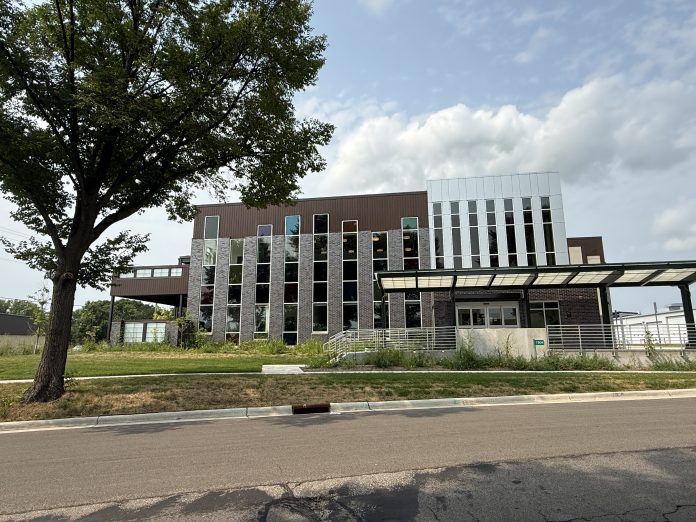

Ahead of the opening of a new men’s shelter on Madison’s east side, the public gathered Monday evening for an open house to preview the services Porchlight and its partners will offer to community members experiencing homelessness.
For District 17 Ald. Sabrina Madison, who for years has championed the project, seeing the facility open its doors for the first time struck a personal chord. She said one of her uncles was previously unhoused and, because of the services offered by Porchlight, which works to reduce homelessness countywide, he has stable housing now.
Another relative who has some personal challenges still uses shelter services in Madison.
“It’s really had a positive impact on my own family,” Madison said. “We know where my relatives are now, and how to contact them, and … that they’re able to get services. For folks in general, though … homelessness is looking younger and younger it seems over the past couple of years.”
Madison said the new, 42,000-square-foot facility at 1904 Bartillon Drive, set to open Sept. 1, brings together critical services and offers more space to meet growing local needs. It is Dane County’s first-ever purpose-built men’s shelter.
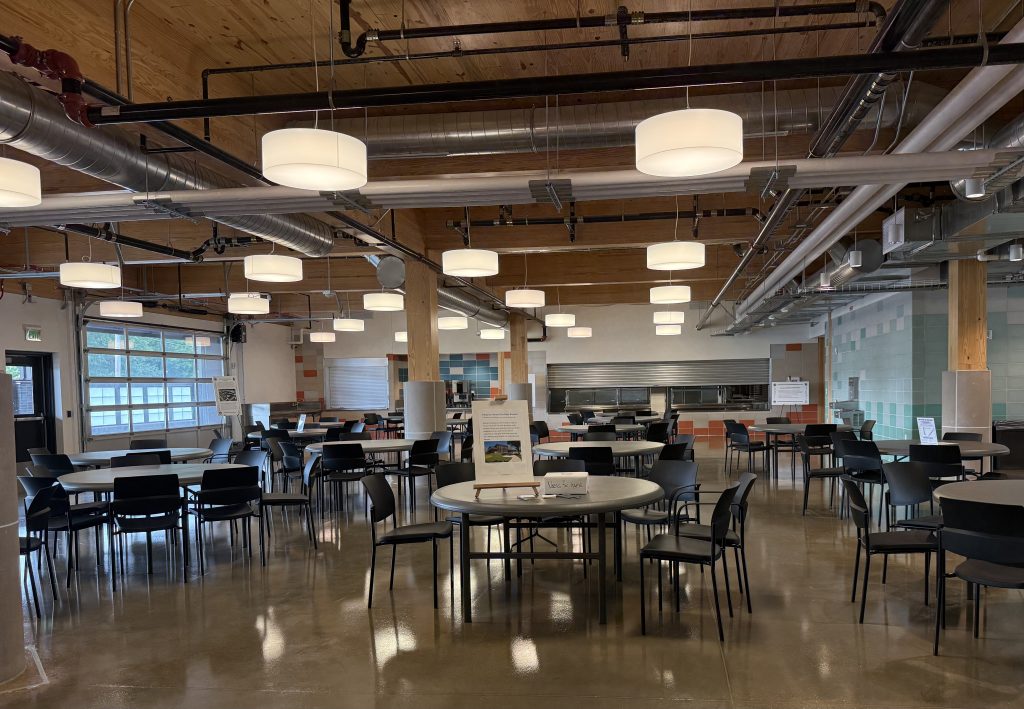
“Folks don’t have to travel all over the city for a housing case manager, or mental health support, or medical care,” Madison said. “it’s necessary, it’s beautiful, and the biggest thing that just comes to mind (is) … it’s with dignity.
“Everything is designed with the whole person in mind, and I love it.”
Karla Thennes, Porchlight’s executive director, said the organization is “ready and so excited” for people to enter the new space.
“A purpose-built shelter is intentionally built,” she said. “We have a nurse’s area, we have a quarantine area, we have individual case management so the guests can meet one-on-one with people. … It might take you three months to find permanent housing, it might take you nine months to find permanent housing. And because we have this large space to accommodate that, we can do it based on people’s needs.”
The facility will open as an overnight shelter — on the same schedule as the temporary men’s shelter on Zeier Road near East Towne Mall — but is anticipated to eventually operate 24/7.
That will be possible only when funding is raised for higher-than-expected operating costs. The cost to operate the men’s shelter has grown from less than $600,000 in 2019 to close to $3.5 million now.
The new facility is reliant mainly on funding from Dane County and the city of Madison. Shelter Friends of Dane County, a private fundraising group, is spearheading a community-based fundraising effort to generate the remaining dollars needed for full-time operation.
“”Please give. … That’s one of the biggest needs right now,” said Madison, highlighting the need for continued public support for the facility to thrive. “It’s beautiful, but there are still needs there. … We need much more than what the city can contribute.”
Growing need for shelter
City and county leaders began developing plans for a new shelter for unhoused men following the closure of the former Dane County men’s shelter in the wake of the COVID-19 pandemic. That shelter for 35 years had operated out of church basements in downtown Madison, which had a total capacity of about 165 men, and ultimately closed due to deficiencies in those spaces.
Officials solicited input from the community, homeless service providers and shelter staff regarding the new shelter’s design. The city acquired the Bartillon Drive property, which was designated as the shelter site in April 2022 by the City Council.
The project team, including local architectural consultant Dimension IV, obtained approval for their plans in December 2023 and began construction shortly thereafter.
Community feedback was “super important,” said Linette Rhodes, community development manager for the city. “When we were starting to do the design, the city actually hired someone at that time to help us get the word out to the community.
“We did a survey (saying), give us feedback on what you think is most important about the shelter. We targeted community partners — people who would work in the space, people with lived experience … and then the surrounding neighborhood as well. Getting feedback from them about what their concerns were about safety and so forth, was important.”
The project team incorporated results from a trauma-informed design report in assembling plans for the new building, which includes:
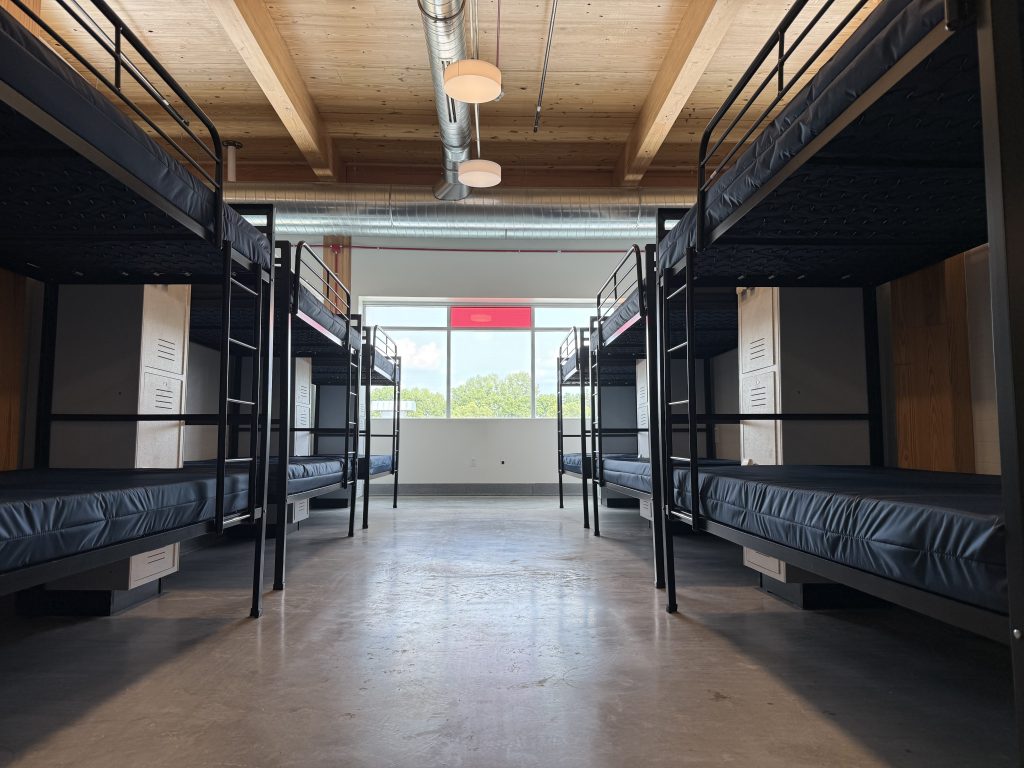
- Both single and bunk beds, divided among six rooms containing 40-50 beds apiece;
- Full bathroom and shower facilities;
- Electrical outlets and lockers to secure belongings to accompany each bed;
- Meeting rooms for shelter guests to work with service providers;
- Secure outdoor spaces;
- A commercial-grade kitchen where meals will be prepared and employment training provided; and
- A geothermal heating and cooling system and solar panel array to cut energy costs.
The new, two-story facility will have the capacity to serve as many as 250 people overnight and is expected to serve over 1,500 different people over the course of a year.
According to the city, the number of beds provided at the new shelter is within the range considered “best practice” for facilities of this type nationwide — larger shelters present additional challenges when it comes to safety, security and maintaining quality services.
Cost was also a factor: More beds and bathrooms would have required a third floor be added to the facility, which would have driven construction and operating costs even higher.
The shelter will rely on a bed reservation system, rather than being a drop-in shelter. Guests with an assigned bed will be able to return each night to reliable accommodations, but that service comes with the expectation that they are looking to secure housing.
The city said that area of focus is intended to help people get out of the shelter and into housing more quickly so the facility can serve more people. The shelter is not intended to serve as a long-term housing substitute, but rather a safe but temporary place for unhoused men seeking a more permanent situation.
“In this space, the shelter is going to be very housing-focused,” said Rhodes. “We are expanding our case management opportunities. Our goal is that when individuals are here, they are engaging in those services.”
With the transition from the temporary Zeier Road facility, priority to stay in the new shelter will be given based on age, with those 65 and older given highest consideration; health or medical needs; the length of time for which they have been using the current shelter and other related factors.
Remaining guests who become homeless may add their names to a waiting list.
Porchlight, which has operated Madison’s men’s shelter for over four decades, will provide men who are registered and assigned a bed at the new shelter with written notification — a process that could take a month or longer. The organization plans to develop a notification system to contact people on the waiting list when beds are available.
On-site case managers will help guests at the new shelter prepare an individualized housing plan.
“Right now, we are going to be implementing a new policy that after 90 days of someone using the shelter, they need to be engaged in case management services” to continue staying there, said Rhodes. “That helps us to make sure people are actually using the shelter for the appropriate housing navigation services.”
Guests who choose not to engage with case management may be asked to leave the facility. Additionally, if a guest leaves the shelter in the morning and does not return that evening, his bed will be offered to the next person on the shelter’s waitlist, and he will need to be re-added to that list.
Funding conundrum
Construction of the new shelter came with a $27 million price tag — $13.5 million of which was provided by the city of Madison. Dane County contributed $10.5 million, and the remaining $3 million came from the federal government.
The city also committed $1.7 million per year to support the shelter’s operations — that’s over 50% of the nearly $3 million Madison sets aside for homeless and housing stability services annually. The county allocated $1.4 million, Porchlight $200,000 and the state $150,000.
“To the public, five years may seem like a long time for this to all come to fruition,” said Porchlight’s Thennes, “but this is a big deal. It cost a lot of dollars, it took a lot of effort.”
The $3.5 million cost to operate the shelter on an overnight basis in 2026 includes both the cost to operate the temporary Zeier Road shelter until the new facility opens, as well as funding to operate the Bartillon Road shelter for the remainder of the year.
The budget will pay for staff, meals, laundry, cleaning, utilities and building maintenance. There is not sufficient funding to support both the new shelter and continued use of the Zeier Road facility, so the latter — which is also in need of maintenance and repairs due to higher-than-expected usage in recent years — will close.
Porchlight’s Thennes said Madison Street Medicine, a longstanding partner that provides the services of volunteer doctors and nurses, will have an expanded presence in the new building.
“They’ve been coming to the shelter once a week for many years,” Thennes said. “We were able to say to them, we’re building you … your own space, what does that look like, what do you need? They’re like, well, we need a handwashing station, we need an exam table, we need a place to lock up our medications and supplies.
“We were able to do all of that. … Now they’re hoping to be able to extend it to two to three times a week that they could come in.”
Building capacity
Dane County has issued a request for proposals seeking organizations to set up and run an overflow shelter.
“Right now, we have a current agreement with Madison Street Medicine as the operator for the overflow shelter. We are still working with them on (determining a) location,” said Melissa Mennig, Dane County’s housing access & affordability human services manager. “There are still lots of different zoning things, and capacity issues … we’re still working through those details right now.”
Mennig said rather than relying on new construction, the county plans to repurpose an existing structure to accommodate the needs of an overflow shelter.
In the meantime, Porchlight will also begin accepting onsite donations at Bartillon Drive beginning Oct. 5 to accommodate current guests’ needs. The organization’s wish list includes:
- Travel-size shampoo and conditioner;
- Travel-size toothpaste and toothbrushes;
- Packages of men’s underwear;
- Packages of men’s T-shirts;
- Grab-and-go breakfast and snack items;
- Deodorant;
- Socks; and
- Shaving razors.

