
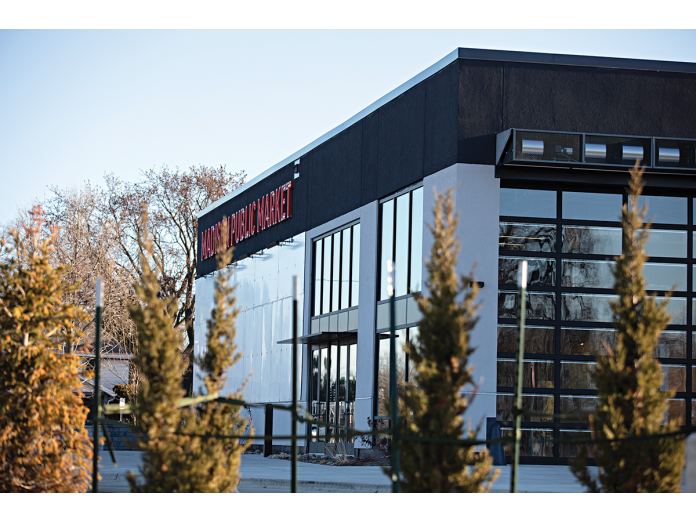

A Madison-area food truck offering a quirky mix of smash burgers and churros is just one of the businesses throwing open new doors in the long-awaited Madison Public Market.
Cinn City Smash was among the first of several vendors announced in January by the Madison Public Market Foundation, the market’s nonprofit operator. Cinn City is taking up residence in the 70-year-old former Fleet Services building, which has been transformed into a vibrant, $23.6 million, 45,000-square-foot space able to accommodate more than 130 local businesses.
Other confirmed merchants include Melly Mell’s Deli and Catering, Cervato Wine & Tapas Bar, Ancestral Tribe Custom Apparel, nonprofit ArtWorking, Unique Hair Accessories & More, home goods maker Love U Madison and Indian street food restaurant, the Chowpati.
The Public Market was a grassroots project started in 2003 by a cooperative of Wisconsin farmers. A site for the market was selected by 2014, but the city’s designs for it would not be released for another five years.
While millions of dollars in city funding would ultimately be allocated toward the market — paired with funding from Wisconsin’s Neighborhood Investment program — hardships stemming from the COVID-19 pandemic, fluctuations in that city funding and higher-than-expected construction costs caused delays. Construction officially began in November 2023.
The market’s opening date was changed repeatedly. In July 2025, needed lease finalization and building improvements to meet public health standards for food vendors pushed the opening date to early 2026.
Ahead of the market’s soft opening next month at 202 N. First St., anticipation is building for Cinn City Smash co-founders Maximus Perdomo and Rutger Schiesser. They are settling into a fully outfitted space that, while snug, is more roomy than their usual digs and could provide a big boost for business.
“It’s one of the smaller spaces in there, but … we’re really excited about it,” said Perdomo, adding that while the business is young, founded in just 2022, “it seems like we’re making big leaps every single year.”
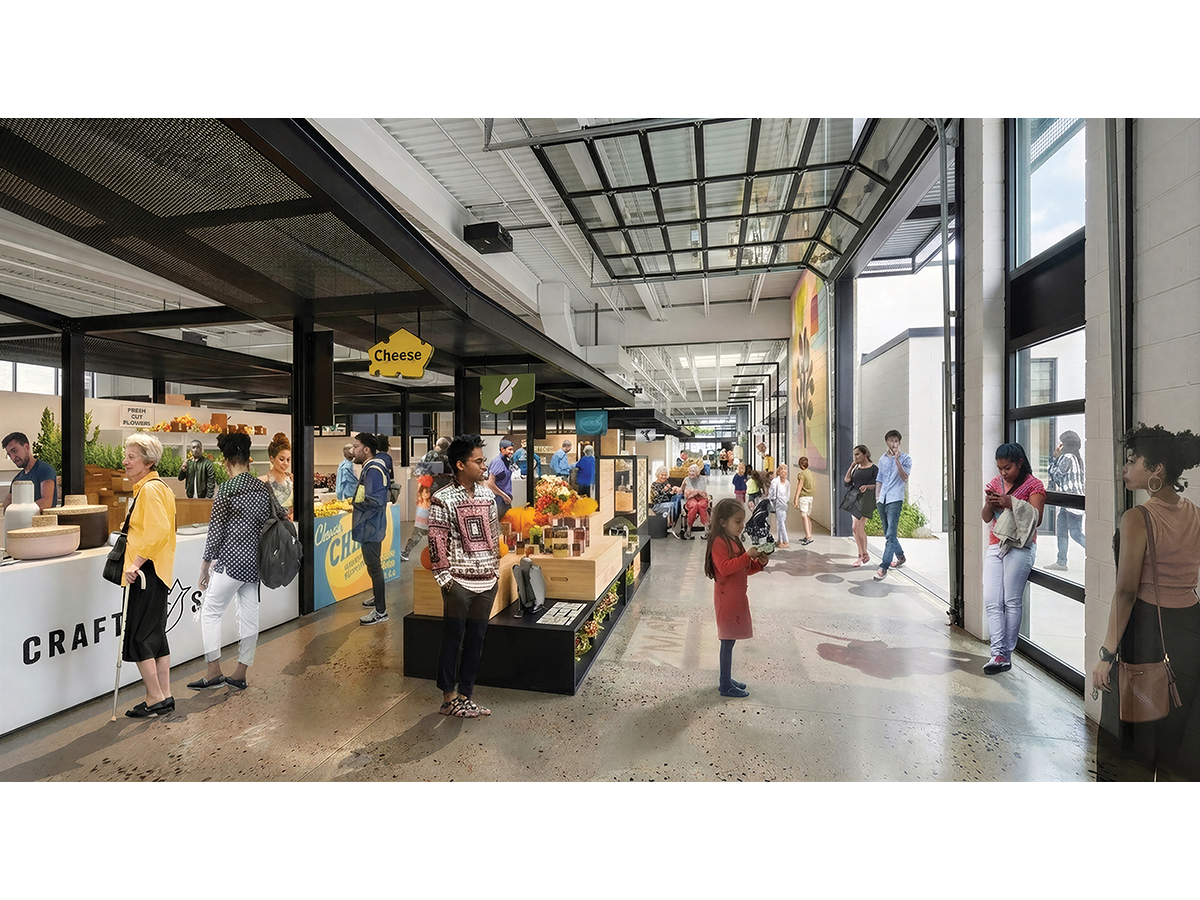
The Madison Public Market was largely designed as a launch pad for enterprises like Cinn City Smash. Its upper floor will house the offices of the Madison Public Market Foundation, whose MarketReady program has helped companies launch and grow since 2017 by providing mentorship, training and grants — particularly to populations including women, immigrants and people of color, who have historically faced barriers to entrepreneurship.
Minneapolis, Minnesota-based architect MSR Design’s plans also called for vendor spaces that would be appropriate for a mix of business types in various stages of development.
“Our intent with the design was to offer flexibility in scale and intensity,” said Traci Lesneski, partner and CEO at MSR. “We didn’t do a one-size-fits-all vendor stall, and this relates back to equity and the ability for emerging entrepreneurs to be able to afford a stall here.”
These include fully outfitted spaces with their own cooking equipment for food vendors like Cinn City Smash; blank spaces that cost less, whose occupants can use the market’s shared commercial kitchen if needed; and a number of even smaller or more flexible options, including shared stalls, product vending machines and configurable displays.
All options come in varying sizes and price points, which Lesneski said is important to “lower the bar of entry for entrepreneurs” and create a more equitable place for gathering and commerce.
The market stands to benefit the local economy as well, generating an anticipated 500,000 visitors and $10 million in local sales each year, according to the Madison Public Market Foundation.
Ahead of the market’s soft launch in March, vendors and organizers are working on tenant buildouts and putting on finishing artistic touches for the first wave of visitors, who will enter a sprawling indoor cityscape that elevates local entrepreneurs, promotes community gathering and showcases Madison’s business diversity.

“The Madison Public Market has been a project now two decades-plus in the making,” said Madison Public Market Foundation CEO Keisha Harrison, “and it will be a place where the community can gather and see itself reflected in the space while also taking advantage of offerings that may be new for community members.”
A city indoors
One of the first things Madison Public Market visitors may notice, according to MSR’s Lesneski, is that in many ways, it’s not like other public markets.
“(The project team) visited many public markets, and we realized that there is a formula that can be very predictable. … We wanted to break out of that a little bit.”
She said many public markets occupy large spaces but offer a fairly uniform experience throughout that can be “disorienting” for visitors, while also inadvertently confining them to main thoroughfares that can become congested.
In contrast, Madison Public Market’s varying “streetscapes” aim to promote an easy flow of pedestrian traffic among businesses, with customizable vendor stalls along these avenues creating more variety and reflecting local character.
“There are very clear main arteries that we’ve set up with the entry points that are much wider and easier for lots of bigger crowds to get through,” Lesneski said. “Then there’s more intimate-feeling side streets. Think of cute little alley shops or restaurants with the twinkle lights — kind of that romantic, cozy feel — that’s what we were going after.”
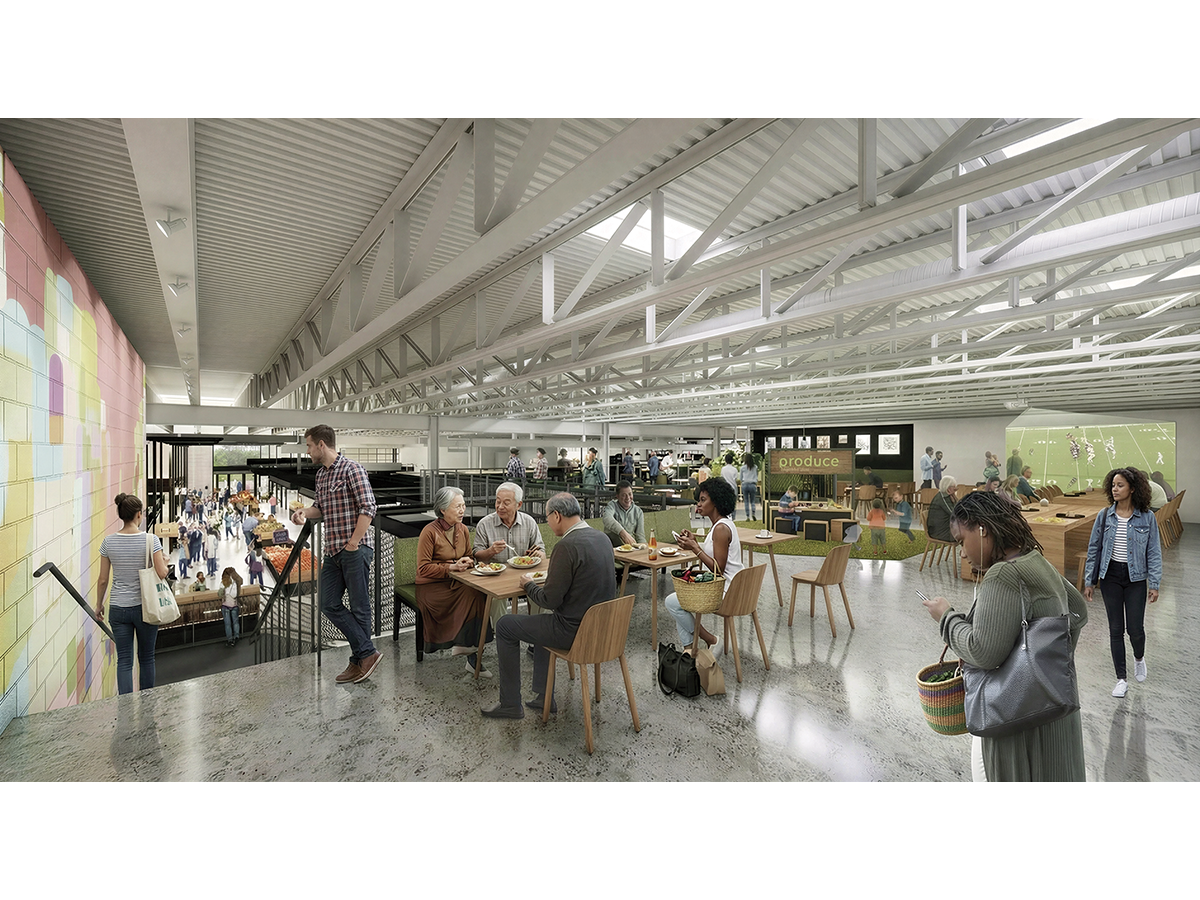
Art exhibit space throughout the marketplace will provide additional aesthetic appeal and community engagement, and an expansive south hall offers space for gatherings, with room for up to 606 occupants at dinners or seated events.
Lesneski said thanks to the building’s historical capacity for large vehicles, it could even accommodate food carts (although not food trucks, due to code and HVAC considerations).
“I hope that the city and the (Madison Public Market) Foundation make use of that,” she said, “because they could!”
Access to natural light and outdoor views will be another boon for market visitors — and another departure from many public markets’ norm.
“In a lot of markets, the only place to sit is up at a mezzanine level, and you’re kind of disconnected from everything,” said Lesneski. “We tried to make sure that there’s ways to be … near windows, and you can spill outside and eat there if you like on nice nights or days.”
Sustainable features of the market include two cisterns that will collect rainwater to be used to flush toilets at the market for all but the two driest months of the year and a PV (photovoltaic) roof array to generate solar power.
The market will be highly accessible for walkers, bikers, bus rapid transit passengers and even kayakers along the Yahara River.
“It’s rewarding to see that that building can have quite a different life,” said Lesneski, “and the bones of what made it great for its original purpose are exactly the bones (that) make it great for a public market.”
Infusing local character
Buildouts are underway for a diverse array of businesses that will operate along Madison Public Market’s broad avenues and narrower offshoots. These will continue up until and after the opening in March, as the leasing and application review process for merchants continues.
“Some (vendors) are food, and some are not, so it’s not a food hall,” said Lesneski. “(Organizers) were really clear about not wanting it to be a food hall.”
Cinn City’s new spot includes a vent hood, dishwasher and all of the equipment necessary to fry up its usual menu. Perdomo said that to start, it will offer the same options as the food truck — which, in addition to burgers and churros, include fries and vegan and gluten-free choices — and possibly add some specials later on.
The food truck will take a pause while operations at the market begin, reopening later on, staff-permitting. Perdomo expects the business to stay small, consisting — in addition to himself and Schiesser — of Sydney Avery, the company’s director of marketing and operations who is also Perdomo’s fiancee, and around four other employees.
“We probably won’t do the bar scene anymore, but we’ll still do the events and festivals,” Perdomo said. “We have to make sure we have the manpower.”
He also said fans of Cinn City Smash’s bold, cartoony aesthetic won’t have trouble recognizing its new abode.
“We are bringing a lot of aspects from the food truck. … We’ll keep some of it a surprise, but we definitely want it to be unique.”
Doing business from the Madison Public Market also means Cinn City Smash can drum up more year-round business.
“We struggle a lot with winters,” said Perdomo. “The offseason… really hurts us. We’ll build up our momentum, and then lose the momentum over the winter, and have to build it all back up again. … That alone will be incredible.”
“The food truck is a lot to take on,” he added. “It takes a lot of work, and it’s hot, especially on long festival days. I think we’re all really excited that now people will be able to find us consistently in Madison whenever they want.”
Lonnell Richardson is another local entrepreneur opening his first brick-and-mortar space in the Madison Public Market. His business, Ancestral Tribe Custom Apparel, had no need for a kitchen-equipped stall, and he chose one modest in size because “this is new territory for me.”
The space was “ready to move in and… that worked best for me,” he said. “I was glad (the Madison Public Market) would do something like that.”
Ancestral Tribe offers a variety of branded and customizable apparel and unisex hair and body care products. Richardson said the idea for the latter product line came from his wife, who creates homemade hair and body care items for women, and much of his branding was created by his son, who went to school for graphic design.
“It’s a family business,” said Richardson, who added that a cooperative mindset is key to Ancestral Tribe’s identity.
“I’m from Chicago originally, that’s where I grew up, and we always had a saying: It takes a village… a community. … I’m trying to bring people together, no matter who they are, where they’re from. (Their) background doesn’t matter, economic (situation) doesn’t matter.
“It’s all about bridging gaps and bringing people together. Your community, your church, your family, anybody who supports you in what you do — that’s what I consider to be your tribe.”
Richardson said he hopes the new location will help him connect with other entrepreneurs and expand his business.
“With the Public Market opening up and being something new, we saw it as a good opportunity to try it out, meet new people,” he said. “There may be vendors in there that I’ve never met, shop owners. So just reaching out and being in the community gives me, I would say, another foothold.”
Meanwhile, ArtWorking — a Madison nonprofit started roughly two decades ago by program director Lance Owens as part of the larger WORC (Work Opportunity in Rural Communities) organization — is taking a more unconventional approach to operating out of the Madison Public Market.
ArtWorking’s arts and entrepreneurship program supports artists with intellectual and developmental disabilities, around half of whom have their own small businesses. ArtWorking will sell their wares from a vending machine on a small plot of space in the market.
“We knew that we wanted to have a presence (in the market),” said Owens. “We just didn’t know what it was going to look like.
“We started looking at what it would take to staff a traditional space over there. How expensive would it be to have somebody there, what would the square footage price be? … We collaborated with an individual who had a similar machine at Garver (Feed Mill), and it went super well. They kept selling their products out of that vending machine, and we realized we could do this.”
The machine will offer a wide array of artistic creations, ranging from jewelry to stickers, cards, coasters, small charms and even fiber arts pieces.
“With Madison Public Market being an event space … I’m imagining people coming in and out of that space for occasional things,” said Owens. “We can tap into (that). … The first three to six months of the market are critical. I think there will be so much traffic there, and there will be so much media coverage of it, that by being up and running … for the soft opening, we’ll be able to capitalize on all that.”
He also highlighted the importance of collaborations like the one between ArtWorking and the market to ensure entrepreneurs of all abilities are able to take their place in the local business community.
“A lot of folks that we work with don’t have the resource(s) or the scalability to be able to self-represent in some places,” he said. “Even though the Public Market is geared toward being accessible to people who might otherwise struggle to make it in the small business community, our constituency is triple-hampered. … Without ArtWorking functioning as an aggregator, the Public Market would just be off limits.
“(The vending machine) is just this little thing that sits on 10 square feet, but we’ve got potentially 45 people who will sell out of it, who all will have a toehold at the Public Market, who all will be represented and will be like, ‘I matter, and I’m part of the world, and I have something to share with the rest of the community.’”
Watch and wait
As the unveiling anticipated by many Madisonians for decades approaches, the Madison Public Market Foundation is working to fill out its tenant roster and get other key operations running.
The market is seeking a mixture of vendors, including emerging founders and established local brands, spanning products from fresh and prepared local foods to agricultural products, artisan goods and gifts.
“Our goal is to highlight Madison’s entrepreneurial diversity and introduce visitors to flavors and products not widely found elsewhere in the region,” said Madison Public Market Foundation CEO Harrison in a statement. “We maintain an interest list for prospective merchants, available on our website.”
Harrison said the market is hiring staff, planning initial programming and preparing to accept event rentals as well.
“We anticipate hosting live music, educational workshops, culinary demonstrations, youth programming, cultural festivals and community gatherings,” she said. “Our event space will also be available for private rentals, business events and nonprofit functions.”
Matt Mikolajewski, Madison’s Economic Development Division director, said the new marketplace will reflect the city’s goals to support food-based entrepreneurship and develop a welcoming community gathering space.
“In partnership with the Madison Public Market Foundation, the city looks forward to years of small business success and great memories from this new home for our local food economy,” he said in a statement.
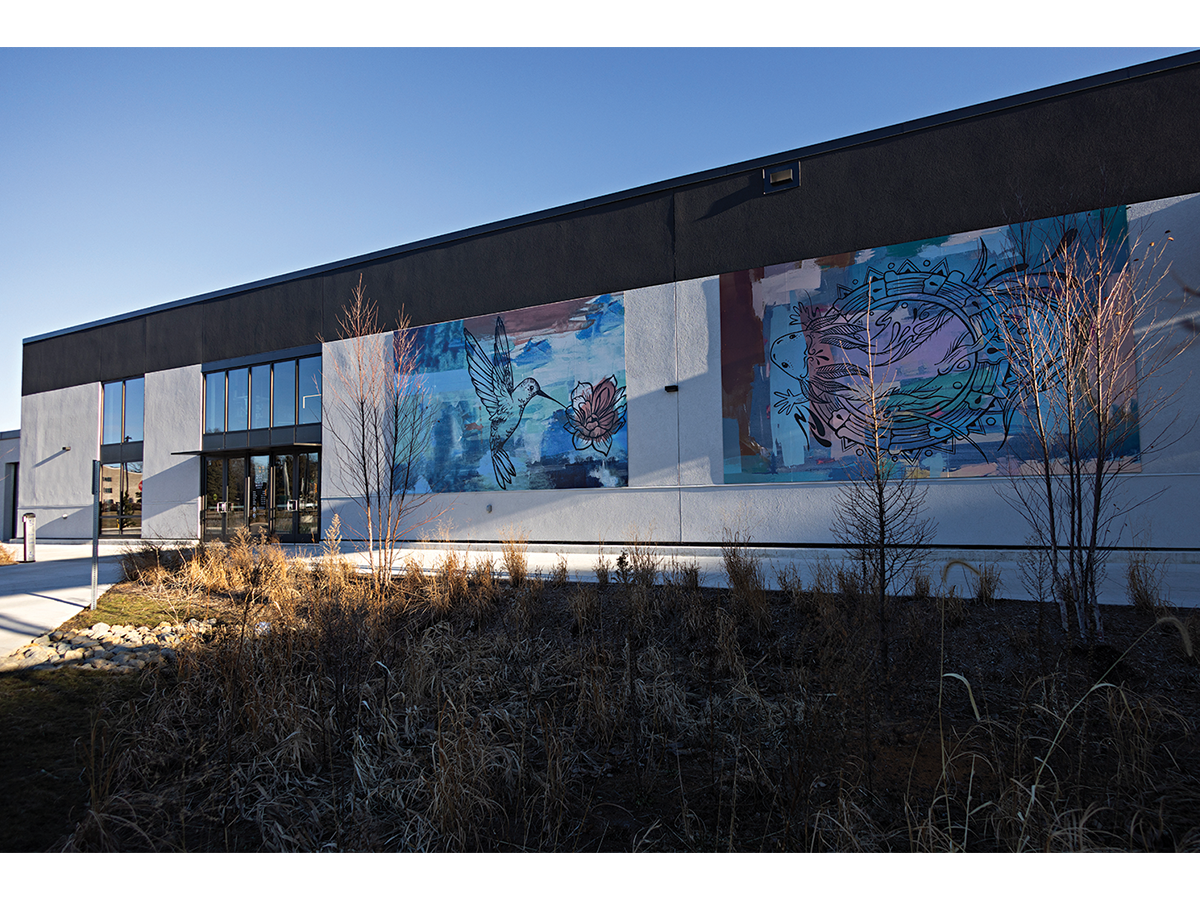
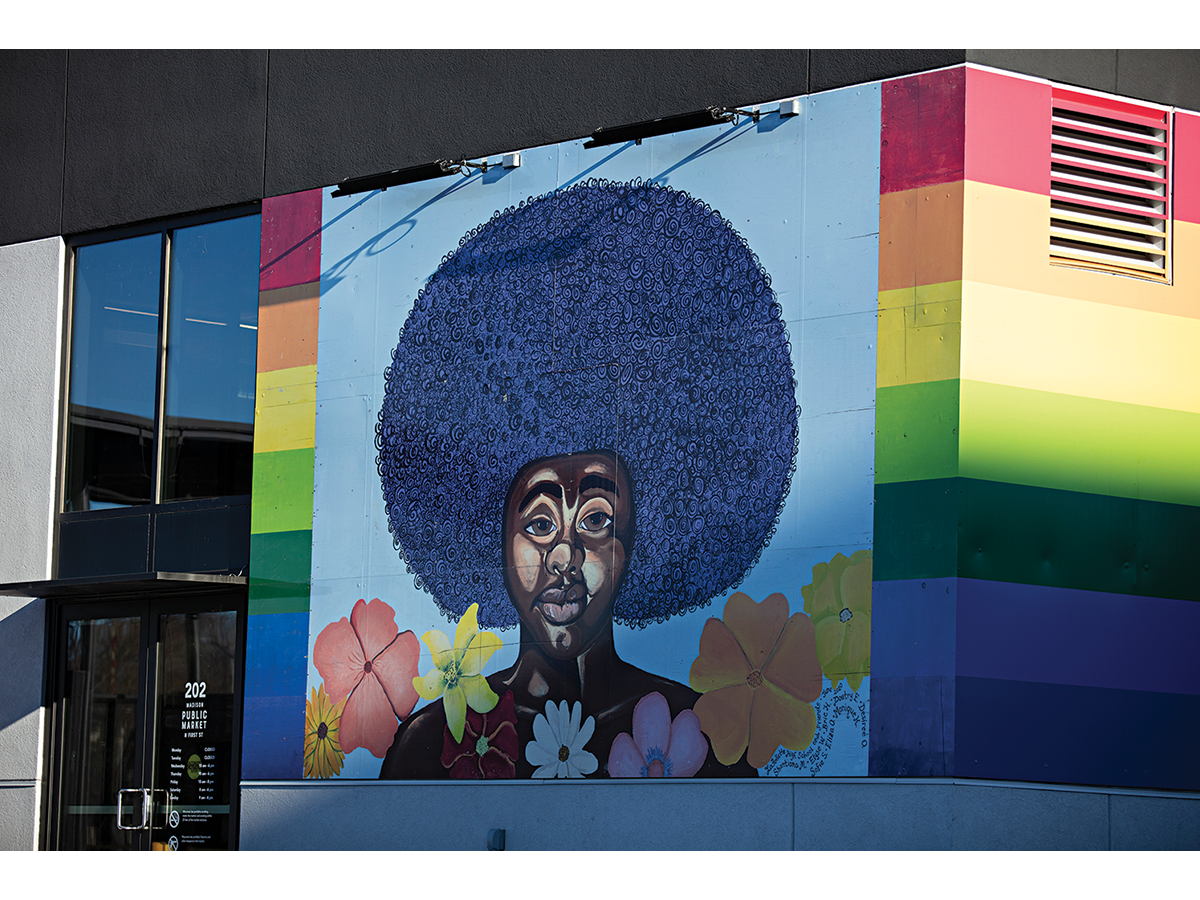
For now, visitors can watch the market’s progress from the outside. In addition to bold new signage, the building showcases three art installations: “Elizah Leonard” by Tom Jones, “Axolotl & Alma” by Issis Macias and Rodrigo Carapia and “And Still, She Blossoms,” created by La Follette and Middleton students under the guidance of La Follette visual arts instructor Monique Karlen.
Macias said the “Axolotl & Alma” murals reflect the “Mexican heritage, memory and color” she and Carapia share.
“Bringing our art into the Madison Public Market is an honor,” she said in a statement. “It’s a space where diverse stories come together, and public art has the power to make people feel like they belong.”
“And Still, She Blossoms” carries additional powerful messaging and was designed by Shantiana McNeal, who instructor Karlen said was in ninth grade at the time.
“The mural was first created by students during the George Floyd protests in 2020,” Karlen said in a statement.
“(McNeal) wanted to show the resilience and strength of a Black woman in the midst of the chaos that was going on in the country.
“We are honored that the city saw that our message is still relevant today and that they chose it to be one of the featured murals on the Madison Public Market.”
Editor’s note: A previous version of this story has been corrected to reflect the location of MSR Design’s headquarters in Minneapolis, Minnesota.

