




In Dane County, 13% of Black families are homeowners. For white families, that number is 64%. This stunning gap in Greater Madison exceeds racial homeownership disparities on a nationwide scale, and the issue has roots as old as the U.S. itself.
Combatting this widespread, systemic problem is a daunting task, but Madison’s Own It program is working to increase Black and brown homeownership and wealth.
“Real estate really is the root of segregation,” said Sara Alvarado, a local real estate entrepreneur and co-founder of Own It: Building Black Wealth. “So, ‘Why don’t we participate a little bit more loudly?’ is the question.”
Since 2021, Own It has worked with area real estate professionals, financial institutions, and partner organizations serving primarily people of color to provide education and down payment assistance that can give first-time homebuyers a leg up in a challenging market, and help set them on a path toward financial well-being.
Entrenched discrimination
Alvarado, who co-owns the Alvarado Real Estate Group with her husband Carlos, and Own It co-founder Tiffany Malone, a realtor for the same agency, said the program was born out of righteous anger at racial gaps in homeownership and an urgent need to make headway against the issue, despite its scale.
Racial disparities in homeownership largely stem from redlining — a practice that denies people access to credit, even if they personally qualify for a loan, based on where they live. Historically, U.S. mortgage lenders redlined predominantly Black neighborhoods, effectively maintaining practices of segregation long after they were outlawed.
The Federal Housing Administration institutionalized redlining in the aftermath of the Great Depression and through the 1960s, according to the Federal Reserve. While the Fair Housing Act of 1968 prohibited racially motivated redlining, discriminatory practices had become sufficiently entrenched in the real estate industry that their effects are still evident today.
U.S. Census Bureau data from 2023 show that, nationwide, Black and Hispanic homeownership rates still trail white homeownership, at 45.9%, 49.8%, and 73.8%, respectively. Lower rates of homeownership can worsen wealth gaps, creating a negative cycle that disproportionately affects people of color.
The National Association of Realtors says these disparities in homeownership rates “are a clear reflection of systemic inequalities that continue to affect minority communities.”
Own It leaders were driven to act.
“Basically, nothing was being done about it,” Malone said. “So we connected with different lenders… realtors, friends in the banking industry, and we came up with the concept of, let’s start… an organization that will provide funding for Black and brown people to buy homes. It’s the right thing to do.”
Alvarado said organizers had three audiences to reach to take Own It from concept to reality: people of color in Dane County interested in wealth-building and homeownership; local real estate brokerages and professionals positioned to contribute to industry reform; and organizations and individuals across the community looking to contribute toward a meaningful cause.
They began with the first group, conducting outreach within the Black and brown communities to acknowledge systemic issues and propose a solution that would make down payment assistance and financial education more accessible.
“What about the Black and brown folks in Madison who have good income, they have good credit scores, they’ve been paying rent on time for 10 years in the same place, and so they don’t qualify for down payment assistance, but they also don’t have access to down payment money?” Alvarado asks. “Those are the folks that, once they’re in homes, they’re building wealth for generations.”
A dream realized
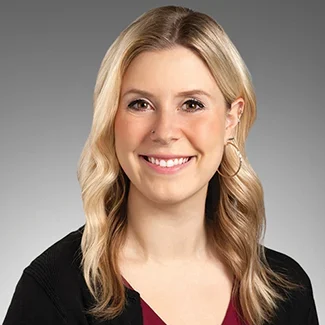
Gabrielle (Elle) Winters is among 18 individuals to carve a path to first-time homeownership with Own It’s support. She heard about the program through its partner, One City Schools, where her son is a student. She said their new home will provide their family with a level of financial security she has long worked toward.
“I’m a single mom trying to make it on my own,” Winters said. “I’ve always wanted to own a home.
“Growing up, I had a single mom… and we moved probably more than 20 times in my life. I’ve never had that stability. That was a huge goal and dream of mine to achieve.”
Winters, who is biracial, said she is aware of the “significant” racial inequalities in Madison and Dane County, and said Own It is working to bridge that gap in housing and generational wealth.
“I didn’t have any parents to give me money or a house or anything like that,” Winters said. “So to be able to do that for myself and now have that for my son to pass down is invaluable.
“Maybe eventually I would have been able to buy a house, but it would have been a really hard, long struggle, and maybe I never would have.”
Support through partnerships
Own It established its first community partnership with One City Schools, whose foundation is its fiscal sponsor. One City serves a high ratio of students of color and through the partnership helps its families — including parents of students and alumni — and staff access Own It’s down payment assistance and financial programming.
Participating families receive up to $19,000 in down payment assistance. Alvarado said partnerships with organizations like One City help Own It reach its target population and cut through the red tape many of them have experienced on the homeownership journey.
“We’ve seen clients who have worked so hard to get qualified for DPA [down payment assistance] and then not been able to use it,” Alvarado said. “We’ve heard lenders say, ‘Oh, I don’t work with DPAs because they’re too complicated.’ … We don’t have the [same] restrictions.”
In fact, there are only a few requirements for Own It participants: They must be first-time homebuyers; the home must be an owner-occupied condo, townhouse, single-family house, or duplex; they must have a conventional mortgage; and they must be affiliated with one of Own It’s partners.
Winters said it is important that her son “can see [her] owning a home and building Black wealth.” She added that the partnership between One City and Own It fosters a sense of community and belonging for program participants.
“It was cool because it’s through my son’s school, so I’d see people I knew … who are going through the program now, and [I talk] about it and [am] a support for them now, too.”
In early December, Own It announced new partnerships with Centro Hispano and Anesis Therapy, both of which operate in Dane County, and are staffed by and serve mainly people of color. Programming is set to get underway this year and significantly grow participants and home closings.
“I want to see the trajectory improve for our families and community. This partnership is a step in the right direction,” said Karen Menéndez Coller, Centro’s executive director. “The staff at Centro, who will benefit from this program, is from the community we serve and together we are all so excited for what is [to] come.”
Sharpening financial skills
One of the key ways Own It supports program participants is through financial education. Over 300 people have taken its education courses to date.
The first course in its two-part series focuses on the principles of wealth-building, according to Grace Trewartha, an Own It board member and the founder and CEO of financial education company Live Beneath Your Means. Trewartha developed the initial Own It curriculum, consisting of six 90-minute sessions, to provide participants with a general understanding of how to grow their wealth.
“For a lot of things financially related, people think about income, and it’s related of course to your net worth and wealth, but it actually can be quite distinct from it,” she said. “You want to build a secure foundation, and that’s… best measured by the resources you can tap into in times where potentially you may not have income, or your income changes drastically, or you have greater needs.”
Trewartha said the class also talks about “intangible wealth” — things one can’t put a price tag on like an individual’s community, skills, network, education and family — which can play a role in how one feels about financial security.
Trewartha emphasized that, while homeownership and the 30-year mortgage are generally more accessible tools for wealth-building, they’re not the only means.
“There are lots of ways that homeownership can go awry, and we saw this in 2008 with the mortgage crisis where people kind of got in over their heads,” she said. “Yes, this is one wealth-building mechanism, but only if you have the right mortgage, the right house, and the right budget.”
Part of Own It participants’ “homework” during the first educational course is to submit a credit report, personal balance sheet, and budget. These items are evaluated by a designated Own It team to determine whether those individuals are nearing homeownership readiness based on their ability to get a mortgage.
“We do encourage those that we feel have the capacity to purchase a home in, say, six to 12 months… to sign up for the second part of the two-part educational series, which is just about homeownership and delves a lot more into what it means to own a home and the … responsibilities,” Trewartha said. “We just want people to feel prepared for this journey.”
Winters said Own It’s financial education courses were a valuable resource, and supplemented research and education she was already undertaking on her own.
“The education and the budget information they give you is just a good foundation and stepping stone to put yourself on the right path. … From start to finish, you have support along the way… with mentors and the people there to support you.”
The final piece of Own It’s financial mentorship comes after participants close on their home.
“We did our very first post-home purchase sit-down with a family, a homeowner, to see… does this actually improve their wealth and financial security? Because that’s its intent,” said Trewartha. “We don’t want to have people buy homes and then have that be… a burden. So we intend to hopefully follow up with people and to offer a financial wellness check-in at maybe a year after [they] purchase a home.”
Sarah Campagna, managing vice president–financial empowerment for Summit Credit Union and Own It’s education advisory lead, echoes the sentiment that financial education is crucial to wealth-building success.
“A community with access to financial education is one ready to thrive. That’s why we are so closely aligned with Own It and [its] efforts to foster financial empowerment, break down barriers, and grow generational wealth in Black and brown communities through home ownership,” she said.
“Financial education is a core value at Summit, and we’ve made it a priority to create and support initiatives that help empower financial stability. … Own It is a great example of innovative programming making a difference.”
Changing an industry
In addition to offering educational services and down payment assistance through its community partnerships, Own It works within the real estate industry to change business practices and generate key funds.
Organizers provide local real estate brokerages and professionals with information on historically racist industry practices and offer ways to join Own It’s ambassador program. Alvarado compares this to a community shares program, wherein a company’s employees can have a portion of their pay automatically withdrawn and contributed to a nonprofit.
While the real estate industry differs from others in terms of the employee-employer relationship, brokerages and/or individuals can systematically contribute a percentage of their earnings toward Own It’s down payment fund.
“At the time of closing, realtors, lenders, appraisers, inspectors, insurance agents… they all earn money,” Alvarado said. “I don’t know how to desegregate neighborhoods. … That’s where the system makes it feel like it’s too big of a problem.
“What would it look like if, at the time of closing, all of those professionals who are in these white-dominated professions — because I do think it’s really critical to talk about just what our industry looks like, too — what if they were to contribute a portion or a percentage of their earnings to the down payment fund systematically?
“This is a direct relationship to [decreasing] the homeownership gap that everyone talks about and no one knows how to address.”
In total, over 60 area real estate professionals are program ambassadors contributing to the down payment fund. Participating brokerages include Re/Max Preferred, Keller Williams Madison, Weichert–Lakepoint, Century 21 Affiliated, Stark Realtors, and Compass Real Estate, which partnered with the Alvarado Real Estate Group last year.
“When we first heard of Own It’s mission, we knew we needed to get involved and support the cause,” said Chris Stark, president of Stark Realtors. “Everyone should have the opportunity to create the life they want to live, and we recognize that there are those within our community that have been historically underserved and face larger obstacles to make that a reality.”
Stark said the company set up a process so its agents could contribute a part of their commission to Own It, and it’s been very successful.
Katie Kolakowski, a Stark real estate agent and Own It ambassador, has been involved with the program since 2021. She contributes a portion of every commission check she earns and also volunteers for the program. Kolakowski said the industry education Own It provides, along with the opportunity to support historically underserved communities, has helped her learn and evolve.
Taking what she has learned and “doing better is key to being an agent of change,” she said. “Being an Own It ambassador is important to me because, as a realtor, we have a big responsibility in helping shape communities. Each transaction matters as we help individuals shape their lives and build generational wealth.
“Little movements create larger movements,” she added.
While real estate industry involvement is critical, the success of Own It and its efforts to increase Black and brown homeownership and wealth depend on community support.
“There’s a lot of neighborhood associations, churches, people who want to learn more,” Alvarado said. “They want to take action. … Our goal is to get more companies, agencies, firms, [and] financial institutions to [participate].”
Own It raised $350,000 in its first six months and over $900,000 since 2021. Donations can be made at ownitmadison.org.
Organizers applied for official nonprofit status in May 2024 and are expecting a status update this month. Alvarado said in addition to adding partnerships and increasing Own It’s participant capacity, she’d like to see 20–25 closings per year within the next two to three years. She also hopes the program’s model will be replicated in other communities.
“Another goal would be not to have the program anymore,” Malone quipped. “It shouldn’t be needed. That’s our ultimate goal.”
Winters said she regards Own It as “a symbol of hope and change.” The program has inspired her and changed the trajectory of her future already.
“Instead of just surviving, I feel like I can thrive now.”

